
JIEYAO LIGHTING · PRACTICAL SELECTION GUIDE
Monocrystalline and polycrystalline describe the silicon cells inside a solar panel. For a street light, compare the actual module’s rated watts, area, electrical characteristics and mounting arrangement. A higher-efficiency module can provide the same rated power in less area; the word “mono” alone does not guarantee more nightly light, better shaded operation or compatibility with an existing controller.
A monocrystalline solar cell is made from single-crystal silicon. A polycrystalline, or multicrystalline, cell contains multiple crystal grains. These are material descriptions at cell level. A finished module connects many cells and adds the encapsulation, front and rear materials, frame where used, junction box and cables.
The distinction matters because a buyer is purchasing a module that must work within a lighting system. The cell name does not describe the panel’s voltage, physical size, fixing points or the energy the battery receives in a particular month. Those need the model data and system calculation.
The US Department of Energy reports that monocrystalline silicon accounted for 96% of global solar module shipments in 2022. The same research overview explains cell designs such as PERC, TOPCon and heterojunction. Those design names are not extra alternatives to “mono” at the same classification level. [1] A panel may be monocrystalline and use a particular cell architecture at the same time.

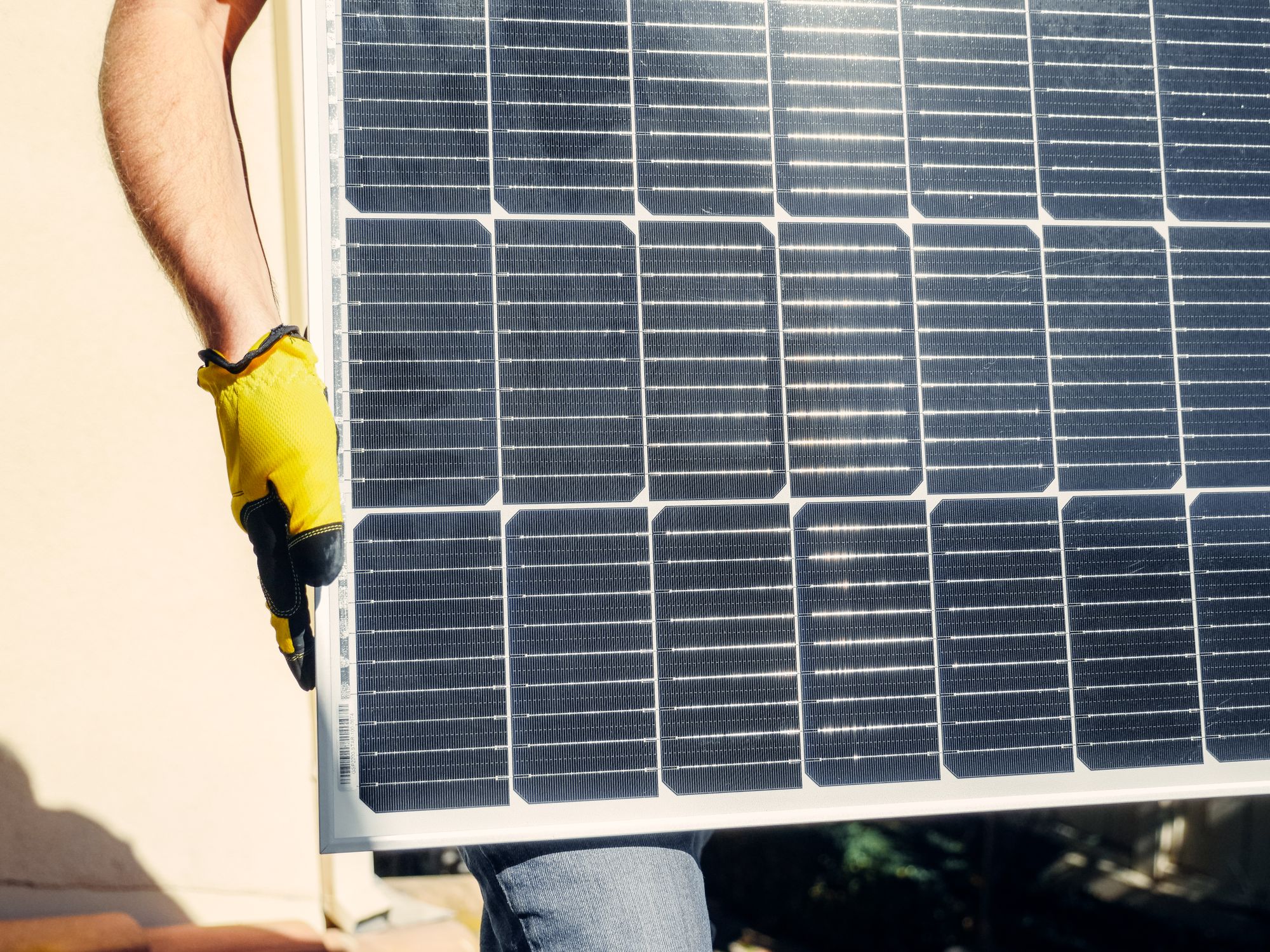
Framed photovoltaic module — a construction and handling example.
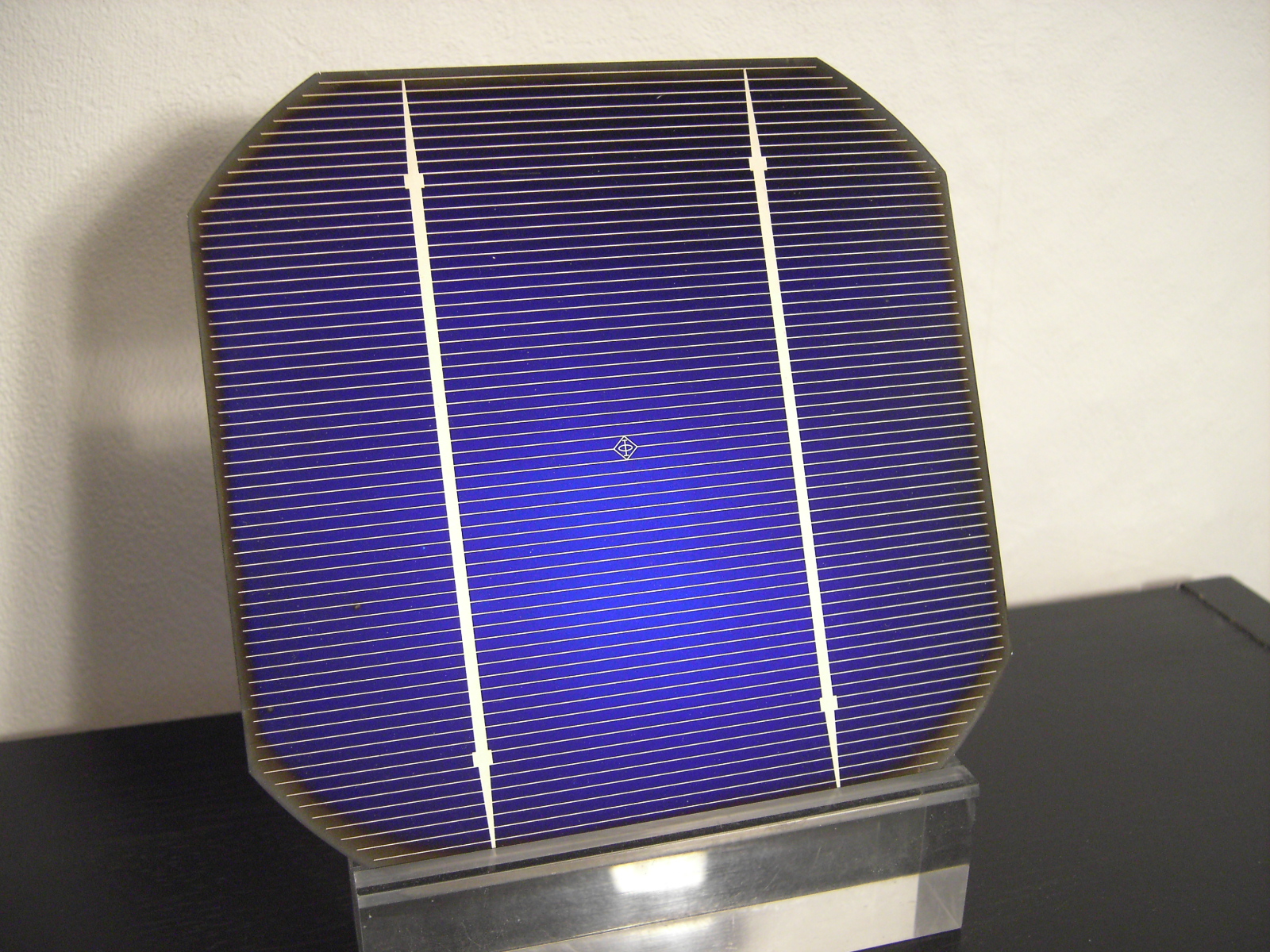
Monocrystalline silicon cell — an identification example, not a current module specification.
Traditional monocrystalline cells often have a relatively uniform dark appearance and clipped corners. Traditional polycrystalline cells can show a visibly mottled or flake-like grain pattern. The photographs illustrate those historical appearances rather than setting a rule for every present-day module.
Modern cell cutting, surface treatments, back-contact layouts and module construction can change the visual impression. A dark module is not automatically identifiable as a particular technology from a distant site photograph. A black backsheet or frame can also affect its appearance.
Confirm the cell technology in the model datasheet and order documentation. Use the photograph to understand the construction; use the identified product record to compare its declared performance. The same caution applies when a seller uses a generic product image for several power ratings.
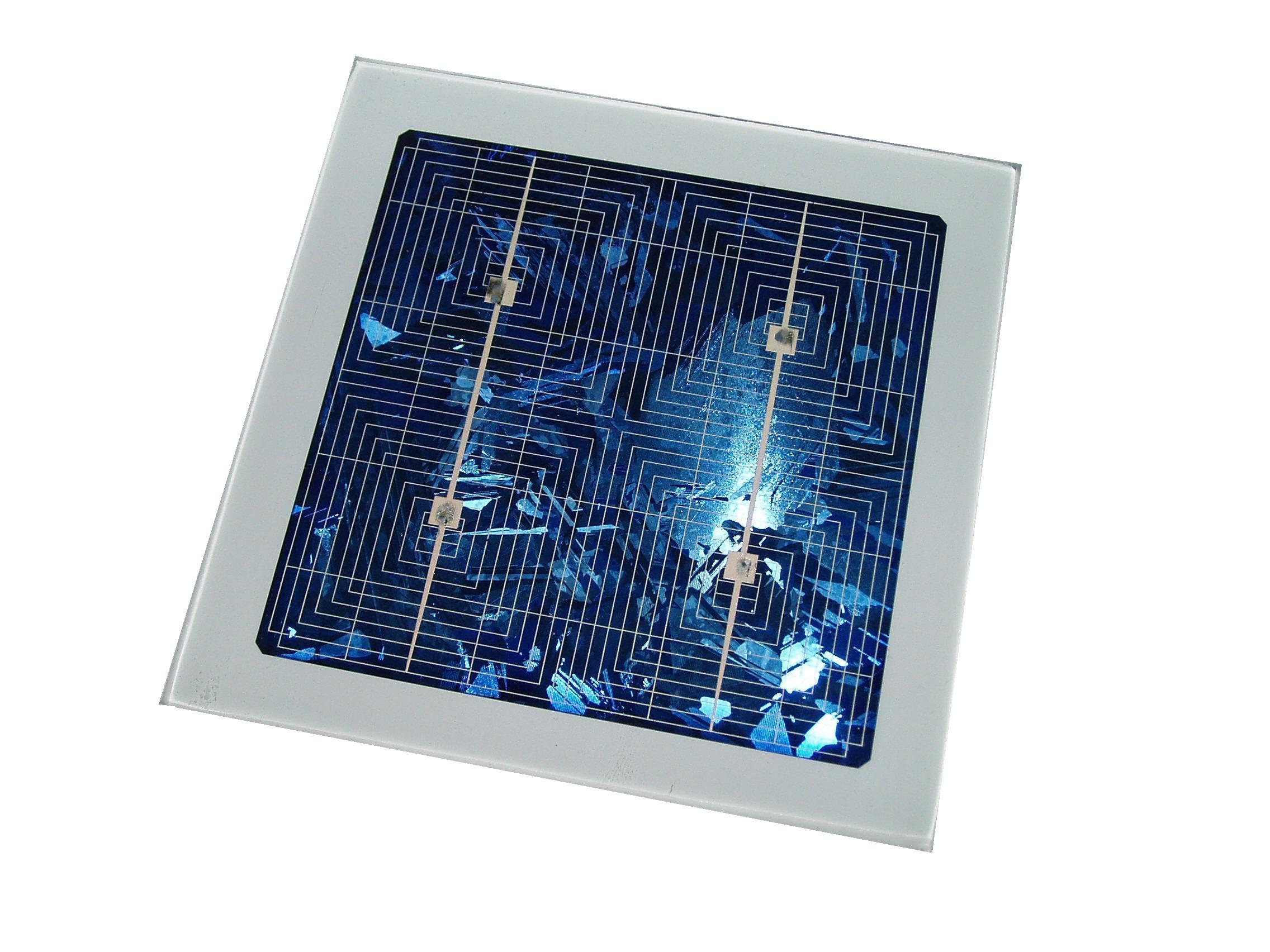
Polycrystalline silicon cell — visible grain pattern in a historical cell example.
Module efficiency relates electrical power to incident solar power over a stated area and test condition. At the same irradiance, a more efficient module can achieve a given electrical rating with less area. That is particularly relevant to an integrated street light with limited panel space.
Use module efficiency when comparing complete module dimensions. Cell efficiency is measured on a different object; it cannot simply be applied to the outside frame area. Gaps, borders and other construction details mean the two figures are not interchangeable.
Assume two hypothetical modules each rated 150 W at 1,000 W/m² irradiance. If module A has 20% module efficiency, the implied area is 150 ÷ (1,000 × 0.20) = 0.75 m². At 15% efficiency, module B needs 150 ÷ (1,000 × 0.15) = 1.00 m².
Module A therefore uses 25% less area for that same rating. These assumed efficiencies illustrate power density; they are not fixed mono/poly values, actual Jieyao products or a daily-energy forecast.
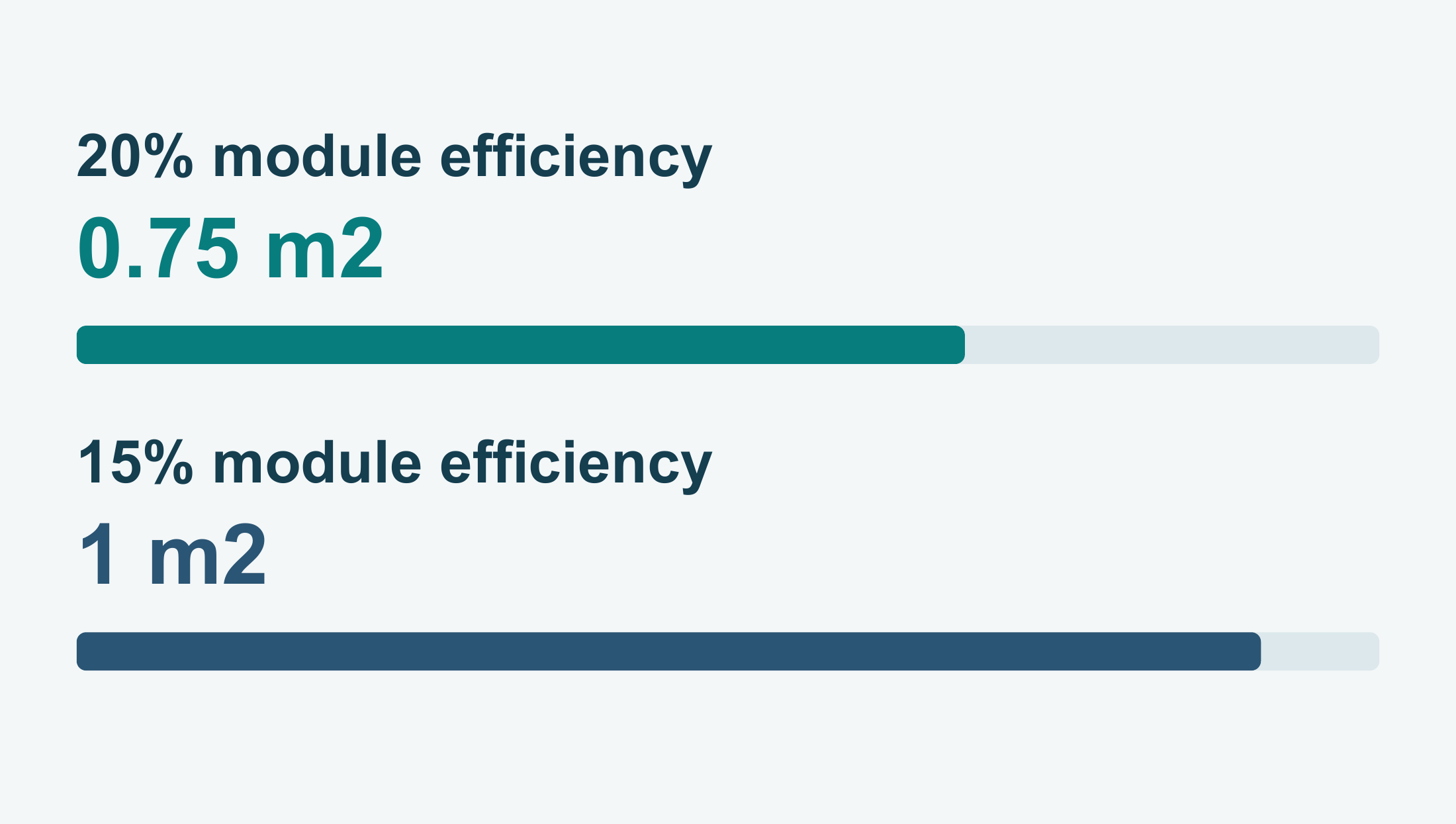
Same rated power, different module area — an illustrative calculation at 1,000 W/m², not measured output.
For a split system, a larger available mounting area may make either identified module practical. For an all-in-one assembly, a module with higher verified power density may help satisfy the area constraint. In both cases, check the actual dimensions rather than comparing the appearance of the cell pattern.
A smaller panel is not automatically a structurally accepted substitution. Frame dimensions, mass, fixing positions, orientation and wind exposure still enter the bracket and pole review. The module is only one part of the supported assembly.
Two modules with the same STC wattage start from the same declared power at the specified reference conditions. That does not make their field behaviour identical. Temperature coefficients, low-irradiance behaviour, electrical matching, shade and losses can affect the energy collected over a day.
Avoid a blanket promise that a mono panel will run a light for more nights than a poly panel. Nightly service depends on the site’s seasonal generation, usable battery energy, charging permissions, the lighting program and recovery after poor weather. A high panel rating cannot correct an undersized battery or an unsuitable controller configuration.
Shading is also a separate question. Cell layout, interconnection, bypass provisions and the location of the shadow matter. Neither “mono” nor “poly” is a shaded-site design. Move or reorient the installation where appropriate, and assess the actual shaded operating conditions rather than relying on a sales adjective.
For seasonal power and recovery, continue to our eight-location panel-sizing analysis. For a lamp that fails to recharge despite daylight, see winter charging conditions. Those pages address energy and battery charge permission, rather than the cell-type comparison here.
A 150 W label does not establish the operating voltage. Two equally rated modules can have different maximum-power voltage and current, as well as different open-circuit voltage and short-circuit current. These characteristics determine whether the controller can use the proposed panel safely and effectively.
Request Pmax, Vmp, Imp, Voc and Isc for the exact module, with the test conditions and temperature coefficients. The design should check the relevant cold-condition open-circuit voltage against the controller input limit, along with the other current, power and operating-range limits. The module name and nominal battery voltage do not replace those checks.
For a PWM system, matching the module and battery voltage is especially significant. An MPPT controller gives a different relationship between input and battery-side operation, but it still has defined limits. Replacing a panel because it is described as a “better mono panel” can create a mismatch if the voltage arrangement changes.
Our 120 W module report analysis explains the distinction between Pmax and the separate Voc/Isc endpoint readings. Its historical sample result is not used to rank every mono and poly module.
↔ On a phone, swipe the table to see every column.
| Decision | What to compare | Why the cell name is insufficient |
|---|---|---|
| Limited panel area | Verified module watts per outside area | Cell efficiency and module efficiency differ |
| Daily solar harvest | Site model and model-specific temperature/irradiance data | STC power is not daily Wh |
| Existing controller | Voltage, current, power and battery compatibility | Equal watts can use different electrical arrangements |
| Replacement fit | Frame size, holes, cables, connectors and mass | Technology does not define mounting dimensions |
| Long-term service | Applicable product documents, inspection and replacement support | A technology label is not a warranty or qualification report |
An existing polycrystalline module does not become unsuitable simply because newer mono products are common. If it is performing the accepted duty and its condition is satisfactory, a replacement decision should address the actual defect, required energy or service change.
For a new project, compare current products available with complete, consistent records. A lower module price or a higher efficiency number is useful only when the selected module can be supported, connected, maintained and supplied as part of the intended lighting configuration.
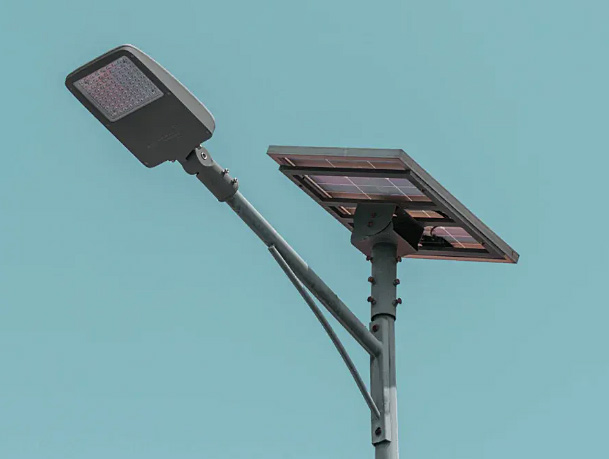
Integrated solar street light: available surface area and the complete head assembly are closely linked. Compare the exact offered light, panel, battery and operating program. A separate large-module rating does not describe the panel area built into that head.
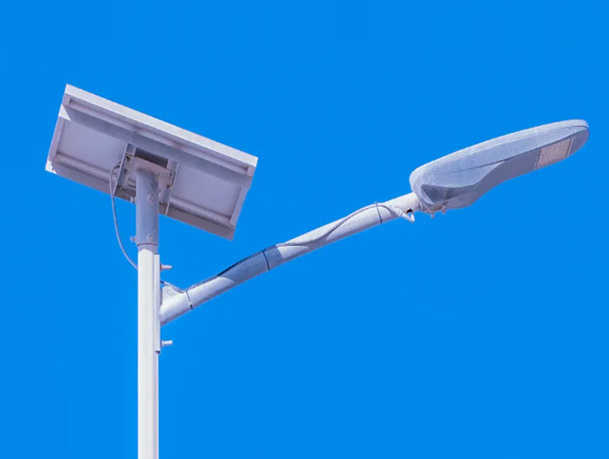
Split solar street light: separate panel mounting can offer more freedom of orientation and size, subject to the bracket, pole and cable design. This makes the physical and electrical module schedule especially important. The module that fits the energy calculation must also fit the actual assembly.
Replacement panel: record the old module label, dimensions, mounting holes, connectors and controller identification first. A new panel may use a different technology and still be suitable, but its fit and compatibility need checking. Do not substitute based on nominal watts alone.
A shaded or winter-constrained site: begin with the resource and operating problem. A cell-type change may not resolve blocked sunlight, temperature-related battery charge restrictions or an unrealistic night schedule. Correct the limiting part of the system rather than assuming one module material solves every cause.
For a project-specific assembly, see Jieyao split solar street-light systems. For module supply and interface information, see PV modules for off-grid lighting.
Ask for the exact module reference and its declared electrical data, overall and mounting dimensions, mass, cable and connector specification, and the applicable product evidence. Pair those with the controller and battery references, the location and the required lighting schedule.
Keep a clear distinction between module qualification, electrical performance testing and the complete lighting-system calculation. A module report does not establish the battery’s usable capacity or the road lighting result. Equally, a lighting calculation does not verify the module’s construction or output.
Use the solar-module comparison worksheet (PDF) to collect both offers on the same basis. The most useful response is a matched set of model data and system assumptions, rather than a generic claim that one cell technology is always superior.
Does mono always mean black and poly always mean blue? Those are common historical appearances, not reliable identification rules for all modern modules. Confirm the technology and model in the documentation.
Does a smaller panel necessarily produce less power? No. Rated power depends on both area and module efficiency under the stated conditions. Compare watts and dimensions together.
Can a mono panel replace a poly panel? Potentially, if the proposed module meets the electrical, mechanical and system requirements. The technology change alone does not confirm compatibility.
Does the cell type set the street light’s brightness? The panel supplies charging energy. Road illumination depends on the luminaire and its programmed output and layout; the energy system must sustain that duty.
Prepared by Jieyao Lighting, Yangzhou Jieyao Lighting Equipment Co., Ltd., 25 November 2026. The area example uses explicitly assumed complete-module efficiencies and is not a comparison test of supplied models.
[1] US Department of Energy, Crystalline Silicon Photovoltaics Research: module construction, mono silicon and cell architectures. https://www.energy.gov/cmei/systems/crystalline-silicon-photovoltaics-research
[2] Victron Energy, Which solar charge controller: PWM or MPPT?, 20 January 2020: module operating points and controller interaction. https://www.victronenergy.com/upload/documents/Technical-Information-Which-solar-charge-controller-PWM-or-MPPT.pdf
Photos: framed module, Kindel Media / Pexels, https://www.pexels.com/photo/a-person-carrying-a-solar-panel-9875449/ (Pexels License). Mono cell, Stephan Kambor, https://commons.wikimedia.org/wiki/File:125x125-pseudo-square-monocrystalline-solar.cell.jpg (CC BY-SA 2.5, https://creativecommons.org/licenses/by-sa/2.5/). Poly cell, original Nosferatu it, white-background version Rogilbert, https://commons.wikimedia.org/wiki/File:4inch_poly_solar_cell.jpg (CC BY-SA 3.0, https://creativecommons.org/licenses/by-sa/3.0/). Photographs are presented without altering the cell content. The original area chart is an illustrative calculation.
Send the site, lighting duty and proposed equipment arrangement so the product discussion addresses your application.
Contact Us
Get a custom lighting solution and quotation for your project. Yangzhou Jieyao Lighting Equipment Co., Ltd. manufactures outdoor lighting and steel poles in Guoji Town Industrial Park, Gaoyou City, Yangzhou, Jiangsu, China. The company reports a 10,000 m² factory site, more than 60 employees including more than 10 technical personnel, and more than 100 production and testing machines. The present company name dates from 2017; Jieyao Poles’ published history traces the team’s manufacturing lineage to 2006. The stated 15 years of experience refers to the team. The company reports exports to more than 60 countries. Do you have any questions or requests?
Email: jay@jieyaolighting.com

Click to Chat.
Im online now.
 English
 Español
 Bahasa Indonesia