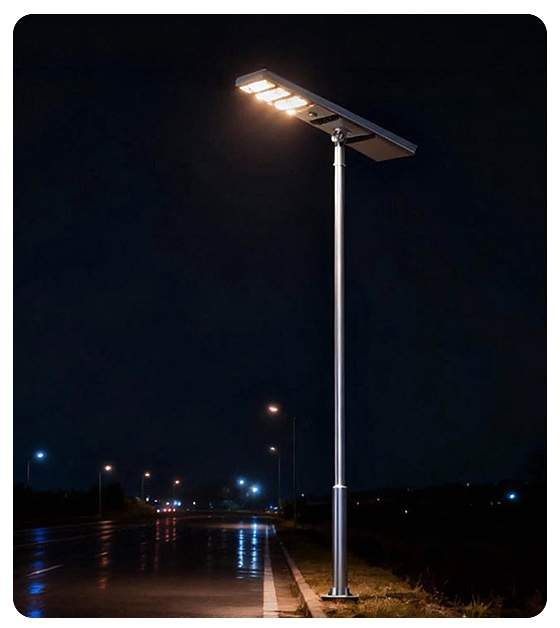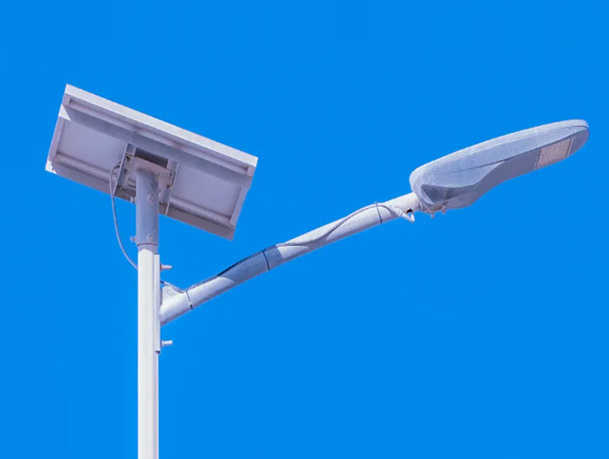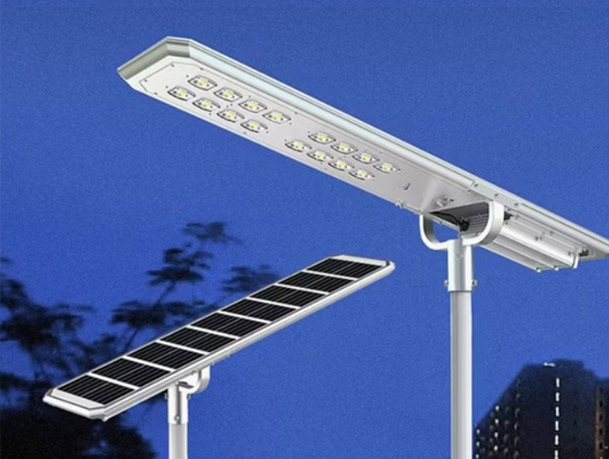

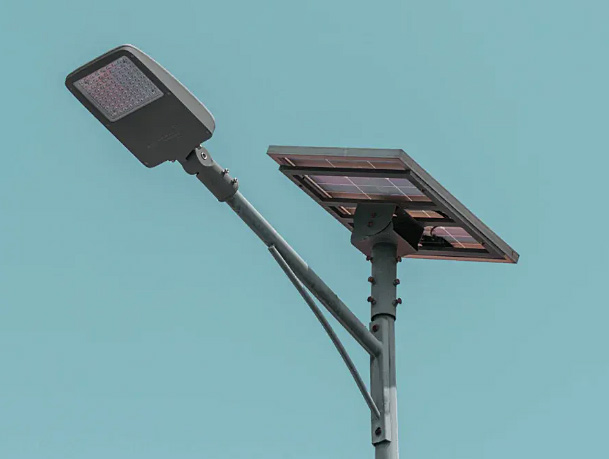
Solar street lighting has become a standard solution for off-grid roads, parking areas, campuses, and remote infrastructure projects. However, when selecting a system, buyers often face one key decision: Should you choose an integrated solar street light or a split solar street light?The layouts place components differently. Compare them against the same road-lighting result, night-time schedule, site solar conditions and service responsibilities before drawing conclusions about performance or cost. This guide breaks down the differences in a practical, engineering-focused way to help you make a clear decision. |
|
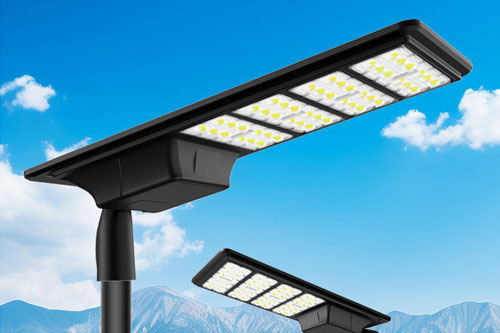
In this article, an integrated or all-in-one arrangement packages the panel, light engine, battery and control functions around a compact assembly. The exact enclosure and adjustable parts vary by model: request a drawing showing component locations, panel orientation, luminaire aim and service access. Preassembly can reduce separate mounting and interconnection work, but it does not remove pole, foundation or commissioning checks. The solar street-light system guide explains the wider product-family context. Evaluate whether the offered integrated assembly can meet the required optical layout and seasonal energy demand at its installed position. Check panel shading and orientation, usable battery energy, enclosure temperature limits and how the battery or controller can be replaced. Compact packaging alone does not establish an appropriate project size, output or purchase price. What Is a Split Solar Street Light? A split solar street light separates the panel and luminaire so their positions can be coordinated independently within the approved mounting and cable limits. Battery and controller locations vary: show the actual enclosures, protection, access and interconnections on the offered assembly drawing. Labels such as split and all-in-two are not a substitute for that drawing. Separate positioning can help when the best panel exposure differs from the required luminaire aim, or when the owner needs a particular service arrangement. It also introduces brackets, cables and connectors to coordinate. Higher output, greater reserve, longer life and better wind resistance must be demonstrated for the complete configuration; they do not follow from a split label. |
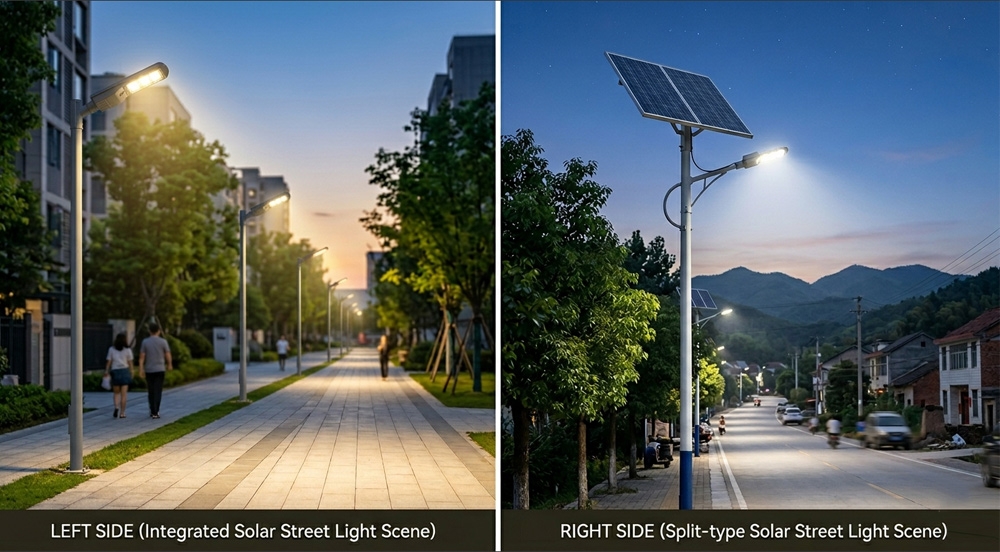
Feature | Integrated Solar Street Light | Split Solar Street Light |
Structure | All-in-one design | Separated components |
Installation | Check the supplied preassembly, mounting steps and commissioning scope | Check separate mounts, wiring, protection and commissioning scope |
Lighting power | Compare offered input, optic and photometric result for the same road | Compare offered input, optic and photometric result for the same road |
Battery capacity | Verify the selected battery, usable energy, temperature limits and access | Verify the selected battery, usable energy, temperature limits and access |
Maintenance | Check access, replaceable parts and compatible spares for the actual head | Check access, enclosures, connections and compatible spares |
Wind resistance | Verify complete head, pole and foundation for the site wind basis | Verify panel, brackets, luminaire, pole and foundation for the site wind basis |
Project scale | Determine suitability from the site and required lighting service | Determine suitability from the site and required lighting service |
Initial cost | Compare a matched bill of materials and supplied work scope | Compare a matched bill of materials and supplied work scope |
Installation Comparison (Practical View) Installation efficiency directly affects the total project cost of a solar street lighting system, especially for municipal projects, commercial developments, and remote-area deployments where labor and transportation costs are significant. An integrated assembly may arrive with fewer separate items to mount and connect. Verify the delivered scope, approved pole and foundation, lifting/access arrangements, setup and commissioning requirements. Preassembly does not remove structural review or safe electrical work. Obtain a work breakdown for the actual site instead of using a universal installation time. A split arrangement needs a coordinated panel support, luminaire mount, battery/controller enclosure and protected interconnections. Review panel orientation, shading, cable length and losses, polarity, isolation, enclosure protection and service access with the responsible suppliers and installer. Installation time depends on the offered assembly and site work; no standard duration follows from the architecture. Compare installation proposals using the same boundary: civil readiness, pole erection, equipment assembly, wiring, access, commissioning and handover. State which work each party supplies before comparing labor or delivery schedules. |
Performance and Lighting Stability Lighting performance is one of the most important factors when choosing between integrated and split solar street lights, especially for roads, parking areas, and public infrastructure projects that require reliable nighttime illumination. For an integrated layout, verify that the installed panel can collect the required seasonal energy while the luminaire meets the road-lighting criteria. Review the selected battery and controller operating limits, thermal environment and usable capacity. An integrated head is not automatically limited to a particular road category or operating duration. For a split layout, independent panel positioning can improve solar access where the mounting design permits it. A larger panel may increase collected energy under the stated conditions; size alone does not prove higher conversion efficiency or all-night reliability. Compare both layouts using the same lighting duty, weather case, losses, battery usable energy, protection limits and recharge assumptions. |
Cost Comparison on a Matched Project Basis When comparing integrated solar street lights and split solar street lights, the real decision should not be based only on the unit price. Buyers should also consider installation cost, maintenance expenses, replacement frequency, and the total lifecycle cost of the project. Compare the actual offered systems and service plans over an agreed assessment period. Component quality, civil work, access equipment, logistics, replacements and warranty scope can change the result. Neither architecture has a demonstrated cost or payback advantage without those inputs. |
Cost Comparison Factor | Integrated Solar Street Light | Split Solar Street Light |
Initial Product Cost | Identify panel, luminaire, battery, controller and included mounting parts | Identify panel, luminaire, battery, controller, enclosures and included mounting parts |
Installation Labor Cost | Price the actual mounting, wiring, setup and site work scope | Price the actual mounting, wiring, setup and site work scope |
Transportation and Logistics Cost | Use packing dimensions, quantities and the agreed transport method | Use packing dimensions, quantities and the agreed transport method |
Maintenance and Repair Cost | Identify service access, fault diagnosis, repairable parts and replacement scope | Identify service access, fault diagnosis, connectors and replacement scope |
Battery Replacement Cost | Confirm access, battery compatibility and the agreed replacement procedure | Confirm enclosure access, battery compatibility and the agreed replacement procedure |
Long-Term Operating Cost | Model inspection, cleaning, service access and agreed component replacements | Model inspection, cleaning, service access and agreed component replacements |
Total Lifecycle Cost | Compare documented costs for the same lighting service and assessment period | Compare documented costs for the same lighting service and assessment period |
A lifecycle comparison should state its assessment period and replacement assumptions. Do not turn a layout preference into a guaranteed service life, lower ownership cost or return on investment. |
Application-Based Selection Guide Choosing between integrated solar street lights and split solar street lights depends on the actual project environment, lighting requirements, and long-term budget planning. There is no single “best” option—only the most suitable system for your application. Use the application to define the performance brief and constraints, then test the offered integrated and split configurations against them. A road category or project size does not decide the architecture by itself. |
Application Scenario | Architecture decision | Evidence needed before selecting |
Residential Roads | Compare both offered layouts | Required lighting scene, panel exposure, shading and owner service access |
Rural Roads and Villages | Compare both offered layouts | Seasonal solar access, agreed night-time duty, logistics and local maintenance |
Garden Pathways and Parks | Compare both offered layouts | Pedestrian lighting criteria, vegetation growth, glare and component access |
Small Parking Lots | Compare both offered layouts | Scaled layout, pedestrian routes, controls, solar access and maintenance |
Urban Main Roads | Compare both offered layouts | Road photometry, operating scenes, seasonal energy balance and structural scope |
Highways and Express Roads | Compare both offered layouts | Authority criteria, full operating duty, solar resource and maintainable access |
Industrial Zones | Compare both offered layouts | Task criteria, environmental exposure, battery limits and service responsibilities |
Stadiums and Public Squares | Verify the lighting and energy brief first | Required distribution, glare, operating duration and complete system design |
Select the configuration whose coordinated lighting, energy, mechanical and service documents meet the project brief. Keep assumptions and deviations visible when comparing offers. |
Need a Reliable Solar Street Light Supplier? Choosing the right solar street light is not only about price, but also about long-term performance and maintenance cost. For integrated or split solar street-light proposals, send Jieyao the road layout, site and shading information, required operating scenes, panel-placement constraints and service requirements. Ask the offer to identify its exact components, calculations, interfaces and supply boundaries. We support OEM and ODM service, project-based design, fast quotation, and global export delivery. Send us your project requirements today and get professional recommendations with competitive factory pricing. customized lighting solution |
FAQ – Integrated vs Split Solar Street Lights
1. What is the main difference between integrated and split solar street lights? The main difference is component placement and the available mounting/service arrangement. Ask for a drawing locating the panel, luminaire, battery and controller. The label alone does not establish output, reserve capacity or quality. 2. Which is better for road projects: integrated or split solar street lights? Choose from the offered configurations after checking the same road-lighting criteria, operating schedule, solar access, energy balance and structural basis. Neither residential nor highway use automatically selects one architecture. 3. Are integrated solar street lights cheaper than split solar street lights? Not necessarily. Compare the actual component schedule, supplied mounting and wiring, site work, logistics and service plan. Architecture alone does not establish initial price or lifecycle value. 4. How long can a solar street light work at night? Runtime depends on the offered luminaire input and scenes, usable battery energy, solar collection, temperature/protection limits and the agreed weather case. Request a calculation for the selected configuration rather than relying on a generic hours-per-night statement.
5. Which type of solar street light is easier to install? A preassembled integrated head can reduce separate assembly tasks. Actual installation work still depends on pole and civil readiness, equipment access, wiring, setup and commissioning. Compare site-specific work scopes rather than a standard installation duration. 6. Do split solar street lights last longer? Not automatically. Service life and repair cost depend on the selected components, operating conditions, enclosure protection, access, replaceable parts and maintenance plan. Separately housed parts do not prove a longer system life. 7. Can solar street lights work during rainy or cloudy days? Either layout may use stored energy during low-sun periods when designed for the agreed duty and weather assumptions. Verify usable storage, collection and recovery, losses and low-battery control behavior for the actual configuration; the layout label does not establish reserve. 8. How do I choose the right solar street light for my project? Issue one project brief covering road geometry and photometric criteria, operating scenes, site solar access, environmental and wind conditions, mounting constraints and service responsibilities. Compare matching component drawings and calculation assumptions before selecting the architecture. |
Contact Us
Get a custom lighting solution and quotation for your project. Yangzhou Jieyao Lighting Equipment Co., Ltd. manufactures outdoor lighting and steel poles in Guoji Town Industrial Park, Gaoyou City, Yangzhou, Jiangsu, China. The company reports a 10,000 m² factory site, more than 60 employees including more than 10 technical personnel, and more than 100 production and testing machines. The present company name dates from 2017; Jieyao Poles’ published history traces the team’s manufacturing lineage to 2006. The stated 15 years of experience refers to the team. The company reports exports to more than 60 countries. Do you have any questions or requests?
Email: jay@jieyaolighting.com

Click to Chat.
Im online now.
 English
 Español
 Bahasa Indonesia
 Français