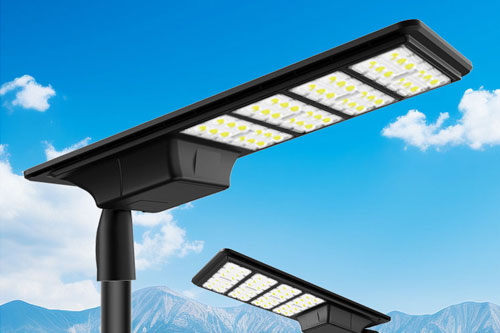


Three main lighting technologies are used in sports facilities today. The right choice depends on your energy budget,
maintenance capacity, and whether your venue hosts televised events.
Metal Halide Lamps Metal halide lamps create light by passing electricity through a gas mixture inside a bulb. Pros Lower upfront purchase cost than LED Familiar technology for most maintenance teams Cons Takes 15-20 minutes to reach full brightness Must cool completely before relighting (restrike delay) Creates uneven light with hot spots and dark areas Shorter lifespan of 6,000-15,000 hours Light quality degrades and shifts color over time High energy consumption Contains mercury, requiring special disposal Poor dimming capability | High-Pressure Sodium (HPS) Lamps HPS lamps are more efficient than metal halide but produce an orange-yellow light that distorts colors. Pros More energy efficient than metal halide Longer lifespan than metal halide Cons Poor color rendering makes everything look orange Not suitable for sports where players need to see accurate colors Same warm-up and restrike delays as metal halide Limited dimming options |
| LED Flood Lighting LED sports lights generate light by passing current through semiconductors. Pros 50-75% lower energy consumption than metal halide Instant on/off with no warm-up time Excellent light uniformity across the field 50,000+ hour lifespan (roughly 11 years at 12 hours daily use) High CRI (80-90+) for accurate color rendering Flicker-free for broadcast cameras Works well with dimming and smart controls Functions in temperatures from -30°C to +55°C No mercury or hazardous materials Multiple beam angles for precise light placement Lower long-term maintenance costs Cons Higher upfront cost (typically offset by energy savings within 2-4 years)
|
Types of Sports Field Lighting Fixtures
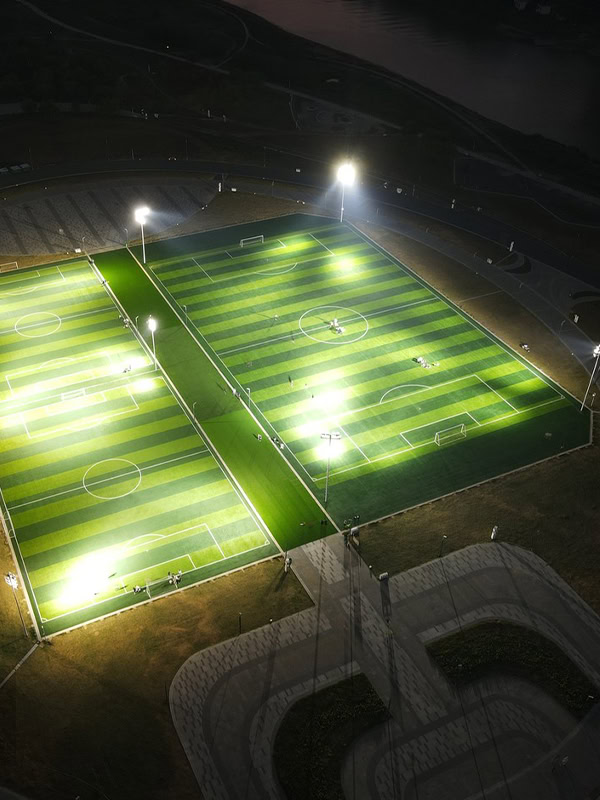
Based on the comparison above, Flood lights are the clear choice for sports field lighting.
JIEYAO Light offers several fixture series designed for different venue sizes and competition levels.
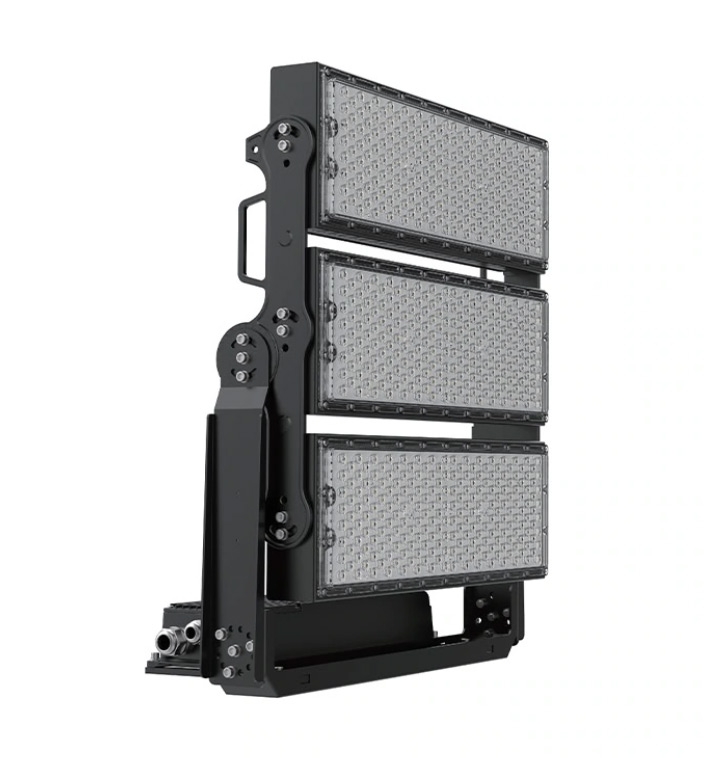
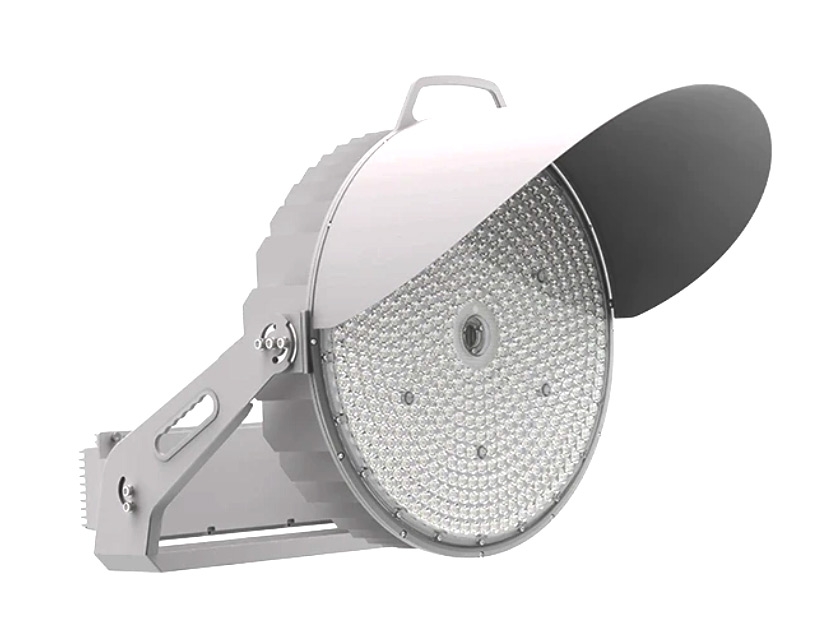
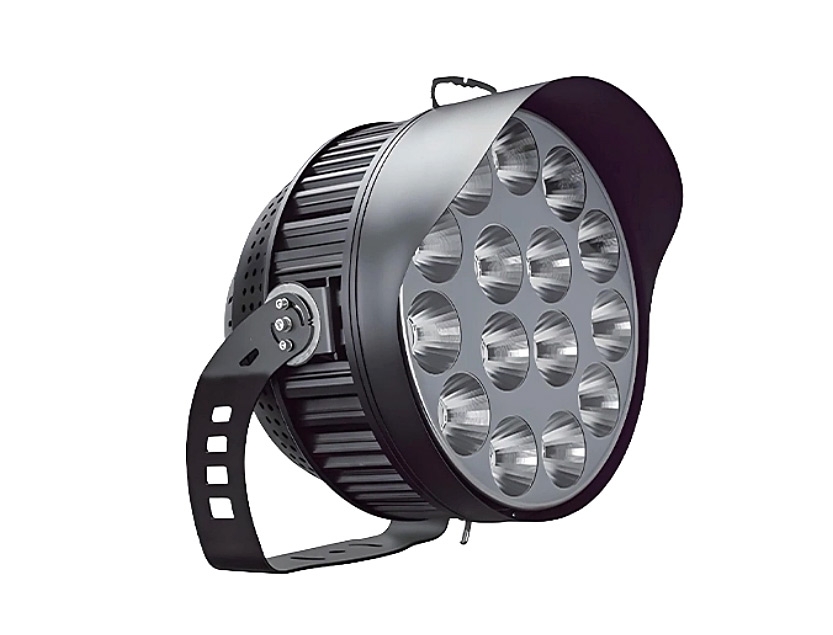
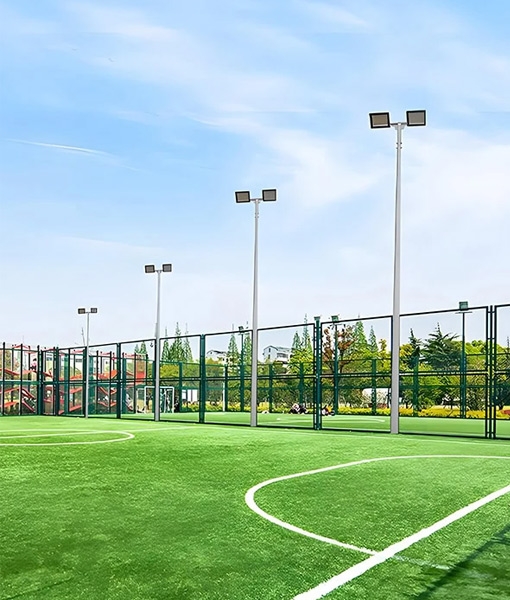
| High-Power Stadium Lights (1000W-1500W) These fixtures are built for full-size football and soccer fields, professional stadiums, and venues hosting televised events. The JIEYAO Series LED Sports Lighting delivers up to 170lm/W efficiency with IP67 waterproofing and 10kV lightning protection. Specs: Wattage options: 500W, 600W, 1000W, 1200W, 1500W Beam angles: 8° to 60° Dimming: 1-10V, PWM, DALI, DMX512 Protection: IP67 waterproof, IK10 impact resistant Best for: Professional football/soccer fields, regional stadiums, broadcast venues |
Medium-Power Sports Lights (500W-750W) The JY SeriesSoccer Field Lights uses CITIZEN COB LEDs options of 80 or 90 for superior color accuracy. The modular design means if one component fails, you replace just that module instead of the whole fixture. Specs: Wattage options: 500W, 600W, 750W, 1000W, 1200W, 1500W Efficiency: 130lm/W Beam angles: 15° to 60° Protection: IP65 waterproof Best for: Tennis courts, basketball courts, training fields, recreational facilities, multi-purpose venues |
|
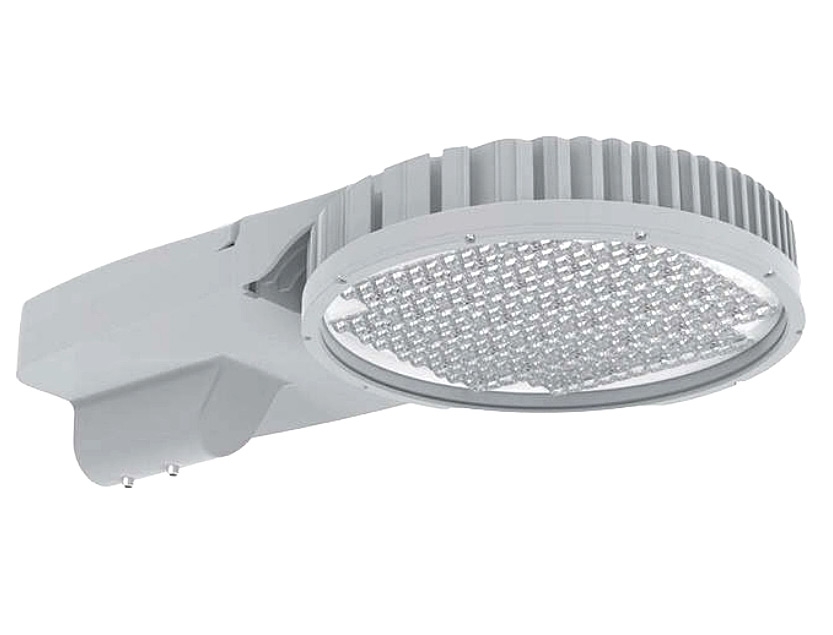
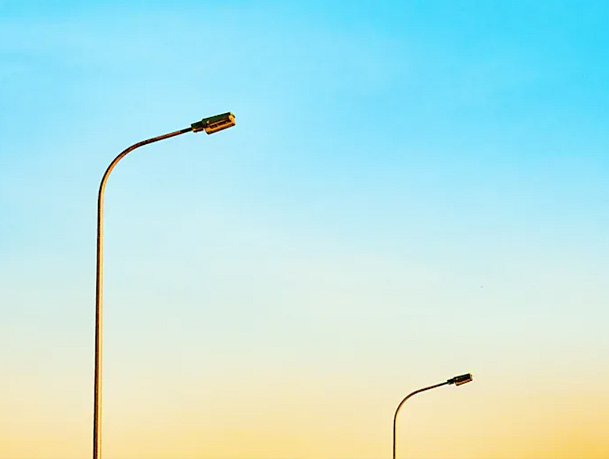
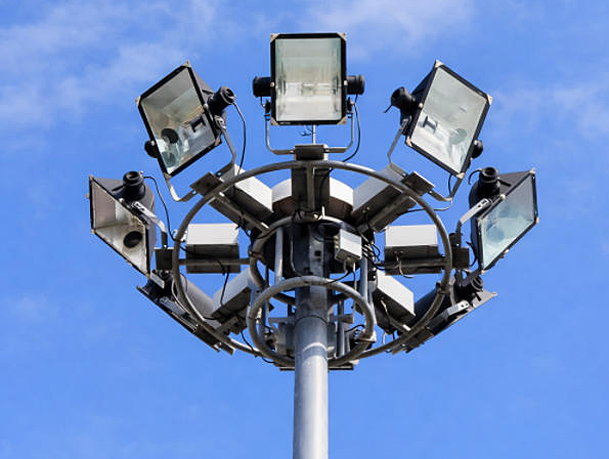
| High Mast Stadium Lighting (400W-800W) For venues with tall poles (25-40 meters), the J-Y Series High Mast Stadium Lighting provides the narrow beam angles needed to project light accurately over long distances while maintaining uniformity across the playing surface. Best for: Large professional stadiums, airports, ports, international competition venues |
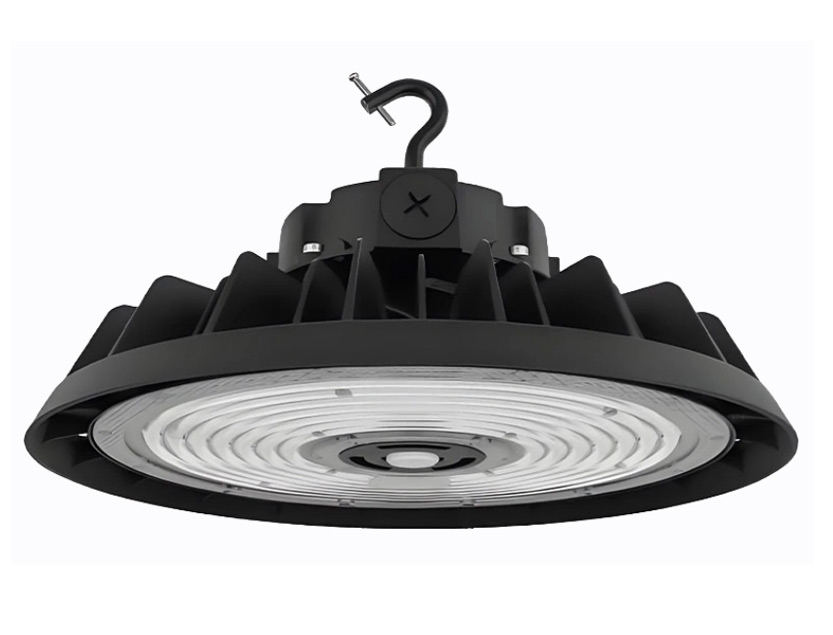
Indoor Gymnasium Lighting For indoor basketball courts, volleyball gyms, and multi-sport facilities,LED High Bay Lights provide the high-output, glare-controlled illumination needed for indoor play. Look for fixtures with anti-glare optics since gymnasium floors are typically reflective. Best for: School gyms, recreation centers, indoor sports halls, basketball and volleyball courts |
|
Don’t Settle For Less Saving a few bucks by buying low-quality lights can cause you trouble in the long run. Always go for a well-reputed lighting company as they have a low malfunction rate of stadium lights. You might have multiple LED lights options to choose from but make sure you pick the most reliable one.
Cost-Effective And Long-Lasting of stadium lights Next up, the factor that matters the most is the cost of the lighting. Cutting down the expenses is among the many reasons why LED lights are becoming so increasingly popular. It is wise to invest in LED lights with a smart control system as it reduces energy consumption to up to 90 percent.
Moreover, with a smart system, you can adjust the lighting and schedule time when the lights turn on and off. Since LED stadium lights require little manual operation, they come with a longer lifespan. Irrespective of the type of LED lights that you choose for the stadium, they should offer high-quality light output with efficiency.
Glare Of The Lighting Although glare is rarely taken into consideration, it plays a vital role in football field lighting. High glare values result in visual discomfort, and the players face trouble in keeping track of the fast-moving ball.
Choosing a high-quality brand of LED lights means that you will receive lights with an advanced lens. LED stadium lights have low glare to enhance focus on the light beam when needed and decrease light leakage.
Football stadium lighting is a blend of art and science, so you need to be considerate when choosing the lights. Various stadiums all across the world are working on football stadiums with green initiatives. With LED lights, not only you can have the perfect stadium lighting but also promote eco-friendliness.
Tv Broadcast What’s the use of investing a hefty amount in lighting when it won’t show clearly on TV? With the evolving era of 4K and HD broadcasting, if you want your audience at home to enjoy the match as much as the fans in the stadium, the football field lighting should be top-notch.
Metal halide lights might appeal as a cheaper alternative, but it can affect the TV broadcast. The lights will work perfectly for the fans in the scene, but the experience won’t be good for those watching at home. This is why your football stadium should embrace LED technology.
Precise Angle And Adjustment sports lighting The beam angle determines the distribution of the light. The led stadium lights that you choose should have the right beam angles. The angle adjustment makes a tremendous difference when balancing the brightness with uniformity of light.
It is better to go for LED lights that allow you to adjust the lights’ mounting brackets. You can then use the precise aiming feature to direct light at exactly where it is needed. If the beam angle is narrow, the light uniformity will be low. But with a wide angle, the regularity of light is high.
Therefore, your chosen LED stadium light should have a proper beam angle to ensure a balance throughout the stadium.
Resistance To External Conditions As the stadium lights are installed outdoors, they should manage different weather conditions like wind or rain. If the lights lack resistance to the outdoor environment, it will affect the lights’ operating system as humidity or water can damage them. Put these factors in special consideration, so in the future, whether it is windy or raining heavily, your LED stadium lights will continue to function at full capacity. Check the lights’ ratings beforehand to ensure that the lights will not disappoint you in harsh weather.
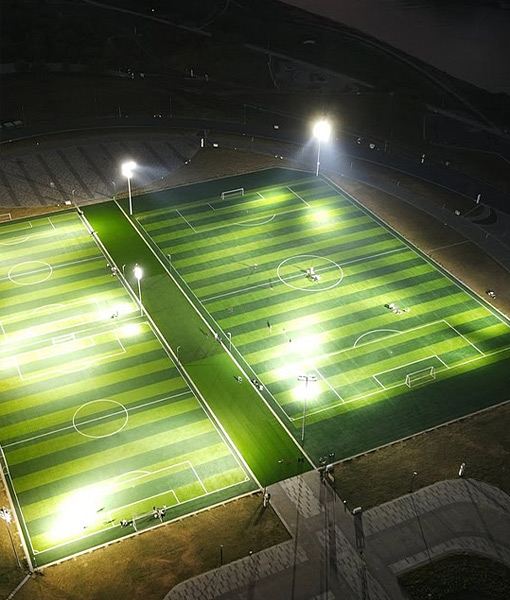
Better Game Experience with stadium lights Metal halide lights create dark and bright spots all over the place. This is a disadvantage of the player when he is trying to keep track of the ball’s speed. By replacing the old-style stadium light with modern, efficient LED lights, you can elevate both the spectators and players’ experience.
Heat Dissipation LED stadium lights do not work like the LEDs installed all around our house. As these lights consume a significant amount of power, so heat dissipation is also high. Overheating can easily damage stadium lights.
But a sound lighting system comes with proper ventilation. So, when you are out searching for lights for the stadium, try to look for the ones made from pure aluminum. Aluminum has the highest conductivity rate; hence it will keep your LED stadium lights from being damaged by overheating.
Conclusion We hope that our guide above will help you choose the best led stadium lights for your football field. Low glare, uniform illumination, lenses, fixture, and precise pole, are the factors that decide how well the lights will perform. So, if your LED stadium lights tick off all these boxes, then they are ready to light up your stadium like never before. Get Your Stadium Lighting Solution |
|
|
Looking for a durable lighting solution for your next project ?
Request a technical datasheet and a competitive quote,get project quotation
Contact the Jieyao team at [ Phone: +86 13815843784 /WhatsApp: +86 13815843784 ]
or visit our official site:www.jieyaolighting.com
FAQ: Essential Guide to Football Field Floodlights
1. Why should I switch from Metal Halide to LED stadium lighting for my football field? Traditional metal halide lamps lose brightness quickly and consume excessive power. Upgrading to LED stadium lighting reduces energy consumption by approximately 50%–70% while providing instant-on capability—no more waiting for lights to warm up before a match.
2. How many watts are typically needed for a standard football field lighting project? The wattage depends on the level of play (amateur vs. professional). Generally, a high-efficiency LED football field light ranging from 400W to 1200W per fixture is used. Our team recommends a professional Dialux simulation to determine the exact wattage for uniform coverage.
3. What is the ideal mounting height for football stadium floodlights? For optimal light distribution and minimal glare, stadium floodlights are typically mounted on poles between 15 and 30 meters high. The correct height ensures the beam angle covers the pitch evenly without blinding the players or spectators.
4. How do LED sports lights handle extreme outdoor weather conditions? Durability is a major concern for outdoor venues. Professional outdoor sports lighting must have an IP65 or IP66 waterproof rating. High-quality fixtures from Jieyao Lighting also feature advanced thermal management to prevent overheating in hot climates.
5. What is "Glare Control," and why is it critical for football players? Glare can distract players and ruin the spectator experience. We use specialized optical lenses in our LED sports floodlights to direct light precisely onto the grass, reducing "spill light" and ensuring the beam doesn't interfere with a goalkeeper’s vision during high balls.
6. Do your stadium lights meet the requirements for 4K TV broadcasting? Yes. For televised matches, flicker-free LED lighting with a high Color Rendering Index (CRI > 80 or 90) is essential. This ensures the camera captures vivid colors and smooth slow-motion replays without the "strobe effect" common in cheaper LEDs.
7. What is the expected lifespan and maintenance cost of LED football lights? One of the biggest pain points for stadium owners is the cost of high-altitude maintenance. Quality LED stadium fixtures last over 50,000 hours, meaning you can go a decade or more without replacing a bulb, significantly lowering your long-term operational overhead.
8. Can I use my existing poles when upgrading to LED stadium lights? In most cases, yes. Our LED floodlights are designed with adjustable brackets and various weight options to be compatible with existing infrastructure, saving you the massive cost of installing new lighting poles.
9. What is the difference between Beam Angle and Light Uniformity? Beam angle determines how wide the light spreads, while light uniformity ensures there are no dark spots on the pitch. A professional football field requires a mix of narrow and wide beam angles to create a seamless, professional playing surface.
10. Are there smart control options available for LED stadium lighting systems? Modern systems support DMX or DALI dimming. This allows stadium operators to adjust brightness levels for different activities—such as full power for a championship match or dimmed settings for routine football training—further maximizing energy savings. |
Contact Us
Get a custom lighting solution and quotation for your project. Outdoor lighting manufacturer in Yangzhou, ChinaAbout Jieyao LightingYangzhou Jieyao Lighting Equipment Co., Ltd. is an outdoor lighting manufacturer focused on solar street light systems and high mas... Do you have any questions or requests?
Email: jay@jieyaolighting.com

Click to Chat.
Im online now.