English
 Español
 Bahasa Indonesia
 Français

- Product details
-
HIGH MAST LIGHTING · PROJECT SYSTEMS
Plan the lighting, structure and maintenance as one system.
A coordinated high mast package starts with the working area and the way it will be serviced.
Jieyao supplies high mast lighting assemblies for large outdoor areas, with the mast, headframe, floodlights, electrical equipment and foundation interface defined around the project. This page helps select the system and organize a usable project enquiry.
Use the high mast equipment range to compare physical package options. Here, the key decision is how the proposed arrangement will illuminate, fit and serve the site.
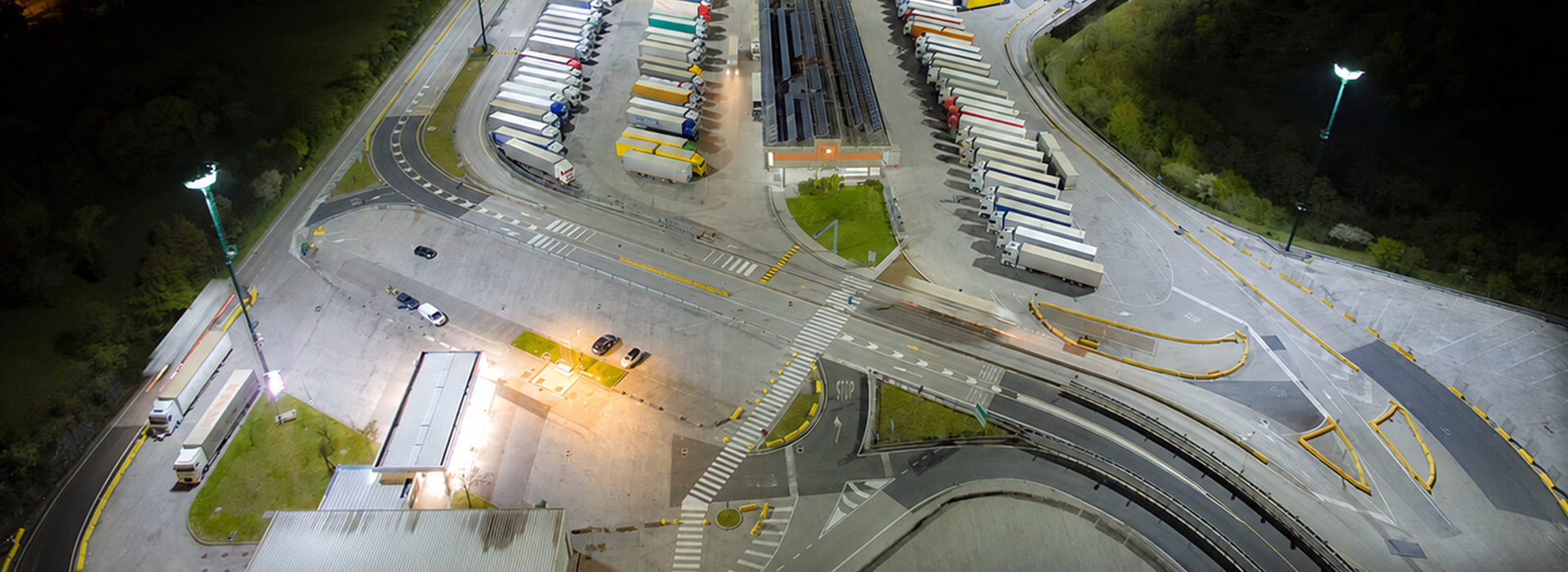
Discuss your project ↗Elevated lighting positions serving a road interchange.01 · SITE USE
Choose the layout around the work after dark
A high mast can serve a broad area from a small number of elevated positions. This is useful where extra pole locations and foundations would interfere with circulation. The benefit still depends on what the light must reach and what can obstruct it.
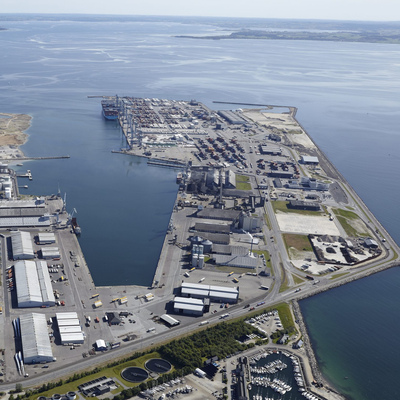
Ports and handling areas
A terminal combines open routes with obstructed handling areas.Containers, equipment and stored materials can block light. Identify the horizontal routes and vertical working surfaces that matter, then review shadows and glare from operator positions.
The container-terminal lighting guide addresses stack shadows and task planes; do not treat an open-yard calculation as a terminal design.
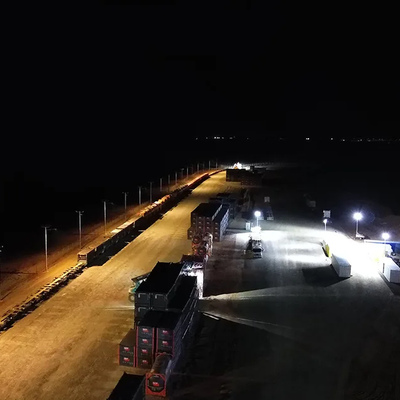
Logistics yards and large open areas
High-level lighting across a distribution yard.Compare vehicle routes, loading positions, pedestrian movement and surrounding properties. A high mast may reduce the number of obstructions on the ground while creating different glare and maintenance considerations.
For a narrow road corridor, conventional road poles may remain more practical. Compare the alternatives against the same lighting and access requirements.
Height alone does not guarantee coverage or uniformity. Existing 20m interchange and yard and 35m port and interchange product examples are starting references, not universal configurations.
02 · SYSTEM SCOPE
Define what “high mast light” includes
A price can describe a mast, a floodlight or a coordinated system. Keep these scopes visible when comparing offers, particularly where separate contractors supply civil works and electrical installation.
Part of the system What must connect Useful project document Mast and base Shaft sections, base plate, anchors and the accepted loads General arrangement, section schedule and foundation reactions. Headframe or lighting ring Lamp positions, brackets, aiming range and cables Headframe drawing with the actual fixture schedule. LED floodlights Optic, output setting, mass and projected area Model data, photometric file and mounting drawing. Electrical equipment Power circuits, control duties, isolation and cable routes Single-line diagram and control schedule. Maintenance provision Access at height or a defined lowering system Access plan and the relevant equipment instructions. Civil interface Base reactions, anchors and actual ground conditions Accepted pole/anchor interface and the responsible civil design. On a phone, swipe the table sideways to read all columns.
The fixed or lowering mast package addresses the supplied steel-and-lighting assembly. Steel lighting rings and headframes are a separate component enquiry when the project already defines the rest of the system.
03 · LIGHTING LAYOUT
Select the target surfaces before the floodlight count
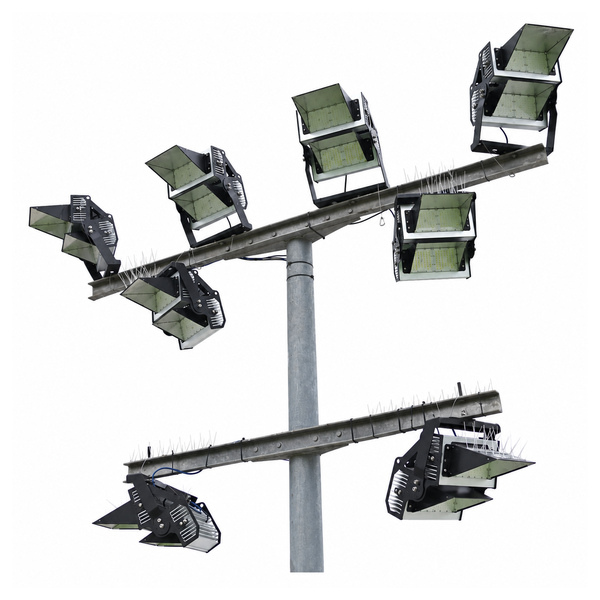
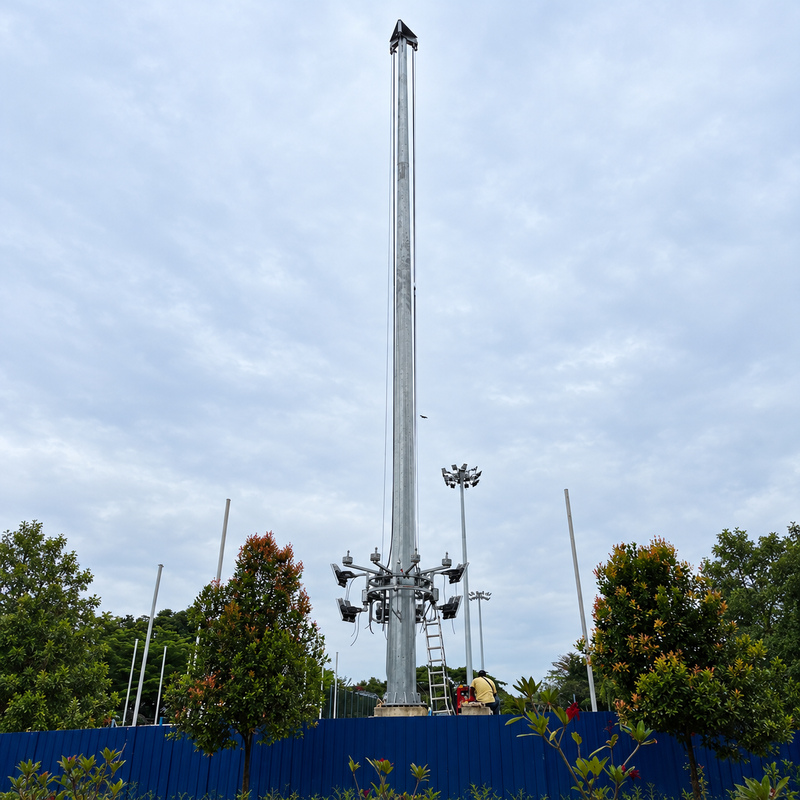
Floodlight positions and aiming directions are part of the headframe layout.Use an accurate site plan with working zones, traffic movement, obstacles and project criteria. A road interchange, port and sports venue have different target surfaces and sensitive viewing directions. One wattage or lumen total cannot represent those tasks.
Test mounting positions and exact optics in a photometric layout. Record the lamp orientation and output setting with the mounting height and aiming direction, so the site arrangement can be checked against the model.
Review glare and spill towards drivers, operators, neighbours and other sensitive areas. Ask how obstructions and a failed fixture affect the important parts of the site. The aiming and glare checklist supports the later commissioning review.
Put switching and any dimming sequence in writing. A yard may have separate activity zones, while a junction may need a consistent operating schedule. Define the response to power or communications faults where that is part of the control requirement; do not assume every package includes a particular protocol.
04 · STRUCTURE & CIVIL WORKS
Coordinate the steel assembly with the foundation
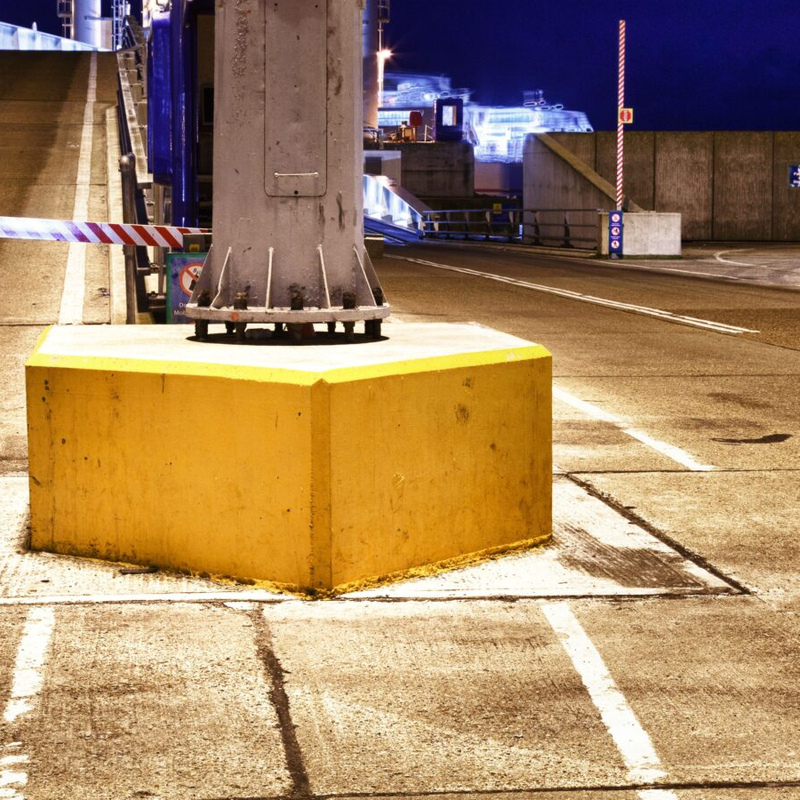
The mast base and civil foundation form a shared interface.The mast carries the headframe, lamps, cables and any selected lowering equipment. Its design basis includes the site wind definition, exposure, topography, equipment mass and projected area. A changed floodlight, bracket or aiming arrangement can change the loading.
The civil design also needs the actual ground information and foundation reactions. A generic height table cannot establish a footing or anchor cage for an unknown site. See high mast foundation inputs and wind and fixture EPA for the relevant review topics.
Agree the material and protective finish for the exposure and maintenance plan. Identify the coating system, inspection method and repair arrangements; a universal corrosion-life promise would hide those differences.
Review transport and erection before releasing the steelwork. Section lengths, joint details, the longest package, crane position, overhead clearances and access restrictions can affect the arrangement. Where professional engineering approval is required, assign that scope to the responsible project professionals.
05 · MAINTENANCE
Choose access before the site is built
A luminaire carriage at a low service position.The owner needs a practical way to reach the luminaires. A fixed headframe can suit a site where an approved lift or climbing arrangement is workable. A lowering ring brings the lighting assembly down but adds a drive, suspension, cable-management and engagement system to inspect.
Compare the actual clear space, traffic management and personnel responsibilities. A site that cannot position access equipment may favour lowering; a lowering system still needs its own protected operating zone and documented maintenance.
The fixed-versus-lowering comparison covers the choice. The raising and lowering system page explains the mechanism and service interfaces.
Planning question Fixed headframe Lowering ring Routine access Approved means of reaching the fixtures at height. Clear lowering area and accessible drive/control position. Equipment care Structural connections, lamps, wiring and access provisions. Those items plus suspension, moving cable path, guides and engagement system. Owner handover Access method and maintenance instructions. Matched system instructions, operating limits, inspection requirements and training scope. On a phone, swipe the table sideways to read all columns.
Compare the maintenance arrangements as part of the operating cost and access plan. Initial purchase price alone does not show whether the owner can service the installation efficiently.
06 · COORDINATED RELEASE
Keep drawings and calculations on the same revision
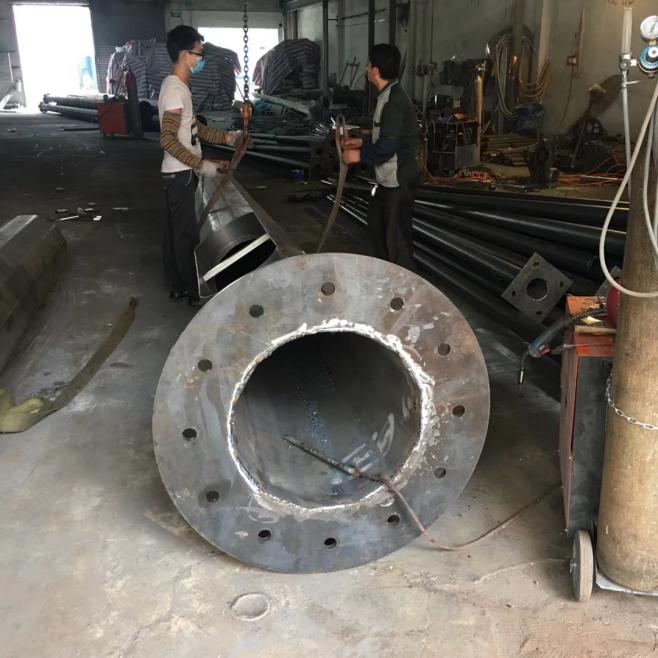
Steel sections and base-connection fabrication.- Define the task. Confirm the site plan, target areas and applicable project criteria.
- Test the lighting layout. Compare mast positions, optics, height and aiming.
- Fix the provisional equipment schedule. Identify fixtures, brackets, frame and service arrangement.
- Coordinate structure and civil interfaces. Review loads, base reactions, anchors and ground conditions.
- Release the connected package. Align power, controls, access, shipment and erection documents.
The sequence is iterative. If a mast moves to avoid an underground service, check its new lighting coverage and foundation position. If a lamp changes, check its photometric and structural inputs. A current bill of materials alone does not close these interfaces.
Retain assembly drawings, the accepted lighting model, structural basis, electrical/control documents and maintenance instructions with the delivered equipment references. Agree the required inspection and commissioning records. The installation hold-point guide helps organize the site handover without replacing the selected product instructions.
COMMON QUESTIONS
Questions that change the system choice
Is a taller mast always better?
No. Height changes reach, glare, structural demand, foundations and maintenance. Compare layouts against the same site criteria rather than selecting the tallest mast available.
Can the system be converted to LED later?
Review the existing structure, headframe interfaces, wiring and controls alongside the proposed fixtures. Inspect the asset and compare loads and lighting results; see the LED high mast retrofit guide.
Send a project brief that connects the interfaces
Provide the scaled site plan, working areas, lighting criteria, proposed mast positions or constraints, site location and structural design basis. Include the maintenance preference, available power, control duties and civil information.
State which party supplies the mast, lamps, ring or headframe, lowering equipment, anchors, foundation design and installation. Jieyao can organize a proposal around a defined equipment schedule and the project inputs that still need confirmation.
Request a project proposal ↗ -
-