

 English
 Español
 Bahasa Indonesia
 Français

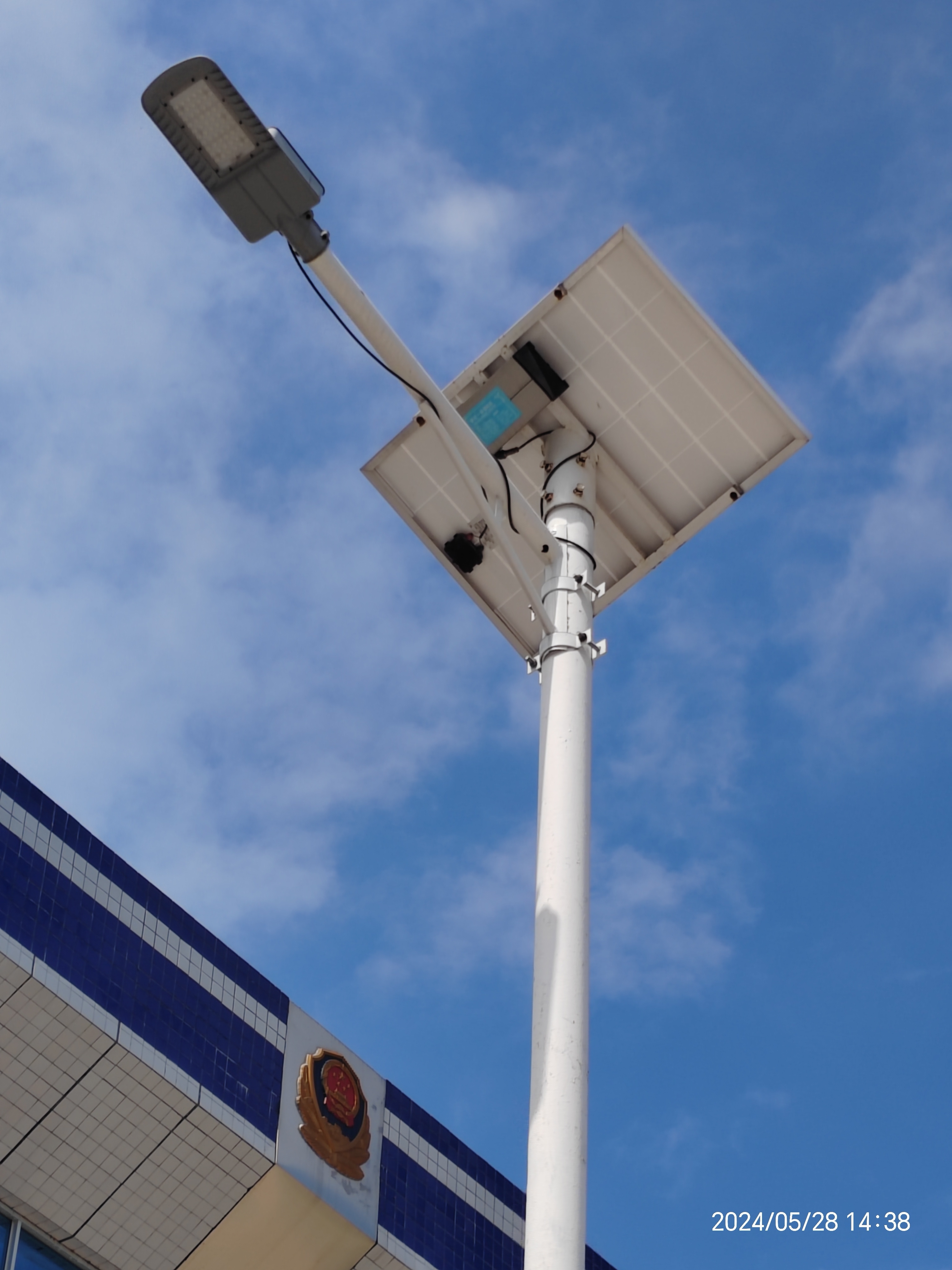
- Product details
-
Product focus: A project-configured split solar street light combines a separate PV module, LED luminaire, battery, controller and steel support. Buy the matched component schedule, mounting arrangement and operating profile together; a lamp wattage label alone does not define the system.
Split solar lighting with a defined component schedule
This product scope covers the solar lighting equipment and its coordinated mounting arrangement. Jieyao product materials include separate PV modules, luminaires, controllers, battery enclosures and steel pole drawings. The selected order identifies which items are supplied together, which components are buyer-supplied and how they connect. Pole-only enquiries belong to the separate solar-pole product page linked below.
A split configuration places the photovoltaic module separately from the luminaire. This allows the panel orientation and light direction to be considered independently, within the limits of the selected support design. It also creates more interfaces to specify: panel-to-bracket, bracket-to-pole, battery mounting, controller wiring and luminaire attachment. Those details are part of the supplied product rather than installation assumptions.
Component Configuration field Order document LED luminaire Exact model, measured operating input, optic, mounting and dimming Luminaire data and photometric file PV module Module model, rated power, electrical values, dimensions and fixing holes Module datasheet and support drawing Battery Chemistry, nominal voltage, Ah / Wh, enclosure and protection Battery specification and mounting detail Controller Compatible voltage, charge method, load control and programmed schedule Controller data and settings record Steel pole and supports Geometry, arm, panel bracket, base and cable route Released pole and bracket drawing Cables and accessories Connectors, lengths, protection and supplied hardware Wiring diagram and counted parts list 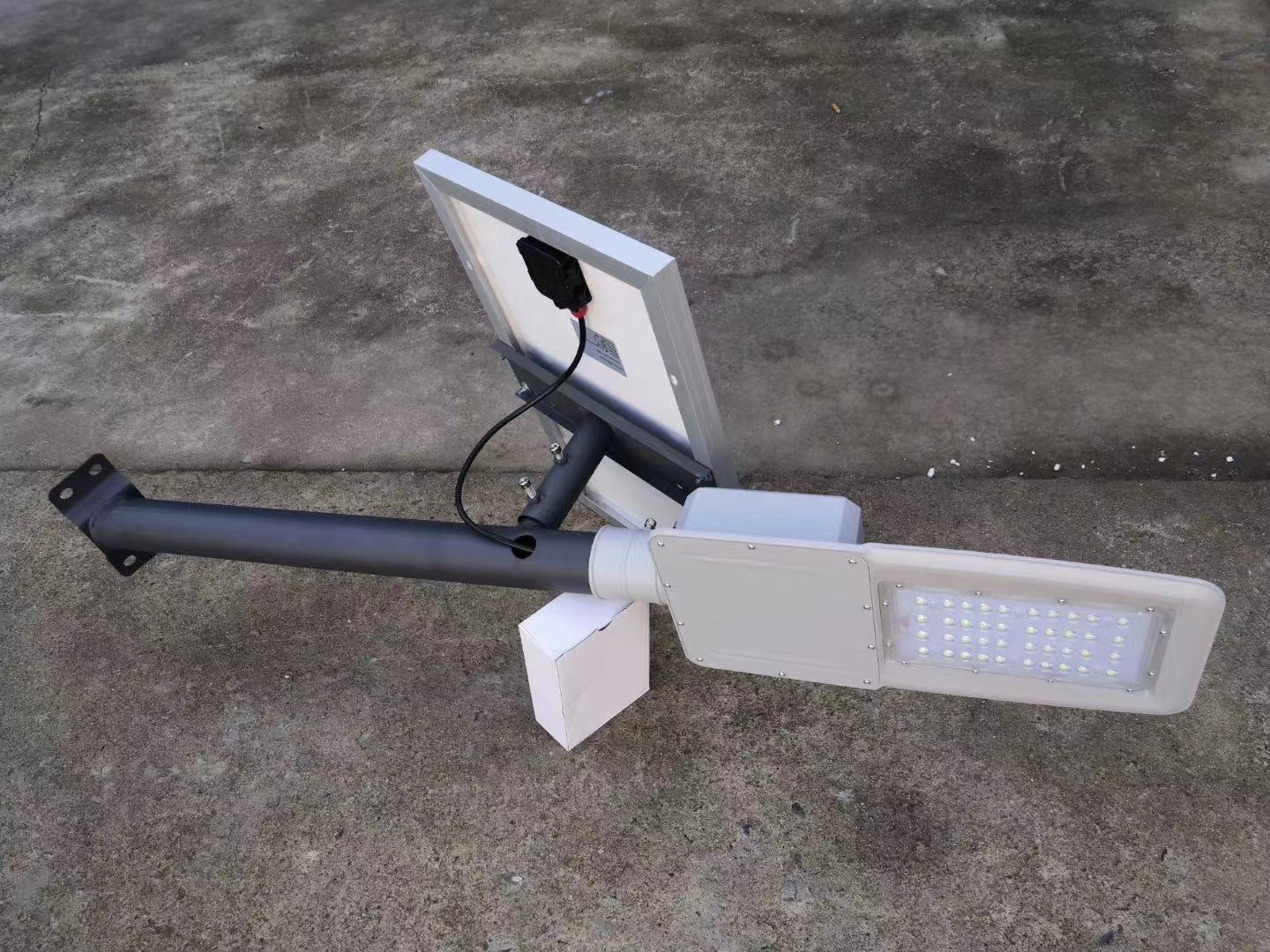 Separate-component product reference; the photographed parts are not represented as the exact equipment fitted to every pole.
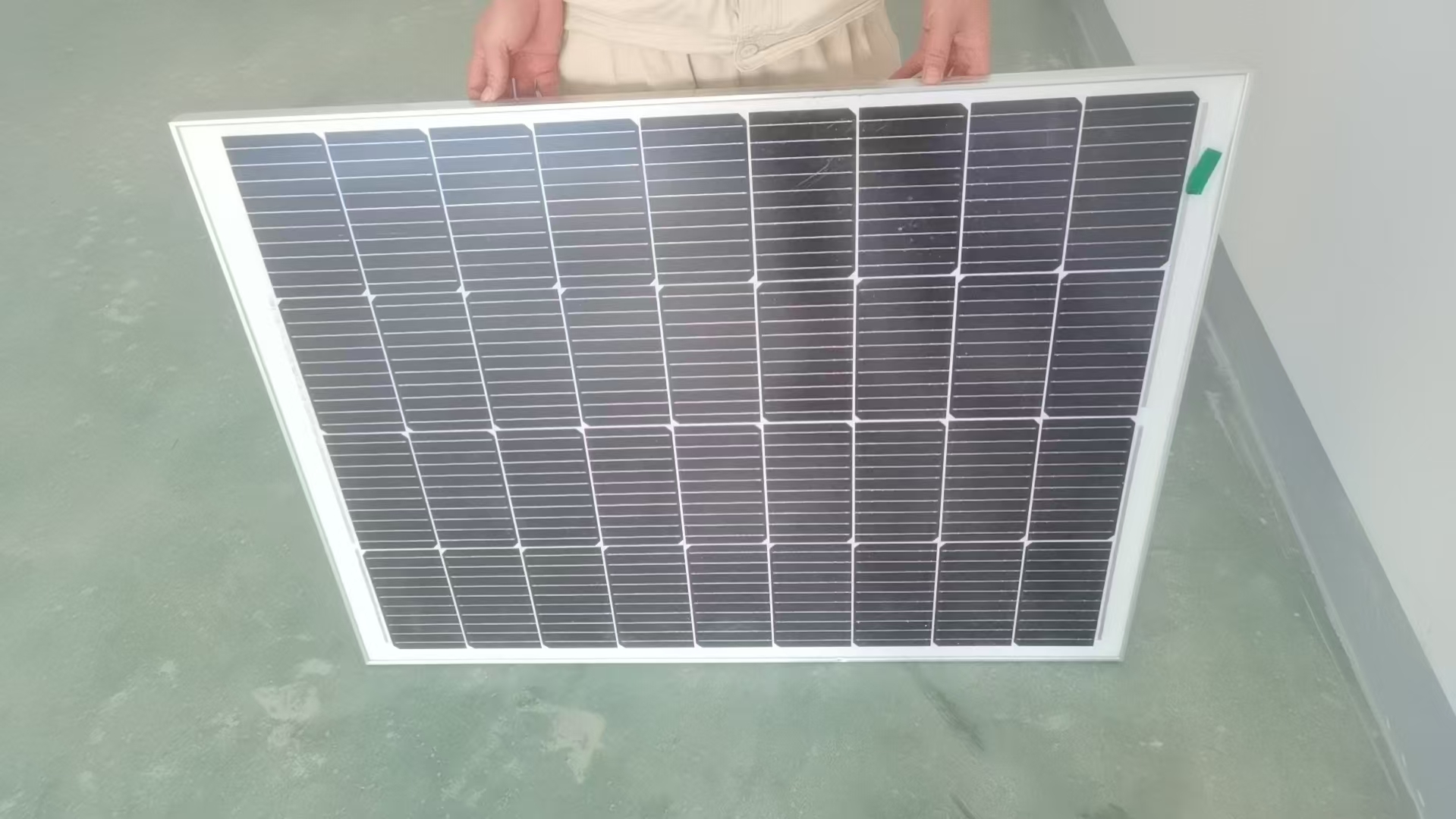 PV module reference. Use its actual datasheet and mounting dimensions for the selected system.
Archived 7 m configuration: dimensional reference
A Jieyao 7 m solar street-light drawing provides a documented reference for the pole and component arrangement. Its dimensions are stated below as drawing values. They are not dimensional measurements from delivered samples, and the drawing does not establish the energy performance of a new project.
Drawing field Recorded value Interpretation Pole height 7,000 mm Round tapered pole shown Shaft diameters Ø60 mm top / Ø140 mm bottom Circular dimensions Wall thickness 2.5 mm Specific archived drawing value; not a general thickness offer Arm Ø60 mm; 1,200 mm; 15° noted Geometry belongs to this configuration Flange 260 × 260 × 12 mm Four Ø24 mm holes; M18 anchors noted Surface finish Hot-dip galvanizing plus white pure-polyester powder Drawing-specified finish, not an inspection result PV module label 120 W monocrystalline Module rating shown on drawing Battery label 12 V / 40 Ah lithium battery 480 Wh nominal by voltage × capacity LED label 120 W Drawing label; measured operating input is not established here 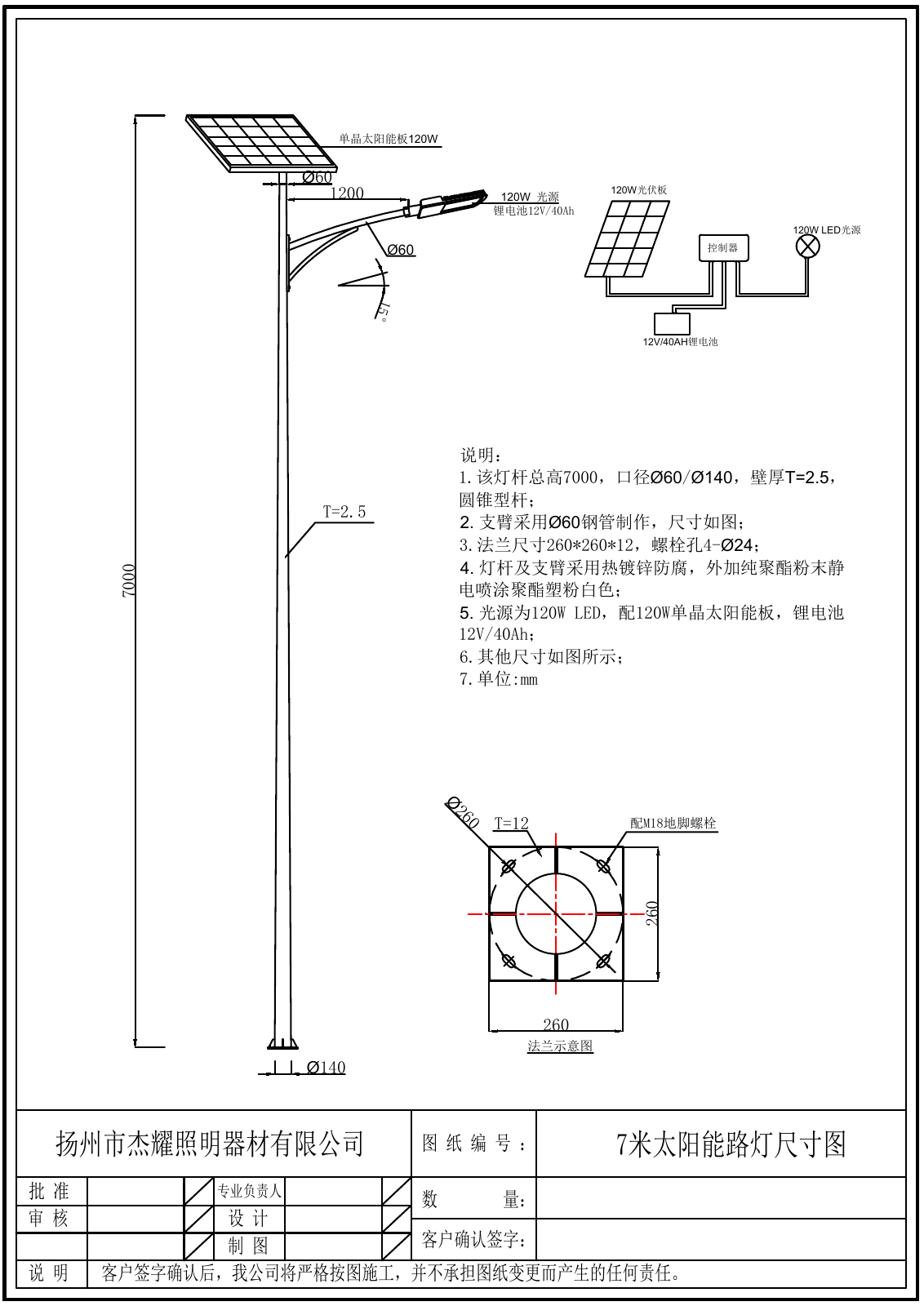 Archived 7 m configuration drawing: mechanical dimensions and component labels are distinguished from tested system performance.
This archived shaft has a 2.5 mm wall. It must not be described as meeting the separate enterprise steel-pole standard where that standard requires a minimum 3 mm wall. A new order uses its own agreed structural specification and released drawing. The archived dimensions are useful for identifying the arrangement, not for bypassing the project structural review.
The battery label gives 12 × 40 = 480 Wh nominal energy. Usable energy is lower after considering the allowed depth of discharge, conversion losses, temperature and battery condition. The luminaire label is not proof of continuous 120 W input. No full-night or multi-day autonomy promise is made from these labels; the actual operating input and programme are required to calculate a credible system schedule.
Electrical matching and the lighting programme
Specify the LED operating input at each programmed stage, not only the headline lamp rating. For example, a programme can have an early operating period and a later dimmed period. Each stage contributes its own watt-hours. The selected controller and luminaire must actually support that programme; a dimming percentage should be linked to measured input rather than treated as a guaranteed linear relationship.
Matching check Required product information Reason Battery / controller voltage Nominal system voltage and supported charging range Prevents incompatible charge and load operation PV / controller compatibility Module open-circuit voltage, current and controller limits Power rating alone cannot establish electrical compatibility LED / controller interface Driver input, output type and dimming method Avoids a controller that cannot operate the selected luminaire Nightly energy Measured watts × hours for each stage Defines the daily load to be supported Usable storage Nominal Wh adjusted to the agreed operating limits Distinguishes label capacity from available energy Local generation Location, season, shading and PV orientation Tests whether the selected panel can replenish the planned load Battery Ah is comparable only when voltage is also known. A 40 Ah rating at one voltage does not contain the same nominal energy as 40 Ah at another voltage. Battery chemistry, protection, charging limits and temperature constraints also affect the selected equipment. The battery schedule should therefore identify the actual product rather than a capacity number alone.
The design inputs include the project location and the limiting season, operating hours, light output requirement, shading, autonomy requirement and maintenance access. These inputs guide the component selection. A panel that physically fits the bracket may still be too small for the requested energy duty; a larger module may require a revised bracket and shaft design.
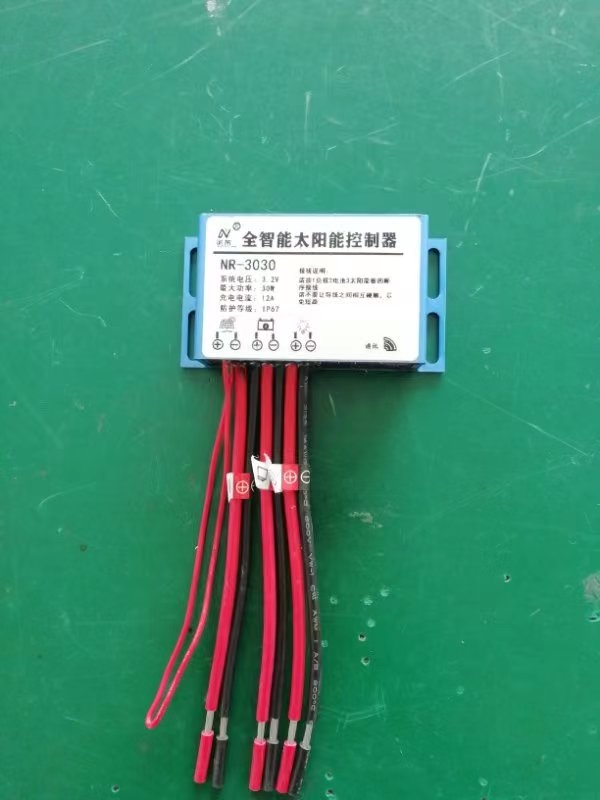 Controller reference from the supplied product archive. The order-specific wiring diagram identifies the actual connectors and settings.
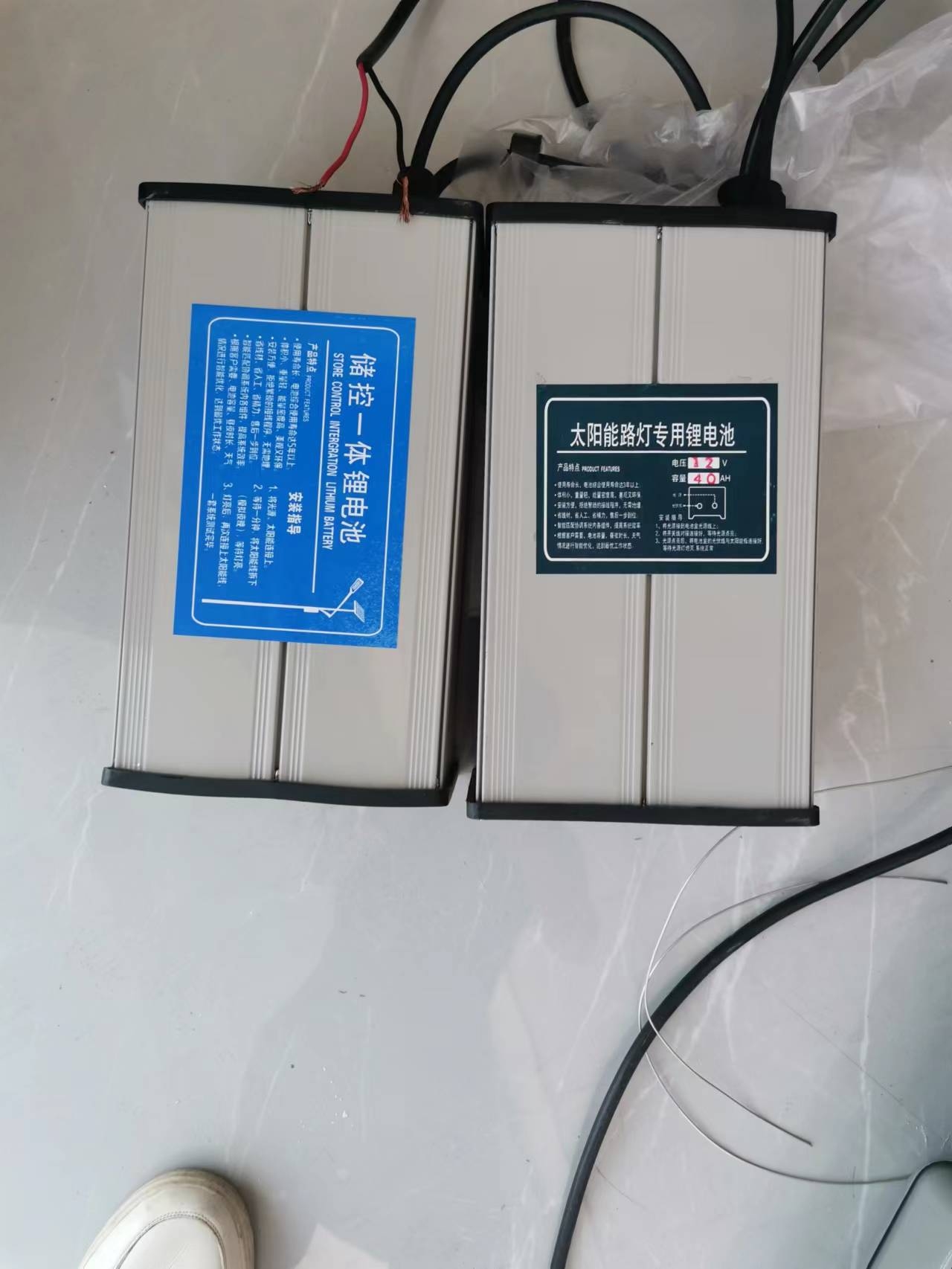 Battery enclosure examples. Voltage, capacity, chemistry and protection belong to the selected battery specification.
Pole, panel bracket and battery location
Record the panel dimensions, fixing-hole positions, tilt and orientation with the bracket drawing. The panel is an additional attachment with its own mass and projected area; its effect on the support should be included in the structural design. The light arm and panel bracket should not be repositioned on site without checking the approved arrangement.
Battery location affects service access, cable length, environmental exposure and the pole equipment load. A pole-mounted battery needs a defined enclosure and attachment; a separately located enclosure needs its own cable and installation arrangement. The controller position should permit connection and maintenance according to its instructions. Do not infer an enclosure rating from a product photograph.
At the base, coordinate the flange, anchor template, cable entry and earthing detail. Solar power does not remove the need for the electrical protection and earthing arrangements required by the local design. Foundations and site installation are separate scope lines unless the accepted quotation specifically includes them.
Production checks and handover documents
Check stage Product check Record Steel fabrication Pole dimensions, bracket fit, weld appearance and base interface Drawing-referenced inspection Surface protection Specified finish, coverage and measurement scope Order-specific coating record Component identification Luminaire, module, battery and controller models Bill of materials and nameplate register Assembly / wiring Polarity, connector fit, cable routing and supplied protections Assembly and wiring checklist Programme verification Actual settings and operating sequence Controller programme record and agreed function check Packing Matched pole marks, brackets and electrical equipment Counted packing list and installation documents A steel-pole inspection report does not certify the complete solar electrical system. Likewise, a component certificate applies only within its own product and standard scope. For destination compliance, the document register should identify each applicable holder, model, standard and report, and distinguish product evidence from company credentials.
Before dispatch, align the bill of materials with the physical shipment. Label loose panel brackets, arms, batteries, controllers and cables so site teams can associate them with the correct pole marks. Provide the released mechanical drawing, wiring arrangement, programme and relevant maintenance information for the selected equipment. These records are more useful than a generic claim that every kit is “complete”.
Frequently asked questions
Does this page sell only the pole?
No. This scope addresses a coordinated split solar lighting configuration. Steel-pole-only supply is listed on the separate solar street-light pole page.
Does the 120 W drawing label mean 120 W all night?
No. The archived label does not establish measured input or a nightly programme. The selected luminaire input and controller schedule are needed for an energy calculation.
What does 12 V / 40 Ah mean in watt-hours?
It gives 480 Wh nominal by multiplication. Usable energy and supported operating time depend on battery limits, losses, temperature and the actual lighting duty.
Can the panel face a different direction from the light?
A split layout can allow separate orientation, but the approved bracket geometry and support design still govern the permitted arrangement.
Can any battery or controller be substituted?
No. Voltage, charging limits, current, driver interface, protection, connectors and programme must remain compatible.
Which details make a quotation comparable?
Use the same equipment models, measured LED input, programme, usable storage basis, PV module, pole drawing, accessories, inspection documents and delivery scope.
Related products and enquiry
Send the current drawing, equipment schedule, quantity and destination through Contact Jieyao for a configuration-specific quotation.
-
-


