

 English
 Español
 Bahasa Indonesia
 Français

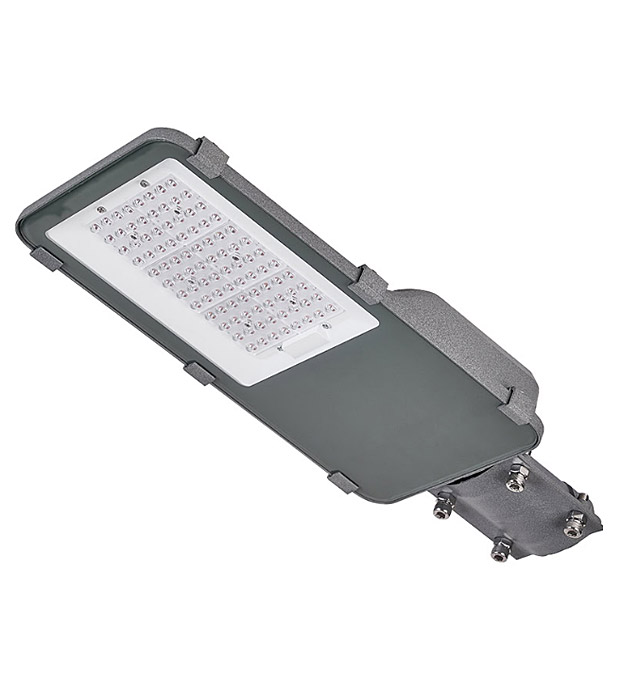
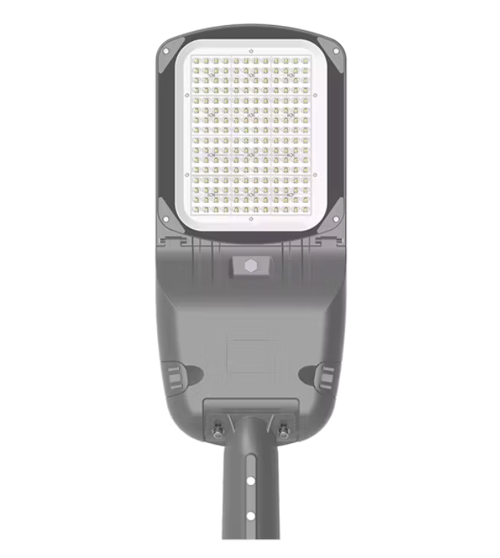
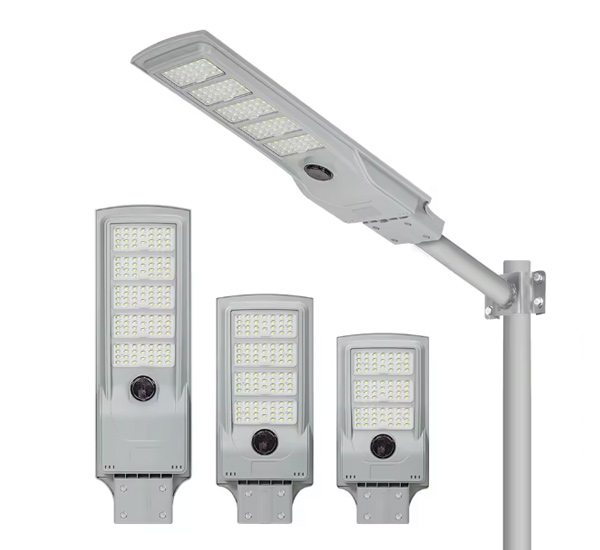
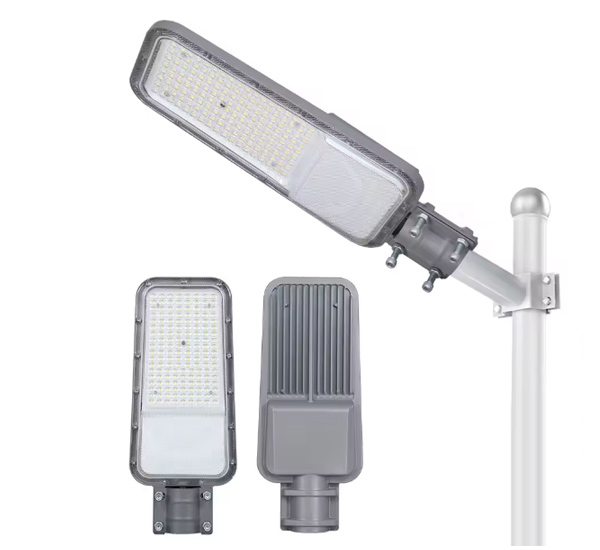
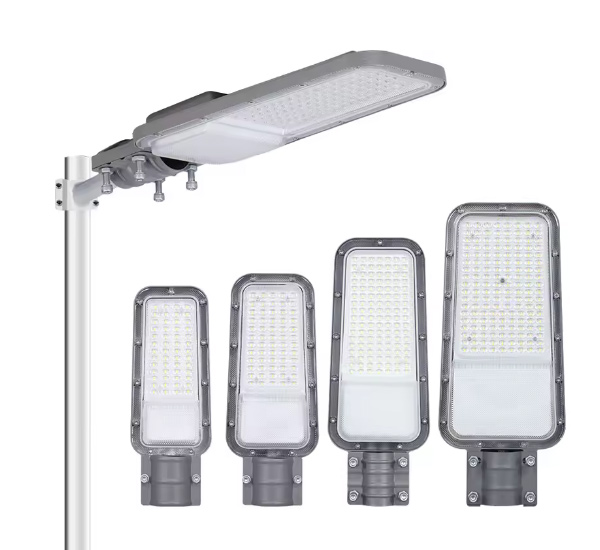
- Product details
-
JIEYAO LIGHTING · PROJECT-CONFIGURED SUPPLY
High Efficiency LED Street Lights for Road Projects
Choose the complete road luminaire: housing, optics, mounting and controls.
Jieyao supplies LED street-light configurations for road projects, from an identified lighting head to a fixture-and-control package. Select the housing for the arm and service arrangement, the optic for the road, and the driver for the supply and operating programme. The quotation brings those choices into one model-specific configuration.
For new roads and existing-lantern replacements, the useful result is light on the required surfaces at the agreed operating input. A high lumen-per-watt figure supports that decision, but it does not replace the road-lighting layout.
Discuss your project ↗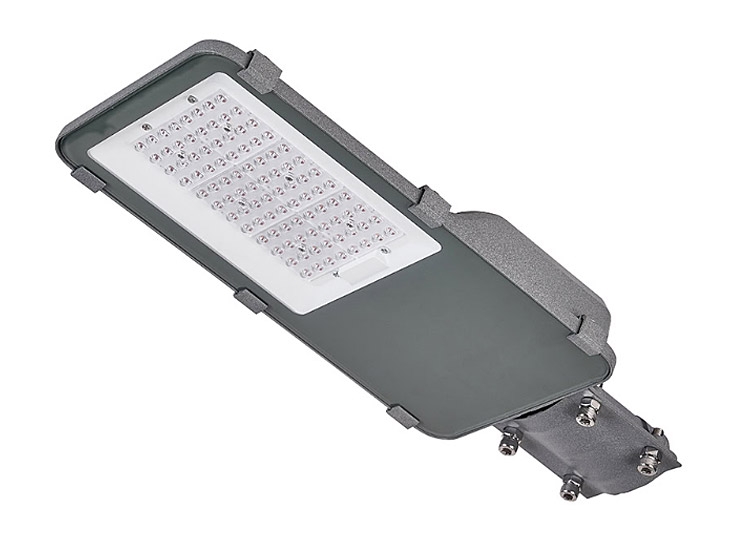 Road-luminaire product reference. Housing, driver and optic are identified together in the offered configuration.
Compare the physical housing arrangements
H-series slim head
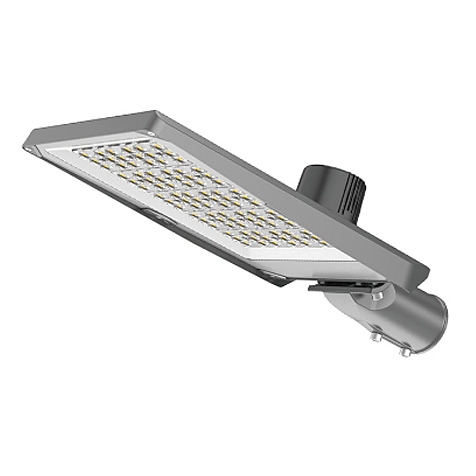 H-series catalogue illustration: slim head with a round mounting connection.
The H reference has a flat optical face, a finned rear section and a round mounting end. Its slim outline is a starting point where body size and the relationship to the arm matter. Confirm the offered revision, mounting orientation, service access and optical file together.
J-series rectangular head
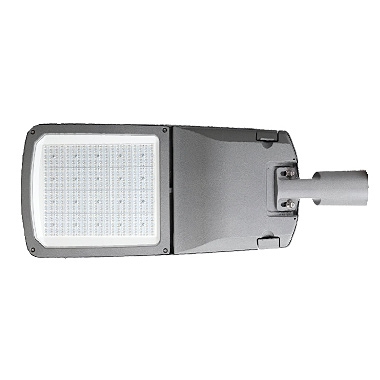 J-series catalogue illustration: rectangular head with an optical window and visible cover catches.
The J reference shows a broad rectangular optical window beside an enclosed rear body, with visible cover catches near the mounting end. Check the connection dimensions and how the selected revision opens for service. The offered drawing identifies the actual fixing and adjustment arrangement.
Y-series finned housing
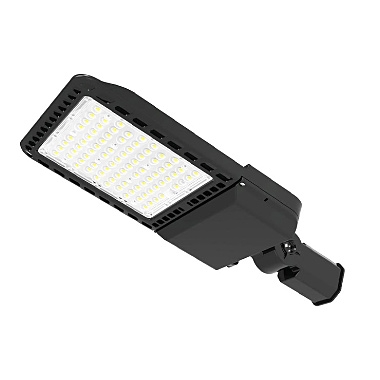 Y-series catalogue illustration: finned housing with a compact mounting connection.
The Y reference has a black finned outline around the rectangular optical face and a compact rear connection. Compare the fixture envelope, mounting clearance and service arrangement with the project. Specify the exact Y model and its optical and electrical configuration in the quotation.
Hinged-cover construction
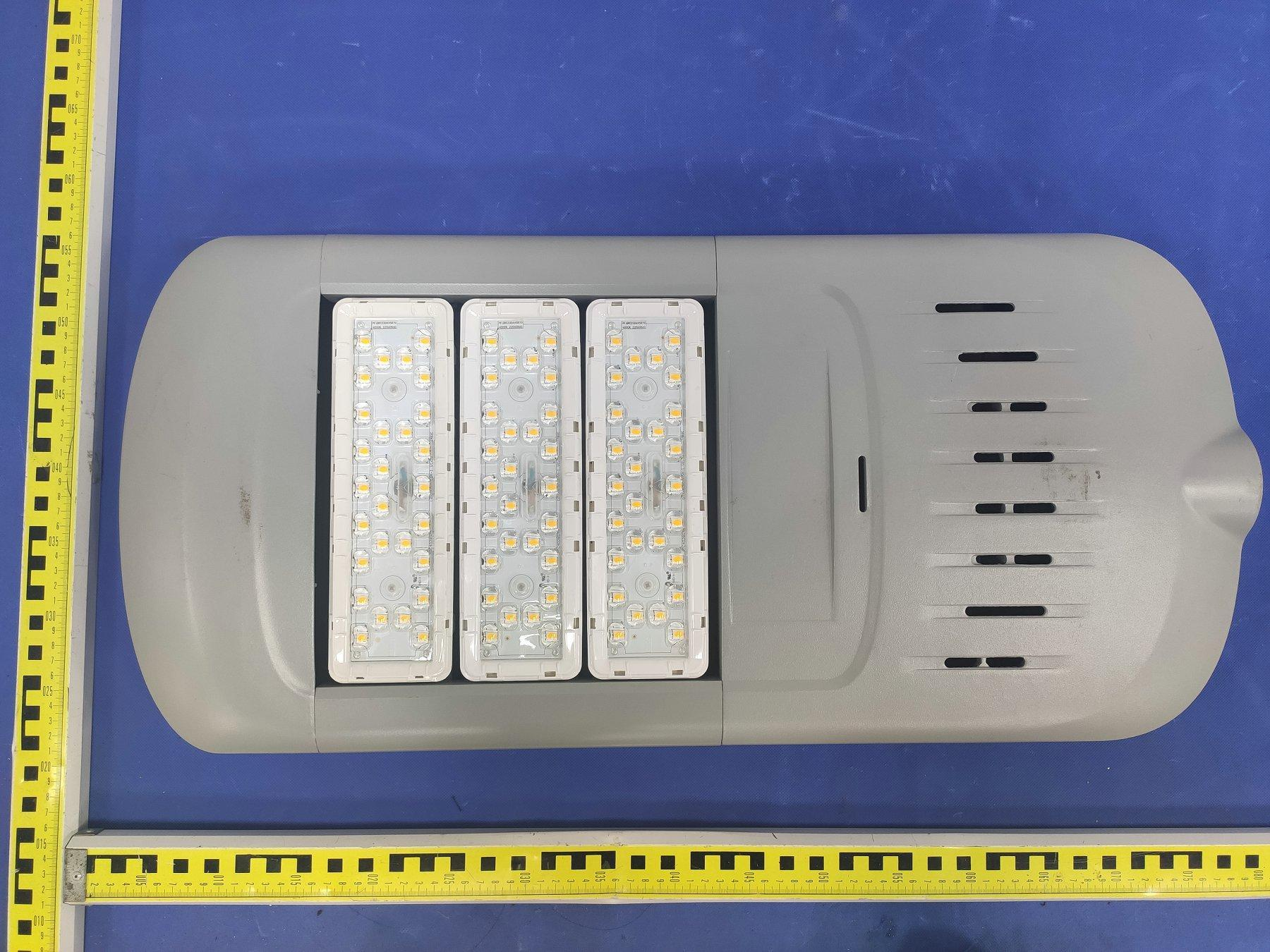 Three optical sections within a rounded street-light housing.
The illustrated physical sample has three optical sections within one body. It is shown separately from the H, J and Y product references. Its rear access arrangement is shown below. Consider this type of construction when component access is part of the maintenance brief; specify the offered revision and serviceable parts rather than assume every optical section is field-replaceable.
Housing family, electrical specification and optical configuration are separate choices. Identify the selected model, driver, optical option and mounting drawing together in the offer.
Match the light to the road, not a wattage band
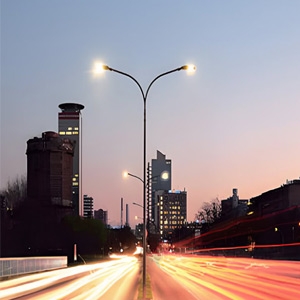 Twin-arm street lighting along an urban road.
A local road, an urban avenue and a highway ask different questions of the same luminaire family. Road width, lanes, pedestrian areas, setback, pole height, spacing and tilt determine where the light needs to go. Select the proposed optic with those inputs in a calculation for the actual layout.
For a retained pole, use measured arm details and the current pole condition. A new head may fit the tube but have a different mass, exposed area or centre of gravity. Coordinate that change with the support review instead of relying on the old lamp’s wattage.
On a phone, swipe the table sideways to read all columns.
Project Lighting priority Mounting or operating decision Local and residential roads Useful light on the road and pedestrian edges with controlled spill Review nearby windows, trees, fixture direction and night programme. Urban main streets Traffic surfaces, crossings and competing bright surroundings Coordinate arm outreach, spacing, CCT and operating stages. Highways and expressways The authority’s maintained lighting and glare criteria Use the exact optical file, installation geometry and maintenance assumptions. Parking and public-space edges Pedestrian routes and vehicle conflict areas Check the whole area and boundary spill rather than copy a road spacing. Optics give similar housings different jobs
Two road lights with similar front faces can put different amounts of light along or across a road. Lens and reflector geometry, LED arrangement and the mounting orientation shape the intensity distribution. Broad labels such as narrow, medium or wide help a discussion but are not a substitute for the proposed IES or LDT file. The four diagrams below illustrate coverage concepts; use the selected optical file to evaluate the actual road.
Paths and shoulders
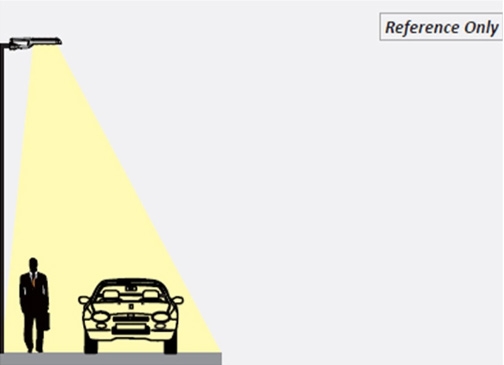 Concept view with one vehicle and a pedestrian near the illuminated area.
Check the narrow target and adjacent pedestrian edges. A distribution that reaches far along a road may still miss a path behind the pole.
Ramps and entrances
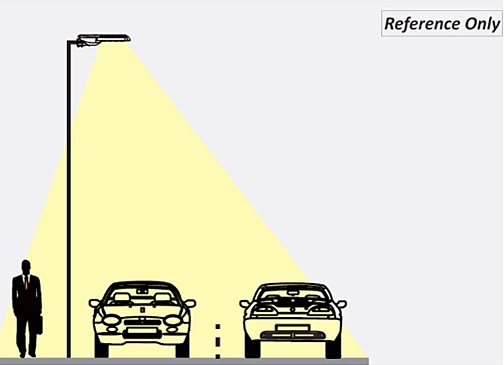 Concept view showing coverage across two vehicle positions.
Changes in road direction or width can require a different aiming and optical choice. Include the approach and transition in the calculation.
Roads and paved areas
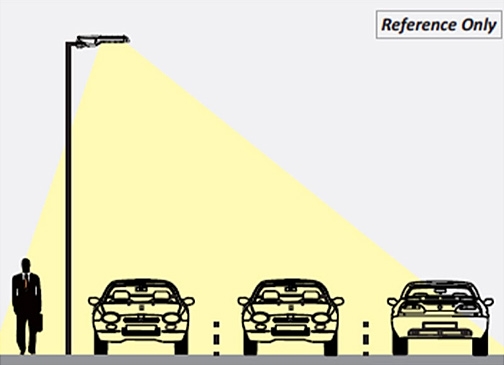 Concept view with a broader target across three vehicle positions.
Review the intended lanes and the spaces between poles. Light beyond the target does not necessarily improve useful visibility.
Intersections and parking
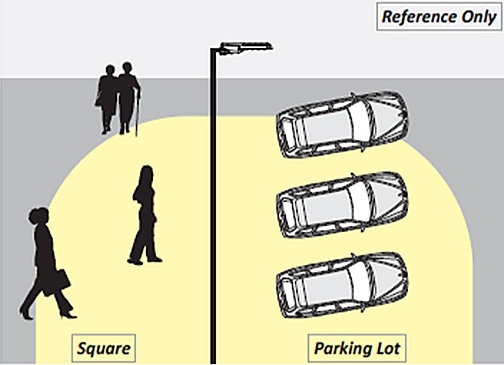 Concept view of pedestrian and parking-area coverage.
Several viewing and travel directions need coordinated coverage. Check glare and property boundaries as well as average illuminance.
For file identification and calculation inputs, use the IES procurement guide. The uniformity guide explains why a good average alone can hide dark intervals.
Efficacy, output and electricity use belong to one configuration
Luminaire efficacy is delivered light output divided by electrical input. Compare complete fittings at the same CCT, optic and operating conditions. LED-chip efficacy, a driver rating and a finished-luminaire result describe different things and should not be combined into a single headline value.
For an HPS replacement, compare the existing and proposed systems at the same required lighting service. Actual system input, hours, dimming and maintenance assumptions determine the energy and cost comparison. If the proposed light runs at reduced output later at night, identify those stages separately from the full-output calculation.
Power is selected after the road and optical arrangement are understood. An efficient fixture with the wrong distribution can still need a revised layout; a brighter head can also create unwanted glare or spill. The existing-pole retrofit guide helps define the retained-asset part of that decision.
Mounting and service access are part of the product
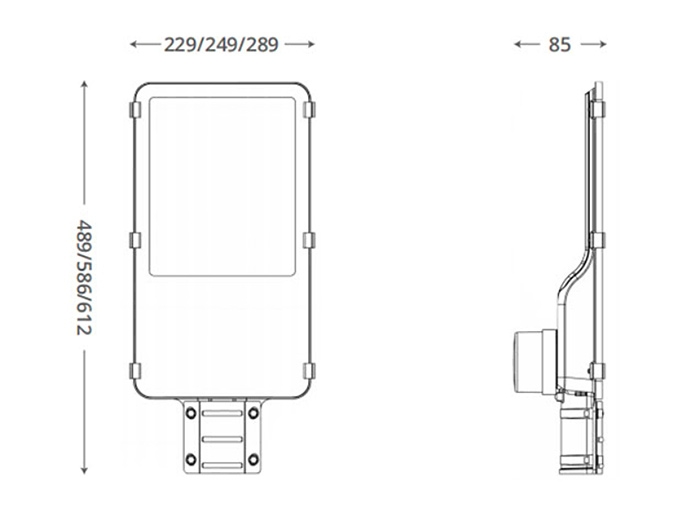 Preserved outline reference. The original does not identify units or the H/J/Y model; use the selected model drawing for production and installation.
The luminaire connection needs its permitted spigot dimensions, insertion, fixing and adjustment arrangement. Confirm the cable entry and how the selected arm passes or stops inside the head. The mounting orientation used in the lighting calculation must be possible with the actual hardware.
The preserved outline reference illustrates different body sizes, but it does not identify a production model or units. A configuration-specific drawing should define the housing envelope, mounting detail and service clearances. Do not scale a catalogue image to approve a replacement connection.
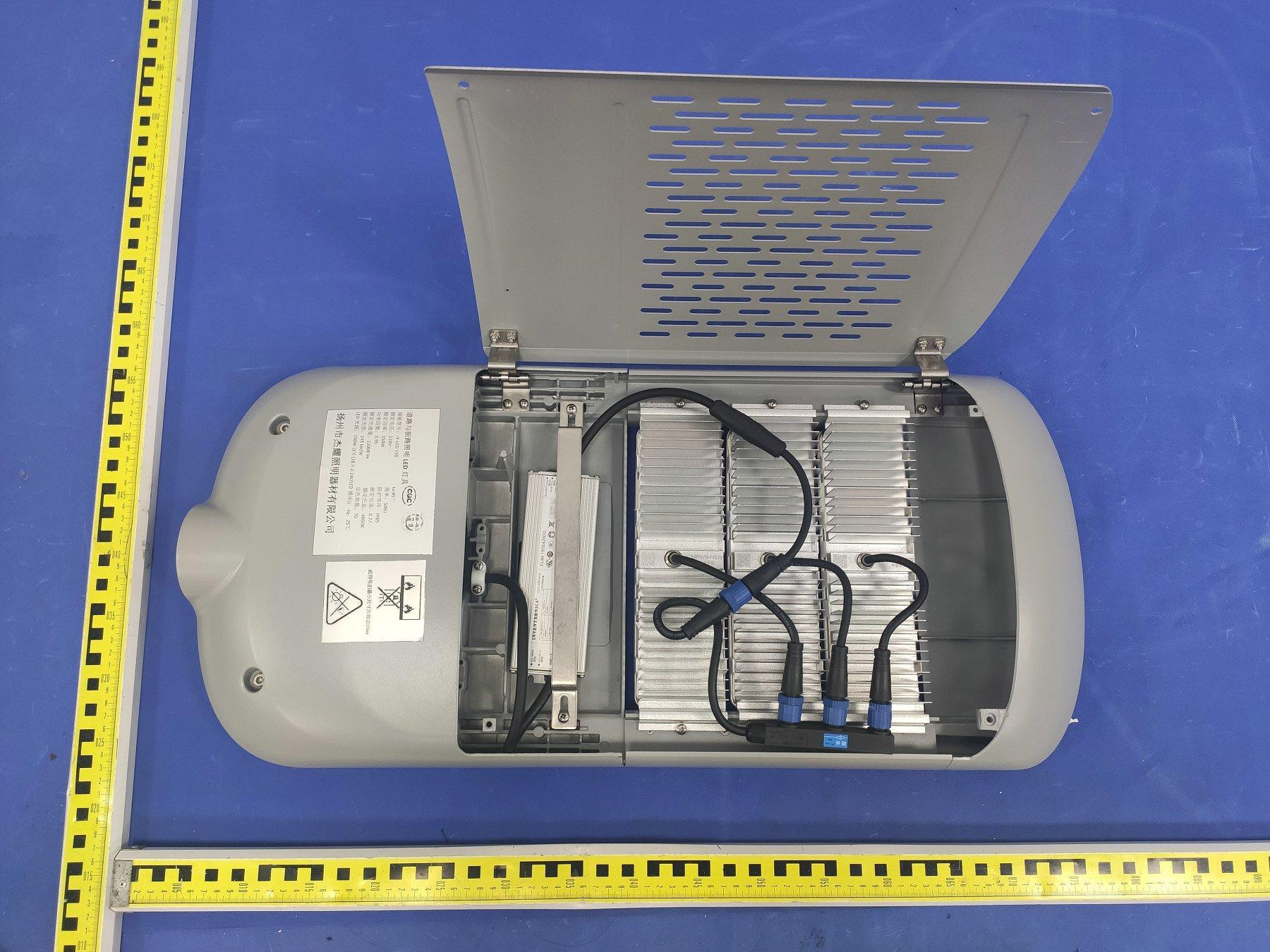 Archived sample construction: opening the cover reveals the component arrangement; the selected model determines permitted service work.
The open sample shows the driver position, internal wiring and the backs of the optical assemblies beneath a hinged rear cover. It makes the service layout visible, while the instructions for the offered revision determine which parts may be replaced and what checks follow the work.
Allow space to open and secure the cover at the installed position. Retain compatible driver and control references in the asset record. A cover that opens does not establish hot-swap operation, tool-free access or an enclosure rating after an unspecified field repair.
Select the driver and the control architecture together
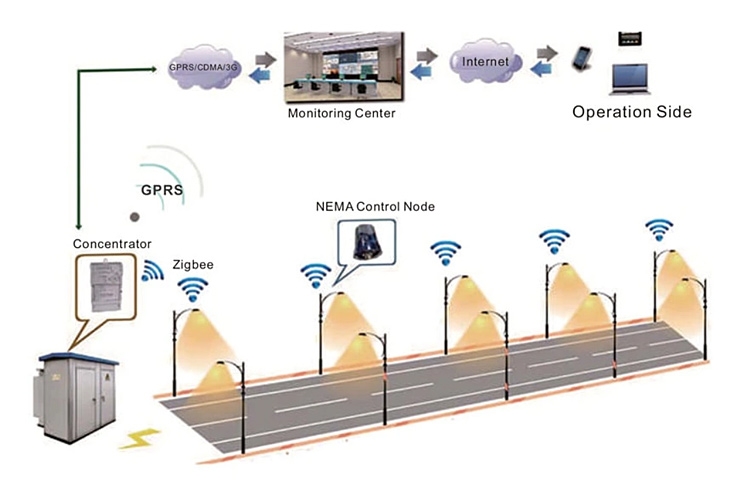 Control architecture example. The GPRS/CDMA/3G and Zigbee labels are examples only; the offered communications arrangement and services are identified in the quotation.
A simple switched road light and a network-managed luminaire can use similar-looking bodies. Specify the required switching, dimming, metering and fault-reporting functions with the actual driver and control interface. A control socket, sensor or node is included only when named in the offer.
A connected scheme may need luminaire controllers, gateways or concentrators, communications coverage and management software. Identify the equipment, protocol, network and commissioning responsibilities together. Software functions and ongoing services should not be assumed to accompany every hardware head.
For a timed lighting programme, state the operating stages and the required output. For a connected project, also define how the system behaves if communications are unavailable and which settings are retained locally. These are configuration questions, not capabilities established by the control diagram alone.
The existing LED street-lighting project reference provides related context. Identify the actual fixture and control scope when asking for an offer based on a case; it does not establish the configuration of every housing on this page.
Specify the values that distinguish the offered model
On a phone, swipe the table sideways to read all columns.
Item State for the chosen configuration Why it matters Luminaire input and output Rated input, delivered lumens, CCT and optic Makes efficacy and road calculations comparable. Electrical supply Driver input range, frequency and required protection Matches the available feeder and project electrical design. Environment Applicable ambient limits and exact-model enclosure/impact information Avoids applying another housing’s rating to this unit. Mount and body Dimensions, mass, exposed area, connection and orientation Coordinates arm fit, structural review and aim. Controls Driver interface, controller, socket or sensor and operating stages Defines included functions and system compatibility. Maintenance and documents Serviceable parts, instructions and identified supporting reports Keeps replacements and acceptance tied to the correct revision. Material, finish, cover, fasteners and seals belong to the identified construction. For coastal or industrial exposure, request the applicable coating and fastener arrangement rather than assume an enclosure rating also proves corrosion resistance. Service life, projected lumen maintenance and warranty coverage also need their own stated conditions.
Use the application to resolve the remaining choices
Residential streets and sidewalks
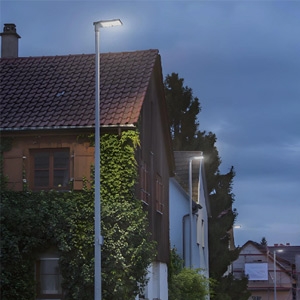 Residential context: consider the road and nearby windows together.
Balance the traffic surface with the environment at homes and paths. Check spill, upward light, visible brightness, CCT and the later-night programme against the project brief. A different mounting angle can change both useful light and glare.
Highway and through-road layouts
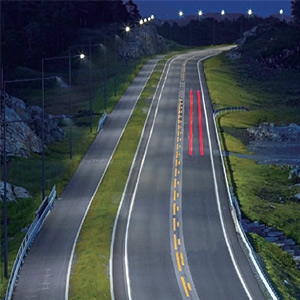 Road lighting with several positions along the verge.
Work from the road authority’s criteria and the actual geometry. The offer should identify the optical option and calculation basis, including maintained-light assumptions. A standard road-type label does not fix a compliant wattage or spacing.
Parking areas, parks and commercial sites may share a luminaire family but need separate target surfaces and mounting arrangements. If the site has no usable mains supply, compare a separately designed split solar system; this mains-luminaire page does not establish solar autonomy.
From selected parts to an identifiable shipment
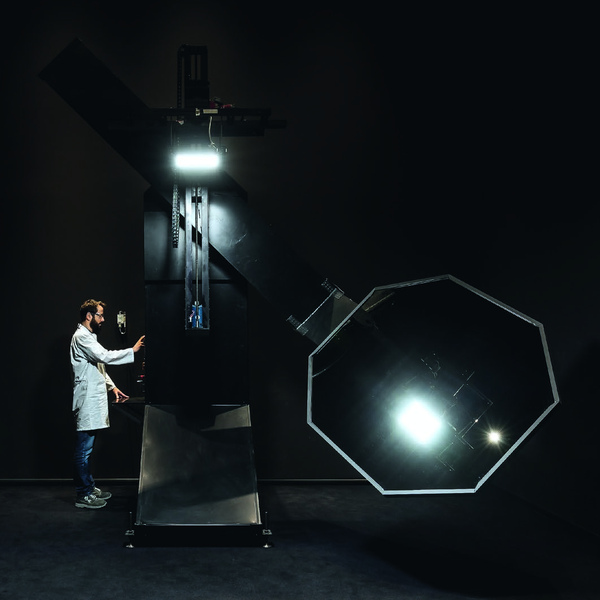 Photometric-equipment reference. Use results for the actual offered luminaire and optical configuration.
Assembly brings the selected LED/optic, driver, wiring, housing and mounting parts into one fixture. Agree the model and component schedule before release, with the inspection and functional checks required for that order. Replacement of a driver or optical part should remain traceable to the accepted revision.
Photometric data must identify the actual tested configuration. Obtain electrical, environmental and product-test documents for the offered unit where destination or project acceptance requires them, keeping the housing, driver and optical revision identifiable.
Before dispatch, match labels, control accessories and loose fittings to the packing list. Protect optical faces, mounting ends, covers and connectors, and distinguish any separately packed controller or spare part. Include the relevant mounting, operating and service instructions. Delivery timing, freight, spare-parts support and warranty scope follow the written order.
Questions buyers ask
Can the housing be selected before the optics?
You can shortlist a body for the required mount and service arrangement. Finalise the luminaire after the selected optic and operating input have been checked in the road layout.
Does a higher lm/W value always mean fewer poles?
No. Pole count also depends on distribution, road geometry, maintained criteria and mounting. Compare the complete lighting calculations at equivalent service.
Are IP, impact and temperature ratings shared by all series?
No blanket rating is stated here. Check the data and supporting evidence for the exact enclosure, driver and offered revision.
Can it use a photocell or connected controller?
State the required control function. The offer must identify the compatible driver, interface, control device and any network or software scope.
How is lifetime different from warranty?
A life or lumen-maintenance projection has stated operating assumptions. A warranty defines written coverage, exclusions and claims responsibilities; the two are not interchangeable.
What do you need for a replacement proposal?
Send the retained pole and arm details, supply, present fixture identification, road layout and target lighting requirements. Include control and maintenance constraints so the proposed complete option can be checked.
Bring the road layout and the required operating programme
Send the quantity, road geometry, mounting arrangement, lighting criteria, incoming supply and controls. For a replacement, add the arm measurements and current fixture information. Jieyao can organize a model-specific proposal with the housing, optic, driver, mounting and documents identified together.
Contact Jieyao ↗ -
-