
JIEYAO LIGHTING · PRACTICAL SELECTION GUIDE
LED high-mast lighting uses electronic drivers and LED light sources; metal halide systems use discharge lamps with matched control gear. The practical differences include start-up and restart behaviour, available controls, optical design and replacement parts. Compare the complete installation at the same maintained lighting target. A lower LED wattage alone does not prove equivalent coverage, a safe retrofit or a fixed energy saving.
An LED fitting produces light using semiconductor emitters supplied by a driver. A metal halide fitting uses an electric discharge through a lamp, with the matching ballast and associated starting equipment for that lamp system. In both cases the light source works with optics, a housing and the mounting arrangement.
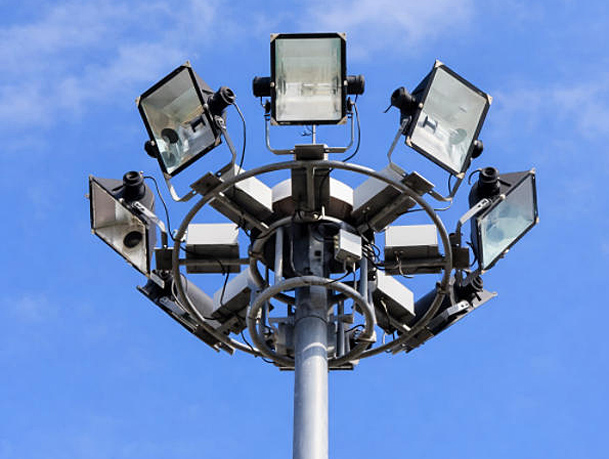
High mast describes where and how the luminaires are supported, not the light-source technology. A fixed head, a lowering ring or a directional sports-lighting head can carry different lighting equipment. Keep the access arrangement separate from the LED-versus-metal-halide comparison.
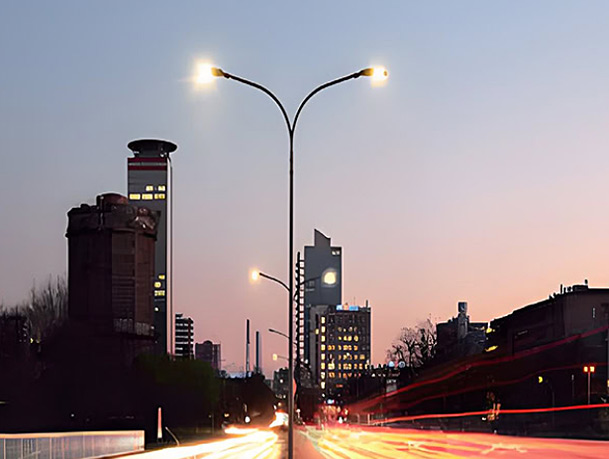
Do not identify the lamp technology from colour alone in a night photograph. Exposure, white balance and the apparent size of a bright source can disguise the actual equipment. For an existing asset, record the lamp, luminaire and control-gear references from its documentation and inspection.

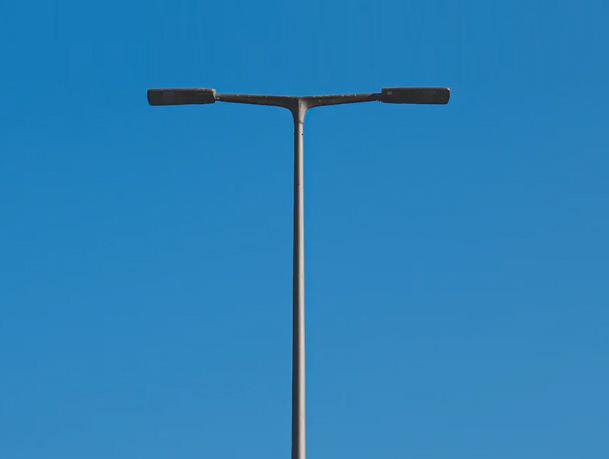
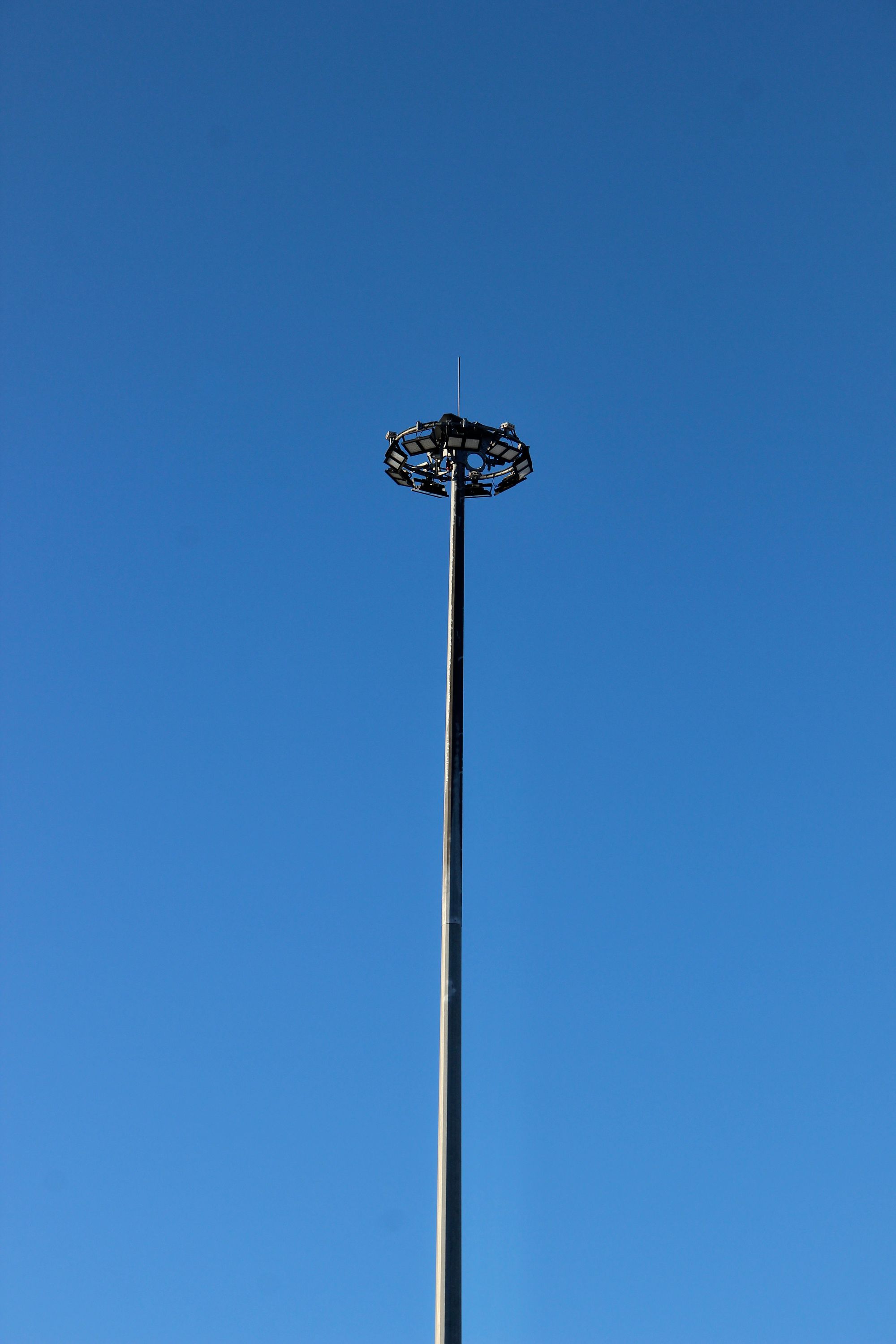
LED luminaires on a high-mast head — an application example.
Metal halide lamps generally need time to reach their intended light output. After a supply interruption, a hot lamp may also need time before it can restart and recover output. The starting system and lamp type affect that behaviour; one restart time should not be assigned to every metal halide installation.
The US Energy Information Administration discussed this issue in its 2013 account of stadium lighting and a major-event power interruption. [1] That article is historical evidence of the operating mechanism, not a description of today’s market share or a test of every existing system.
LED equipment does not need the same discharge-lamp warm-up process. The complete installation’s actual restart still depends on restored supply, drivers, protection, controls and any programmed sequence. An “instant-on” light source is not an independent emergency-power system.
For an industrial yard, the useful question is what happens after a short interruption: which areas lose light, which can return automatically, and what the accepted recovery sequence requires. For a sports ground, distinguish normal switching from the separate event or broadcast requirements. Specify the operating response that the site needs rather than a generic marketing phrase.
Compatible LED drivers and controls can support scheduled dimming, different lighting scenes and switching by zone. These features can help align output with the actual task: a fully active yard, a reduced-activity period and a closed site may have different accepted lighting duties.
The word LED does not specify the control interface. Identify the dimming method, available range, control wiring or communications, fail-state behaviour and the programmed scenes. The luminaire, driver and controller must work together; a dimmable driver does not automatically communicate with an unrelated control system.
Existing metal halide installations have their own ballast and switching arrangements. Do not assume that equipment designed for discharge lamps is a suitable LED control package. Equally, avoid saying that every metal halide system has exactly the same limitations; identify the installed lamp and gear before deciding what remains useful.
Zoning is often as important as dimming. Separately switching a storage lane, service area or training section can avoid operating the whole site unnecessarily, provided the accepted lighting and safety requirements are still met. The circuit layout and operating schedule should support those zones.
Our high-mast control-panel guide explains the separate panel and control scope. It should be coordinated with the selected luminaires rather than inferred from the source type.
A metal halide lamp’s rated lumens are not the same measurement as the luminaire’s emitted output after optical losses. An LED luminaire rating may refer to the complete fitting. Confirm the measurement object before putting the two numbers in the same table.
Even complete-luminaire lumens do not show where the light lands. Reflectors, lenses, shields and aiming distribute the output. A lower-power fitting can be a useful candidate if its photometry serves the target more effectively, but that is something to demonstrate in the layout.
Use the same task planes, geometry, maintenance basis and acceptance criteria for both proposals. For an open yard this might involve work surfaces, traffic routes and surrounding receptors. For a sports site it can involve additional vertical and camera-facing requirements. Keep the criteria tied to the application.
The selected floodlight count and aiming may change when the source technology changes. Preserve the required maintained result rather than forcing a one-for-one quantity. Also check glare and spill: a strong central result can coexist with poor edge coverage or excessive light toward observers.
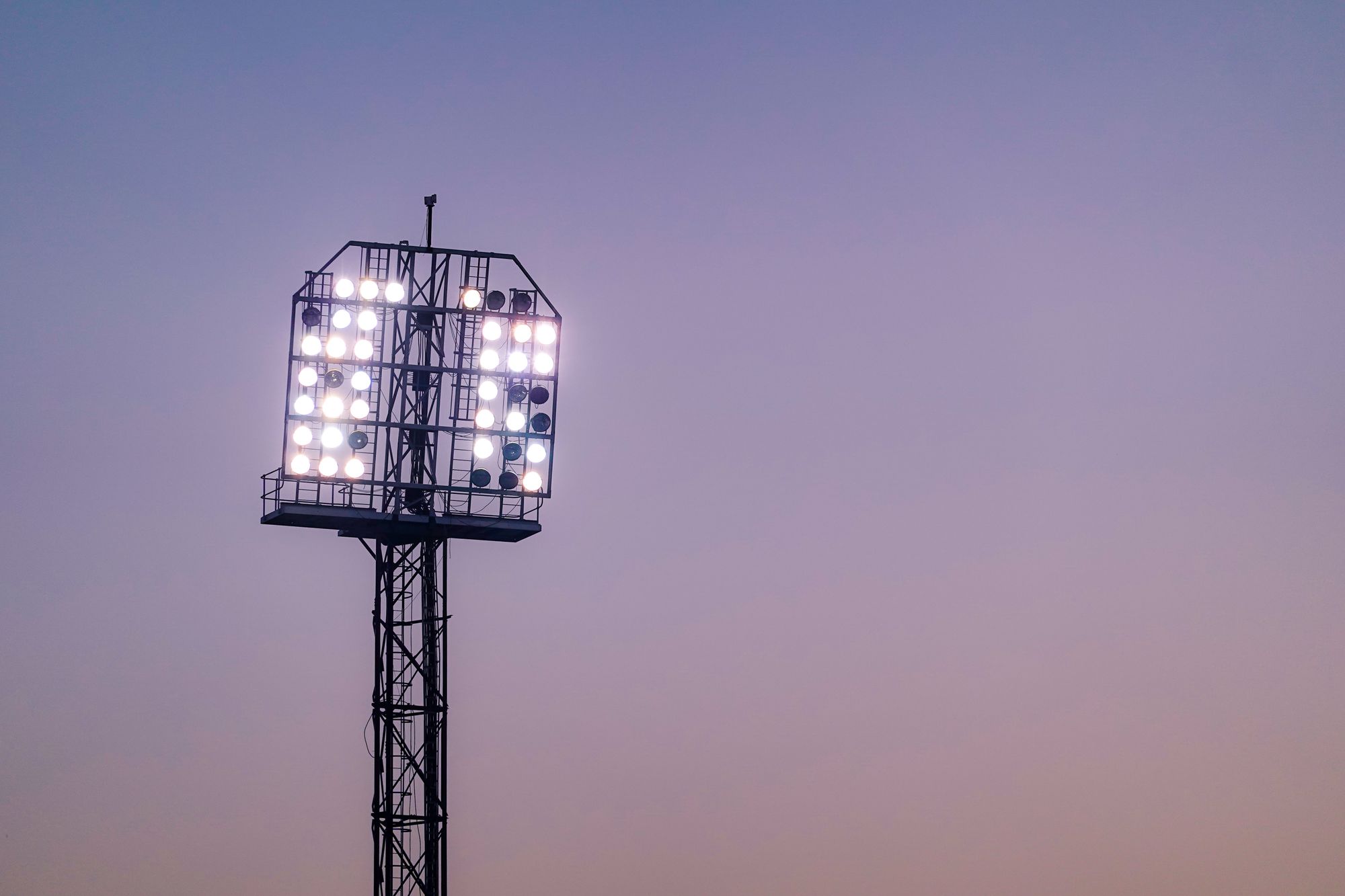
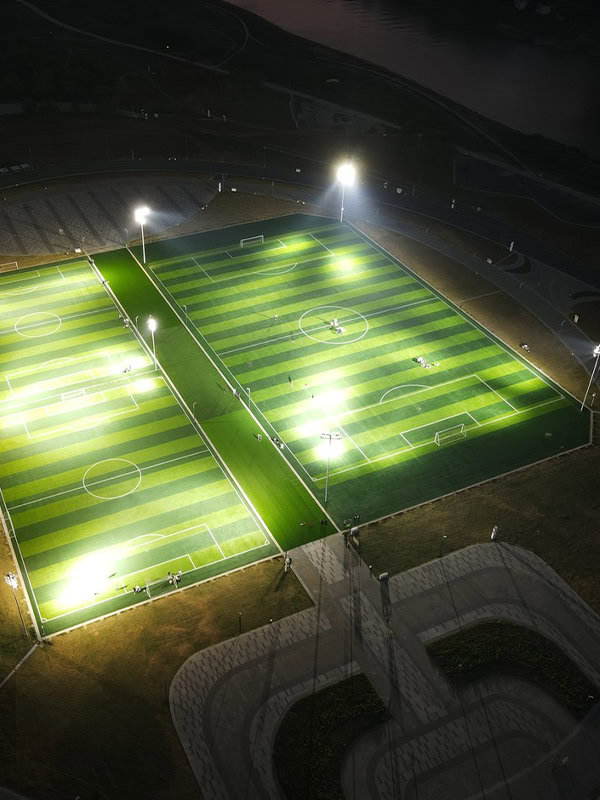
Stadium floodlighting at twilight — an application example. Source technology and rated performance should be identified from the actual equipment records.
For sports-site criteria, see football-field lighting standards and broadcast considerations. For a yard with stacked obstructions, see container-terminal lighting and task planes.
Record the actual electrical input of each proposed lighting system. A metal halide lamp rating may exclude ballast losses; an LED luminaire’s input figure should include its driver under the stated condition. Auxiliary equipment and controls may add further demand.
Then apply the same operating requirement. A shorter LED schedule cannot be credited as a source-efficiency improvement unless the changed schedule still meets the intended duty. Conversely, a well-designed control schedule can provide a separate operational benefit, which should be shown separately from the source comparison.
Assume an existing installation draws 12.0 kW at the supply boundary and operates 3,000 hours per year. Its energy is 12.0 × 3,000 = 36,000 kWh. Assume an alternative accepted LED layout draws 7.2 kW for the same hours: 21,600 kWh.
The calculated difference is 14,400 kWh, or 40% of the assumed existing use. These are chosen arithmetic inputs, not a measured Jieyao retrofit, a fixed replacement ratio or a promise for another site.
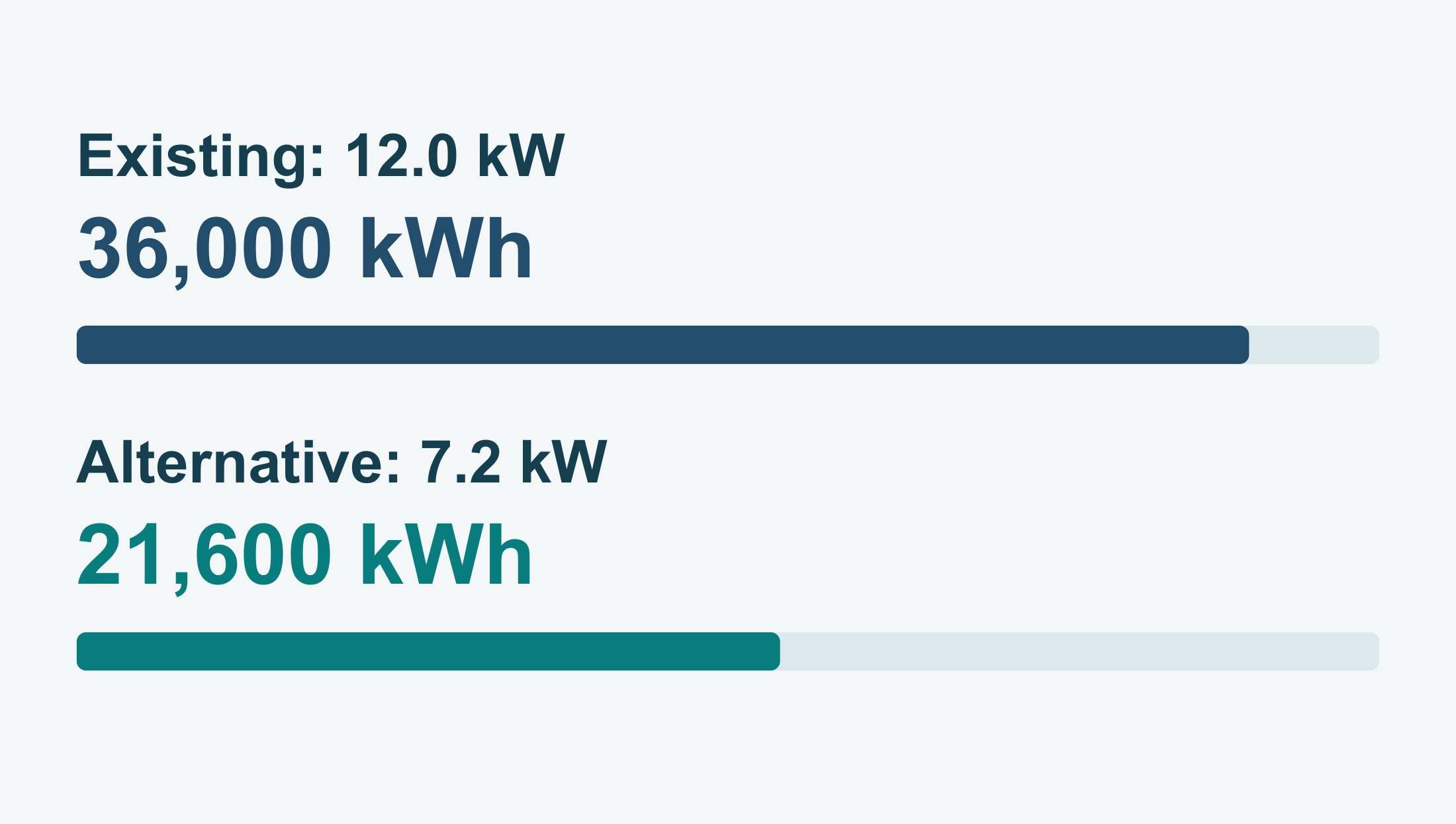
Illustrative annual energy at an equal 3,000-hour duty. Both input powers are assumptions; equivalent lighting must be established separately.
If the proposed LED installation uses several dimming scenes, calculate the power and hours of each scene, then add the results. Use actual input-power data at each setting where available. A control percentage does not automatically equal the same percentage of power or the same percentage of useful illumination.
For a financial comparison, add the local tariff, demand charges where relevant, capital work, access costs and maintenance assumptions. A kWh difference alone is not a full payback calculation. Keep energy, maintenance and the investment scope visible as separate inputs.
A metal halide system may require lamp replacement and attention to its control gear, seals, reflectors and electrical connections. The owner needs the correct lamp/gear combination and an access method that reaches the equipment safely.
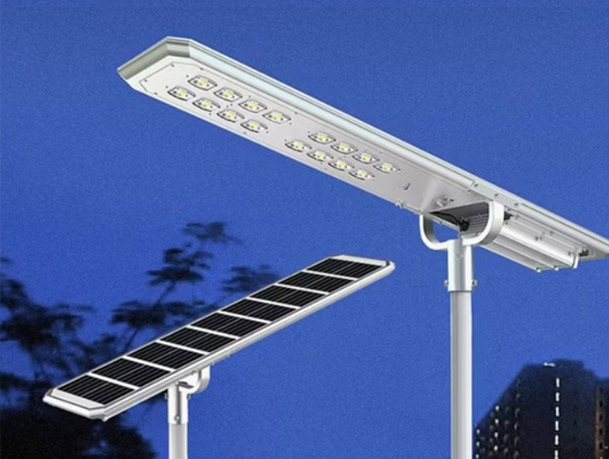
LED systems change the parts list. Drivers, LED modules, optics, seals, surge-protection components where fitted, connectors and controls can all affect continued service. “No lamp to replace” does not mean no maintenance or no failure modes.
Ask which parts are replaceable on site and which require a complete luminaire change. Retain the exact model and revision, supported spare references, settings and aiming records. This is particularly useful when a manufacturer changes a driver or module during the service period.
The access method still controls much of the work. A lowering ring can bring a defined assembly down for maintenance; a fixed head may need another approved access route. A light-source change does not itself change the mast’s maintenance arrangement.
Do not equate an LED L70 statement with a complete-system warranty or the date when every component will fail. Our LED lifetime, L70 and warranty guide separates those terms. The same distinction is useful when comparing high-mast offers.
↔ On a phone, swipe the table to see every column.
| Situation | Useful next step | What the source label cannot settle |
|---|---|---|
| Existing lighting meets the duty but energy is high | Compare an identified LED layout at the same maintained target | Actual energy, glare and coverage |
| Frequent interruption/restart problems | Review supply, source and control recovery together | Automatic safe return of the complete installation |
| Poor uniformity or spill | Recalculate fixture distribution and aiming | A universal replacement wattage |
| Repeated maintenance access | Compare part replacement and the access plan | A guaranteed maintenance-free period |
| Proposed reuse of the mast | Assess retained structure, head and interfaces | Compatibility based only on lower input watts |
For a new project, compare a coordinated assembly rather than an old lamp and a new LED fitting in isolation. For a refurbishment, decide which existing equipment remains and which is renewed. This separates the lighting decision from the retained-asset decision.
Our high-mast retrofit guide addresses the structural, lowering-system and mounting compatibility questions in detail. This article focuses on daily lighting operation; it does not approve reuse of an existing mast.
Request the exact luminaires, optics, drivers or lamp/gear references, operating power and control options. Pair those with the photometric layout, maintained-lighting basis, equipment schedule and defined operating hours.
For service planning, request the replacement-part scope, access arrangement and maintenance information. For a retrofit, include the identified retained equipment and the accepted compatibility assessment. Keep the energy calculation tied to the same final configuration.
Use the LED versus metal-halide comparison worksheet (PDF) to record those inputs. Jieyao’s fixed or lowering high-mast assemblies provide a product route for discussing a new coordinated system. Share the site task and operating profile so the proposal addresses the intended installation.
What LED wattage replaces a 1,000 W metal halide lamp? There is no universal equivalent for every high-mast layout. Compare complete input power and photometric results for the actual fixture and site.
Does LED automatically remove glare? No. Distribution, visible source luminance, positioning and aiming still matter. Check the applicable criteria and observer locations.
Can the old ballast stay? A purpose-built LED luminaire normally uses its specified driver arrangement. Any specialised replacement lamp or retrofit kit must follow its own approved instructions; do not assume compatibility.
Can the old pole remain because the LED system uses less power? Electrical power is not a structural rating. Assess mass, wind exposure, attachment positions, condition and the complete retained system separately.
Prepared by Jieyao Lighting, Yangzhou Jieyao Lighting Equipment Co., Ltd., 25 November 2026. The energy example is original arithmetic using declared hypothetical inputs; no field saving or equivalent-lighting result is claimed.
[1] US Energy Information Administration, Stadiums and arenas use efficient, high wattage lamps, 6 February 2013. Historical explanation of HID warm-up and restart behaviour. Its market description is not used as a current market statistic. https://www.eia.gov/todayinenergy/detail.php?id=9871
[2] Halliday Lighting, 5 differences between LED sports lighting and metal halide lighting: operational comparison, including warm-up and controls. No supplier saving, lifetime or universal equivalence claim is transferred. https://www.halliday-lighting.co.uk/articles/differences-between-led-sports-lighting-metal-halide-lighting/
Photography: Кирилл Абрамов, LED high-mast head, https://www.pexels.com/photo/lamp-on-a-high-pole-in-front-of-blue-sky-12482978/ ; Magda Ehlers, stadium floodlight head, https://www.pexels.com/photo/stadium-floodlights-against-evening-sky-32471032/ . Pexels License. Source type in the stadium scene is not inferred as a tested model. The energy chart is an original illustrative calculation.
Send the site, lighting duty and proposed equipment arrangement so the product discussion addresses your application.
Contact Us
Get a custom lighting solution and quotation for your project. Yangzhou Jieyao Lighting Equipment Co., Ltd. manufactures outdoor lighting and steel poles in Guoji Town Industrial Park, Gaoyou City, Yangzhou, Jiangsu, China. The company reports a 10,000 m² factory site, more than 60 employees including more than 10 technical personnel, and more than 100 production and testing machines. The present company name dates from 2017; Jieyao Poles’ published history traces the team’s manufacturing lineage to 2006. The stated 15 years of experience refers to the team. The company reports exports to more than 60 countries. Do you have any questions or requests?
Email: jay@jieyaolighting.com

Click to Chat.
Im online now.
 English
 Español
 Bahasa Indonesia