
JIEYAO LIGHTING · TECHNICAL BUYER ANALYSIS
Use an operating-hours conversion table and a buyer audit to separate L70, whole-luminaire reliability and warranty responsibilities.
Jieyao Lighting · 26 October 2026 · Professional-source analysis with original hour-to-year arithmetic and fictional procurement examples. No life test or whole-product prediction.
A 50,000-hour LED claim is incomplete until it identifies the item, endpoint and conditions. L70 concerns retained light output; it is not a warranty or proof that the entire street light remains fault-free. At twelve hours daily, 50,000 hours equals about 11.42 calendar years by arithmetic alone.

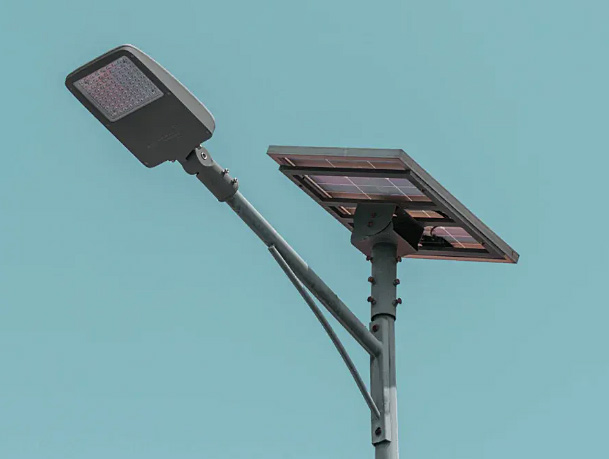
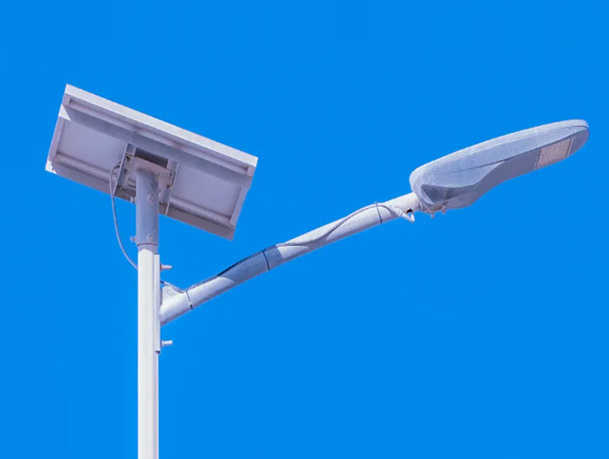
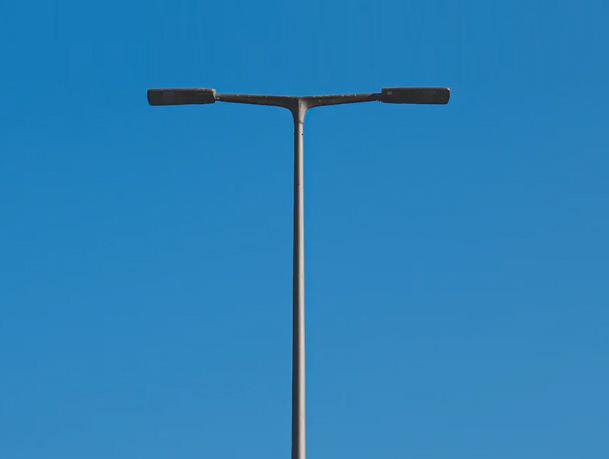
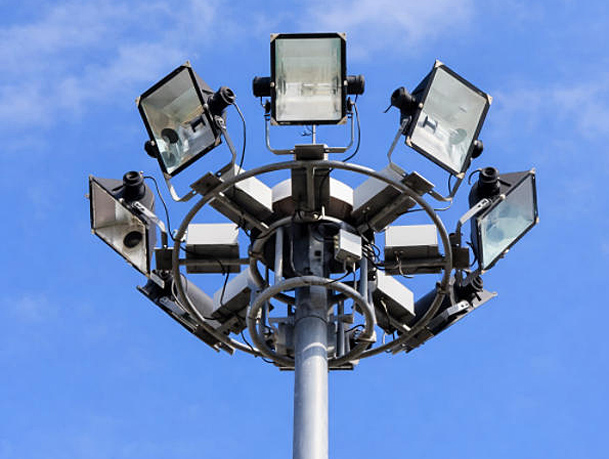
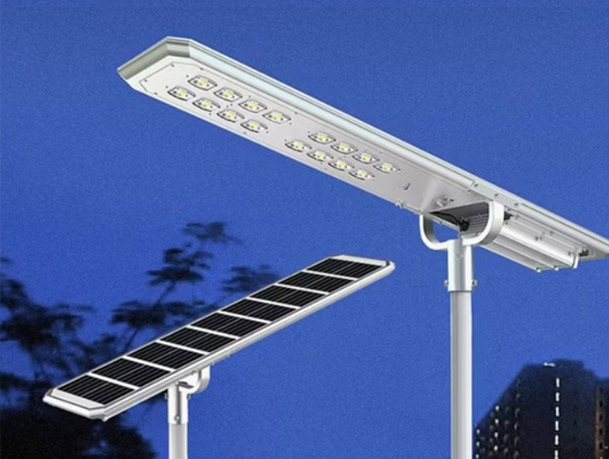
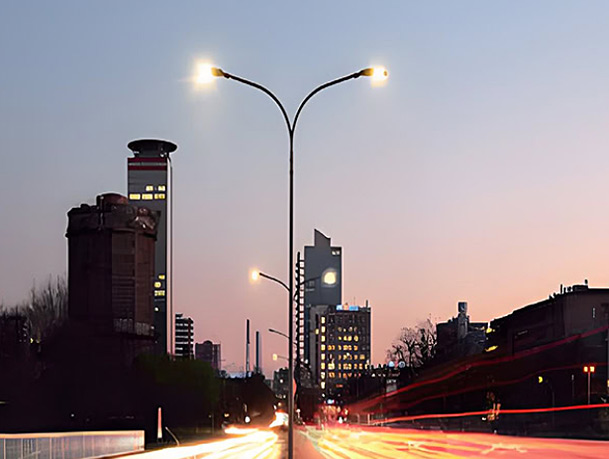
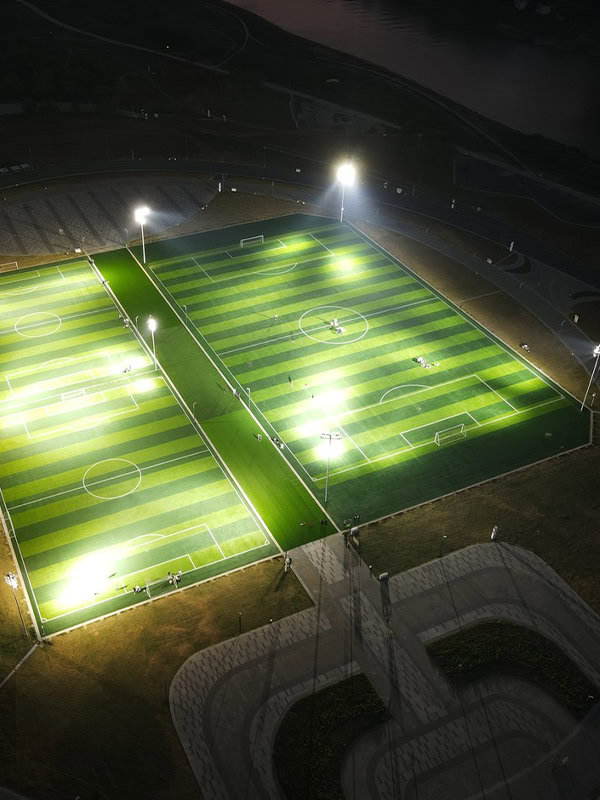
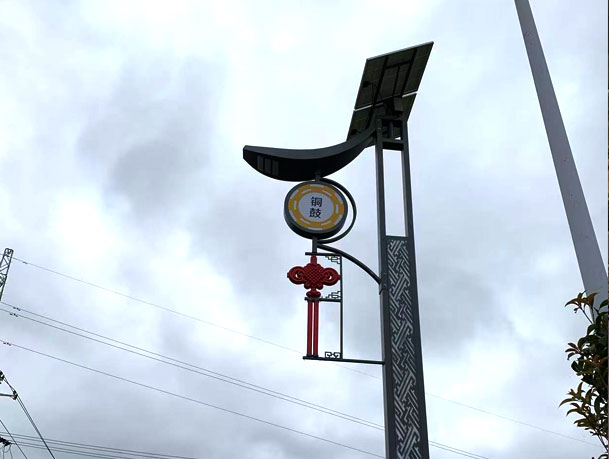
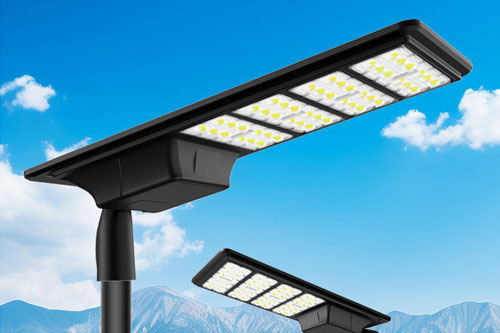
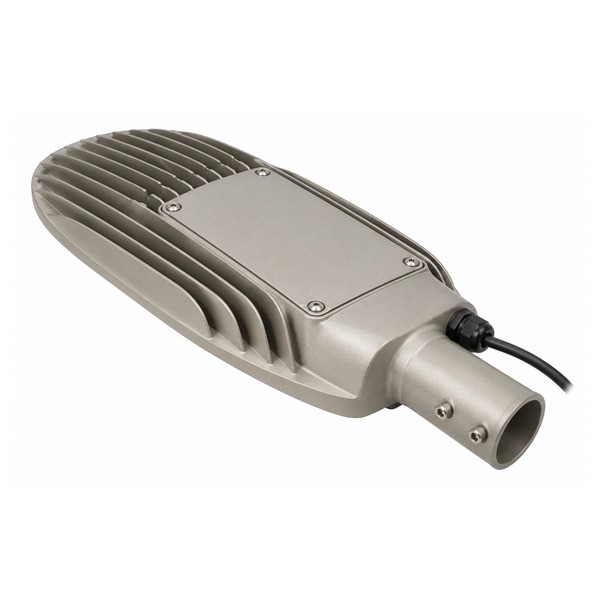
Photograph from the supplied image library, used for product/application context. It does not identify a tested specimen or verify the performance discussed below.
A street light quotation may place 50,000 hours next to a product photo without naming a failure criterion. It could refer to a source lumen-maintenance projection, a product target or a warranty discussion. Those statements are different, even when the same number appears beside them.
DOE describes retained light output while also noting electronics failure and color shift. IES makes a narrower point important to procurement: LM-80/TM-21 component results alone are not enough to claim the life of an entire luminaire. A complete assembly includes more than its LED source.
The table below is arithmetic, not a product-life prediction. It assumes the stated daily operating hours repeat every day, uses 365 days per year and makes no adjustment for seasonal schedules or leap years.
| Daily operating hours | Annual operating hours | Calendar equivalent |
|---|---|---|
| 6 | 2190 | 22.83 years |
| 10 | 3650 | 13.70 years |
| 12 | 4380 | 11.42 years |
| 24 | 8760 | 5.71 years |
At twelve hours a day, the arithmetic is about 11.42 years. This does not turn a five-year warranty into an eleven-year warranty. Nor does it prove that the driver, seal, controller and optics remain acceptable for that period. Asset planning needs the actual schedule and service responsibilities.
Operating hours are accumulated time. Calendar age is elapsed time. Warranty duration is a contractual term. Put them in separate columns rather than translating one into another without explanation.
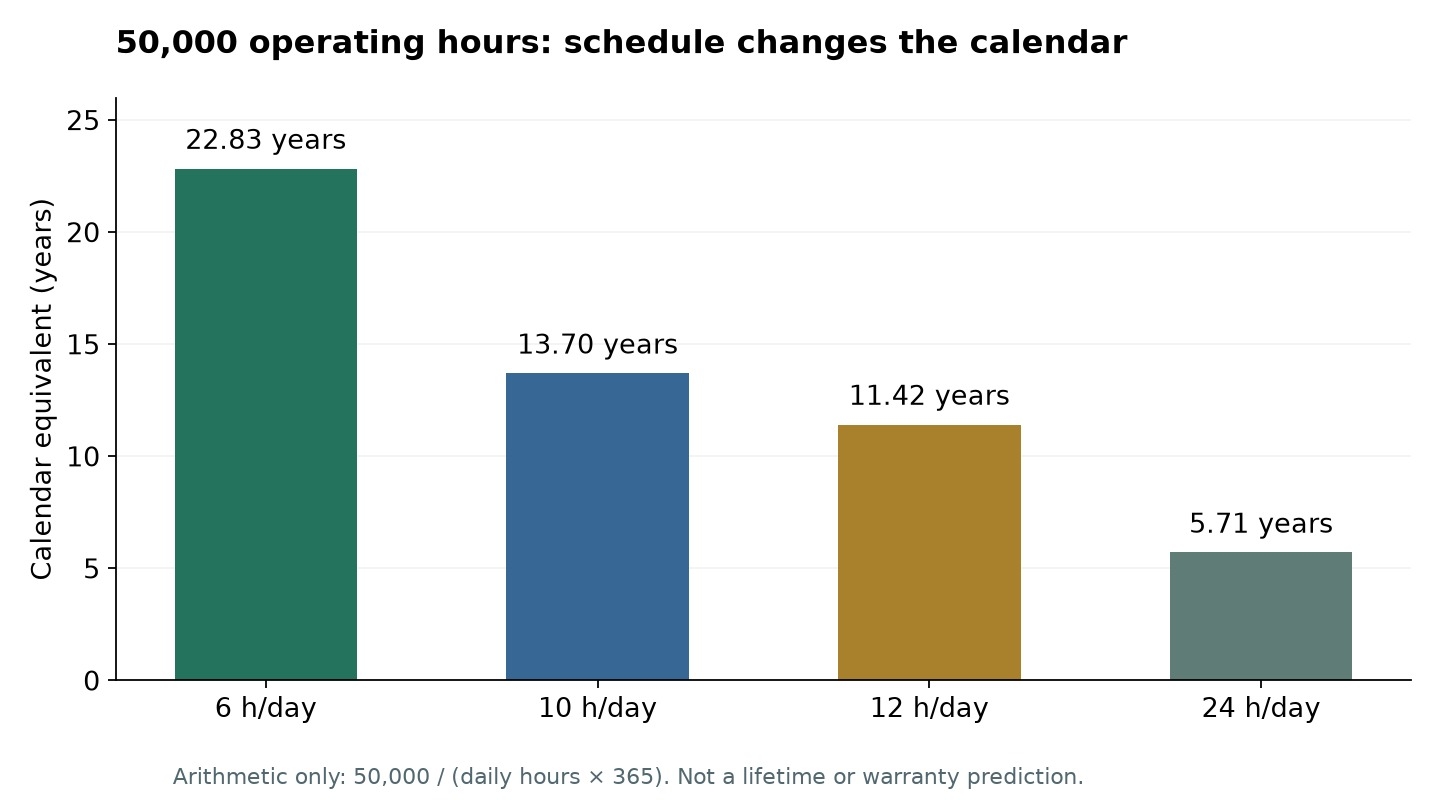
Original arithmetic chart; not a product-life or warranty forecast.
L70 expresses 70% of initial luminous flux at the stated time and conditions. For an illustrative 10,000 lm starting output, that threshold is 7,000 lm. This does not establish road illuminance, uniformity or glare, and it is not the probability that every installed light survives.
| Question | Useful evidence | Not a replacement for |
|---|---|---|
| How will source output change? | Identified maintenance data and applicable projection. | System reliability or warranty terms. |
| Will the assembly function? | Driver/system reliability and environmental evidence. | The project lighting calculation. |
| Who pays after failure? | Written warranty scope and claim process. | Technical life evidence. |
The IEA 4E review discusses the uncertainty and scope of lifetime methods. For an actual submission, identify the method edition, underlying data, sample count, temperature and drive condition. A historical summary or an unconstrained calculator output is not permission to exceed the applicable method.
A projection for one source family also does not automatically support a changed source, current or thermal arrangement. Ask how the offered luminaire’s operating conditions relate to the submitted evidence. Record both the test identifier and the proposed bill-of-materials revision.
Consider two fictional offers with the same 50,000-hour headline. A supplies a component projection and a short warranty note. B adds source identity, operating-condition basis, driver information, service parts and a clear claim procedure. The headline cannot determine a winner; the additional evidence makes B more reviewable.
| Submission item | Supplier response | Evidence to match |
|---|---|---|
| Item and endpoint | ________________ | Source/module/luminaire, L value and time. |
| Conditions | ________________ | Temperature, current and offered build. |
| System weak points | ________________ | Driver, optics and environmental basis. |
| Warranty/service | ________________ | Covered parts, labor/access, exclusions and process. |
If the optic, driver or LED changes after approval, reopen the relevant review. A familiar housing does not make a replacement configuration equivalent. Preserve the accepted part identities and settings in the asset record, so later service can retain compatibility.
Define what triggers action: a failed light, a degraded seal, an unacceptable control scene or a measured lighting shortfall. Plan safe access, replacement compatibility and responsibility beside the life claim. A serviceable design can still need intervention before its projected lumen-maintenance endpoint.
For seasonal dimming, retain the schedule instead of assuming twelve full-power hours every night. When translating hours into years, show the assumption beside the result. Avoid assigning one universal street-light lifespan to sites with different exposure and maintenance.
Jieyao Lighting, based in Yangzhou, China, can discuss an outdoor lighting configuration against the project brief. Use the LED street light buying guide for the wider specification and the sample approval checklist for build control. This article specifically interprets the lifetime claim.
Define the 50,000-hour claim by item, endpoint, method and conditions. Supply evidence for the offered LED/driver configuration and a separate warranty statement covering parts, labor, access costs and claim procedure.
No. L70 is a luminous-flux maintenance threshold. Request separately defined failure or reliability information.
No. About 11.42 years is arithmetic at twelve hours daily; the warranty follows its written terms.
An initial optical/electrical result does not replace evidence for a long-term statement. Check what the report actually measured.
Send the application, site conditions and proposed configuration. Ask for evidence matched to the requirement rather than a universal performance promise.
Discuss the technical requirements →Professional-source analysis with original hour-to-year arithmetic and fictional procurement examples. No life test or whole-product prediction. Interpretations and templates are independent editorial analysis. Source organisations do not endorse this article or the offered products.
Source addresses (copy to open):
IES PS-10-18: LED product lifetime prediction: https://ies.org/advocacy/ps-10-18/
US DOE: LED Basics: https://www.energy.gov/cmei/ssl/led-basics
IEA 4E SSL Annex: Literature Summary of Lifetime Testing: https://iea-4e.org/wp-content/uploads/publications/2021/06/SSL-Annex-Lifetime-Literature-Review-Report-by-the-LRC_final.pdf
Contact Us
Get a custom lighting solution and quotation for your project. Yangzhou Jieyao Lighting Equipment Co., Ltd. manufactures outdoor lighting and steel poles in Guoji Town Industrial Park, Gaoyou City, Yangzhou, Jiangsu, China. The company reports a 10,000 m² factory site, more than 60 employees including more than 10 technical personnel, and more than 100 production and testing machines. The present company name dates from 2017; Jieyao Poles’ published history traces the team’s manufacturing lineage to 2006. The stated 15 years of experience refers to the team. The company reports exports to more than 60 countries. Do you have any questions or requests?
Email: jay@jieyaolighting.com

Click to Chat.
Im online now.
 English
 Español
 Bahasa Indonesia