

 English
 Español
 Bahasa Indonesia

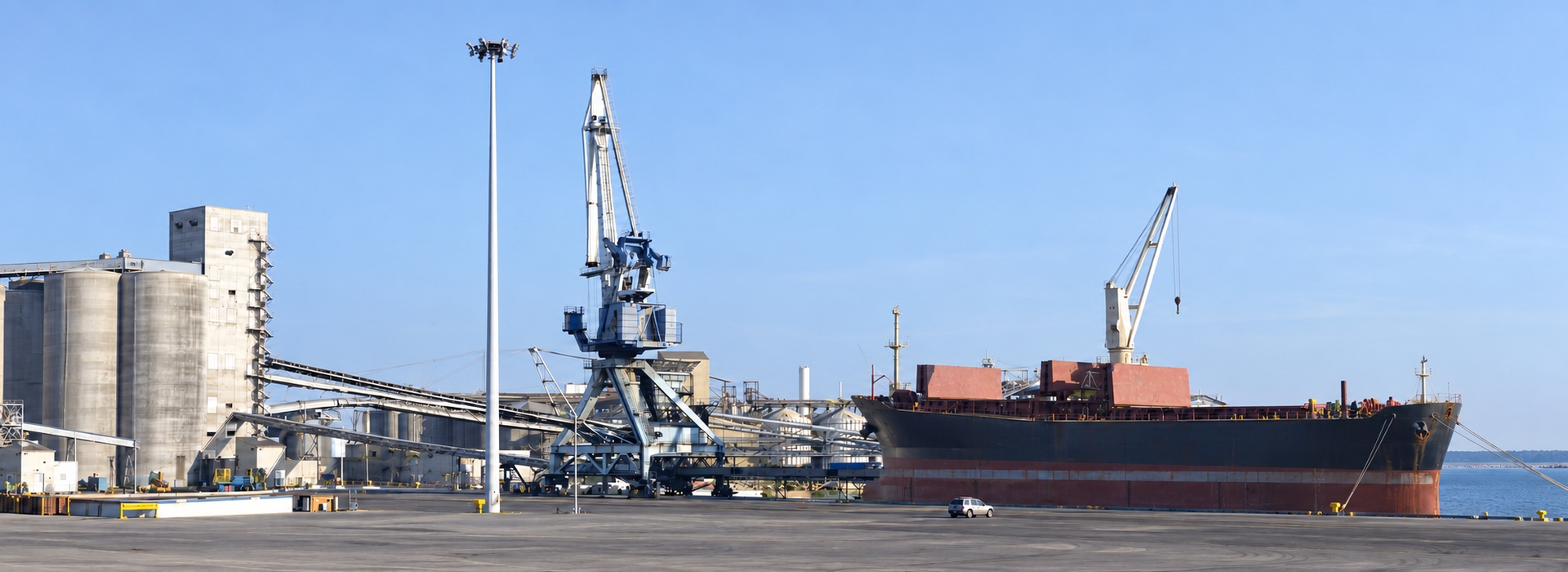
- Product details
-
Product scope: Choose the steel mast alone, a mast with a fixed lighting head, or a coordinated lowering-ring assembly. The order schedule identifies the headframe, floodlights, mechanical equipment, electrical items and documents included with each mast mark.
Three high mast assemblies to specify
Jieyao high mast product materials show steel shafts, fixed multi-light heads, ring-mounted floodlights, base connections and internal equipment arrangements. These components form different procurement scopes. A pole-only order and an equipped lowering mast should therefore have separate bills of materials even when their nominal height is the same.
A fixed head remains at its installed height during maintenance. A lowering ring is designed to travel along the mast using its specified equipment and procedure. Neither the head shape nor the presence of a door proves that a mast includes a lowering mechanism. The assembly drawing and equipment list establish the purchased configuration.
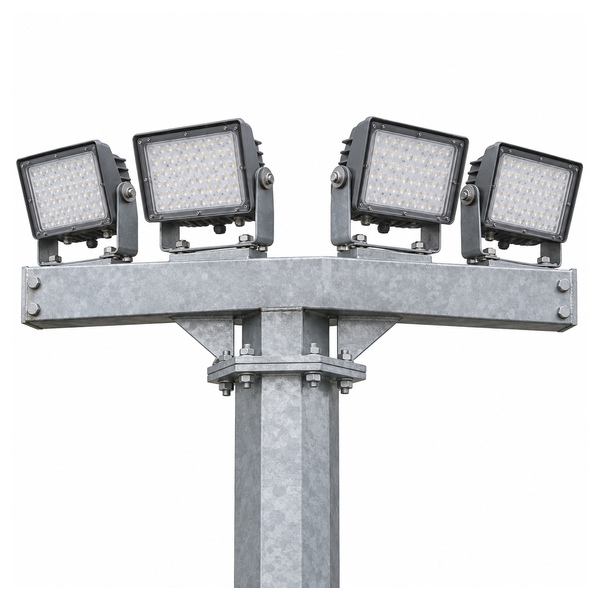 Fixed headframe product reference. Fixture count and attachment geometry belong to the selected configuration.
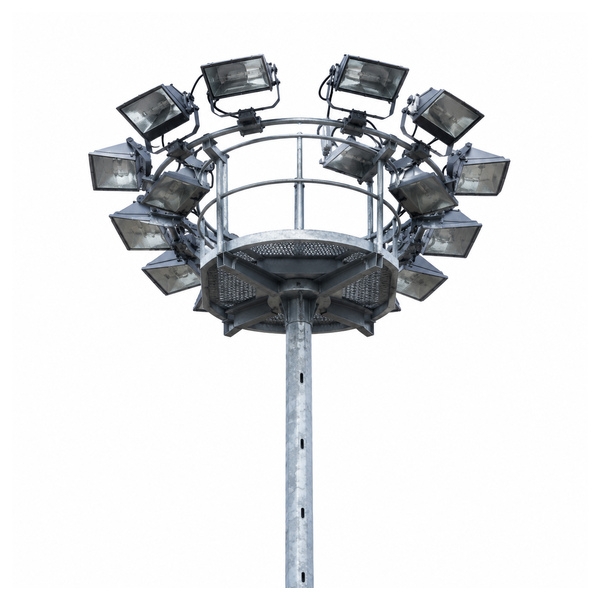 Ring-mounted product reference. Confirm the actual lifting and locking equipment in the system submittal.
Supply schedule: shaft, lighting head and equipment
Item Steel mast scope Fixed-head scope Lowering-ring scope Shaft sections and base Included as scheduled Included as scheduled Included as scheduled Head connection Interface to buyer equipment Fixed bracket / headframe Matched top assembly and ring Floodlights Buyer supply unless listed Models and quantity stated Models, quantity and ring positions stated Lifting equipment Not implied Not implied Winch, ropes, guides and controls itemized Electrical equipment Specified cable path and earthing point Terminal and circuit scope listed Travelling cable and disconnect scope listed Anchor components Separate counted supply line Separate counted supply line Separate counted supply line Civil works and erection Not implied by steel supply Not implied by equipment supply Not implied by lowering equipment supply The schedule prevents a common scope gap: a quotation headed “complete system” can still exclude luminaires, feeder cables, anchor bolts or commissioning. Specify the supplied quantity of each component and identify any buyer-supplied item. Local foundations, incoming power and site installation should remain explicit responsibility lines rather than assumptions hidden in the product name.
Where the buyer already owns floodlights, provide their mass, projected wind area, bracket dimensions and connection details. An identical power label does not establish that a replacement fixture fits the old ring or produces the same mechanical load. The headframe layout should identify the direction and aiming range of each luminaire.
Documented steel-pole manufacturing basis
Jieyao enterprise standard Q/321084 JYZM003—2023 covers steel lighting poles and describes sectioned polygonal shafts with nominal heights up to 40 m within its stated scope. This is a manufacturing framework, not a load chart or a declaration that every 40 m assembly suits every project. The final shaft sizes, section lengths, joints and base connection are selected from the approved structural design.
Standard item Recorded requirement How to use it in an order Material Q235 or material with similar performance; thickness at least 3 mm Specify the actual grade and section thickness; do not use the minimum as the mast design Galvanizing, metal below 5 mm At least 65 μm stated in the enterprise standard Agree the applicable coating specification and measurement scope Galvanizing, metal 5 mm or above At least 86 μm stated in the enterprise standard Identify member thickness and inspection locations Weld examination Visual checks plus sampled ultrasonic / magnetic examination described Set the contracted method, coverage and acceptance criteria Release documents Factory inspection and conformity document described Request order-specific records tied to mast marks A material certificate identifies the steel supplied; it does not verify the completed welds or the assembled lifting system. A coating measurement records the inspected surface; it does not establish the lifetime of the mast in a port or industrial atmosphere. Keep those records in separate parts of the handover file so each claim has an identifiable basis.
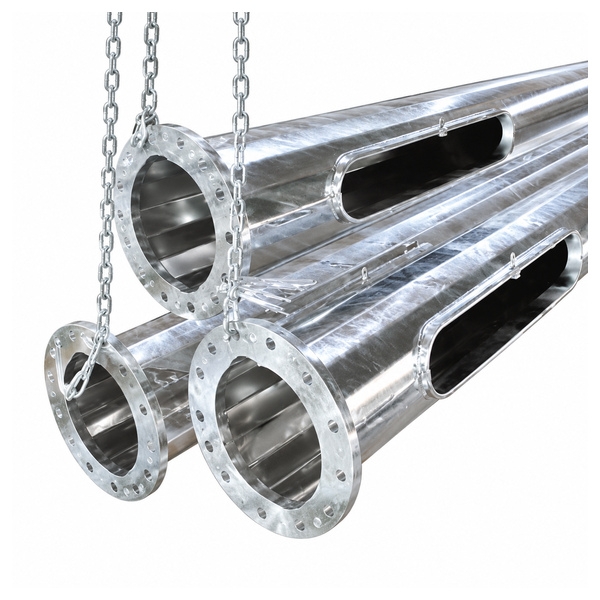 Sectioned mast product reference. Match each section mark, joint and base orientation to the released assembly drawing.
Shaft joints, base orientation and access door
For a sectioned mast, record the joint type and the assembly reference for every section. A slip-jointed shaft needs the approved overlap and assembly procedure; a flanged joint needs its mating plates, fastener schedule and orientation. These are different interfaces. A transport photograph alone cannot establish the correct overlap or bolt torque for an order.
The base drawing should show the anchor pattern, hole dimensions, cable opening, earthing attachment and head orientation. Before casting the foundation, the project team should compare the anchor template with the released mast base drawing. Geotechnical and foundation design remain project-specific; a reference foundation for one site is not a universal foundation for another soil or load.
Place the access opening so technicians can reach the equipment while following the approved maintenance procedure. The internal equipment arrangement must allow the specified cable route and operation of any lifting mechanism. Unscheduled equipment should not be added inside a mast simply because it appears to fit through the door.
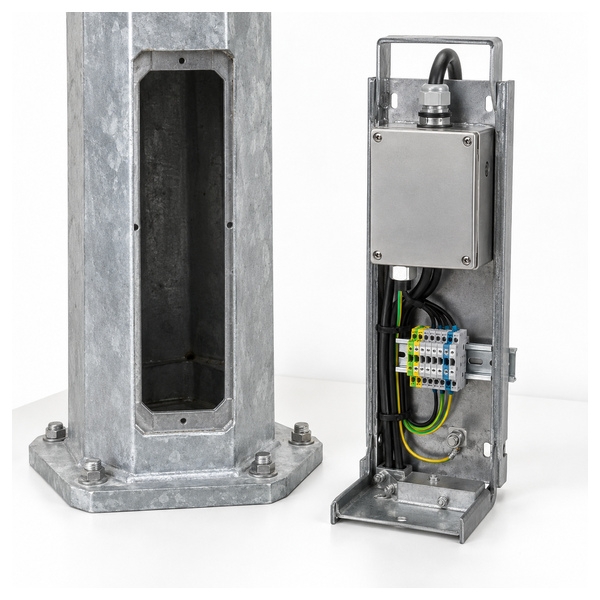 Internal equipment arrangement shown in product materials; exact components and clearances follow the selected assembly.
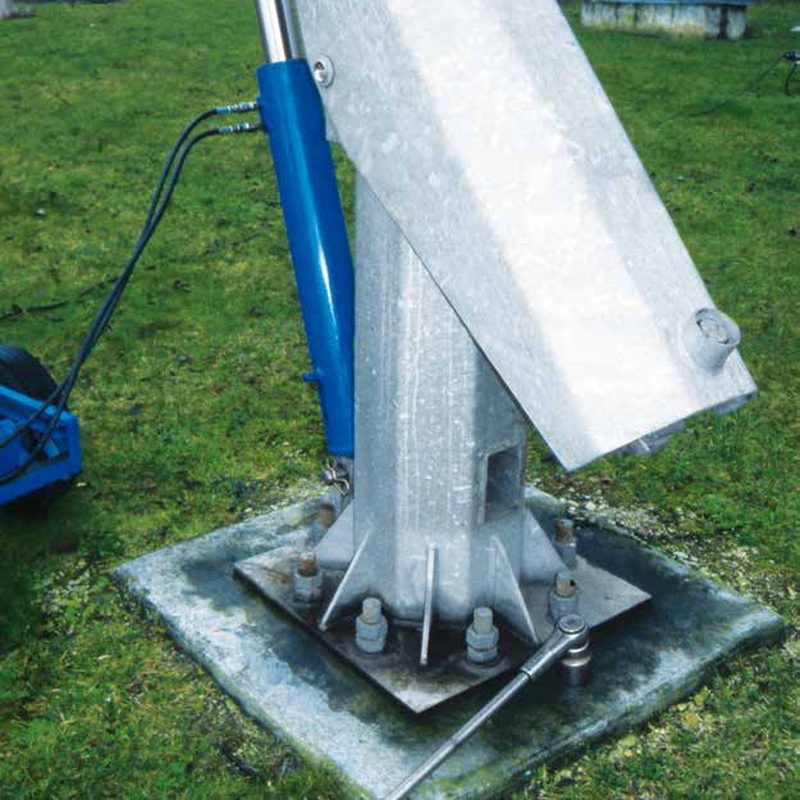 Base connection context. The actual anchor schedule and foundation require project-specific confirmation.
Lowering equipment and electrical interfaces
A lowering system should be ordered as a coordinated mechanical assembly. Identify the ring, head pulley or guide arrangement, lifting ropes, drive, locking or unloading devices, travel limits and supplied operating accessories. Their ratings and compatibility come from the selected system documents. A photograph of a ring is useful for configuration review but cannot establish a safe working load.
The operating sequence should state when the ring is supported by its working-position locks, when the drive carries the moving load and how the operator confirms the ring is correctly seated. The site owner also needs the required operating zone and inspection procedure. These details affect the selected product; they should be settled before equipment is shipped rather than improvised during installation.
For electrical scope, list incoming supply, circuit count, protection, cable lengths, connection points and the earthing arrangement. A moving light ring needs a cable and connection arrangement compatible with its travel. Floodlight wattage alone does not define the cable, protection or supply requirements. The destination project electrical design governs those selections.
Manufacturing, inspection and delivery file
Hold point Inspection subject Record to identify Before fabrication Material grade, thickness and drawing revision Material documents and released bill of materials Shaft fabrication Section geometry, seams, base and head interfaces Dimensional / weld inspection records Surface protection Preparation, zinc coverage and specified coating readings Inspection results by member or sampling location Assembly review Headframe / ring fit, hardware and equipment identification Assembly checklist and component schedule Functional verification Specified lifting, locking and electrical checks Configuration-specific test and operating records Packing and dispatch Matched section marks, head equipment and loose accessories Packing list and document register The inspection plan should distinguish shaft manufacture, assembly function and site commissioning. Before dispatch, agreed factory records should identify the drawing revision, inspected components, checks performed, results and test limitations. Record any substitution against the accepted component schedule. At handover, match delivered item marks and quantities to that schedule; site commissioning records should identify the installed configuration and the agreed checks completed after installation. A shaft dimensional check alone does not verify the lowering system, and factory checks do not replace site commissioning.
Long mast sections require a packing and lifting plan that protects the coating and preserves identification. Section marks should remain traceable to the assembly sequence after unloading. Count headframe pieces, bolts, covers, cables and operating accessories separately; a missing small component can prevent erection even when every shaft section has arrived.
For a quotation, send the mast height and layout, governing wind and structural requirements, floodlight data, fixed or lowering requirement, electrical supply, inspection documents, quantity and destination. The return offer should separate the confirmed equipment from site work and buyer supply. This page addresses that assembly scope; individual height-specific product pages remain the place for their separate model schedules.
Frequently asked questions
Can I buy only the high mast shaft?
Yes, a shaft-only scope can be defined. Its top connection, base interface, access opening and buyer-supplied equipment still need to be shown in the released drawings.
Does a lowering ring include the drive and controls?
Only when those components are listed. Specify the complete matched mechanical and electrical scope rather than assuming it from the ring photograph.
Are fixed and lowering heads interchangeable?
Do not assume so. Head connection, shaft geometry, equipment loads, cable route and maintenance arrangements need review for the proposed assembly.
Does the 40 m standard scope establish a load rating?
No. The enterprise standard gives a manufacturing scope. The project-specific structural design establishes the selected mast geometry and equipment capacity.
Can existing floodlights be fitted to a new mast?
Their bracket geometry, mass, wind area, aiming arrangement and electrical data must be checked against the new headframe or ring.
What confirms the supplied assembly?
The accepted quotation, released drawings, bill of materials and configuration-specific inspection and functional records should describe the same equipment.
Related products and enquiry
Send the current drawing, equipment schedule, quantity and destination through Contact Jieyao for a configuration-specific quotation.
-
-