
◈ What should a port lighting design balance?
Port and quay lighting must make the work area visible while controlling glare for drivers and vessel operators. Review the berth, crane work areas and navigation viewpoints together. Compare energy after layouts meet the same lighting criteria.
A quay edge, container lane and crane loading area have different tasks and sight lines. Specifying one floodlight wattage across the terminal hides these differences. Begin with activity zones and test how the light reaches workers, drivers and water-facing viewpoints.
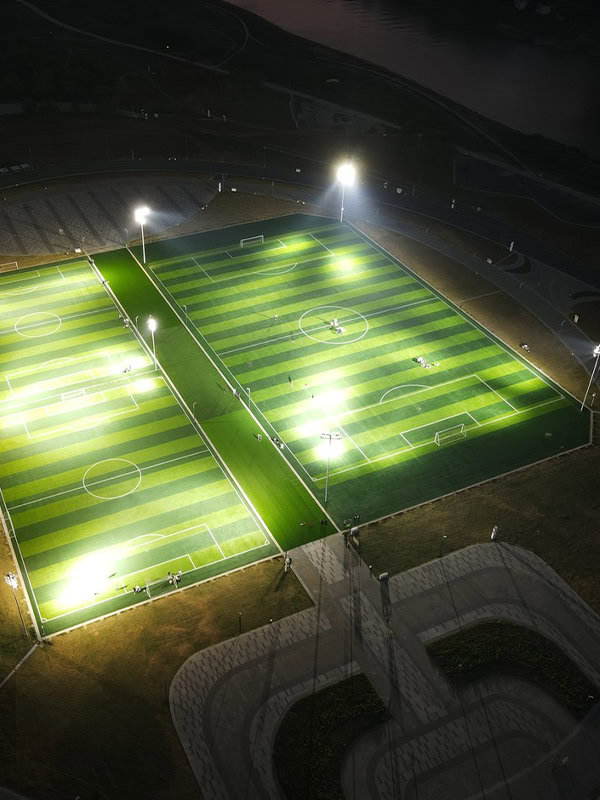
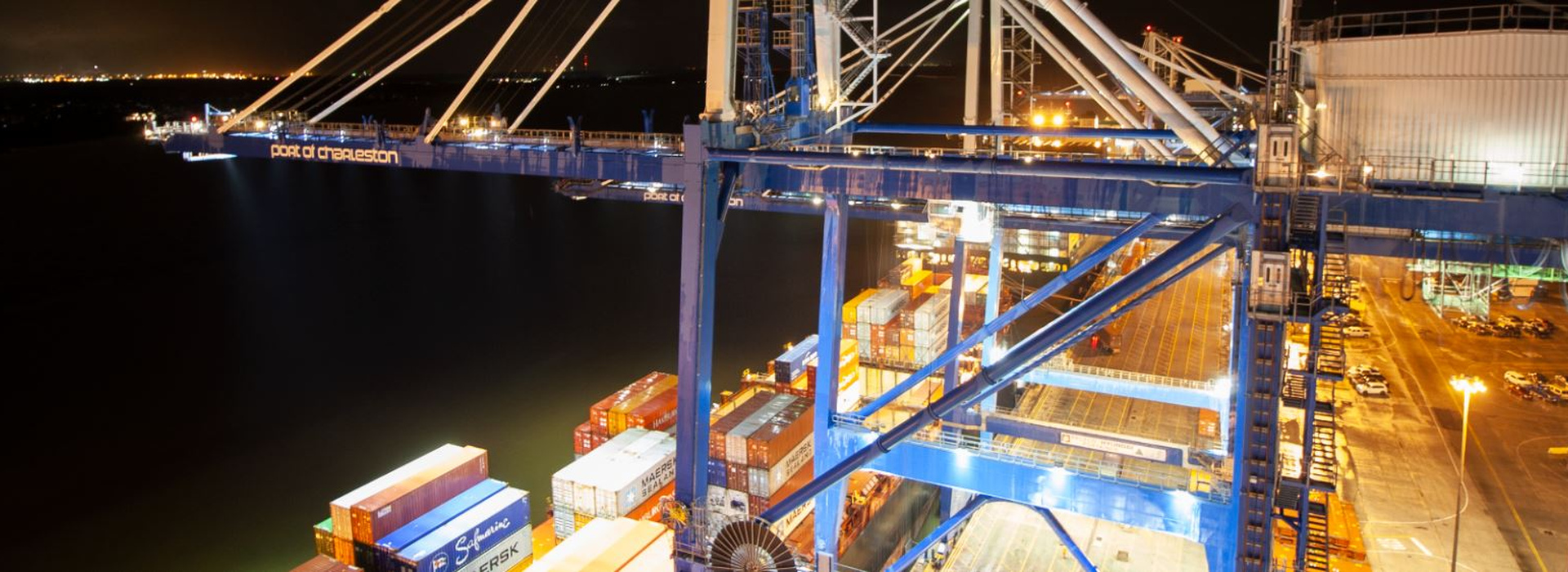
Container terminal lighting at night — an application example.
Port Skills and Safety’s SiP009 guidance asks designers to consider vessel operators’ night vision and visibility of navigation aids, alongside glare and cargo shadows. Its 2025 open-access edition is UK guidance, useful as a reference rather than a universal local requirement. [1]
A pavement lighting calculation cannot establish what a pilot sees from the approach channel. Add water-facing viewpoints with the relevant harbour stakeholders. Review floodlight beam directions and bright backgrounds behind navigation marks, including changes as vessels move.
↔ Swipe horizontally to read all columns.
| Zone | Main visual issue | Useful design output |
|---|---|---|
| Quay edge and mooring | Edges, obstacles and ship-shore changes | Task grids plus pedestrian viewpoints |
| Crane work area | Moving loads, shadows and cab views | Operating-state models and glare review |
| Container / vehicle route | People and bright-dark transitions | Route grids and driver viewpoints |
| Water-facing approach | Navigation aids and night vision | Views agreed with harbour stakeholders |
More luminaires do not automatically mean higher energy use, and fewer luminaires do not establish a better layout. First compare the same task areas, maintained criteria, operating states and glare requirements. Then compare actual luminaire input power and operating hours.
Illustrative comparison: assume two candidate layouts have passed the same photometric and operational checks. Layout A has 12 luminaires at 300 W each; B has 16 at 250 W each. These are hypothetical inputs, not results for a Jieyao installation. Assume 12 hours every night, 365 days, without dimming or additional control loads.
↔ Swipe horizontally to read all columns.
| Calculation | Layout A | Layout B |
|---|---|---|
| Luminaire quantity | 12 | 16 |
| Input per luminaire | 300 W | 250 W |
| Total input | 3.6 kW | 4.0 kW |
| Energy per 12-hour night | 43.2 kWh | 48.0 kWh |
| Energy per 365-day year | 15,768 kWh | 17,520 kWh |
▤ What the 10% difference means
Annual difference = 17,520 − 15,768 = 1,752 kWh, or 10% of Layout B consumption. This follows from assumed power and hours. It is not evidence of a product saving unless both real layouts deliver the required lighting service.
For dimming, calculate each scene separately: energy = Σ(scene input kW × scene hours). Use measured or documented input power at each setting; a 50% control command does not necessarily mean exactly 50% electrical input. Include standby and controls where material to the comparison.
Initial and maintained calculations answer different questions. In an illustrative design with a maintenance factor of 0.80, initial 75 lx corresponds to 60 lx maintained because 75 × 0.80 = 60. The 0.80 assumption is not a default marine factor: support it with the selected equipment, environment and maintenance plan.
Neither value establishes acceptable glare or navigation visibility. These need their own assessment. A design can meet an average lux target while leaving important shaded locations or uncomfortable operator views.
Create scenes around actual operating areas. Occupied loading zones, active routes and inactive storage can have different requirements. Check the consequences of a sensor missing an operation or a dimmed zone becoming active. Record scene boundaries and transitions so vehicle routes do not alternate unexpectedly between bright and dark areas.
SiP009 treats controls as a risk-assessed choice. Their operating and failure states deserve attention alongside the projected energy total. [1]
Equipment that is difficult to reach may remain dirty or faulty longer. Compare access methods, isolation arrangements and servicing disruption. Identify pole coating systems and assembly interfaces separately from luminaire ingress ratings. An IP rating describes a different property from corrosion resistance.
At handover, retain final aiming schedules, as-built positions, control scenes and survey conditions. Compare installed views with the agreed locations, including the view from water where relevant. Changes to container stacks, cranes or berth operations can justify another review.
A terminal contains different activities and receiving planes. Define criteria by task and area, then check interfaces between zones. A single average over the whole site can conceal a poorly lit working location.
Discuss your project with Jieyao Lighting
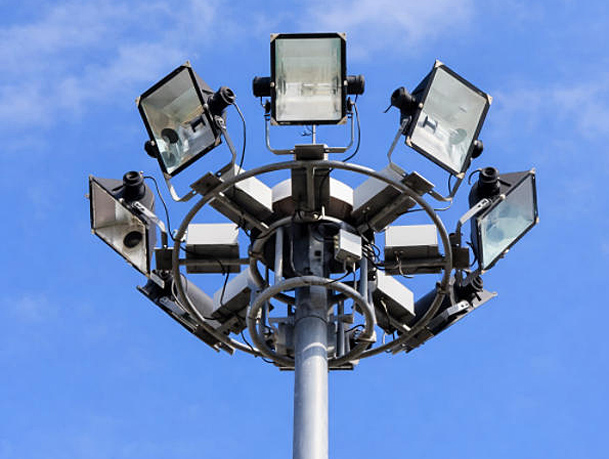
Send Jieyao Lighting the terminal plan, berth boundary, crane envelopes and operating schedule. Include lighting criteria and navigation review viewpoints so layout options can be compared consistently. Explore port and dock high mast lighting poles or use the website contact form to share the project requirements.
1. Port Skills and Safety, SiP009 v2 (October 2025) — See printed pages 5–10 for navigation, glare, shadows and controls. UK legislative context.
https://www.portskillsandsafety.co.uk/wp-content/uploads/2023/11/SiP009-Open-access-version.pdf
The numerical examples are original calculations by Jieyao Lighting using the stated assumptions. They illustrate a comparison method and are not measured results for a supplied product.
Contact Us
Get a custom lighting solution and quotation for your project. Yangzhou Jieyao Lighting Equipment Co., Ltd. manufactures outdoor lighting and steel poles in Guoji Town Industrial Park, Gaoyou City, Yangzhou, Jiangsu, China. The company reports a 10,000 m² factory site, more than 60 employees including more than 10 technical personnel, and more than 100 production and testing machines. The present company name dates from 2017; Jieyao Poles’ published history traces the team’s manufacturing lineage to 2006. The stated 15 years of experience refers to the team. The company reports exports to more than 60 countries. Do you have any questions or requests?
Email: jay@jieyaolighting.com

Click to Chat.
Im online now.
 English
 Español
 Bahasa Indonesia