

 English
 Español
 Bahasa Indonesia

- Product details
-
Product overview: This 30–35m high-mast lighting pole is an RFQ starting point for large port and terminal areas where luminaires must cover broad working surfaces from a small number of mast locations. The final shaft, headframe, floodlight arrangement, finish, anchors and access method must be defined against the actual terminal layout, equipment schedule and site design criteria. Jieyao should quote the approved configuration—not a height label alone.
Where a port high mast fits
Container yards, apron edges and internal terminal roads can require different light distribution, glare control, obstruction clearance and maintenance access. A high mast may be considered for a broad area with clear placement and an appropriate civil foundation. It should not be assumed to replace every lower road pole or to light around stacked containers without shadow and aiming studies. The buyer should identify the area boundaries, moving equipment, traffic routes, adjacent properties and any water-facing spill-light limits before selecting a layout.
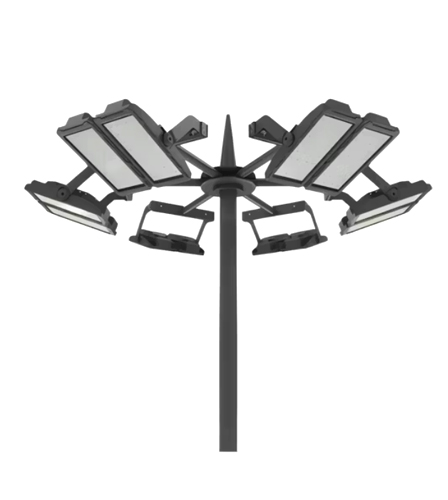
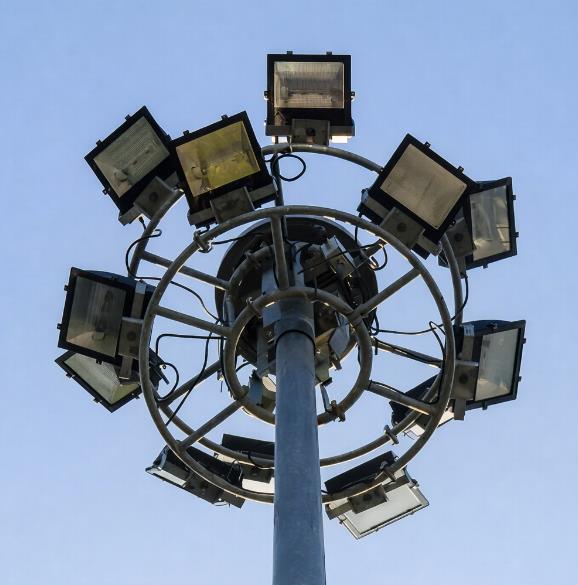
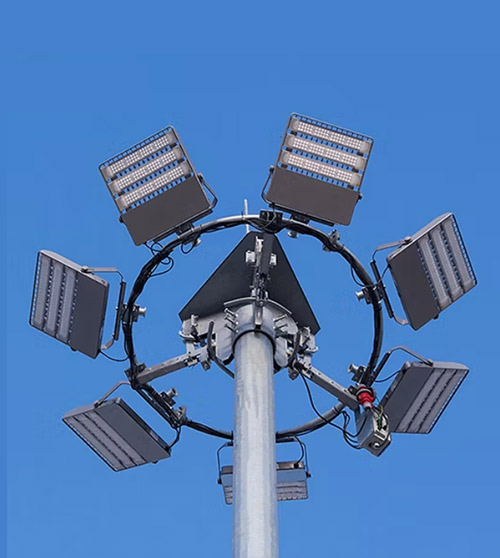
The existing gallery shows a circular headframe with multiple LED floodlights viewed from below. Match the offered headframe and floodlight schedule to the approved drawings rather than selecting equipment from a photo alone.

LED floodlight arrangement on a circular high-mast headframe.
Define the mast as a coordinated assembly
A useful quotation identifies the pole and base arrangement, headframe, floodlight mounting points, cable route, access and maintenance method, surface protection, and boundaries between the lighting supplier and the civil/electrical contractors. A fixed headframe and a raising/lowering arrangement are different systems. Do not assume the presence of a winch, latch or other moving mechanism from a picture of a ring. If a lowering system is required, its mechanism, operating procedure and acceptance evidence must be explicitly included in the offer.
Port high-mast inputs and the corresponding quotation response Buyer input Why it changes the design Response to request from Jieyao Site plan and working-area boundaries Set mast positions, target surfaces, obstructions and light-spill constraints. Proposed mast locations, headframe arrangement and luminaire aiming study for review. Floodlight schedule and controls Equipment mass, projected area, cabling and maintenance access affect the complete assembly. Matched luminaire/headframe schedule and interface drawing for the quoted configuration. Site wind and governing structural criteria Determine the shaft, arm/headframe, base and anchor design basis. Project-specific calculations, material and section proposal, and foundation reactions. Coastal or industrial exposure Influences surface preparation, coating, drainage details and inspection scope. Specified finish system and inspection/repair plan rather than an unsupported service-life promise. Service access and work-zone restrictions Separate fixed-head and lowering-head maintenance methods. Defined access option, operating documentation and responsibility boundary. Civil and electrical interfaces Prevent a gap between supplier drawings and site construction. Base/anchor information, cable/access arrangement and submittal list. Lighting and structural checks belong to the same design release
A proposed mast height and floodlight wattage cannot establish the right layout on their own. Ask for a calculation using the offered optic, output, mounting geometry and aiming, with the project's applicable criteria and constraints. Then use that exact equipment schedule in the structural design: changes to floodlight quantity, bracket position or projected area can change wind effects and headframe loads. Site-specific reactions must be coordinated with the civil foundation designer.
For a port or dock, include glare and spill-light review from actual operator viewpoints and site boundaries. State which nearby tasks need illumination and which areas must be protected from intrusive light. A generic “high output” claim is not a substitute for this review. If the mast is near marine exposure, the finish and inspection criteria should be specified for the actual environment; do not treat a single salt-spray number as proof of a complete pole system's durability.
Review maintenance and handover before ordering
A fixed headframe relies on planned elevated access. A lowering headframe adds moving equipment and requires a defined operating area, inspection and trained-personnel procedure. Neither option is universally cheaper or safer without the site's access plan. The purchase documentation should define how floodlights, drivers, controls and mechanical parts will be identified and serviced.
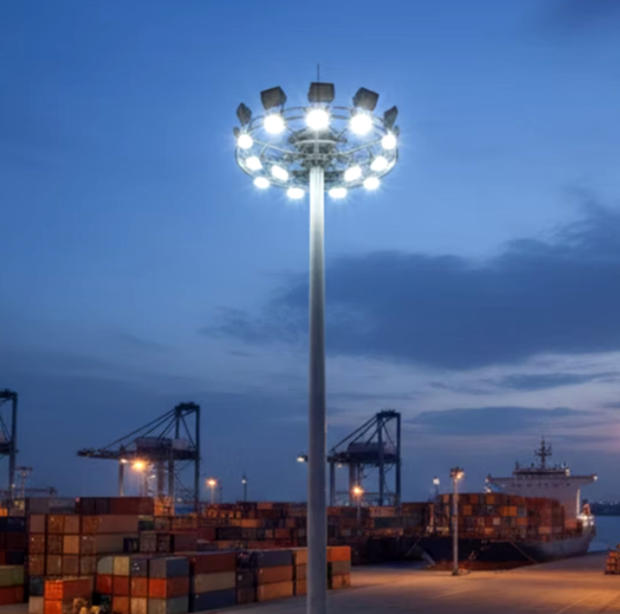
Submittal and handover evidence for a quoted 30–35m terminal mast Stage Evidence to agree Decision it supports Before fabrication Approved layout, equipment schedule, photometric study, structural basis and general arrangement. Confirms the quoted configuration and interfaces match the project brief. During production Material identification, applicable inspection records and finish checks tied to released drawings. Connects manufactured components to the accepted specification. Before shipment Section/part identification, packing list and any mechanism-specific documentation. Allows the site team to receive and assemble the intended set. At commissioning Installed equipment and aiming record, electrical checks and mechanism witness checks if a lowering system is supplied. Provides a baseline for acceptance and future maintenance. The existing gallery also shows a high mast illuminating a container-handling area at dusk. A similar scene should be evaluated against the buyer's actual yard layout and operating viewpoints.

High-mast lighting in a container-handling area.
Request a project-specific proposal
Send Jieyao the terminal plan, lighting targets, mast-location constraints, floodlight preference if already selected, wind and exposure requirements, civil/geotechnical information and maintenance-access preference. Ask the quotation to separate supplied equipment from foundation construction, erection, controls and commissioning where those responsibilities differ. For broader system options, compare the 35m high-mast lighting system; for the effect of fixture area on structural design, see the wind-load and EPA guide. Submit the actual brief through Contact Jieyao.
Frequently asked questions
Is a 30–35m high mast suitable for every port area?
No. Site geometry, obstructions, glare, working areas, mast locations, foundation conditions and access method determine whether it is appropriate.
Does the gallery prove a lowering system is included?
No. Fixed and lowering headframes require different mechanical details and documentation. The quoted equipment schedule and drawings must identify the supplied arrangement.
Can the wind rating be taken from a standard product claim?
No. The selected equipment, projected area, site wind basis, mast geometry and governing design method determine the project-specific structural response.
What should be included in the RFQ?
Provide a site plan, target lighting criteria, obstruction and spill-light limits, site wind/exposure information, maintenance preference, floodlight schedule if known, and the civil/electrical interface scope.
-
-