
A light pole damper must address the behaviour of the installed assembly. A product described as a first-mode device cannot be selected solely because its reduction percentage looks attractive. Establish the motion being addressed, understand the offered device’s mechanism and location, and compare its evidence with the pole, fixtures and site under review.

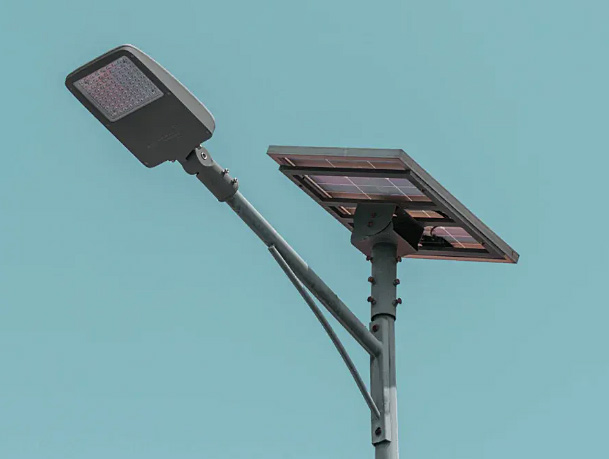
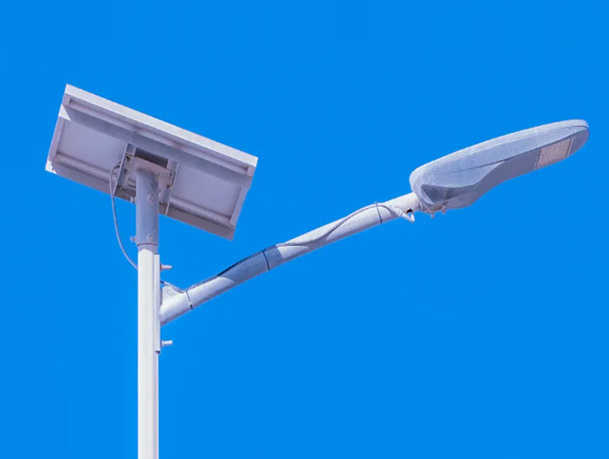
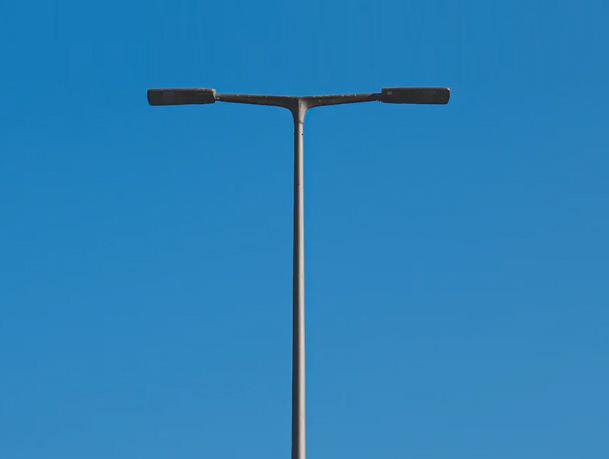
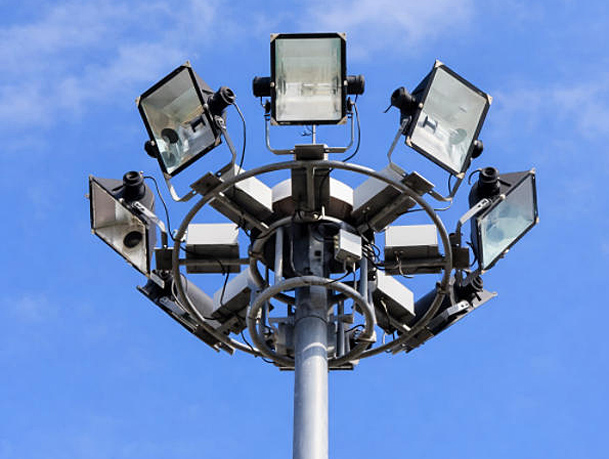
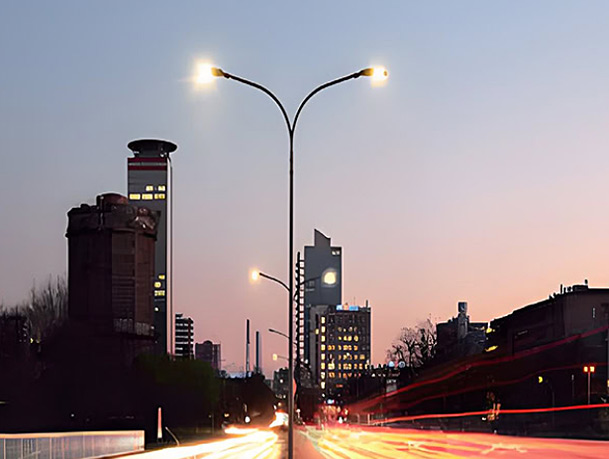
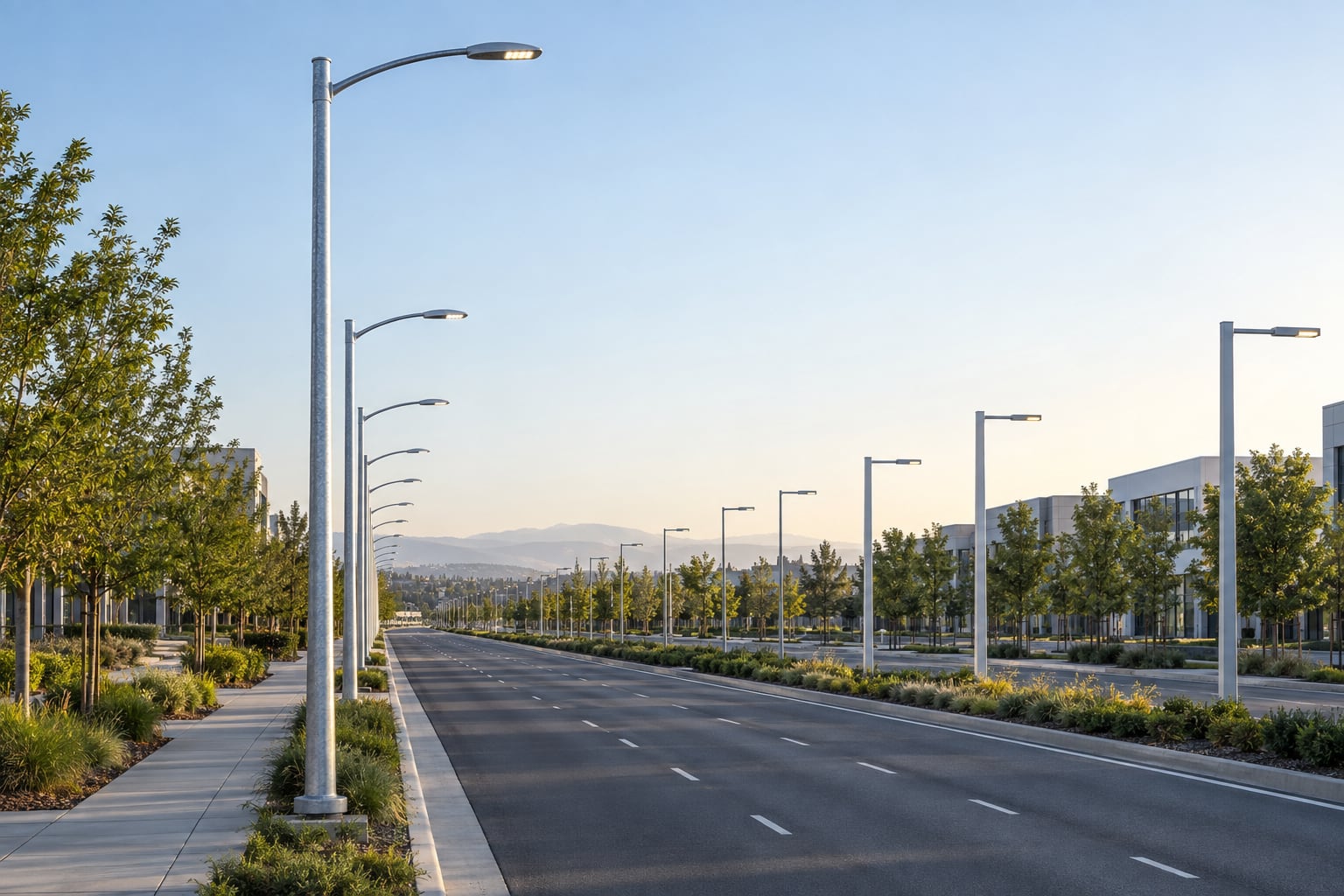
Roadway lighting pole application.
A slow movement concentrated near the top and a faster movement involving the middle of a shaft describe different behaviours. Wind-induced resonance occurs when excitation interacts with a structure’s natural vibration characteristics. A location that produces repeated oscillation can therefore require attention even without an exceptional storm.
Hapco’s vibration guidance (https://www.hapco.com/resources/wind-induced-vibration/) describes first-mode motion with its greatest displacement at the top and second-mode motion involving the middle portion. It gives typical frequencies of roughly 1 Hz and 3–6 Hz respectively, and explains how alternating vortex shedding can excite the shaft. These are explanatory descriptions, not pass/fail frequency limits for another manufacturer’s pole.
| Feature in Hapco’s explanation | First mode | Second mode |
|---|---|---|
| Described movement pattern | Largest displacement at the pole top | Movement involving the middle portion of the shaft |
| Indicative frequency | About 1 cycle per second | Typically 3–6 cycles per second |
| Meaning for an enquiry | A pole-top recording may show the prominent motion | A recording cropped to the top can miss an important part of the pattern |
A video is useful context, especially if it includes the full shaft and fixtures. Camera movement, perspective and frame rate can distort what it shows. It cannot by itself establish vibration mode, stress or remaining service life. The assessment needs the actual pole geometry, attachments and site behaviour.
A damper manages the response of the structure through its particular mechanical arrangement. It is not a substitute for establishing that the pole and connections suit the project loads. The mechanism and its location help explain what an offered device is intended to address.
Valmont’s LP3 product description (https://www.valmontstructures.com/product-catalog/us/accessories/mitigator-lp3-light-pole-damper) provides a specific example. A shot-filled stainless-steel ball moves inside a curved chamber. Motion of the shot and interaction with the chamber lining dissipate vibration energy. Valmont identifies this product as a first-mode device and locates it near the pole top.
That description belongs to the LP3. Other damping arrangements may use different mechanisms. A photograph of a small attachment near a pole top does not establish which mechanism it contains or its suitability for another assembly.
Location is also part of the design. Hapco’s accessory page (https://www.hapco.com/pole-accessories/vibration-dampers/) describes its first-mode device at the top of the pole and its second-mode arrangement around mid-height, with factory and field mounting options. Those examples show why a substitute device needs a defined location and fixing detail; they do not prescribe installation points for every pole.
The LP3 page reports an 80% laboratory vibration reduction and says performance depends on pole size and configuration. The short product description does not identify whether that headline percentage concerns displacement at a particular point, another response measure, or a defined summary of a test. It cannot be relabelled as an 80% reduction in stress, energy or fatigue damage.
The published percentage is a statement about the named Valmont product. It is not a Jieyao measurement or a guaranteed reduction for an arbitrary street light pole. The summary alone does not supply the test setup needed to reproduce that result.
The comparison becomes meaningful when a test report identifies the response quantity and units, measurement position, excitation, baseline and complete assembly. A reduction in top displacement and a reduction in base strain describe different quantities. Even two displacement comparisons can differ if one records peak motion at the top and the other records motion elsewhere on the shaft.
There is no useful reason to convert the headline number into a universal life-extension estimate. Service-life assessment requires the relevant stress history and structural details. A purchasing comparison should establish whether the device addresses the assessed motion and whether its supporting test or analysis applies to the proposed configuration.
Consider a hypothetical maintenance enquiry. The owner’s recording shows persistent shaft movement, with noticeable motion around the middle. One supplier offers a pole-top first-mode product and highlights its laboratory reduction percentage. A second proposes an assessment before selecting a device.
The first offer has supplied a performance headline, but has not yet connected it to the behaviour at this site. The recording does not establish a diagnosis either. The useful next step is to assess the motion and its cause, then compare a device intended for that response. Ordering the first product on percentage alone would skip that decision.
A recent luminaire or arm change is relevant because the configuration under review has changed. Record the old and new equipment, including location and attachment details. The wind-load and luminaire EPA guide covers the structural input package; a vibration assessment adds the dynamic behaviour and proposed mitigation.
For an existing pole with persistent movement, the owner’s inspection and access-control process comes before a routine accessory installation. Visible damage, loose hardware or altered alignment requires its own disposition. Fitting a damper does not establish that earlier damage has been repaired. The pole maintenance decision guide addresses that condition record.
Once the proposed mitigation has been assessed, the supply can be defined: the exact device, drawing and mounting location; factory or field installation; the work included; and the inspection or measurement that will verify completion. These items connect the engineering decision to a deliverable assembly.
For a new Jieyao Lighting pole enquiry, include the application and site conditions alongside the pole and luminaire configuration. Discuss the project requirements so any vibration concern can be addressed in the proposal’s design and supply scope.
Source-based explanation revised 6 November 2026. The maintenance example is hypothetical.
Contact Us
Get a custom lighting solution and quotation for your project. Yangzhou Jieyao Lighting Equipment Co., Ltd. manufactures outdoor lighting and steel poles in Guoji Town Industrial Park, Gaoyou City, Yangzhou, Jiangsu, China. The company reports a 10,000 m² factory site, more than 60 employees including more than 10 technical personnel, and more than 100 production and testing machines. The present company name dates from 2017; Jieyao Poles’ published history traces the team’s manufacturing lineage to 2006. The stated 15 years of experience refers to the team. The company reports exports to more than 60 countries. Do you have any questions or requests?
Email: jay@jieyaolighting.com

Click to Chat.
Im online now.
 English
 Español
 Bahasa Indonesia