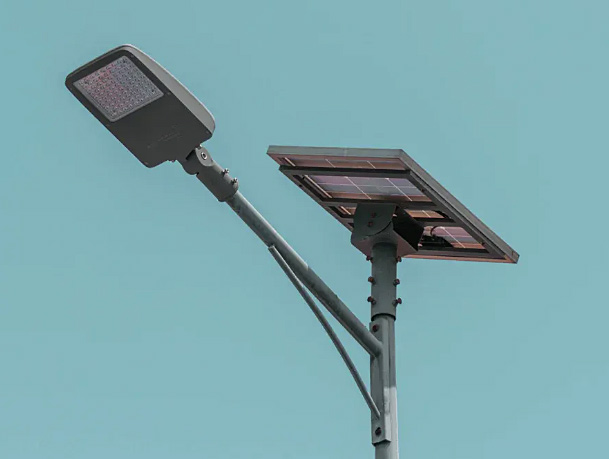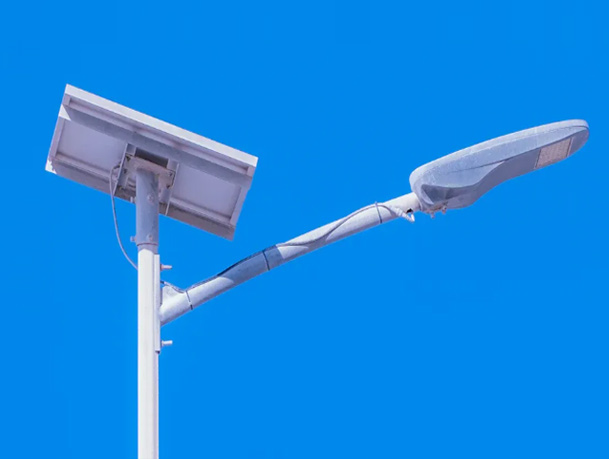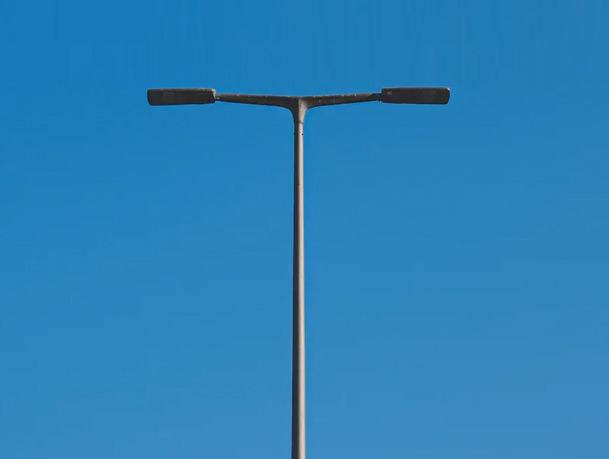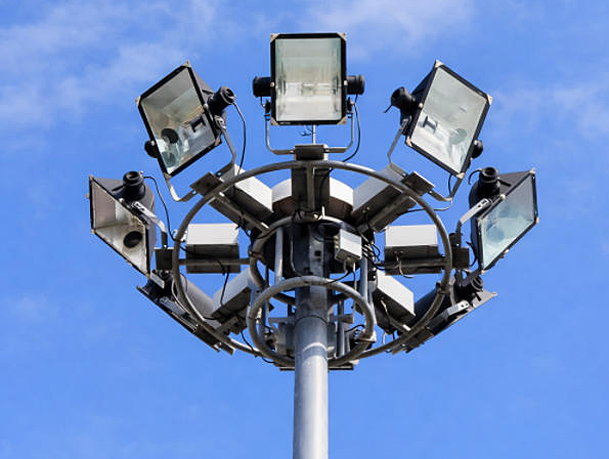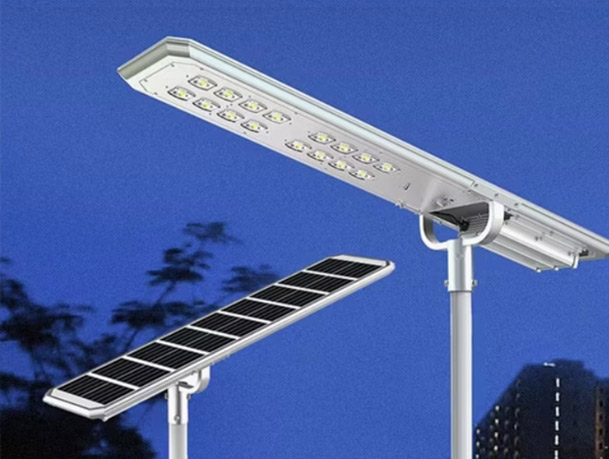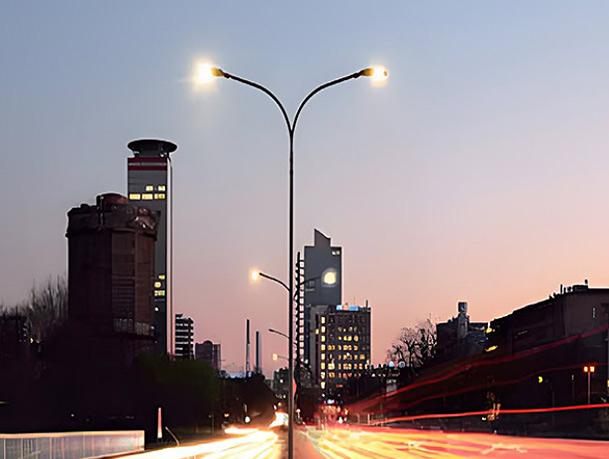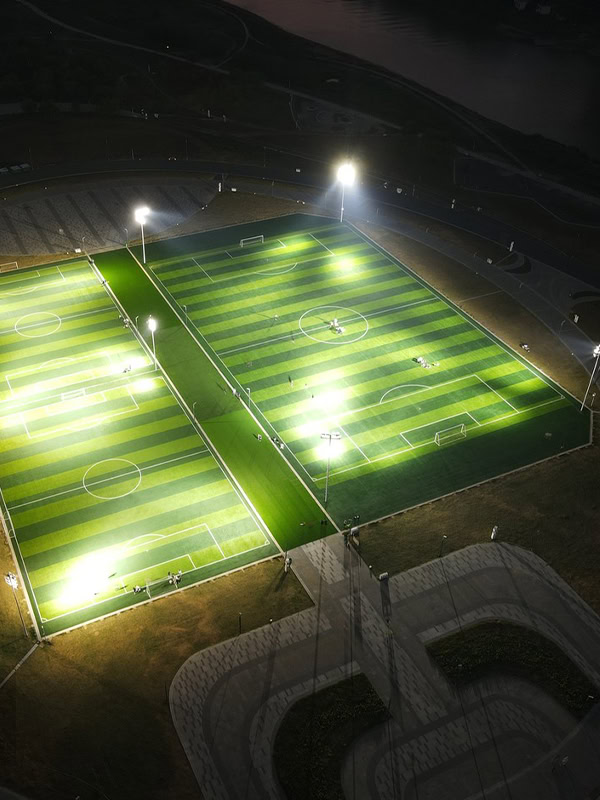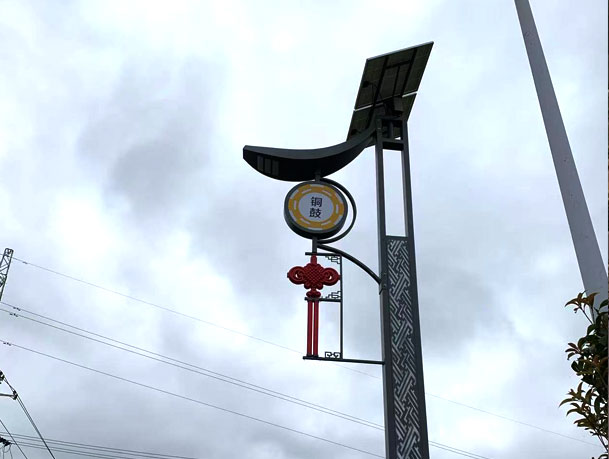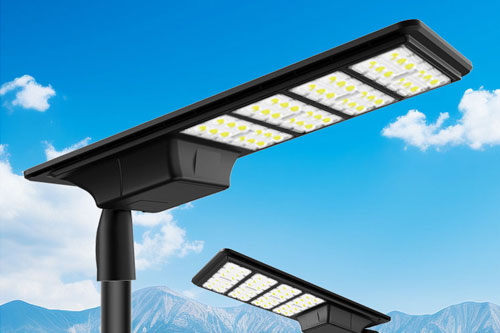


When only basic street lighting is required and there is no need for additional equipment, traditional streetlight poles should be selected. These are suitable for ordinary residential streets, rural roads with low traffic volume, and projects with limited budgets and no plans to expand supporting infrastructure.
If the poles are expected to integrate equipment such as surveillance cameras, various sensors, or 5G micro-base stations within the next 15 years, smart utility poles must be selected. In this case, the core considerations for selection are no longer luminous flux or pole height, but rather the grade of steel, structural calculations for wind loads, long-term corrosion protection systems, and integrated equipment operation and maintenance solutions.
Most procurement teams focus solely on comparing differences in lighting functionality, but what truly drives the difference in total lifecycle costs are structural design and long-term service life. Such critical information is often omitted from specifications, so it is essential to clearly distinguish the roles of the two in advance:
Traditional streetlight poles serve solely as support columns for lighting fixtures; smart utility poles, in addition to carrying lighting, must also support a variety of external devices that are heavier, installed at higher elevations, have a larger wind-exposed surface area, and incur higher replacement costs.
Comparing lighting fixture specifications is merely a basic step. The main structure of the pole must continuously withstand 15 years of wind exposure, salt fog corrosion, and damage from external impacts. Structural durability is the core criterion that distinguishes cost-effective procurement from the risk of costly repairs down the line.
The structural difference buyers underestimate
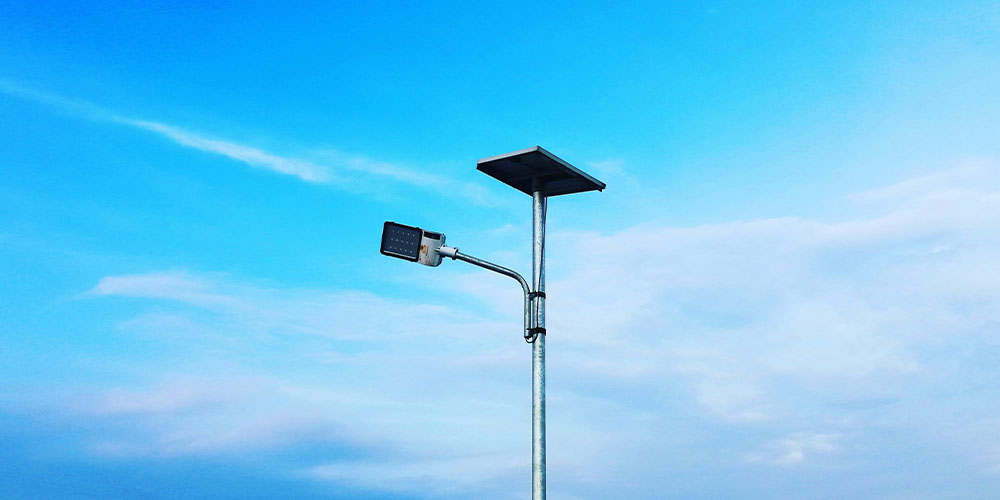
Smart utility poles are steel lighting poles designed with sufficient load-bearing capacity to support cantilevered communication and surveillance equipment; they are not intended solely for mounting lighting fixtures. Once a 5G radio frequency unit, a PTZ camera, and multiple sets of sensors are installed at the top of the pole, the pole’s function transcends that of a simple lighting fixture and becomes an engineering load-bearing structure. Therefore, during the selection phase, the design must strictly adhere to standards for load-bearing components.
This underscores the importance of manufacturers’ comprehensive technical documentation, which far surpasses that of simple product manuals. Our company manufactures steel light poles in strict compliance with the European standard EN 40 for steel lighting poles and the EN 1090 standard for steel structures, and we provide full CE compliance certification for the EU market.
Conventional streetlight poles listed in product catalogs typically use generalized, simplified load classes; however, multi-functional poles equipped with smart devices require a complete set of compliance documentation that clearly specifies all structural design bases.
A simple verification method for buyers: Confirm whether the pole has obtained EN 1090 certification for steel structures or is being sold solely as a standard lighting product. Conventional light poles marketed solely on the basis of luminous flux and pole height generally lack structural stress calculations for the bending moments generated by top-mounted cameras and communication equipment, posing safety hazards such as overturning and deformation.
Wind-load engineering: the row most tenders forget
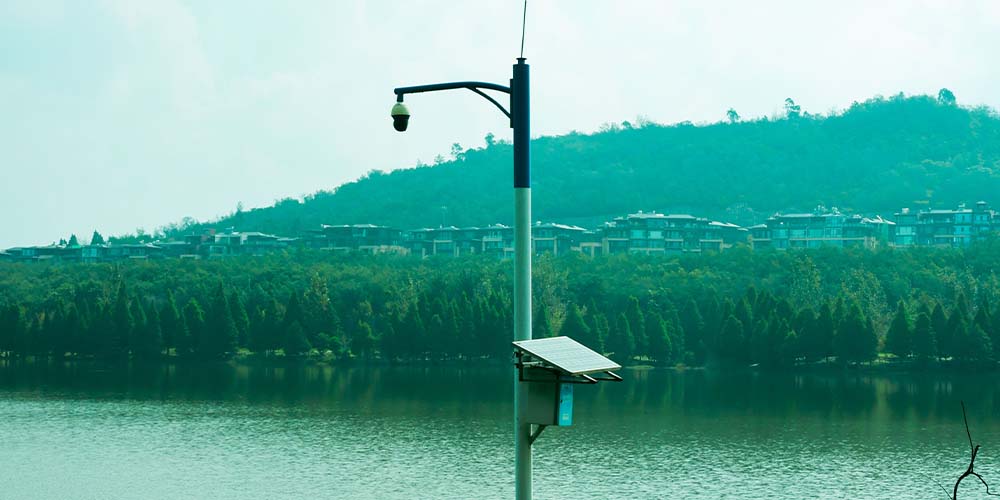
The maximum external force acting on a smart utility pole stems from the wind pressure exerted on equipment mounted at a high elevation. Due to the pole’s high installation height and the cumulative wind-exposed area, the bending moment at the base of the pole increases dramatically. Relying solely on the general wind speed ratings listed in product catalogs is insufficient to meet the safety design requirements for poles subjected to various types of smart loads.
Lipco can issue stamped static wind load calculation reports in accordance with the local codes of the project’s host country—for example, compliant with the Polish standard PN-EN 1991-1-4—rather than uniformly applying generic catalog wind speed parameters. Wind pressure conditions differ significantly between the Scottish coast and the Spanish interior; rigorous structural stress calculations account for these regional meteorological variations. Traditional streetlight fixtures have a small wind-exposed area and generally do not require such detailed specialized structural analysis; however, smart utility poles must undergo targeted wind load verification.
During the price comparison phase, it is essential to clarify the fundamental difference between these two types of documents: wind speed ratings listed solely in a catalog are not the same as specialized wind load calculation reports that are stamped and adapted to the target country’s standards. The latter constitutes formal engineering design documentation that can be submitted to review agencies for verification; the former consists merely of reference values on a product specification sheet. Once equipment such as 5G modules and surveillance cameras is mounted, these parameters may not meet actual structural load requirements, posing potential structural safety hazards.
Steel grade and wall thickness: why S355 earns its place
Steel grade is a critical parameter that is often overlooked; it directly determines whether a pole can support the load of externally mounted equipment without the need to indiscriminately increase the cross-sectional area. Conventional lighting poles typically use S235 structural steel; for multi-functional poles designed to carry various types of smart devices, it is advisable to select steel with a higher yield strength.
Our company’s smart utility poles uniformly use S355 structural steel, which has a higher yield strength than the commonly used S235. After structural analysis, the poles are designed with standard wall thicknesses of 3 mm and 4 mm, which are sufficient to support cantilevered 5G equipment, surveillance cameras, and other smart loads. The advantage of steel with a higher yield strength lies in its ability to achieve a lighter cross-section while meeting the same load-bearing requirements; Selecting wall thicknesses based on structural calculations—rather than relying solely on industry conventions—not only mitigates the risk of insufficient load-bearing capacity but also avoids unnecessary weight gain from excess steel.
Conventional streetlights support only small lighting fixtures, for which thin-walled S235 steel fully meets operational requirements; however, smart utility poles rely on high-grade steel combined with wall thicknesses verified through structural calculations to withstand the bending moments caused by wind loads on top-mounted equipment, thereby preventing pole deflection and deformation.
Corrosion finish and service life: where the lifecycle gap opens
Corrosion is the primary cause of failure in outdoor steel poles. The corrosion protection system directly determines the overall replacement cycle of the poles, rather than merely requiring localized refurbishment or repairs. This critical difference in the full life cycle is rarely reflected in product comparison tables.
Our factory’s light poles utilize a dual-layer corrosion protection system consisting of hot-dip galvanizing in accordance with ISO 1461 and outdoor powder coating. The protection level exceeds the ISO 12944 C4 corrosion environment standard, and the designed service life is 1.5 to 2 times that of single-layer protection processes. The design is based on Clause 6.4 of ISO 12944-5:2018 and the ISO 14713 standard.
In C4 corrosion environments, such as coastal and industrial areas, poles with only galvanization or a single coat of paint will rust rapidly and require frequent maintenance; For ordinary, traditional streetlights in inland areas with low corrosion levels, a simplified corrosion protection process may be acceptable, as the cost of replacing poles is low.
However, for smart utility poles equipped with high-value electronic equipment such as 5G base stations and surveillance systems, if the pole corrodes and fails prematurely, the precision equipment—which is still fully operational—must be completely dismantled, resulting in significant costs for disassembly, reassembly, and equipment relocation. Therefore, the corrosion protection process is a structural selection criterion that affects the entire life-cycle investment, rather than a mere aesthetic choice.
Lighting controls, power headroom, and efficacy
Traditional streetlights simply drive their light sources at a constant power level; smart utility poles, however, are equipped with adaptive dimming systems, and the same power circuit must simultaneously supply power to communication and sensing devices in addition to lighting. As a result, there is a fundamental difference in the logic used to evaluate the lighting efficiency and power distribution capacity of the two systems.
The adaptive dimming feature of smart poles automatically adjusts brightness based on time of day and traffic volume. During most nighttime hours, LED luminous flux is maintained at approximately 60%, with full-power (100%) operation occurring only during peak hours. This mode reduces the operating temperature of the luminaire’s PN junction, effectively extending the L70 light decay lifespan; in contrast, traditional streetlights with constant output lack a thermal buffer zone, causing the light source to age more rapidly.
At the same time, smart poles demand higher LED luminous efficacy to ensure sufficient power reserves for RF units and various sensors. Our factory’s LED luminaires have been tested in accordance with the IES LM-79 standard, achieving a measured luminous efficacy of 119.37 lm/W at a color temperature of 3000K. This high luminous efficacy reduces power distribution requirements, leaving ample power reserves for external communication and sensing equipment.
While the power reserve in traditional streetlights is merely idle capacity, in smart poles—when lighting, surveillance, and communication equipment are all operating at full load simultaneously—the reserved power prevents overload-induced power outages and circuit breaker trips.
Enclosure durability for the mounted equipment
Traditional streetlight poles only require protection for the light source; smart utility poles, however, must protect various electronic devices. Since these devices are far more expensive than the lighting fixtures and are highly susceptible to damage from external forces, the enclosure’s protection rating is no longer a secondary consideration in product selection but a mandatory requirement.
The enclosures for our company’s supporting equipment have undergone independent third-party testing and meet the highest IEC standard—IK10 impact resistance—making them suitable for pole-mounted smart components in environments prone to accidental collisions or malicious damage. IK10 represents the highest level of impact resistance for electrical enclosures; the corresponding IP protection rating is established according to the international IP standard system and measures the enclosure’s dust and water resistance.
While standard streetlights require only basic weather-resistant housings to function, the cameras and RF communication units mounted on smart poles are the most expensive components of the entire system. Therefore, IK impact resistance and IP dust and water resistance ratings must be included as mandatory requirements in tenders and cannot be treated as optional configurations.
Maintenance model: scheduled trucks vs condition monitoring
The greatest hidden cost over the entire lifecycle of a light pole is not the hardware procurement cost, but rather the labor costs associated with the subsequent operation and maintenance of the entire fleet of facilities. This is also the most fundamental difference between the operational models of traditional streetlights and smart utility poles.
Traditional streetlights rely on scheduled, periodic maintenance or on responding to citizen reports of malfunctions: maintenance personnel must travel to each pole individually, climb to inspect and repair it, and replace light sources. With tens of thousands of poles, this process must be repeated for each one, resulting in persistently high labor and vehicle costs.
Smart utility poles, powered by real-time IoT status monitoring, can instantly detect deviations in operating parameters and predict equipment failures. This allows maintenance providers to address multiple fault locations in batches, significantly reducing the frequency of service calls and unnecessary wear and tear on replacement parts. Maintenance no longer follows fixed schedules or passively awaits complaints; instead, replacement work is carried out only for lights identified by backend data as having aging-related risks.
This predictive maintenance system can significantly reduce long-term operating expenses, but it has a clear threshold for achieving economies of scale: when the total number of poles is small, the investment in IoT monitoring infrastructure is difficult to amortize and recoup; for large-scale projects, data-driven batch maintenance solutions offer greater cost advantages compared to traditional periodic inspections and should be a core consideration in the selection process.
Smart pole vs traditional streetlight: the full comparison
The table below compares the two types of members based on the key factors that influence procurement decisions. Each comparison in the table is supported by a corresponding reference to a relevant code or publicly available external standard.
Dimension | Traditional streetlight | Smart pole | When it decides the choice |
Structure / certification | Often a lighting product only | Engineered structure, EN 40 + EN 1090, CE attested | Any pole carrying cameras, radios, or signage payload |
Steel grade / wall thickness | S235 common, thinner wall often adequate | S355 higher yield, 3mm/4mm verified by calculation | Loaded, cantilevered top section |
Wind-load engineering | Catalog rating usually sufficient | Signed country-specific calc, e.g. PN-EN 1991-1-4 | Coastal, exposed, or high-payload sites |
Corrosion finish / service life | Lighter finish often acceptable | Hot-dip galvanizing (ISO 1461) + powder coat, exceeds ISO 12944 C4, targets 1.5-2x life | Coastal/industrial sites; long asset life with costly electronics |
Lighting control | Fixed output | Adaptive dimming, lowers junction temp, extends L70 | Energy targets; thermal-life extension |
Luminous efficacy (LED head) | Varies; verify per fixture | 119.37 lm/W at 3000K, LM-79 verified, IES method | Power budget shared with sensors/radios |
Enclosure durability | Basic weatherproof lamp housing | IK10 impact verified; IP rating per IP Code | Vandalism-exposed, high-value gear |
Maintenance model | Scheduled or reactive truck rolls | IoT condition monitoring, batched predictive service | Large fleets where labour dominates cost |
Upfront vs lifecycle cost | Lower upfront, low per-unit | Higher upfront; savings are operational over the asset life | Capex-constrained vs total-cost-of-ownership view |
Market direction | Mature, declining new-build share | Growing fast: see named-firm forecasts below | Long-horizon planning |
When analyzing industry trends, market size data provided by leading research firms should be viewed as a reference range rather than a single, precise figure, as there are significant differences in calculation methods and statistical scopes among different firms:
Mordor Intelligence forecasts that the global smart pole market will grow from $28.86 billion in 2026 to $71.65 billion in 2031, with a compound annual growth rate (CAGR) of 19.95% from 2026 to 2031.
Precedence Research estimates the global market size to be $15.51 billion in 2026, increasing to $46.92 billion by 2034, with a compound annual growth rate (CAGR) of 14.84% from 2026 to 2034.
In terms of regional demand, India’s Smart Cities initiative alone plans to deploy 16 million smart LED streetlights by 2026, serving as the core growth driver for the Asia-Pacific market.
Key Conclusions
While estimates of short- and long-term market size vary significantly among different institutions, they all agree that the global smart pole industry will maintain a long-term, high-growth trajectory. The core drivers of this growth are the increased deployment of 5G micro-stations, urban IoT upgrades, and the widespread replacement of lighting systems with energy-efficient alternatives.
When the traditional streetlight is still the right answer
Smart streetlights are not necessarily the optimal solution in every scenario. When manufacturers insist that smart poles are superior to traditional poles in every respect, this is merely marketing rhetoric rather than objective advice for selection. If there is no need to install surveillance cameras, sensors, or communication equipment on the road, and there are no plans for related capacity expansion throughout the pole’s lifecycle, traditional streetlights equipped with high-efficiency LED heads can meet basic lighting needs with lower initial investment and fewer supporting components. This solution is suitable for streets in ordinary residential areas, rural roads with low traffic volume, and renovation projects with limited budgets.
The core principle of objective selection is to base the decision on the project’s actual long-term plans, rather than relying solely on product brochures. If a project requires only basic road lighting, selecting traditional light poles that meet those needs allows the saved budget to be allocated to other supporting infrastructure projects.
Reasonable Justification for the Premium Cost of Smart Poles: The pole must be capable of mounting external equipment beyond lighting during its current service life or within the next 15 years. Once there is a need to mount multiple devices, four key indicators—steel grade, specialized wind load calculations, long-term corrosion protection processes, and operation and maintenance models—directly determine whether the pole will last its full design life or require premature replacement.
Mandatory verification requirements for selection: Suppliers must provide EN 1090 steel structure certification, wind load calculation reports stamped in accordance with local codes, and a complete corrosion protection system compliant with ISO 12944 classification standards. Suppliers capable of providing all three types of compliance documents offer products featuring specialized, integrated structural designs; manufacturers unable to provide the full set of documentation merely attach external modules to standard lighting poles, resulting in unguaranteed structural safety.
FAQ
What is the real difference between a smart pole and a traditional streetlight?
The key distinction between the two lies in their structural design and purpose, rather than whether they are equipped with surveillance cameras.
Smart utility poles are load-bearing steel columns that have undergone specialized structural design and compliance certification to support cantilevered, externally mounted equipment; traditional streetlight poles serve merely as simple support columns for lighting fixtures. This fundamental difference goes beyond the mere presence or absence of sensors; it is further reflected in four core dimensions: steel material specifications, specialized wind load mechanical calculations, long-term anti-corrosion processes, and the protection rating of equipment enclosures.
Does a smart pole cost more than a traditional streetlight?
The higher initial procurement cost of smart poles stems from the fact that their pole structures, anti-corrosion coatings, and equipment enclosures are all designed to higher standards, and they are equipped with a large number of external hardware components.
The cost savings are realized during the long-term operational phase: energy consumption and expenses are reduced through adaptive dimming technology and IoT-based predictive maintenance. These benefits gradually materialize over the entire lifecycle of the poles, based on large-scale pole deployments, and cannot be immediately realized through a single procurement.
When should a city choose a traditional streetlight instead?
If a road requires only basic lighting and there are no plans to install communication, surveillance, or sensor equipment on the light poles throughout their entire service life, traditional streetlight poles are the optimal choice. Typical scenarios where smart poles are not suitable include ordinary residential neighborhoods, rural roads with low traffic volume, and lighting retrofit projects with limited budgets.
What steel grade and wall thickness should a smart pole use?
For smart utility poles designed to support multiple devices, high-yield-strength structural steel such as S355 should be selected; conventional S235 steel should not be used. Pipe wall thickness must be determined through structural stress calculations and verification; it must not be selected based solely on industry experience or convention.
Lip Smart Poles uniformly use S355 steel with standard wall thicknesses of 3 mm and 4 mm, as verified by structural calculations, ensuring that the poles will not undergo bending deformation when supporting cantilevered equipment.
Why does corrosion finish matter more on a smart pole?
Corrosion protection directly determines the overall replacement cycle of the poles; since smart poles are equipped with expensive electronic devices, premature corrosion and failure of the pole structure will result in high replacement costs.
By adopting a dual-layer corrosion protection system—hot-dip galvanizing followed by powder coating—in compliance with the ISO 1461 standard, the protection level exceeds the requirements for ISO 12944 C4 corrosion environments. The designed service life can reach 1.5 to 2 times that of single-layer corrosion protection processes, thereby avoiding the high costs associated with dismantling intact electronic equipment due to premature pole failure.
What is IK10 and why does it appear on smart-pole housings?
IK10 is the highest impact resistance rating in the IEC standard for electrical enclosures, indicating that the enclosure can withstand the maximum impact energy defined by the standard.
The enclosures for cameras and RF communication devices mounted on smart poles must meet the IK10 rating, as these devices are susceptible to damage from external forces, and the procurement costs of their core components are significantly higher than those of lighting fixtures.
Are smart poles more environmentally compliant than traditional lights?
Both modern LED streetlights and smart integrated poles comply with the EU RoHS Directive, which strictly regulates the content of hazardous substances in electronic products.
Compared to conventional streetlights, smart poles offer additional energy efficiency benefits: by utilizing adaptive dimming technology to reduce the junction temperature of LED chips, they not only reduce power consumption but also extend the rated service life of the luminaires.
Contact Us
Get a custom lighting solution and quotation for your project. Outdoor lighting manufacturer in Yangzhou, ChinaAbout Jieyao LightingYangzhou Jieyao Lighting Equipment Co., Ltd. is an outdoor lighting manufacturer focused on solar street light systems and high mas... Do you have any questions or requests?
Email: jay@jieyaolighting.com

Click to Chat.
Im online now.