
 English
 Español
 Bahasa Indonesia
Quick answer: A high-mast winch is part of a raising-and-lowering system used to bring a luminaire ring or service assembly down for maintenance. Before selecting a high-mast lighting winch, confirm the complete moving assembly, the system’s operating method, rated load and safety provisions from the exact design documents. Do not choose a winch from a generic mast height or a headline capacity alone.
For wider background, see the raising/lowering versus fixed-head high-mast comparison and the high-mast product range.
What the winch system does
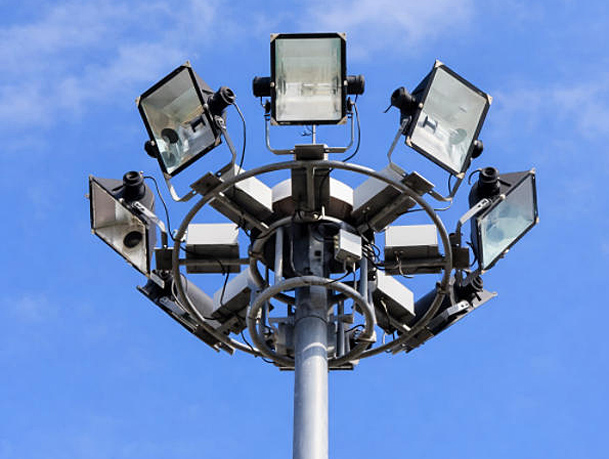
In a lowering system, a winch and its associated cable, support hardware and luminaire ring allow authorized personnel to bring lighting equipment to a service position. A complete solution may also include a raising/lowering ring, cables, guides, electrical disconnects, a pole-mounted operating point and instructions. The actual design varies. Ask the supplier to show the complete assembly and explain how the moving parts are operated, secured and inspected.
Start with the moving load and operating method
The winch is not selected in isolation. The designer needs the weight and geometry of the ring, floodlights, cables and attachments, plus the path they travel and the intended operating procedure. The support structure and foundation must be designed for the complete arrangement. Confirm whether the system uses a manual or powered drive and what tools, access and trained personnel are required.
| Input | Why it affects selection |
|---|---|
| Complete moving assembly | Defines the load to be raised, lowered and held |
| Travel distance and geometry | Affects cable routing, guides, clearances and service position |
| Operating method | Determines drive, access point, tooling and operator procedure |
| Safety and retention | Defines how the assembly is controlled and secured during service |
| Inspection regime | Sets expectations for cable, winch, guides, fasteners and documentation |
Safety and maintenance questions
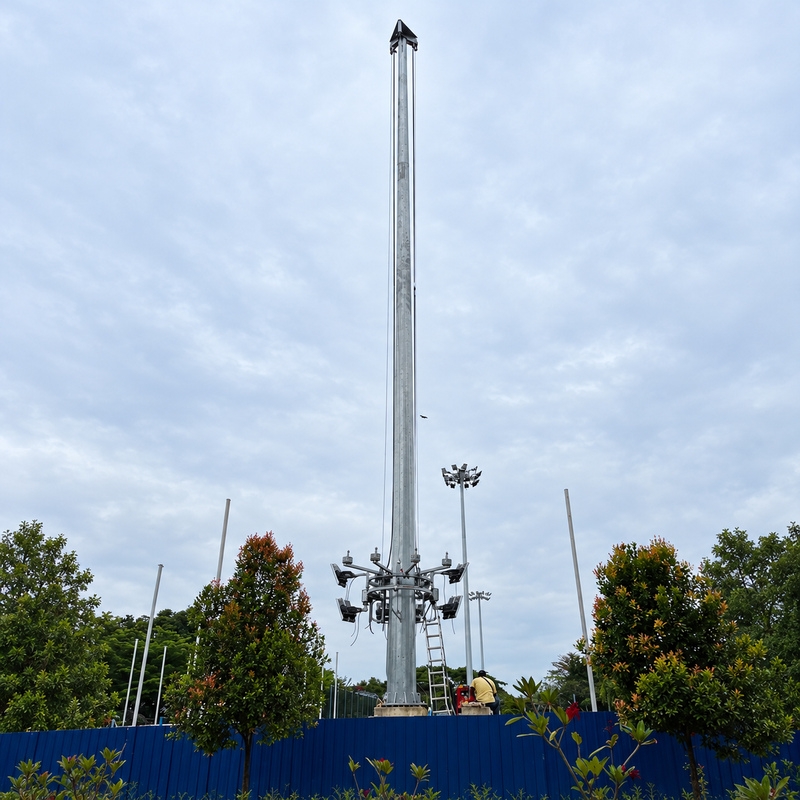
A lowered high-mast lighting ring ready for service.
Ask for the operating and emergency procedures, inspection points, replacement part list and safe isolation steps. Clarify who may operate the system and what fall-protection or exclusion-zone practices apply under the project’s rules. A lowering device does not remove the need for competent personnel, documented work procedures or site-specific safety review.
Maintenance planning should identify visible wear indicators, corrosion exposure, lubrication requirements when specified, cable inspection criteria and a way to record service. Use the manufacturer’s instructions for the selected model. Do not apply generic intervals or replacement periods to equipment unless the supplier and project documents support them.
Prepare a useful RFQ
| Request | What it should clarify |
|---|---|
| Assembly drawing and bill of materials | Which winch, ring, cables, guides and operating accessories are included |
| Rated-load basis and design inputs | How the supplier defines the complete moving load and operating conditions |
| Operating instructions | How lowering, raising, securing and emergency response are performed |
| Inspection and maintenance instructions | Which parts require inspection and how findings are recorded |
| Compatibility statement | Which mast, ring and luminaire configuration the quote covers |
Common procurement mistakes
- Choosing by mast height alone without the complete moving assembly.
- Assuming a manual and powered winch have the same operating or service needs.
- Leaving the luminaire ring, cable guides or operating accessories outside the supply scope.
- Accepting a headline capacity without the design basis and operating instructions.
- Failing to define who will inspect the system and how parts are replaced.
Frequently asked questions
Does every high-mast light use a winch?
No. Some high-mast systems are fixed-head, while raising-and-lowering arrangements use a service mechanism. The project design determines the type.
Can a winch be selected from the pole height alone?
No. The complete moving assembly, travel, operating method and safety provisions must be reviewed.
What should be inspected?
Follow the exact manufacturer's instructions for the winch, cables, guides, ring and attachments. The project should assign inspection responsibility and recordkeeping.
Can lowering systems be serviced by any site worker?
Do not assume that. Confirm training, operating instructions and site safety requirements with the project owner and equipment supplier.
What information helps Jieyao review a high-mast requirement?
Share the mast arrangement, luminaire-ring concept, equipment schedule, service method and required documents through the project inquiry page. For a project evaluating a 30m lowering mast, review the 30m raising-and-lowering high mast system and request the matched ring, winch and operating-document scope.