
 English
 Español
 Bahasa Indonesia
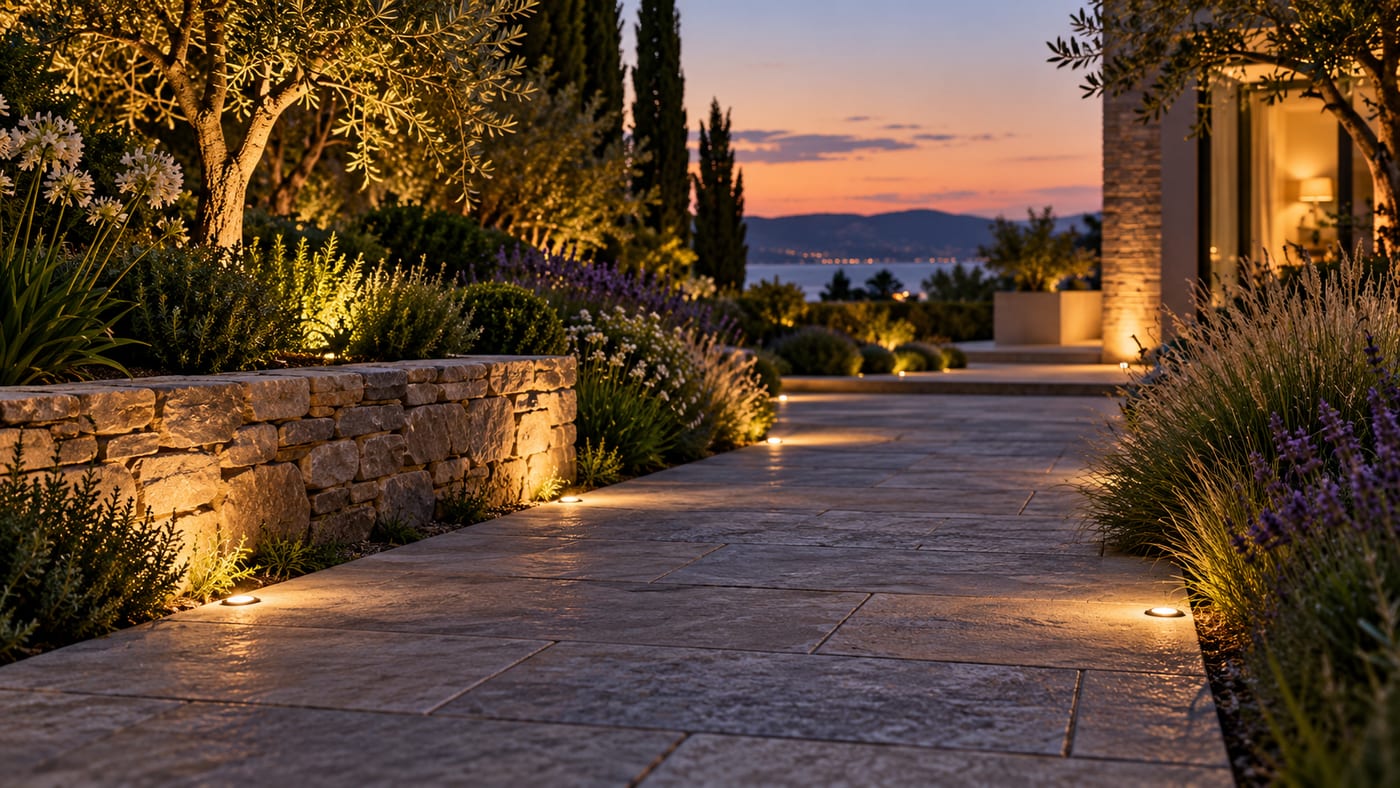
Quick answer: Plan in-ground light placement from the viewing position and the visual task. Mark the path, wall or landscape feature; check where people approach from; then test fixture spacing and beam direction at night. Avoid placing bright sources directly in normal sightlines, and coordinate every recess with paving, drainage, cable access and future replacement.

AI-generated landscape concept artwork; use project drawings and the selected fixture data for actual placement and construction details.
The goal is legible, comfortable light—not simply a row of bright points. This guide focuses on layout and visual placement, not product-specific ingress ratings or installation dimensions. Confirm those details against the selected model and site drawings.
Define the lighting job first
Decide whether the fixtures are intended to mark a route, graze a wall, reveal a tree or create a feature accent. One fixture arrangement may not serve all of these tasks. For path guidance, a restrained rhythm can help a visitor read the route; for wall grazing, the spacing and beam shape should relate to the wall texture and viewing distance. Accent lighting should support the landscape composition rather than compete with signs or other wayfinding cues.
Map views before choosing positions
Walk the approach, pause at seating, and look from nearby windows or driveways. Mark where the source could be seen directly. Check curves, steps, ramps, crosswalks and changes in paving, where a line of fixtures may appear irregular or create confusing visual emphasis. A temporary nighttime mock-up is useful for checking the effect before final paving is completed.
| Planning point | What to check |
|---|---|
| Primary task | Route guidance, wall grazing, feature accent or a combination with separate zones |
| Normal viewpoints | Approach direction, seating, windows, vehicle paths and accessible routes |
| Surface geometry | Curves, steps, edges, joints, slopes, paving pattern and planting locations |
| Beam direction | Whether light reaches the target without shining into a user's eyes |
| Maintenance access | How the fitting can be reached, isolated and replaced after landscaping |
Balance spacing and brightness
Do not assume that equal spacing automatically creates a good result. Fixture output, optic, recess depth, surface color, mounting orientation and surrounding light all influence the visual pattern. A closely spaced row can look busy, while a wide gap can leave a route visually discontinuous. Review the chosen layout with the exact photometric information when available, and judge a nighttime mock-up at realistic viewing distances.
Coordinate paving, drainage and electrical access
Placement is also a construction decision. Coordinate the fixture body with paving thickness, sub-base, conduit, drainage and any waterproofing detail. Avoid unplanned low points that collect water. Confirm how cable connections, driver components and service covers can be accessed without breaking finished surfaces. The exact fixture instructions govern recess, sealing, loading and wiring; generic layout guidance does not replace them.
Use a simple design-review checklist
| Review item | Pass condition |
|---|---|
| Purpose and zone | Each fixture group has a defined visual task and control zone |
| Nighttime view | Normal users do not face avoidable direct glare or confusing bright points |
| Surface detail | Recess, finish level, joints and surrounding paving are coordinated on drawings |
| Water and wiring | Drainage and cable routes are documented for the selected fixture and site |
| Service plan | Isolation, access, cleaning and replacement responsibilities are assigned |
Frequently asked questions
How far apart should in-ground lights be?
There is no universal spacing. It depends on the visual task, optic, output, surface and surrounding light. Review a layout using model data and, where possible, a nighttime mock-up.
How can I avoid glare from recessed lights?
Check source visibility from normal approach and seating positions, select an appropriate optic, and avoid aiming bright output toward people or drivers.
Should in-ground lights follow a straight line?
Only when that supports the route and landscape design. Curves, path edges, features and sightlines may call for a different rhythm.
What drawings should be coordinated before paving?
Review fixture dimensions, recess section, conduit, drainage, cable access, finish level and service method against the selected model instructions.
Where can I review related fixtures?
See Jieyao’s LED garden-light range and discuss project requirements through the inquiry page.