
SOLAR STREET LIGHTS · BUYER GUIDE
Compare measured light output, road coverage and operating hours—not just the wattage label. A buyer’s guide with a real Jieyao Lighting test-report example.
Jieyao Lighting · Primary report issued 24 October 2025 · Analysis prepared 24 October 2026
A 30W rating alone does not determine brightness. Compare the measured lumen output, the light distribution on your road, and the output maintained over the required night schedule.
In one Jieyao report, a 30W light-source sample produced 4,626 lm at 30.5W under an external DC 6.3V supply. This provides a concrete example for reading performance data.
Choose a complete solar street light against its exact configuration and site requirements. The example is a light-source test, not a battery-runtime test or a rating for every Jieyao model.
◎ MEASURED OUTPUT
4,626 lm
ϟ MEASURED POWER
30.5 W
↗ REPORTED EFFICACY
151.67 lm/W
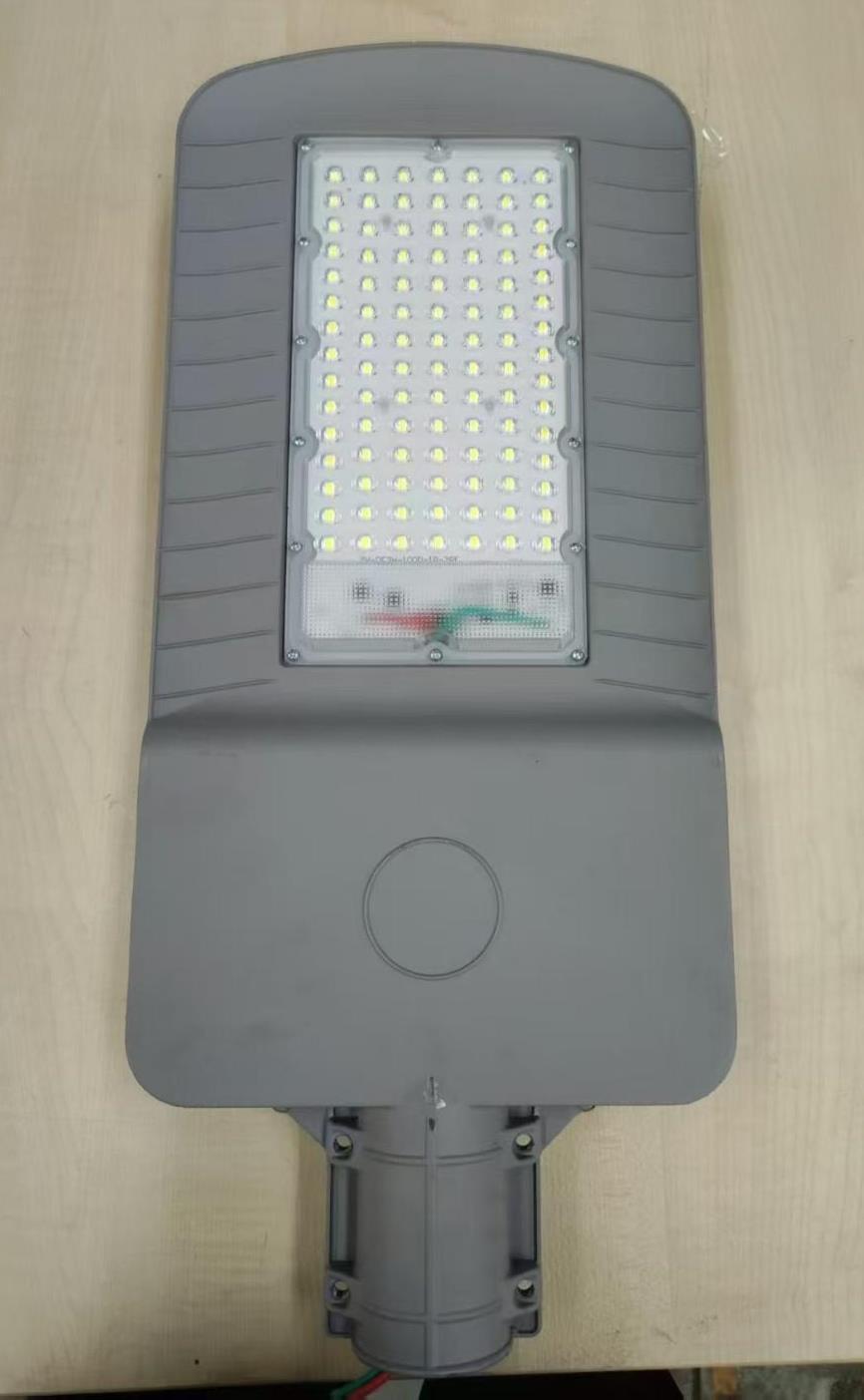
The 30W light-source sample pictured in Jieyao’s report AGXB125W00731. Its current sales-model cross-reference remains to be confirmed.
If you are comparing a 30W solar street light for a road, access lane or outdoor project, start with three questions: how much light does it emit, where does that light go, and how long does the required output last? A wattage label answers none of those questions on its own.
Lumens describe total light output. Illuminance and uniformity describe how light reaches the target area. The operating schedule describes the output available over the night. A useful quotation connects these three parts to one product configuration.
Yangzhou Jieyao Lighting Equipment Co., Ltd. is an outdoor lighting manufacturer in Yangzhou, China, supplying solar street light systems and other outdoor lighting products. This guide uses a commissioned report from Jieyao’s records to show how a buyer can connect an output claim to documented evidence.
| Item | Value in the report | How to read it |
|---|---|---|
| Power specification | 30W | The sample’s designation |
| Measured lamp power | 30.5W | The power used in the efficacy check |
| Luminous flux | 4,626 lm | Reported total light output |
| Luminous efficacy | 151.67 lm/W | Reported output per measured watt |
| Correlated color temperature | 5,426 K | A color characteristic, not an output rating |
| Ingress-protection result | IP65 | A separate enclosure test result |
| Supply arrangement | External DC 6.3V | A condition stated on the identification page |
Source: AGXB125W00731, report body pages 1–2 (PDF pages 3–4). Values are transcribed, not new measurements.
The result answers a specific question: how much light this sample produced under the documented test arrangement. It does not establish a typical output for the whole product range. A repeat-production specification needs a clear model and configuration match, together with the agreed production acceptance requirements.
We reviewed three light-source reports from Jieyao’s supplied factory records. The comparison below concerns the information each report provides. It is not a controlled comparison of product efficiency: the samples, dates and documented supply conditions differ.
| Report / specification | Power / output / efficacy | Documented condition | Buyer takeaway |
|---|---|---|---|
| AGXB120W00586 40W · 2020 | 40.8W Flux and efficacy not reported | One sample; 40 × 1W LED packages noted | A power result alone cannot establish brightness. |
| AGXB123W00549 80W · 2023 | 80.2W 15,736 lm 196.21 lm/W | Test voltage 3.4V; CCT 6,486K; one sample | Keep these figures with this sample and its conditions. |
| AGXB125W00731 30W · 2025 | 30.5W 4,626 lm 151.67 lm/W | External DC 6.3V; CCT 5,426K; one sample | Useful output evidence; a solar-system operating record is a separate requirement. |
Sources: each report’s identification and result pages. Report years identify documents, not a product-development trend.
The practical finding is a distinction buyers can use immediately: evidence of power, evidence of light output and evidence of all-night operation answer different questions. The 40W report illustrates the first category. The 30W and 80W reports add optical results, but neither figure should be transferred to another configuration.
The 80W sample has a higher reported efficacy than the 30W sample. The documents do not isolate the reasons for that difference, so they do not establish that increasing wattage improves efficiency or that one current product family is superior. A fair supplier comparison needs matched configuration boundaries and sufficiently documented test conditions.
How this report analysis was prepared
We read the three supplied reports, matched their identification and result pages, visually checked the 30W and 80W result pages, and recalculated the 30W efficacy. AGXB125W00731 was tested on 22–23 October 2025 and issued on 24 October 2025. It names Chengdu Product Quality Inspection and Research Institute Co., Ltd. and the National Photovoltaic Product Quality Inspection and Testing Center.
The listed test bases include GB/T 24824-2009; these records are not described here as LM-79 tests. The issuer’s online verification, current sales-model mapping and detailed laboratory uncertainty have not been established in this analysis. Results relate to the submitted samples.
Luminous efficacy expresses emitted light per unit of electrical power. To check that the reported values agree arithmetically, divide the reported luminous flux by the measured power:
Calculation using the report’s displayed values. Rounding to two decimal places reproduces the reported efficacy. This is an arithmetic check, not another laboratory test.
If we divided by the nominal 30W designation instead, the result would be 154.2 lm/W. That number is about 1.67% higher than the quotient using measured power. It is a denominator change, not an improvement in the sample’s performance. Keep the measured electrical and optical results together.
If a buyer’s specification calls for a minimum measured output of 5,000 lm at the specified setting, a report showing 4,626 lm is 374 lm below that requirement: a 7.48% gap. A “30W” label or a rounded efficacy claim does not close the gap. Ask for a configuration and supporting result that meet the requirement.
5,000 lm is an illustrative buyer requirement, not a road-lighting standard or a new test result. Gap = (5,000 − 4,626) ÷ 5,000.
The same discipline applies when comparing quotations. A chip-level efficacy, a module result and a measurement on an assembled lighting product may refer to different boundaries. Ask what was included in the test. An attractive number is useful only when it belongs to the configuration and supply arrangement being compared.
A 30W solar street light may be a candidate, but suitability depends on the road and its lighting criteria. A lumen figure gives you an output value to work with; a photometric calculation shows how that light reaches the road. Two products with the same total flux can send light in different directions. Mounting height, outreach, tilt, road width and the optical distribution all affect the result at the surface.
This report does not provide a road-layout calculation or an IES photometric file. We therefore cannot turn 4,626 lumens into a verified mounting height, spacing or road-lighting class. The next step is to obtain photometry for the exact offered configuration and calculate the intended layout against the project’s criteria.
For that separate task, see our IES photometric file review guide. Keep the report number, product configuration and photometric-file revision together so the output claim and the design refer to the same product.
When a solar street light is advertised to operate all night, ask what happens to output during that night. A schedule with several hours at full output followed by dimmed operation is a different offer from constant full-output lighting.
| Ask the supplier for | Why it changes the decision |
|---|---|
| Full-output and dimmed time blocks | Shows when the quoted light output is intended to be available. |
| Battery voltage, capacity and usable-energy assumptions | Allows the energy budget to be checked against the schedule. |
| Solar panel rating and location-specific charging assumptions | Connects the proposed system to the project’s solar resource. |
| Battery/controller configuration and operating records | Connects a runtime claim to an identifiable system. |
The 4,626-lumen result was obtained under an external supply. Use it as an optical reference for that sample, then obtain the battery, charging and controller evidence for the complete solar street light being offered. For a quotation, define both the required lighting performance and the hours during which it must be maintained.
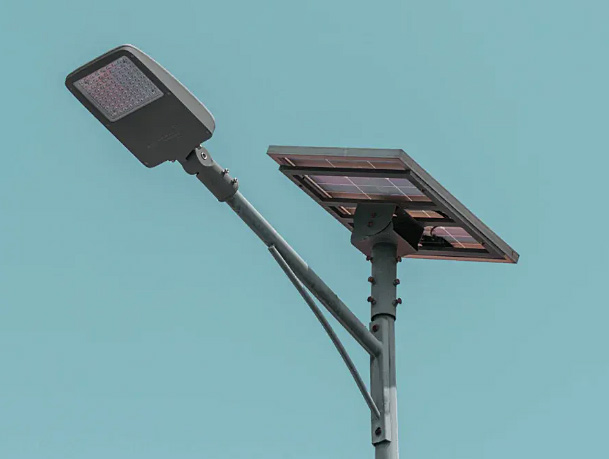
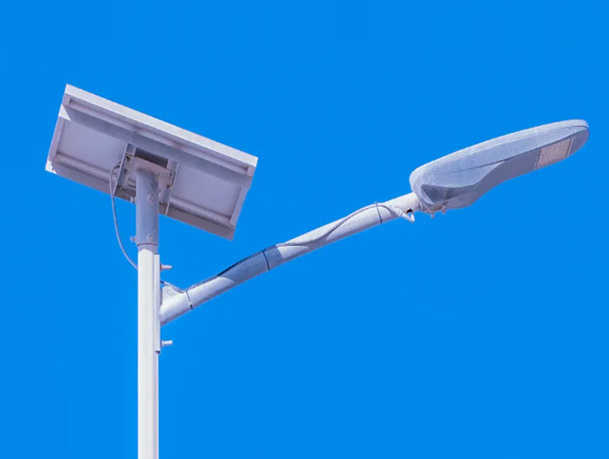
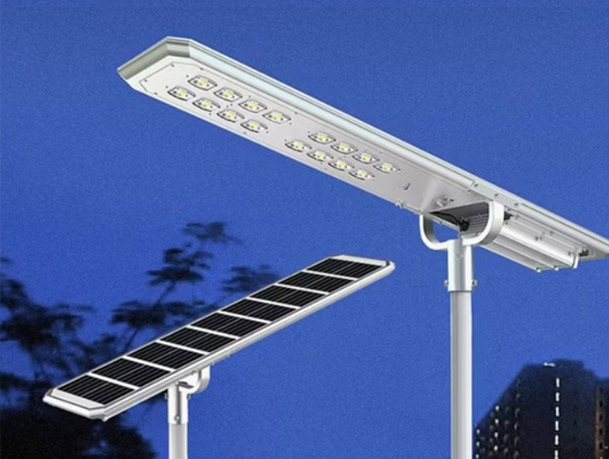
Jieyao Lighting supplies 30–40W all-in-one solar street lights and split-type solar street light systems. Use these product options as starting points for a configuration discussion. Confirm the offered model and the applicable evidence before treating this article’s sample results as its specification.
| Question | Evidence to connect |
|---|---|
| Does this result belong to the offered product? | Report number, sample photograph, exact model, optic, LED configuration and power setting |
| Will it provide the required road lighting? | Matching photometry and a calculation using the actual road and mounting geometry |
| Will it maintain the required output through the night? | Battery/controller identity, programmed schedule and a discharge or field record under stated conditions |
For production approval, retain an agreed configuration record so changes in optics, electronics or settings trigger another evidence review. Our pre-production sample approval checklist covers that release process.
Share the installation location, road width, mounting height and required nightly schedule. Ask Jieyao to match the proposed lighting configuration to the relevant report and design information.
Request a solar street light configuration →There is no single lumen output established by a 30W label. One 30W light-source sample in Jieyao report AGXB125W00731 produced 4,626 lm at 30.5W under an external DC 6.3V supply. Request a measured output for the actual solar lighting configuration being quoted.
Efficacy helps compare light output per watt, but the decision also includes light distribution, color requirements, thermal conditions and the required operating schedule. Compare results measured at compatible boundaries before using efficacy to choose a supplier.
Specify spacing through a project calculation using the matching photometric distribution, road geometry, mounting arrangement and lighting criteria. Wattage and total lumens alone do not provide that layout.
Editorial analysis prepared 24 October 2026. The primary optical example is one submitted sample. Two additional reports are used to compare evidence scope. This buyer guide combines reported results, identified calculations and procurement interpretation.
Contact Us
Get a custom lighting solution and quotation for your project. Yangzhou Jieyao Lighting Equipment Co., Ltd. manufactures outdoor lighting and steel poles in Guoji Town Industrial Park, Gaoyou City, Yangzhou, Jiangsu, China. The company reports a 10,000 m² factory site, more than 60 employees including more than 10 technical personnel, and more than 100 production and testing machines. The present company name dates from 2017; Jieyao Poles’ published history traces the team’s manufacturing lineage to 2006. The stated 15 years of experience refers to the team. The company reports exports to more than 60 countries. Do you have any questions or requests?
Email: jay@jieyaolighting.com

Click to Chat.
Im online now.
 English
 Español
 Bahasa Indonesia