English
 Español
 Bahasa Indonesia
 Français

- Product details
-
HIGH MAST LIGHTING · LOWERING SYSTEMS
Bring the lighting assembly to a defined service position.
A lowering ring, drive, suspension and cable system specified to work together.
Jieyao supplies raising and lowering high mast packages with the steel mast, lighting carriage and selected mechanical and electrical equipment coordinated around the project. Lowering the carriage changes how the lamps are reached for maintenance; it also creates moving interfaces that need inspection.
Choose the complete system from the carriage load, travel, mast geometry, power supply and service area. A mast height or motor-power label alone cannot define the arrangement.
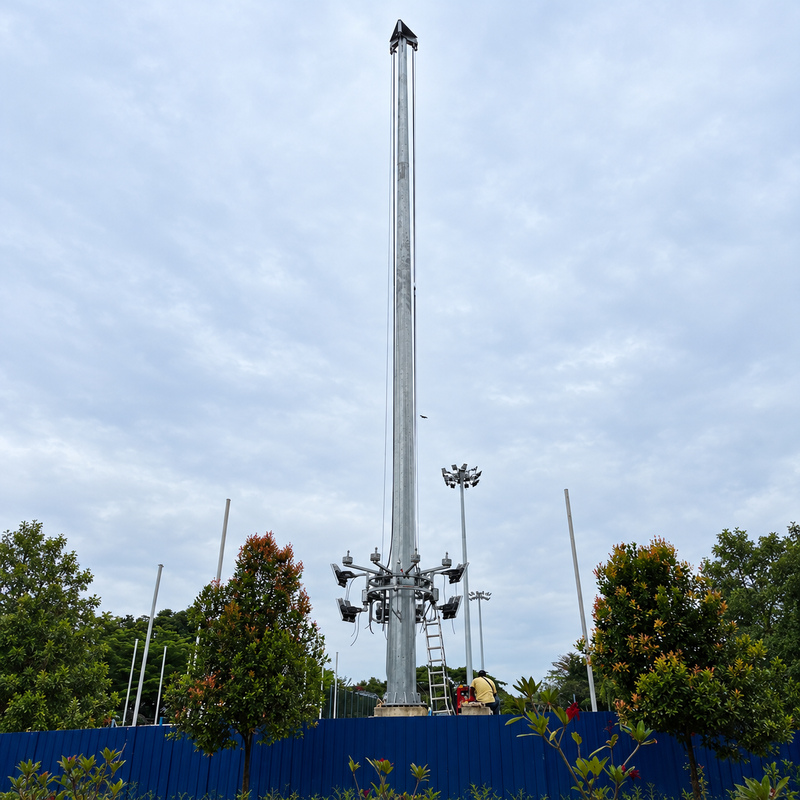
Discuss your project ↗Lighting carriage at a low position beside the mast.01 · WHAT THE SYSTEM DOES
The lighting carriage moves; the mast remains in place
The ring or headframe carries the floodlights and their mounting hardware. A suspension and drive arrangement moves that assembly between its operating position and the specified service position. Guides manage the relationship between carriage and mast, while the power cable needs a planned route through the movement.
Where the design uses head latches or other mechanical supports, the drawing defines how the carriage load is transferred at the operating position and how engagement is verified. Do not assume the suspension ropes have the same duty during movement and normal service.
The complete package can include the mast, carriage, floodlights, winch and drive, wire ropes, pulleys, guides, engagement equipment, power cable, controls and foundation hardware. The offer identifies the included parts and any separately supplied equipment.
For the broader lighting layout and project interfaces, use the high mast system guide. For package configurations, compare the high mast equipment range, or browse the full high mast range.
02 · MECHANICAL INTERFACES
Four parts to review on the actual assembly drawing
These photographs illustrate physical component arrangements. The selected system drawing identifies which parts and models form the offered assembly.
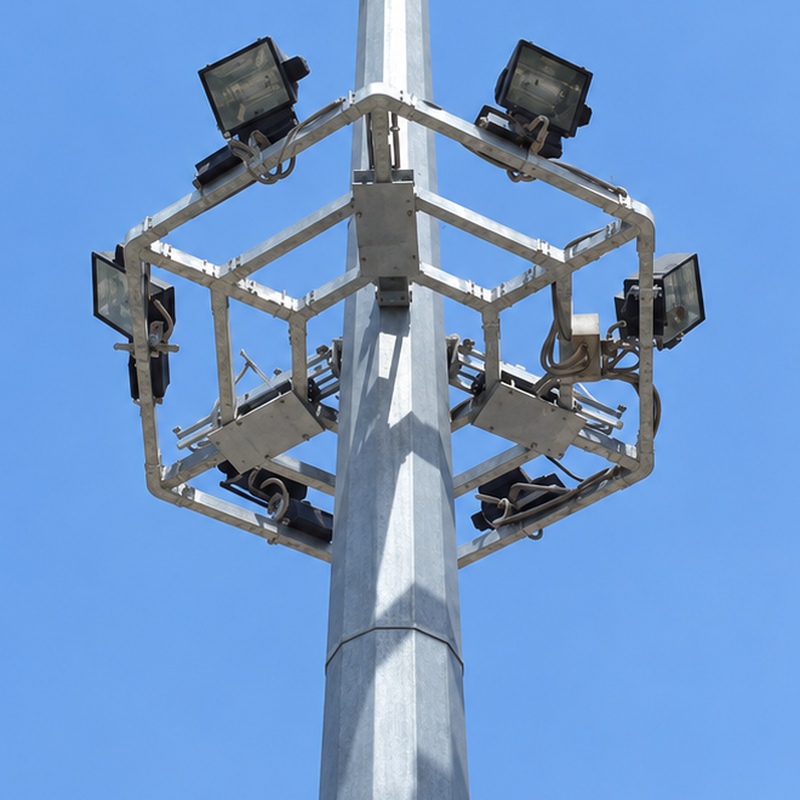
Lighting carriage
A polygonal frame with floodlight brackets and cable routes.The frame geometry sets the fixture positions, available aiming range and exposed area. Include the luminaires, brackets, drivers, junction boxes and moving cable in the equipment schedule.
See steel lighting rings and headframes for the component supply enquiry.
Guide and engagement interfaces
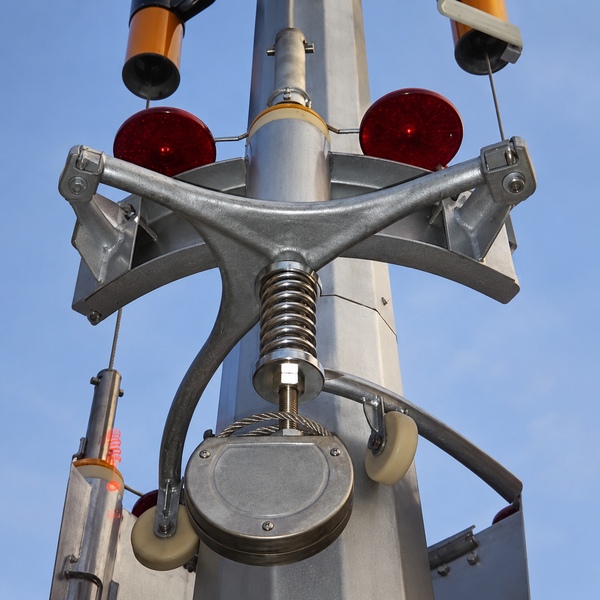
Rollers, a spring and suspension connections beside the mast.Guide arrangements control the carriage position relative to the shaft. If head supports or latches are used, their engagement and release method belong to the selected design.
A photograph cannot establish the required adjustment or engagement check. Keep the matching instructions and component references with the system.
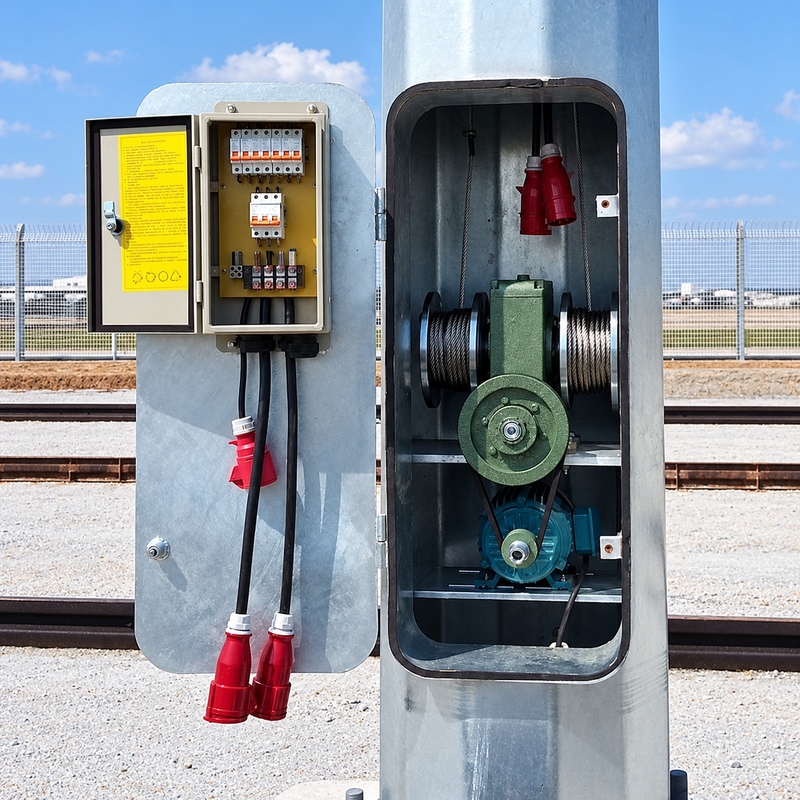
Winch and drive access
A winch inside an accessible mast compartment.Match the drive to the complete moving load, travel, operating duty and system geometry. The mast needs room for the specified drive, connections and service access.
For separately supplied mechanical units, see winch and drive assemblies. Motor power alone does not establish a permissible carriage load.
Rope path and terminations
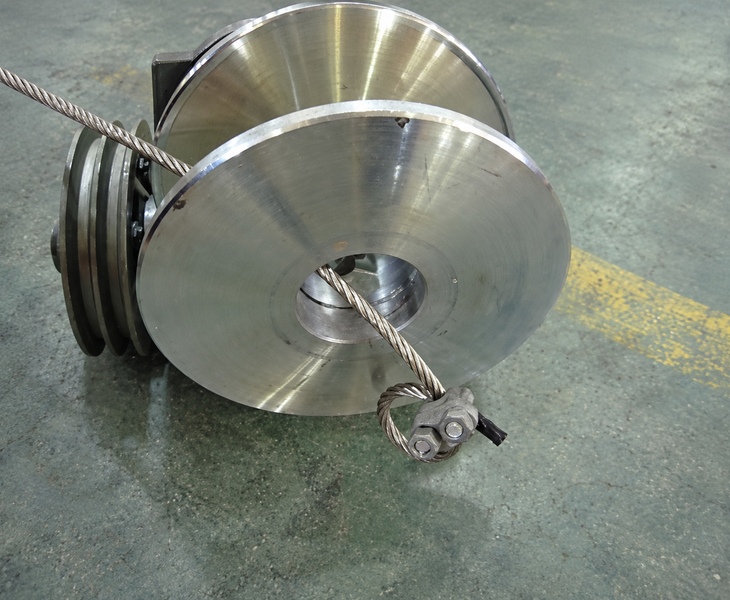
Wire rope termination and drum assembly.Rope construction, terminations, pulley geometry and the designed load-sharing arrangement must match. Include corrosion exposure and inspection access in the specification.
The electrical cable has a separate power-supply duty. Its routing and movement must be coordinated without treating it as a suspension member.
03 · MATCHED DESIGN
Specify the moving assembly before choosing the mechanism
Input What to include What it changes Moving equipment Frame, lamps, brackets, drivers, boxes and moving cable The actual moving load and distribution. Carriage geometry Fixture positions, exposed area and attachment details Clearance, wind inputs and interaction with the mast. Mast and travel Shaft arrangement, internal space and service position Rope and cable paths, guide interfaces and access. Power and operating duty Available supply, required operation and any manual provision Drive/control selection and the defined operating method. Site conditions Wind basis, corrosion exposure and operating area Structural design, protection and service constraints. On a phone, swipe the table sideways to read all columns.
The lamp count follows the lighting layout, then becomes part of the mechanism and structural review. A different fixture can alter weight, projected area and cable demand even if the electrical wattage is similar. Include cameras, antennas or other accessories when they are part of the proposed assembly.
Coordinate pole sections, joints, base plate and anchors with the accepted loads. Foundation reactions and the actual ground conditions are inputs to the civil design; see foundation and anchor design inputs. The wind and fixture EPA guide explains the related loading questions.
Existing high mast product examples are configuration references. Height alone does not establish whether a particular ring, drive or mast interior is suitable for a lowering system.
04 · ELECTRICAL & CONTROL DUTIES
Separate lighting operation from carriage movement
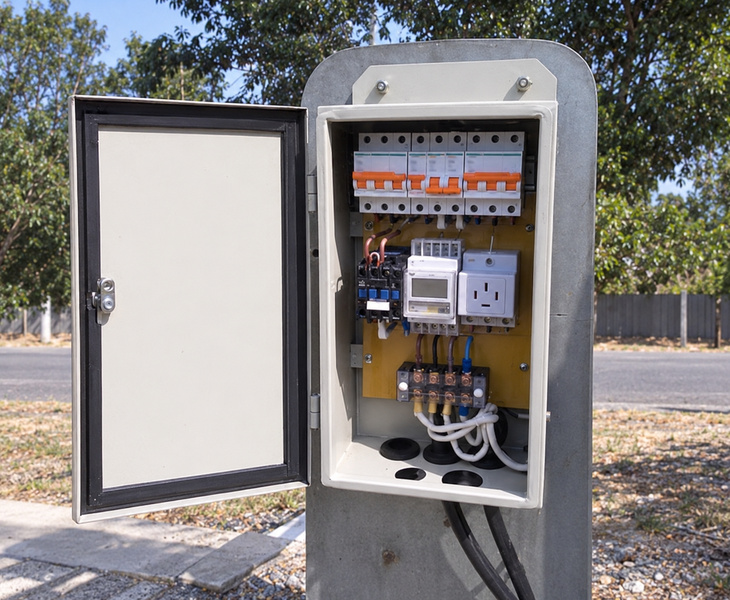
Electrical equipment behind a service cover.The lighting circuits switch and protect the luminaires. The lowering controls govern the drive and the movement functions specified for that mechanism. The equipment schedule and diagrams should identify those duties and the connections between them.
Define the power supply, isolation provisions, control position and any required limit or interlock functions. Cable lengths, flexible sections and connectors must suit the designed travel and service arrangement.
If operation without normal electrical power is required, specify an appropriate manual provision before production. Do not assume a hand tool or an unrelated drive can be fitted later. The quoted method and instructions must match the installed equipment.
The operating manual sets the release, lowering, raising and engagement sequence, permitted conditions and stopping criteria. Personnel training and the exclusion zone belong to the owner’s operating plan. This page does not replace the selected system instructions.
05 · SERVICE & INSPECTION
Plan the working area as carefully as the travel
Provide room around the intended service position for the carriage, lamps, tools and personnel. Review fences, landscaping, vehicle routes and nearby equipment before fixing the mast location. Ground-level servicing still requires a clear and controlled work area.
Commissioning records
Before service release, record the accepted assembly and component references, required civil release, electrical checks and the specified functional tests. Verify movement, cable behaviour and engagement using the matching procedure.
Keep the required limit/interlock checks and any engagement indication in the record. A successful lamp switch-on does not by itself confirm the mechanical system.
Continuing inspection
Inspect the ropes and terminations, pulleys, guides, drive, specified holding/braking arrangements, flexible cable, fasteners and corrosion condition. Include the head supports or latches where fitted.
Intervals and rejection criteria follow the selected equipment instructions, operating duty and environment. Record wear, damage and changes against the installed component references.
Use the winch selection and maintenance guide and installation hold-point guide to organize the procurement and handover questions. The fixed-versus-lowering comparison helps where the maintenance method is still undecided.
Treat a changed frame, lamp set or accessory as a configuration change. Review its lighting, structural, moving-load and cable implications before returning the system to the accepted operating arrangement.
06 · SUPPLY & DELIVERY
Keep steelwork, mechanism and documents matched
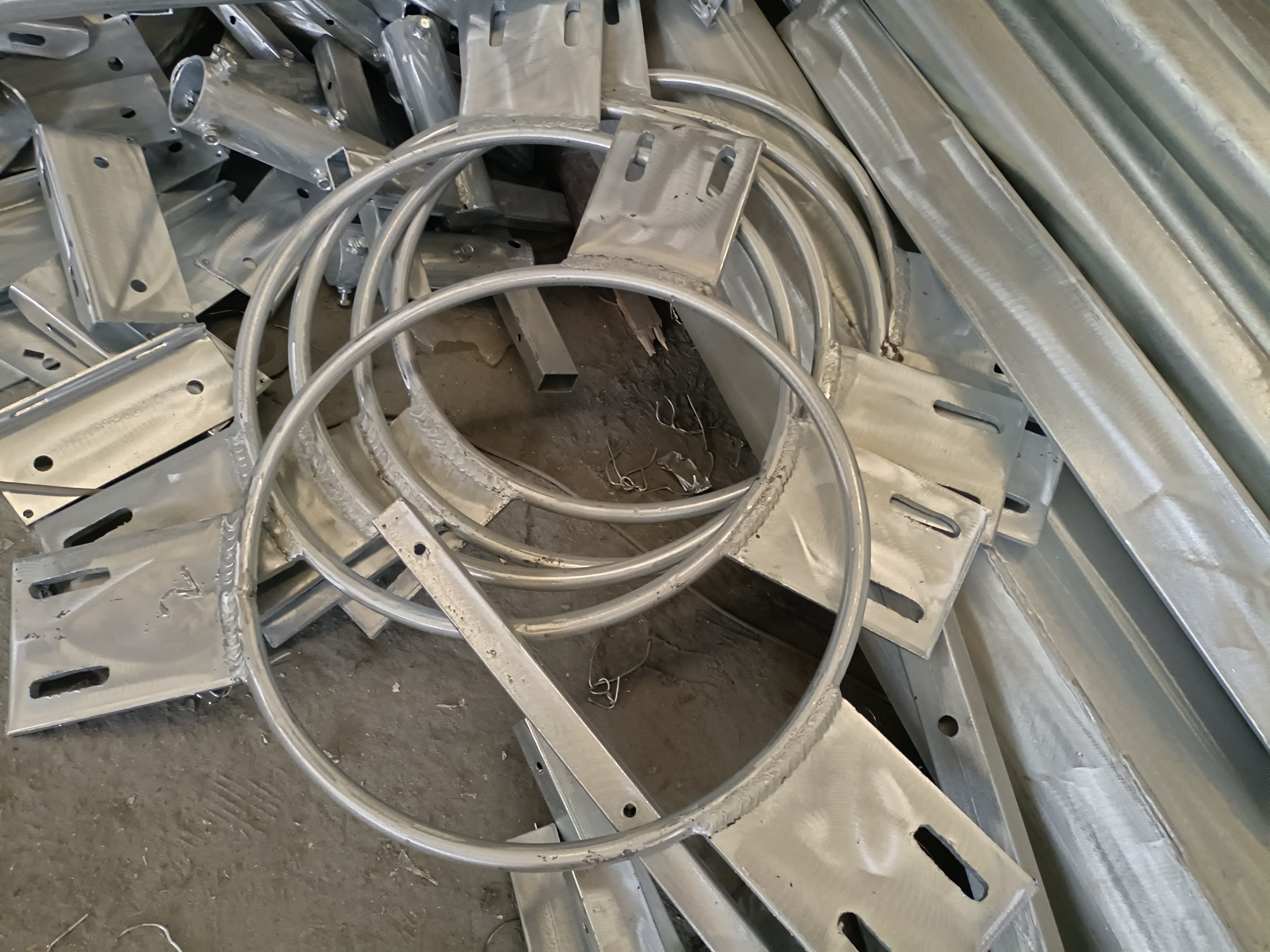
Fabricated steel rings with radial mounting plates.The mast, carriage and mechanism drawings should identify their mutual interfaces. Dimensions, fit, finish and equipment references must remain traceable through fabrication, component procurement, assembly and packing.
Separate the steelwork checks from the mechanism’s required functional checks. Agree dimensional records, material and finish evidence, assembly verification and the commissioning scope in the order. A component photograph is not an inspection result.
Mark loose parts, drive accessories, hardware and control equipment to the system or mast schedule. Protect finished interfaces, connectors and cables during handling, and agree the longest package and unloading requirements.
Handover item What the package should identify Assembly drawings Mast sections, carriage, fixtures, mechanism, cable paths and service position. Foundation interface Base plate, anchors, reactions and the civil design responsibility. Equipment records Named drive/suspension/control components and the required inspection evidence. Operating documents Matched installation, operation and maintenance instructions, limits and training scope. Commercial boundary Lamps, wiring, anchors, transport, unloading, erection and commissioning included or excluded. On a phone, swipe the table sideways to read all columns.
Component suppliers and models are identified in the agreed package. Jieyao’s steelwork supply does not mean every purchased mechanism part has the same manufacturer. Keep the system references available for compatible spares and future service.
COMMON QUESTIONS
Resolve the service method before ordering
Do the ropes carry the ring during normal lighting?
The answer depends on the support arrangement. In a latched system, the defined head supports transfer the carriage load at the operating position. Use the design and engagement requirements for that system rather than assuming the same load path for every mast.
Can any existing mast receive a lowering ring?
It needs a specific review of the mast geometry, internal space, loads, interfaces, electrical route and service area. A tall shaft or an existing floodlight frame alone does not establish compatibility.
Define the carriage, travel and service area
Send the site plan, proposed mast positions and height constraints, wind and exposure basis, lighting requirements and fixture data. Include all moving equipment, available power, intended service position and any manual-operation requirement.
State the supplied components and the owner’s inspection and operating requirements. Jieyao can coordinate a project-specific package around the identified mechanism, steelwork and site interfaces.
Request a project proposal ↗ -
-