

 English
 Español
 Bahasa Indonesia
 Français

- Product details
-
HIGH MAST COMPONENTS · PROJECT-MATCHED STEELWORK
High Mast Luminaire Mounting Rings and Steel Headframes
A steel support for the floodlights, matched to the mast and the maintenance arrangement.
Jieyao coordinates custom steel lamp-ring and headframe supply for high mast lighting projects. Define the mounting positions, mast interface and included fittings together, whether the enquiry is for steelwork alone or a ring with named accessories. Each quotation establishes the supply scope; these are project-matched components rather than universal replacement rings.
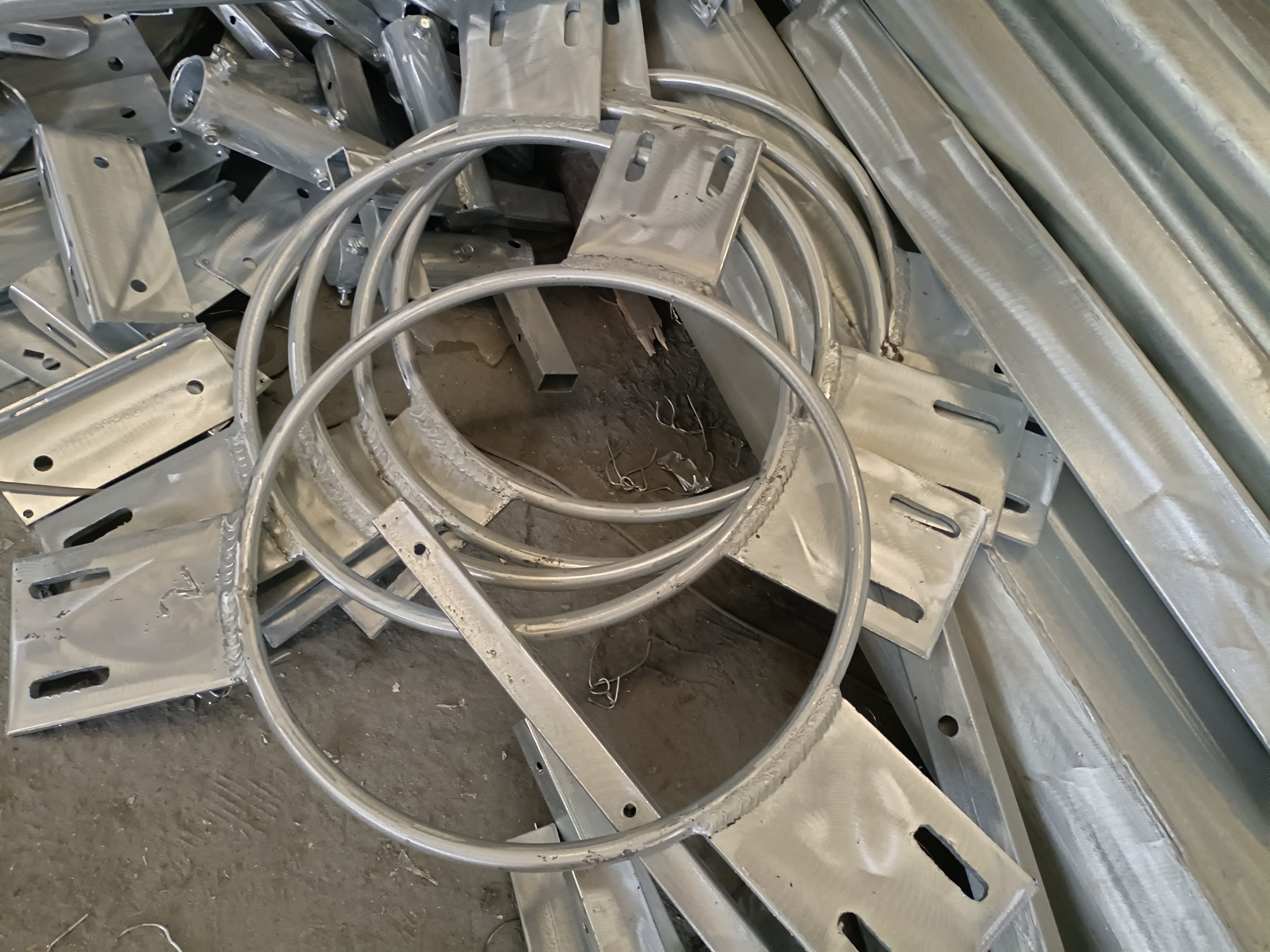
Discuss a lamp-ring configuration ↗ Circular steel frames with radial mounting plates. The photograph shows the fabrication form; dimensions and the final equipment arrangement follow the project drawing.
What are you ordering?
The lamp ring, also called a luminaire mounting ring, carries the floodlight mounting points around the mast. A headframe describes the supporting steel arrangement more broadly. For a lowering assembly, the moving ring also needs the interfaces specified by that system. The mast shaft, top pulley assembly, winch, wire ropes and electrical equipment are separate quotation items unless expressly included.
Start with the support arrangement
The visible circular form does not establish how a head is supported in service. First decide whether the lighting head stays fixed or travels down the mast. Then define the lamp positions and the connections. The complete high mast assembly page covers the wider mast package.
Circular mounting frame
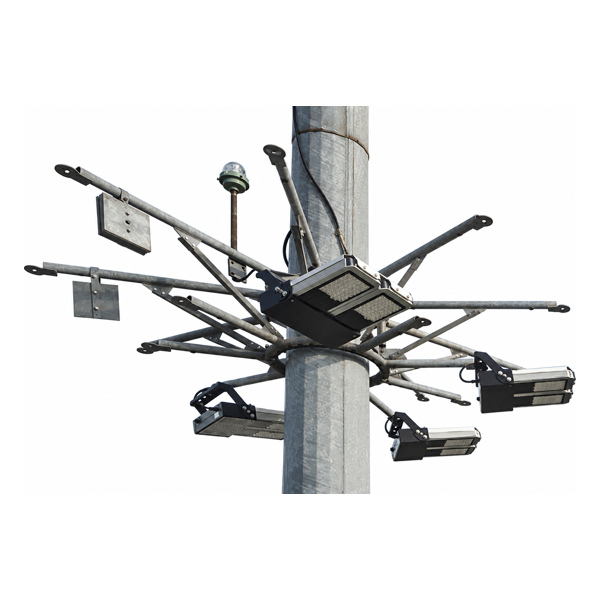 Radial support arms carrying floodlights around a mast.
A circular support places mounting points around the mast. The separate steel rings in the opening photograph show radial plates with elongated holes. Specify the plate dimensions, hole pattern, bracket spacing and fasteners for the selected fixtures; a slot alone does not establish an aiming range or load rating.
Two-tier lamp layout
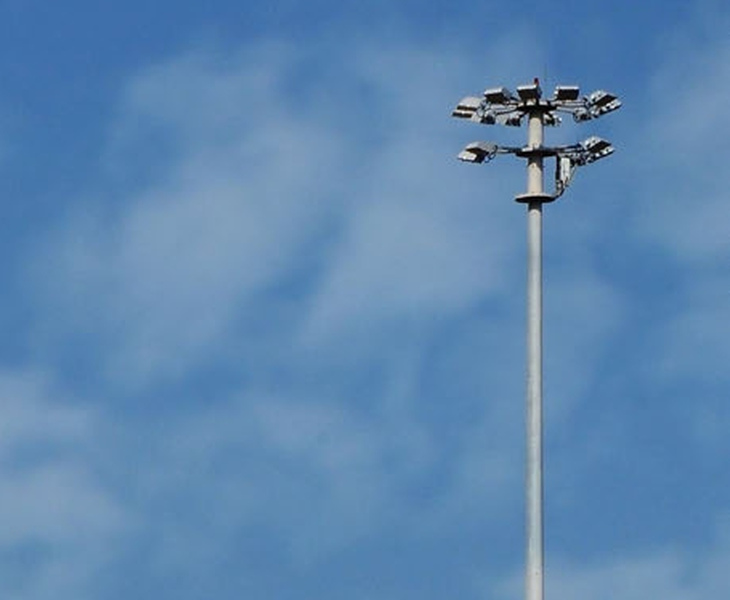 Two tiers of floodlights mounted around a mast.
A two-tier layout places fixtures at two mounting levels. Coordinate the tier spacing, fixture clearances and aiming directions in plan and elevation. The archived configuration below illustrates one 12 + 8 arrangement.
A fixed head needs a defined connection to the mast top and a separate maintenance-access plan. A moving ring needs compatible guide, suspension and docking interfaces. Tell us which arrangement is required before comparing prices: similar-looking steel rings can belong to different systems.
An archived two-tier configuration
A 2022 high-mast quotation/contract lists the configuration below. It is an archived assembly example, not a specification for the photographed frames or a current stock item. Dimensions, loads, interfaces and included parts must be agreed for each new order.
Item Recorded configuration For a new order Steel Q235 State the required grade and documentation. Arrangement Dismantlable, two-tier lamp support Define tier spacing, assembly joints and shipping split. Lamp allocation 12 + 8 positions; 20 × 500 W floodlights in that assembly Use actual fixture dimensions, mass and exposed area. Wattage is not a structural rating. Finish Hot-dip galvanized, then powder coated Agree coating scope, colour and inspection requirements. Ring size and load rating Not specified in this record Establish these in the project design and drawing. Interfaces that decide whether the ring fits
A nominal mast height does not identify its lamp ring. Two masts of the same height can have different shaft profiles, top hardware and fixture layouts. For a replacement enquiry, photographs help identify the arrangement, while measured dimensions and original drawings establish the mating geometry.
Lamp and bracket connection
Give the fixture model, yoke or bracket drawing, hole spacing, fastener size and required aiming directions. Leave room to reach the fixing points and cable connections after the lamp is mounted.
Mast and moving assembly
Identify the shaft profile where the ring passes, centre clearance, guide locations and suspension points. Where a docking mechanism is used, its geometry and engagement arrangement need to match the existing system.
Cable and accessory space
Show cable routes, junction-box locations and any brackets that move with the ring. Include their mass and external dimensions in the equipment schedule so the mechanical and electrical arrangements use the same layout.
Adding lamps or changing to a larger LED fixture changes more than the hole pattern. The responsible designer needs to check the ring, its connections and the supporting mast/system with the revised equipment loads and site conditions. An existing winch rating alone does not approve the revised assembly.
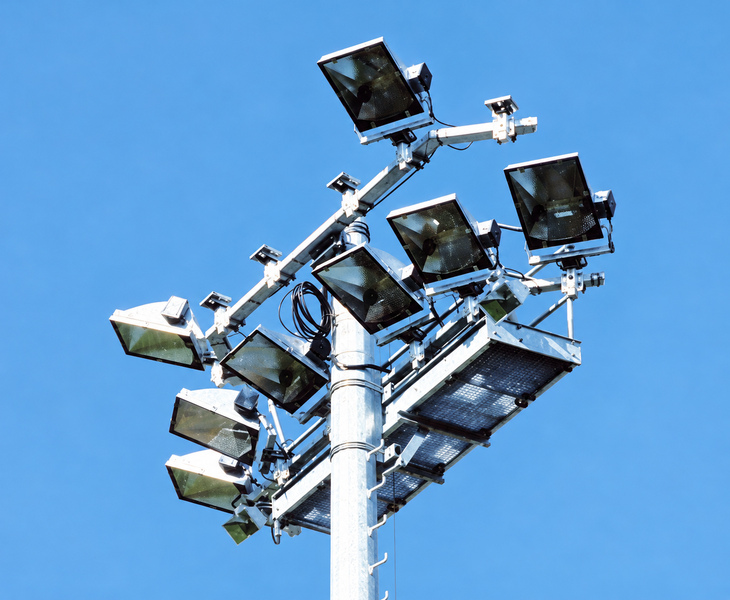 Floodlights mounted on horizontal steel rails at separate levels.
Choose the layout around the lighting task
For an open yard with illumination required around the mast, a circular support can place lamps in several directions. At a site boundary, the useful aiming directions may occupy only part of that circle. The horizontal-rail reference illustrates a different supporting geometry: lamp brackets sit along rails rather than around a circular perimeter. Specify that arrangement separately when discussing a custom headframe. Set the lighting layout first rather than distributing lamps evenly simply because the frame is round.
A two-tier arrangement introduces another mounting level. Check fixture spacing, tilt, physical interference and access to the fixing points in an elevation as well as a plan. The 12 + 8 example describes positions; the actual optic and aiming determine the light distribution.
Where lowering is required, reserve space at ground level for the ring and the fitted lamps. A larger outer frame can affect the service footprint and handling route even when it clears the mast shaft.
Define the steelwork, accessories and delivery together
Steelwork and supplied fittings
For steelwork-only enquiries, identify the ring members, mounting plates, connection pieces and any dismantlable joints on the scope drawing. For a package with accessories, list the brackets, fasteners, guides, junction boxes and other named parts separately. This makes it possible to compare offers for the same assembly rather than assuming that a lamp-ring price includes the lifting mechanism.
Drawing and inspection agreement
Before fabrication release, agree the drawing revision, material, member and plate dimensions, weld details, fixture interfaces and finish. Specify which checks and records are required: dimensional inspection of mating points, connection fit-up, weld inspection scope, coating checks and identification of the supplied pieces. Any assembled fit check or system test needs its own defined scope in the order.
Packing for reassembly
A dismantlable head should have identifiable mating parts and a hardware list for site reassembly. Agree the maximum packed size, protection for coated contact faces and protruding plates, and how loose fittings are packed and labelled. Shipment dimensions and mass belong to the final packing list; they cannot be inferred from the mast height or the lamp count.
If you need the mast, winch and moving system together, use the motorized high mast lighting system as the package starting point. This page keeps the enquiry focused on the lamp-support steelwork and its named interfaces.
Questions before ordering
Can you quote a lamp ring without a new mast?
Send the existing assembly drawings, interface dimensions, photographs and fixture schedule. Jieyao can coordinate a custom steelwork proposal, with the included fittings and compatibility work defined in the quotation. A ring-only enquiry does not imply a ready-made replacement for every existing system.
Does a 20-lamp arrangement fit any 20 lamps?
No. Lamp count leaves out mass, exposed area, bracket geometry and aiming clearance. The recorded 12 + 8 arrangement is one example; a different fixture needs a corresponding layout and load check.
Can the ring carry maintenance personnel?
This page offers luminaire-support steelwork. It does not specify a personnel platform or approve riding the ring. Personnel access requires a separately defined and approved arrangement.
Send the mast interface and lamp schedule
For a new head, send the quantity, support arrangement, fixture data, desired lamp positions, site design requirements and finish. For an existing mast, add its drawings, measured connection geometry and clear photographs of the ring, mast top and guide/suspension details.
State whether you need steelwork alone or named accessories, together with the delivery destination and packing limits. Those inputs let the proposed ring, quotation and drawing describe the same supply.
Contact Jieyao about lamp-ring steelwork ↗ -
-


