

A useful street light pole weld inspection plan identifies each weld category, the governing drawing and welding standard, the method and extent of inspection, the acceptance criteria, and the record required for release. It is not enough to ask for “full NDT” without saying which welds are affected or why. The right scope depends on the pole design, connection detail, load and fatigue basis, contract, local authority and qualified engineer's requirements.
This guide helps buyers specify a reviewable scope for fabricated steel lighting poles. It does not certify any individual pole or prescribe a universal test percentage. For the wider pre-shipment sequence, use the factory acceptance checklist.
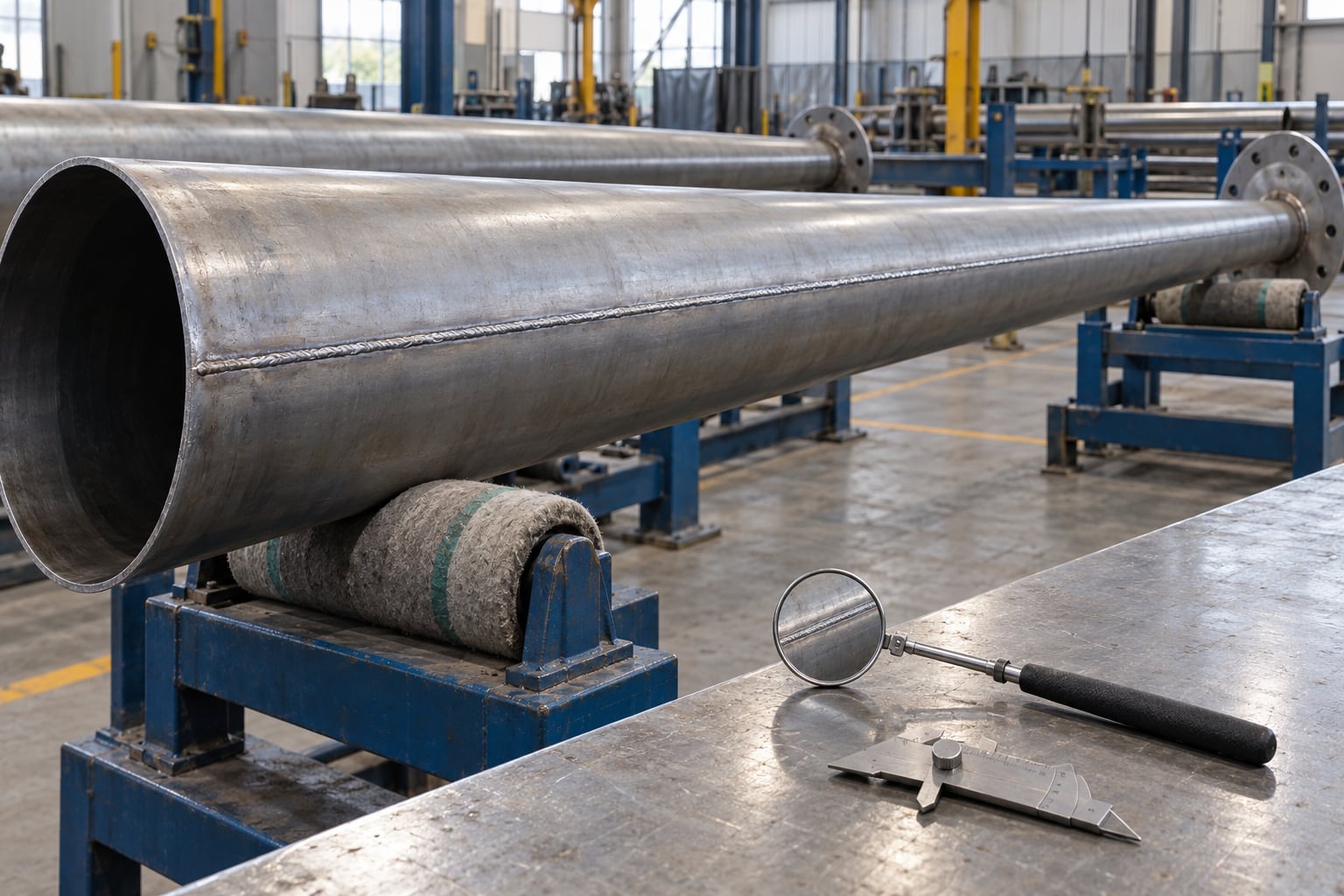
A visible longitudinal seam is one of several distinct weld groups on a steel pole.
The approved fabrication drawing should locate the longitudinal shaft seam, any circumferential section joint, base plate and stiffeners, arm/socket connection, door-frame detail, brackets and attachments. These welds do not all have the same geometry or function. A seam that closes a formed shaft, a fillet around a base plate and a welded arm connection need separate drawing symbols and inspection descriptions. A buyer should ask the supplier to return a weld map tied to the pole type and drawing revision, including whether a detail is shop welded, site welded or mechanically connected.
The pole assembly schedule must also include actual accessories. A different luminaire, longer arm, CCTV bracket or sign may change demand at a connection. The arm and luminaire interface guide explains why the equipment schedule belongs in the design basis, while the shop drawing checklist addresses revision-controlled approval before cutting.
The contract should name the applicable welding code and edition, material grade, required welding procedure documentation, personnel qualification, consumable controls and any independent inspection role. The American Welding Society's D1.1 overview explains that the steel structural-welding code covers procedure and welder qualification, fabrication, inspection and acceptance. Whether that code applies to a particular Jieyao order is decided by the project specification; other jurisdictions or products may use a different governing framework.
Welding documentation is useful only when it matches the physical joint. Verify that the procedure covers the material and thickness range, process, position and joint type used. Do not assume a certificate for one process or position qualifies every bracket, seam and base detail. Ask the responsible welding coordinator to identify exceptions before production, not after galvanizing hides the original steel surface.
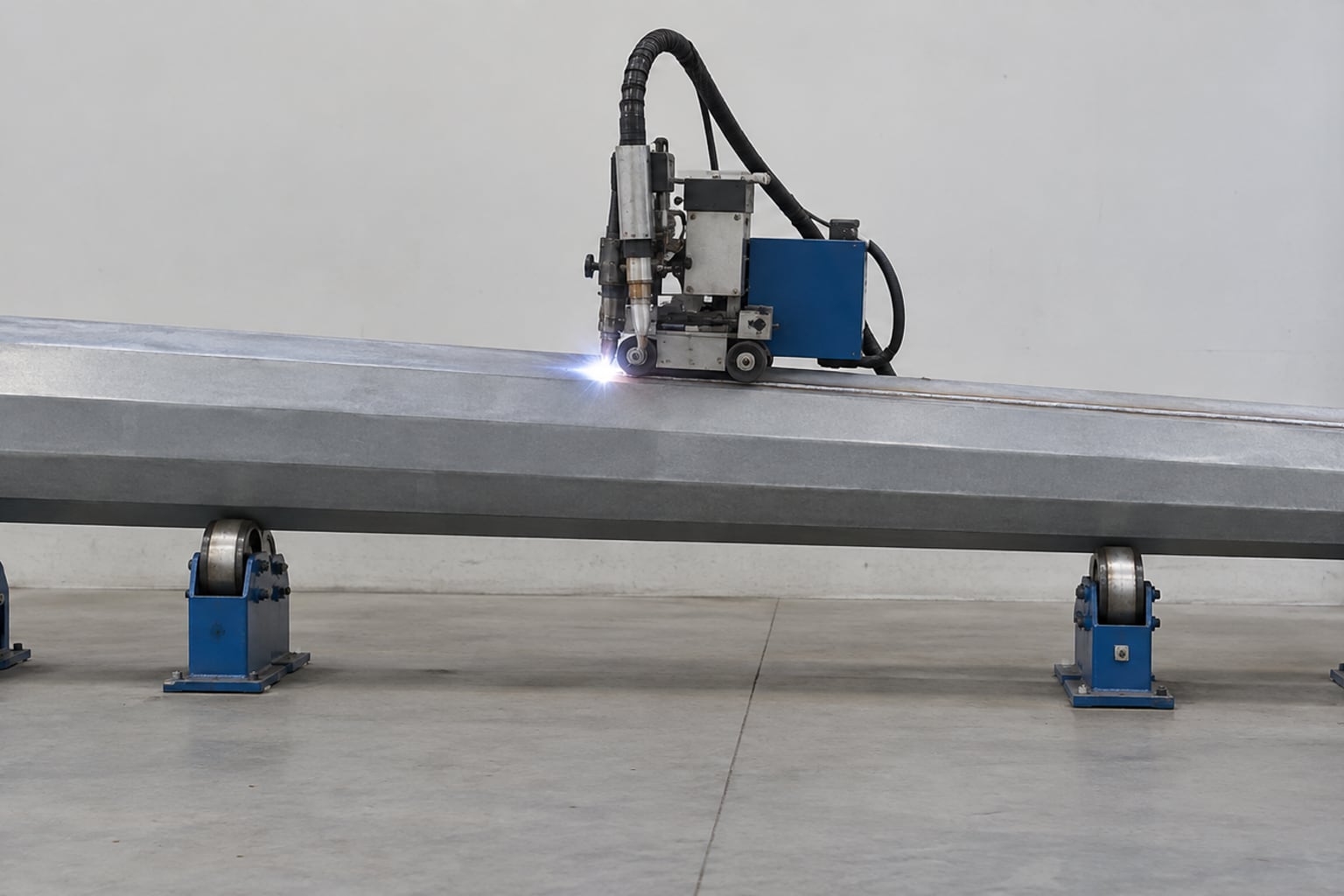
The specified welding process and joint geometry should be documented before inspection.
| Weld group | Drawing/inspection question | Record the buyer should request |
|---|---|---|
| Formed-shaft longitudinal seam | Seam location, continuity, fit-up, start/stop and any specified additional examination | Weld map, visual record and specified NDT report by pole mark/lot |
| Base plate and stiffeners | Alignment, access around the joint, continuity and design-required size/detail | Dimension and weld inspection linked to base drawing |
| Arm and head interface | Connection geometry, orientation, trial fit and load path | Assembly check, visual inspection and any design-specified NDT |
| Door and openings | Reinforcement/detail matches approved drawing; no unacceptable local distortion or sharp edges | Detail inspection with opening and door location identifier |
| Section or site joint | Joint type, fit-up, access, field responsibility and return-to-service check | Approved method, inspection record and deviation closure |
This table is an RFQ scoping tool. It intentionally gives no blanket acceptance dimension or NDT percentage because those values must come from the governing design and code.
Visual inspection can identify location and fit-up errors, surface discontinuities, dimensional conflict, poor access and missing details. It should be performed at the stages specified in the inspection and test plan, not only when the assembled pole is ready to ship. Document lighting/access conditions and whether the inspector could see the full joint. If a base plate or enclosed part prevents later access, define a hold point before it becomes hidden.
Nondestructive testing can supplement visual inspection where the code, fatigue assessment or project specification requires it. The method should suit the joint geometry and the type of indication sought; the NDT procedure, personnel qualification, coverage, timing and acceptance basis should be agreed in advance. A test report without weld identity, technique, extent, result and disposition is weak evidence even when it carries a company stamp. Conversely, a test on one sample does not prove every untested weld is accepted.
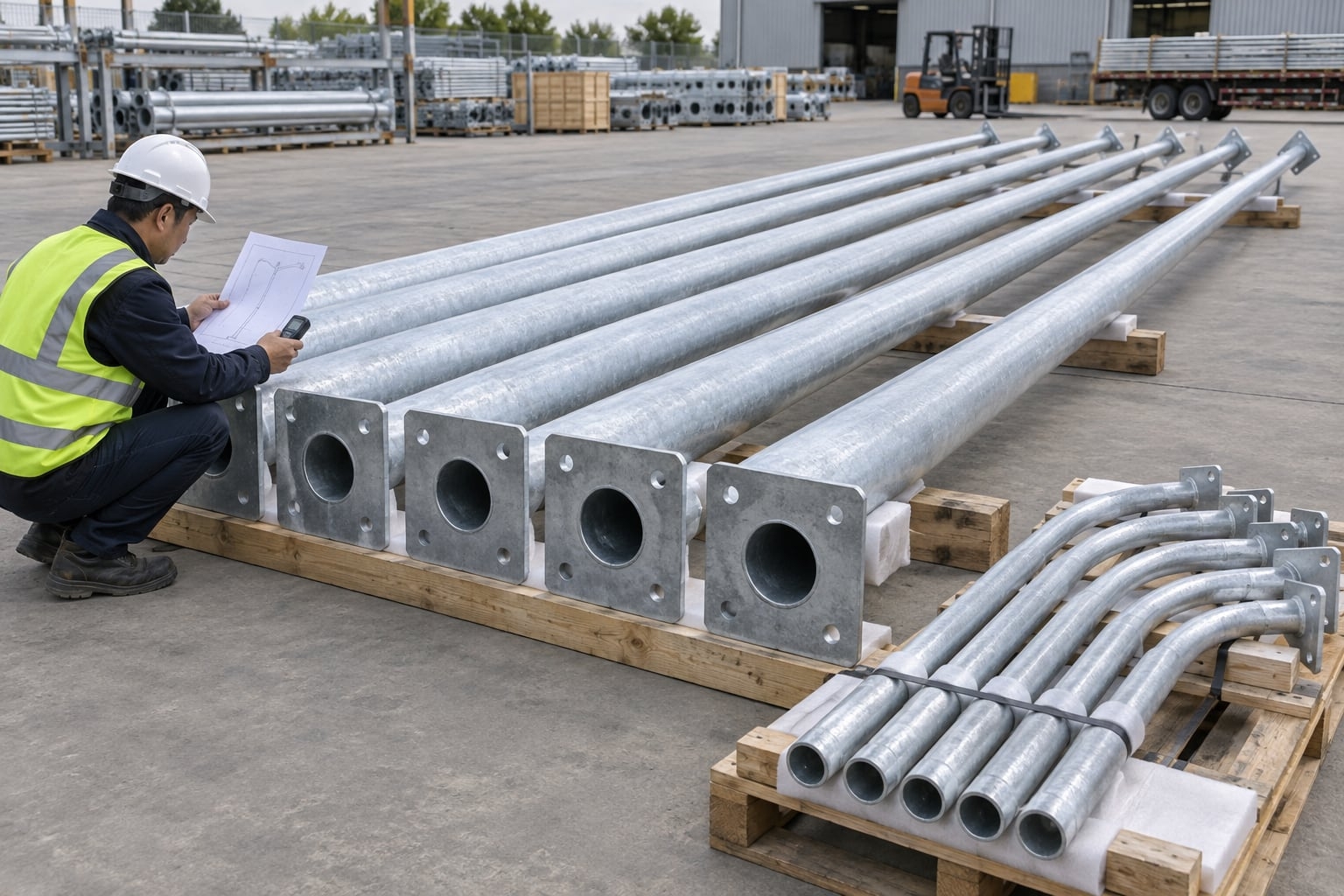
Final inspection links each physical pole to its agreed fabrication and release records.
A nonconformance should be located by pole mark, weld identifier and drawing revision. Record the observed condition, the applicable acceptance clause, the proposed disposition, any approved repair procedure and the reinspection result. Structural repair needs an authorized engineering/welding decision; blending or painting over a finding is not a closure method. When repair changes the surface, repeat the specified pre-coating and post-coating checks in the affected area.
The galvanized coating inspection and repair guide covers finish assessment after fabrication. It does not replace evaluation of a defective structural weld. The foundation and anchor-bolt guide likewise addresses the civil interface, which must use the released pole configuration.
| Record | Minimum linkage | Release question |
|---|---|---|
| Approved drawing and weld map | Pole type, mark, revision, weld IDs | Was the actual joint inspected against the released detail? |
| Procedure and personnel record | Relevant material, thickness, process, position and date | Was the selected qualification valid for this joint? |
| Visual inspection sheet | Weld ID, stage, inspector, result and noted access limits | Were required surfaces available and checked? |
| NDT report, if specified | Method, location, extent, procedure, indication and result | Does the report cover the required population and acceptance basis? |
| Nonconformance/repair closure | Finding, engineering decision, repair and reinspection | Are open defects resolved before coating and shipment? |
The export packing checklist starts after the accepted assembly is identified. The buyer should be able to connect the released physical pole to its drawing and quality record before labels and protective packing obscure details.

An inspection report is useful when its weld ID and pole mark match the released drawing.
State pole marks and quantities, steel grades, drawings or concept geometry, attached equipment, governing structural/welding standards, requested weld and NDT scope, witness/hold points, documentation format, and whether a third-party inspector is required. Leave room for the supplier to identify an impractical examination location and propose a technically equivalent access or sequencing plan for approval. Comparing bids on the same stated scope is more useful than assuming that every “quality certificate” means the same inspection.
For a project-specific pole and arm configuration, start with the steel street light pole range and send the technical package through contact. Jieyao's final welding and inspection deliverables must be agreed in the purchase documents and approved drawings.
No universal rule applies. The governing code, joint geometry, design/fatigue basis and contract determine which welds need which method and extent. A qualified reviewer should define the scope.
No. An inspection result needs a released detail and acceptance basis. Without them the inspector cannot show what configuration was accepted.
The inspection plan should identify checks while the uncoated steel is accessible. Coating can obscure some conditions and repair later may damage the finish.
Only within the sampling and acceptance plan agreed for that batch. The report should identify the inspected population and the decision rule.
Hold the affected item, identify the defect by weld and pole mark, obtain an authorized repair or rejection decision, and record the required reinspection before release.
Contact Us
Get a custom lighting solution and quotation for your project. Outdoor lighting manufacturer in Yangzhou, ChinaAbout Jieyao LightingYangzhou Jieyao Lighting Equipment Co., Ltd. is an outdoor lighting manufacturer focused on solar street light systems and high mas... Do you have any questions or requests?
Email: jay@jieyaolighting.com

Click to Chat.
Im online now.