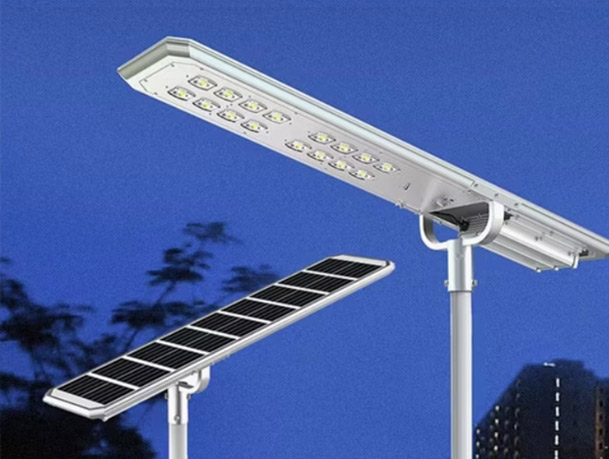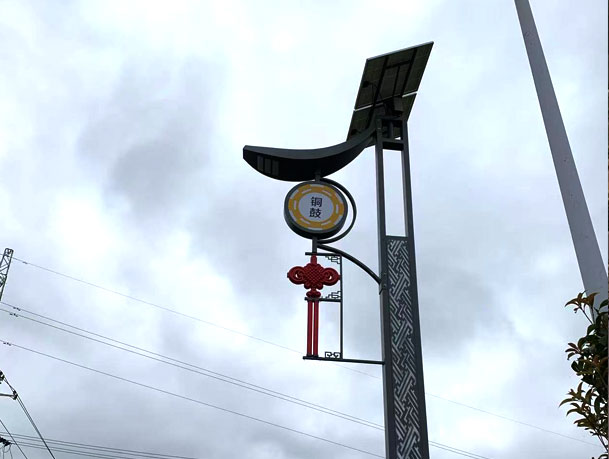


The factory acceptance test (FAT) for a street light pole is a documented check that the finished assembly matches the approved drawings, purchase specification and agreed inspection plan before it is packed and released.
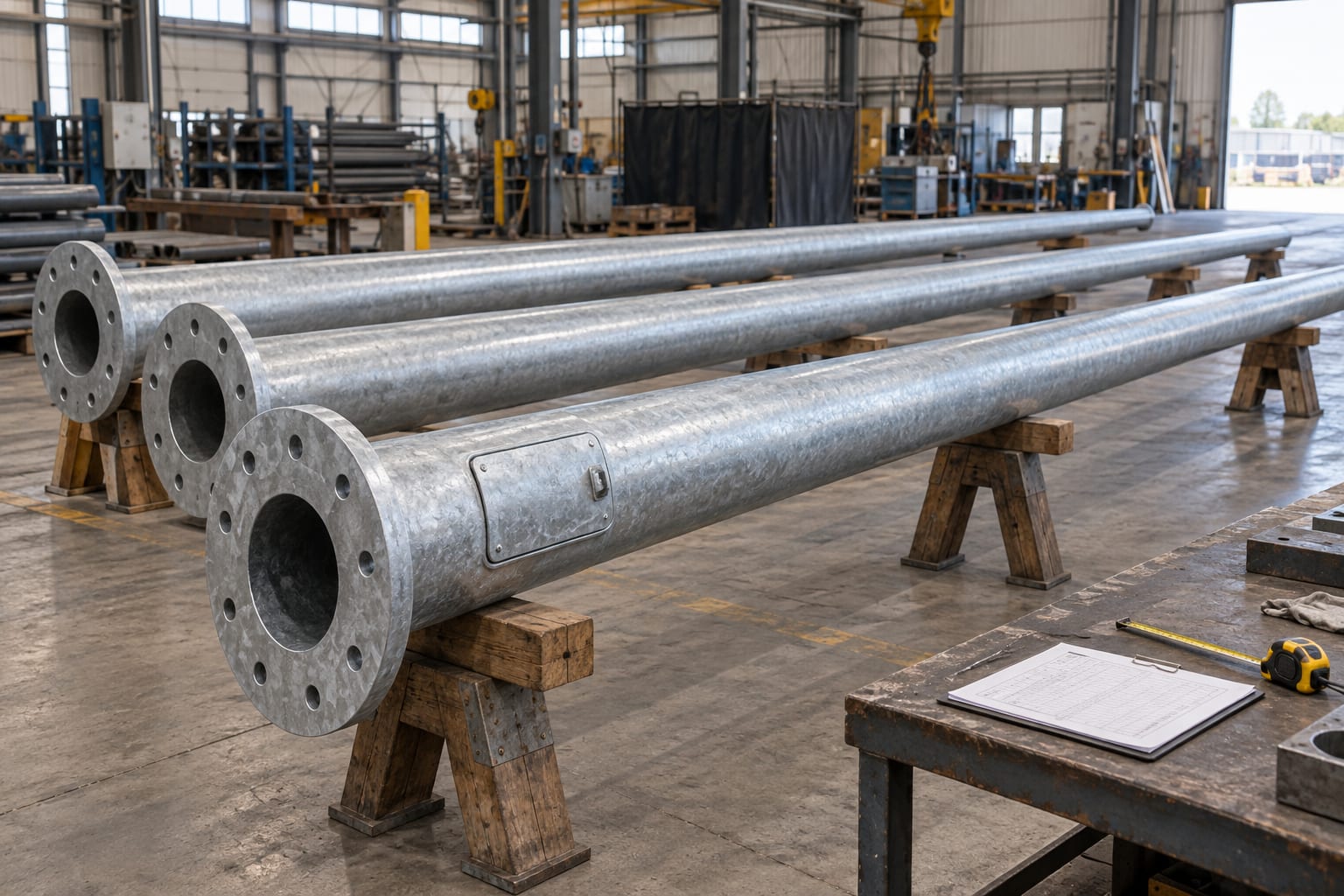
A supported pole assembly allows geometry, finish and identification to be reviewed before release.
It is not a substitute for the structural designer's calculations, a galvanizer's process record or the site's foundation and electrical commissioning checks. For a useful FAT, identify the exact pole mark, revision, quantity, acceptance criteria and responsible signatories before inspection starts.
At minimum, the buyer and supplier should reconcile five things: the approved geometry, the fabricated steel assembly, the specified finish, the fit of mating parts, and the traceable packing/release documents. Define which checks are done on every piece and which are sampled under the contract. A photograph can support a measured result, but cannot replace a measurement record or a missing drawing approval.
The physical inspection should follow the actual supply boundary. A pole-only order may exclude luminaires, internal wiring and anchors. A complete assembly may include arms, base plates, doors, terminal mounting provisions and a project-specific anchor set. The FAT report should mark each interface as supplied, excluded or by others; otherwise a superficially complete checklist can hide a missing responsibility.
The table is a planning matrix, not a universal dimensional tolerance. The signed drawing and purchase specification govern actual pass/fail decisions.

Measure against the approved drawing revision and pole schedule.
Start with the latest approved shop drawing, not a catalogue sketch. Confirm overall mounting height, shaft section or taper, pole orientation, arm reach and rise, luminaire connection, service-door location, base-plate thickness, hole pattern and anchor projection interface. The shop-drawing approval checklist explains the earlier submittal stage; the FAT checks the resulting manufactured hardware.
Record dimensions as measured values with units and the instrument used. Label any tolerance as a project requirement or drawing callout. Do not invent a standard tolerance for an entire pole family: a change in shaft profile, arm arrangement, luminaire load or base interface may change what must be checked. If a drawing discrepancy is found, stop release of the affected pole mark until the responsible designer or buyer resolves the revision.
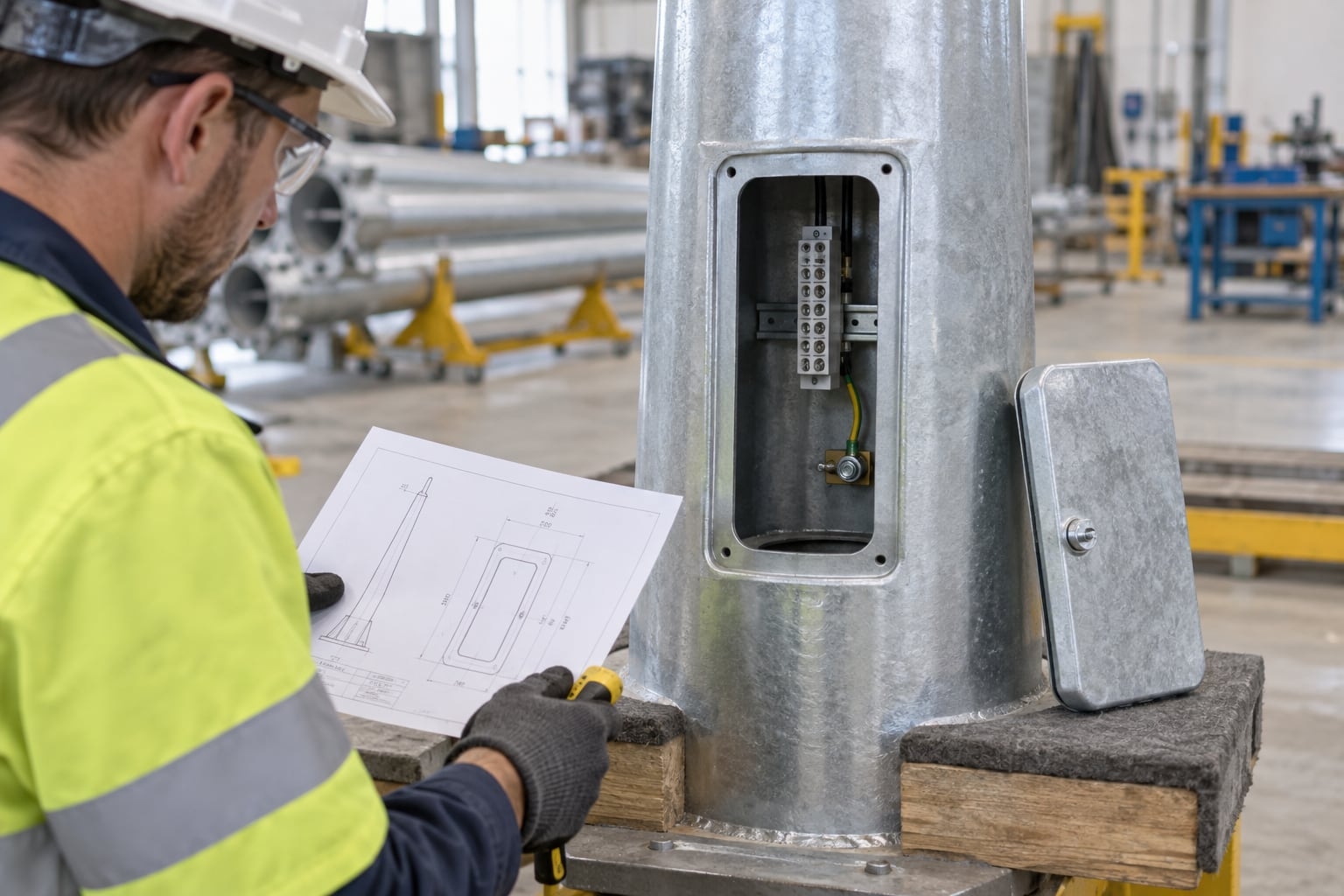
Access openings and covers are checked as physical interfaces, not only as drawing notes.
Place the pole on stable, padded supports so the shaft, base and arm connections can be observed without rolling or damaging the finish. Check straightness and visible local damage in the supported condition, then inspect weld access and cut edges according to the agreed plan. Verify the service opening, cover, fasteners and bonding provision without assuming every product shares the same electrical arrangement.
Where the arm or luminaire connection is in scope, trial-fit representative mating components using the approved hardware. Confirm orientation, seating and cable passage; photograph the assembled interface and record any shims, adapters or deviations. A bracket that looks aligned in a loose photograph may still have a wrong spigot size or bolt pattern. The street light pole product overview is useful for comparing configuration options, but the order-specific drawing remains the release authority.
The inspection plan must say whether the finish is hot-dip galvanized, painted, or a compatible duplex system, and which contract standard and edition apply. For hot-dip galvanized fabricated steel, the relevant standard may be ISO 1461:2022 or the contract's ASTM route; do not apply an unstated coating thickness or a universal repair rule. Confirm that specified records and inspection locations correspond to the actual article, and that any uncoated or damaged areas have been assessed against the governing project specification. The separate coating inspection and repair guide will address that technical decision in depth; it should not be replaced by a generic FAT photo.
For an organic topcoat, check the approved coating system and the coating supplier's application/inspection requirements. A smooth visible surface alone does not establish preparation, adhesion or layer compatibility. Treat any rework as a documented nonconformance with a repair method, reinspection and acceptance signature.
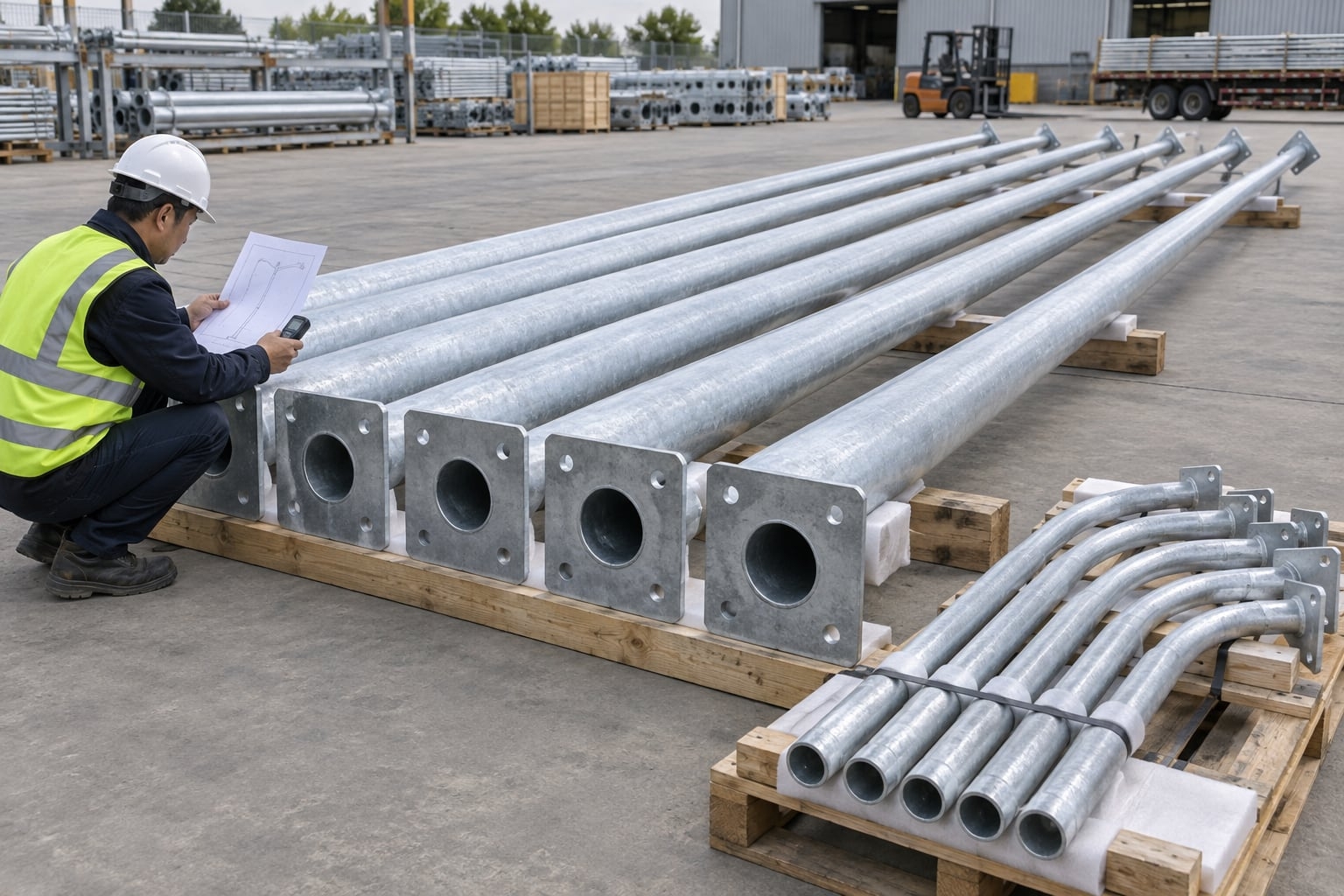
Match shafts, arms and loose parts to the released pole marks.
Count the components against the purchase scope and pole schedule: shafts, arms, base plates, doors, gaskets, hardware, anchor sets if included, identification plates and project-specific fittings. Check that loose hardware is labelled to the assembly it fits. Confirm that coatings and edge protection will not be damaged during handling, and keep shipping marks readable after wrapping.
The second table is a document-control and handover checklist, distinct from the physical inspection matrix above. It also establishes what must travel with the shipment even when a buyer does not witness the FAT in person.
A buyer may specify a physical hold point, remote witness or supplier self-inspection with document review. Agree the mode and notice period before production. For remote review, request close, legible views of the measured interfaces and document identifiers, not only wide beauty shots. If a dimension is critical, include the measurement reading, datum and drawing callout in one frame or in a linked report.
If the buyer is absent from an agreed witness point, follow the contract's waiver procedure instead of silently treating the inspection as accepted. The FAT report should state who attended, which items were observed, which were sampled and which remain subject to site verification.
A signed FAT closes the specified factory checks and authorizes the next release step; it does not mean the pole has arrived undamaged or has been correctly erected. Protect the finish and projections during packing, identify loose parts by pole mark and capture loading evidence. Then use the installation and erection checklist for receipt, foundation release, lifting and commissioning. For supplier comparison before award, see the road lighting tender evaluation guide.
It depends on the purchase contract and inspection plan. Even without a witnessed FAT, the buyer should require a defined factory inspection and release record for the supplied pole marks.
No. A certificate and a physical observation answer different questions. The agreed standard, article identity and inspection plan determine what additional checks are required.
Check them if they are part of the supplier's scope. If anchors are supplied separately, verify the approved base-plate/anchor interface and document the scope boundary.
No. Foundation geometry, site lifting, wiring and commissioning need their own checks under the project design and installation plan.
Record the affected pole mark, protect the evidence, and use the contract's nonconformance and repair procedure before dispatch or installation. Do not hide a repair under packaging.
Contact Us
Get a custom lighting solution and quotation for your project. Outdoor lighting manufacturer in Yangzhou, ChinaAbout Jieyao LightingYangzhou Jieyao Lighting Equipment Co., Ltd. is an outdoor lighting manufacturer focused on solar street light systems and high mas... Do you have any questions or requests?
Email: jay@jieyaolighting.com

Click to Chat.
Im online now.