

Short answer: A street light pole production schedule should begin only after the buyer and manufacturer agree on the approved pole schedule, structural inputs, interface drawings, finish system and inspection plan. A quoted lead time is meaningful only when its start event, approval dependencies, lot size and delivery basis are stated. Treat fabrication, finishing, inspection and dispatch as separately evidenced milestones instead of one unqualified promise.
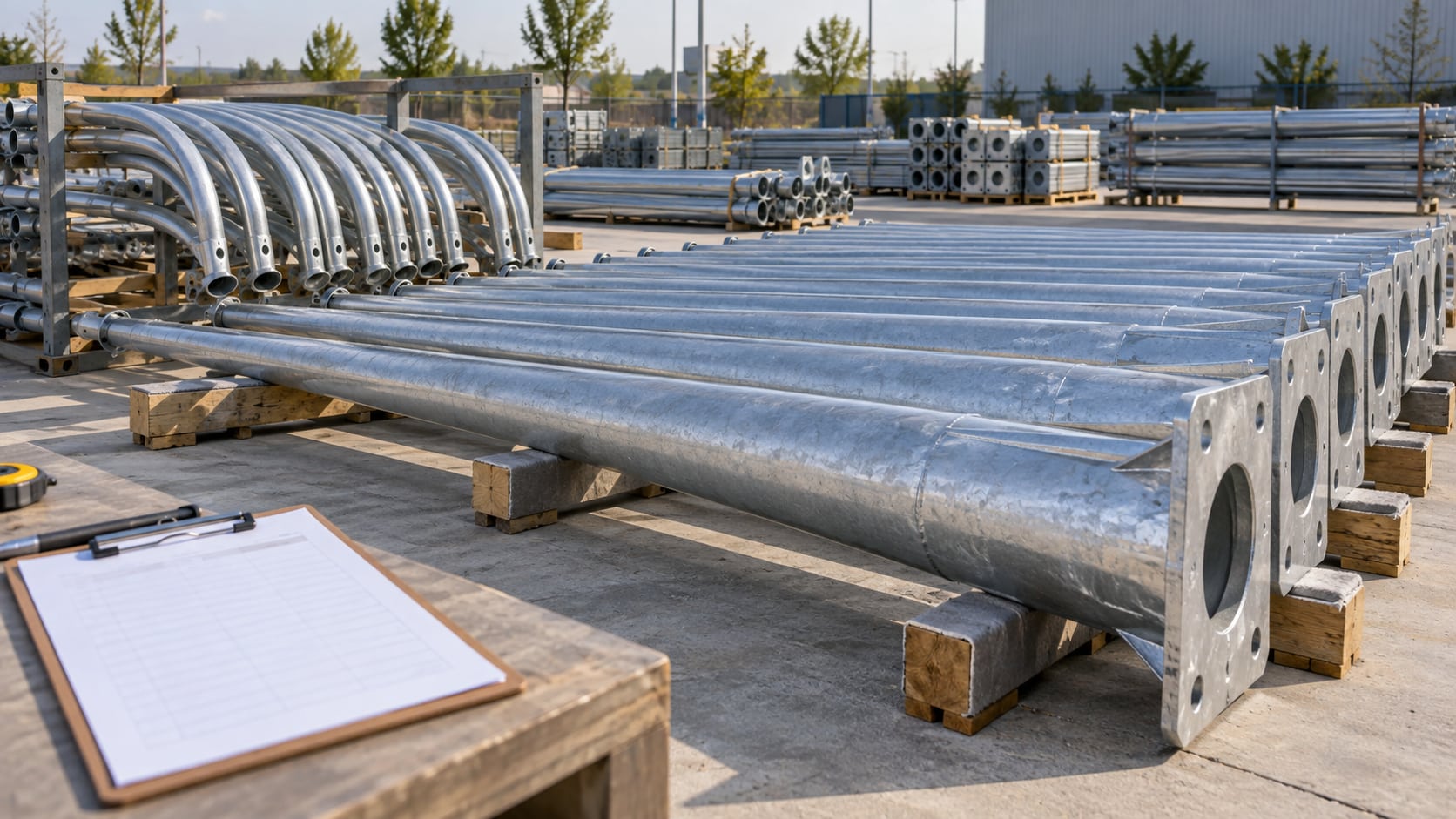
Lot staging and release records make production progress visible.
The purchase order alone may not release a custom lighting pole to fabrication. Check whether approved general-arrangement and shop drawings, luminaire and arm details, base-plate and anchor interfaces, cable access, material grade, finish, identification marks and the inspection-and-test plan are all required before the supplier can cut steel. The shop drawing approval checklist details the drawing package; the pole inspection and test plan guide covers release authority. The agreed schedule should identify who supplies each input, who approves it and how revisions are controlled. A changed luminaire effective projected area, arm outreach or foundation interface can require a drawing or structural review and move the release date.
| Input or decision | Evidence to exchange | Why it affects timing |
|---|---|---|
| Pole schedule and quantity by type | Location schedule showing height, shaft, arm, luminaire and finish for each type | Controls drawings, material allocation and batching; a total count alone is insufficient. |
| Structural and equipment inputs | Project wind criteria, luminaire/bracket data and any attached equipment load schedule | Changes to outreach or equipment can change the shaft, arm and base design. |
| Foundation and electrical interfaces | Approved base plate, anchor template, cable entry and access-door orientation drawings | Unresolved interfaces can hold fabrication even if the pole silhouette is accepted. |
| Finish and inspection scope | Specified protection system, visual/measurement criteria and hold-point responsibilities | Finishing sequence and witness availability affect release and dispatch dates. |
| Shipping basis | Delivery location, packing, marking, document and shipment split requirements | Loading and transport plans depend on pole lengths, assemblies and lot grouping. |
Ask the supplier for a dated, revision-controlled plan that separates engineering release from physical manufacture. The plan should show dependencies and evidence, not merely percentages complete. For repeat configurations, some activities may overlap; for new custom details, an approval hold can sit on the critical path. The supplier should explicitly identify whether a milestone applies to the first sample, each lot or the whole order.
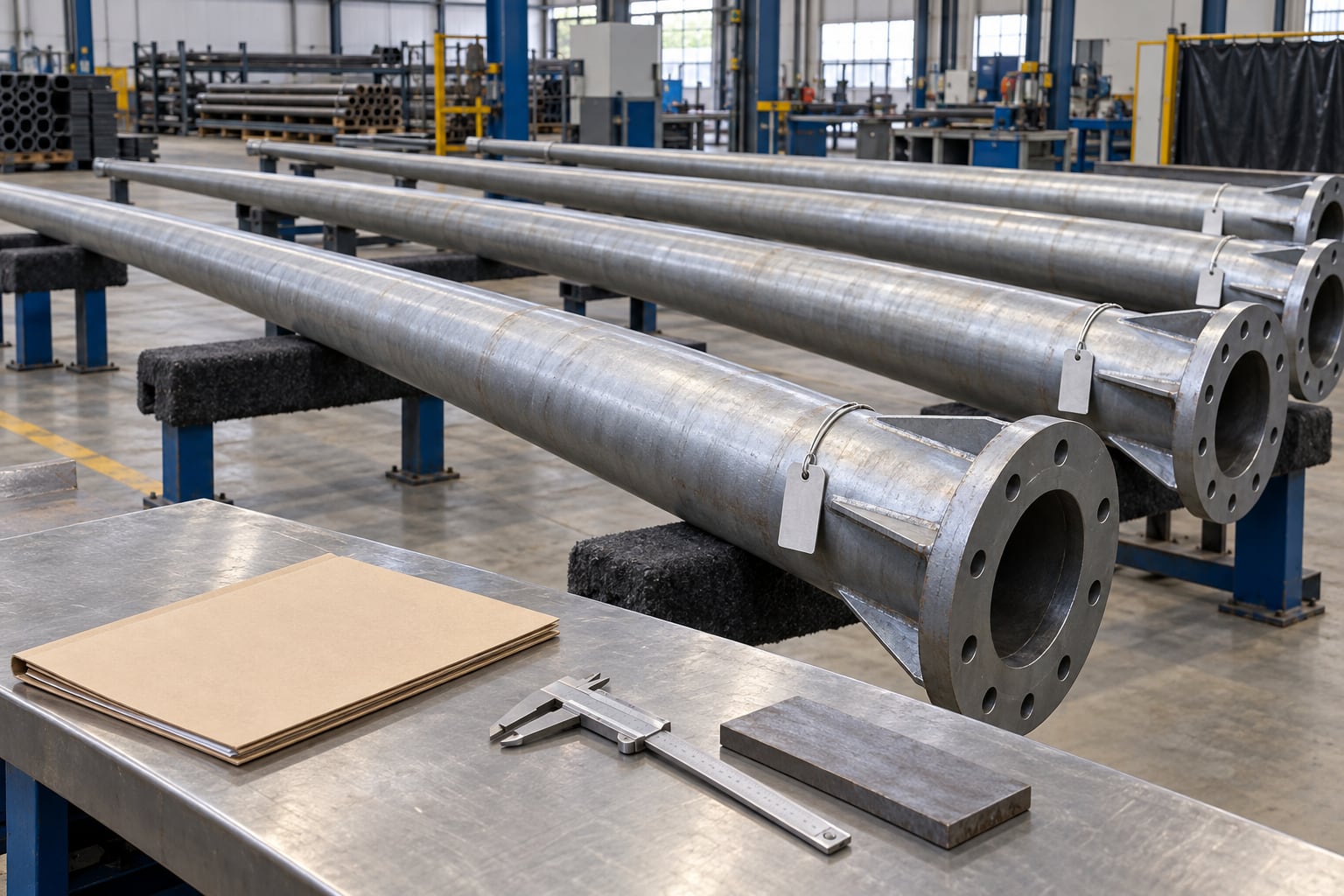
Material allocation should connect the specified grade to the controlled manufacturing lot.
| Milestone | Suggested evidence | Buyer decision |
|---|---|---|
| Design and drawing release | Approved revision of the pole schedule and shop drawings | Confirm the released configuration matches the purchase order. |
| Material allocation | Traceable material list or mill records where required by the contract | Check grade and identification requirements before fabrication. |
| First article or initial lot review | Dimensional and interface records for the specified sample or lot | Resolve deviations before repeating them across the order. |
| Fabrication completion | Lot-based inspection record covering shafts, arms and base connections | Release units to the specified finish process. |
| Finish and final inspection | Finish records, final dimensions, marking and agreed witness sign-off | Accept, repair or hold the affected units according to the approved plan. |
| Packing and dispatch | Packing list, bundle identification, document set and shipment notice | Match each delivery to installation locations and receiving capacity. |
Compare both offers from the same defined start event and delivery endpoint. One quotation may run from deposit receipt, another from final drawing approval; one may end at ex-works readiness, another at site arrival. Ask for the assumptions in writing, including approval turnaround, order quantity, optional finish, witness inspection and partial-shipment policy. Do not turn a supplier's indicative duration into a contractual delivery commitment without an agreed baseline and change-control method.
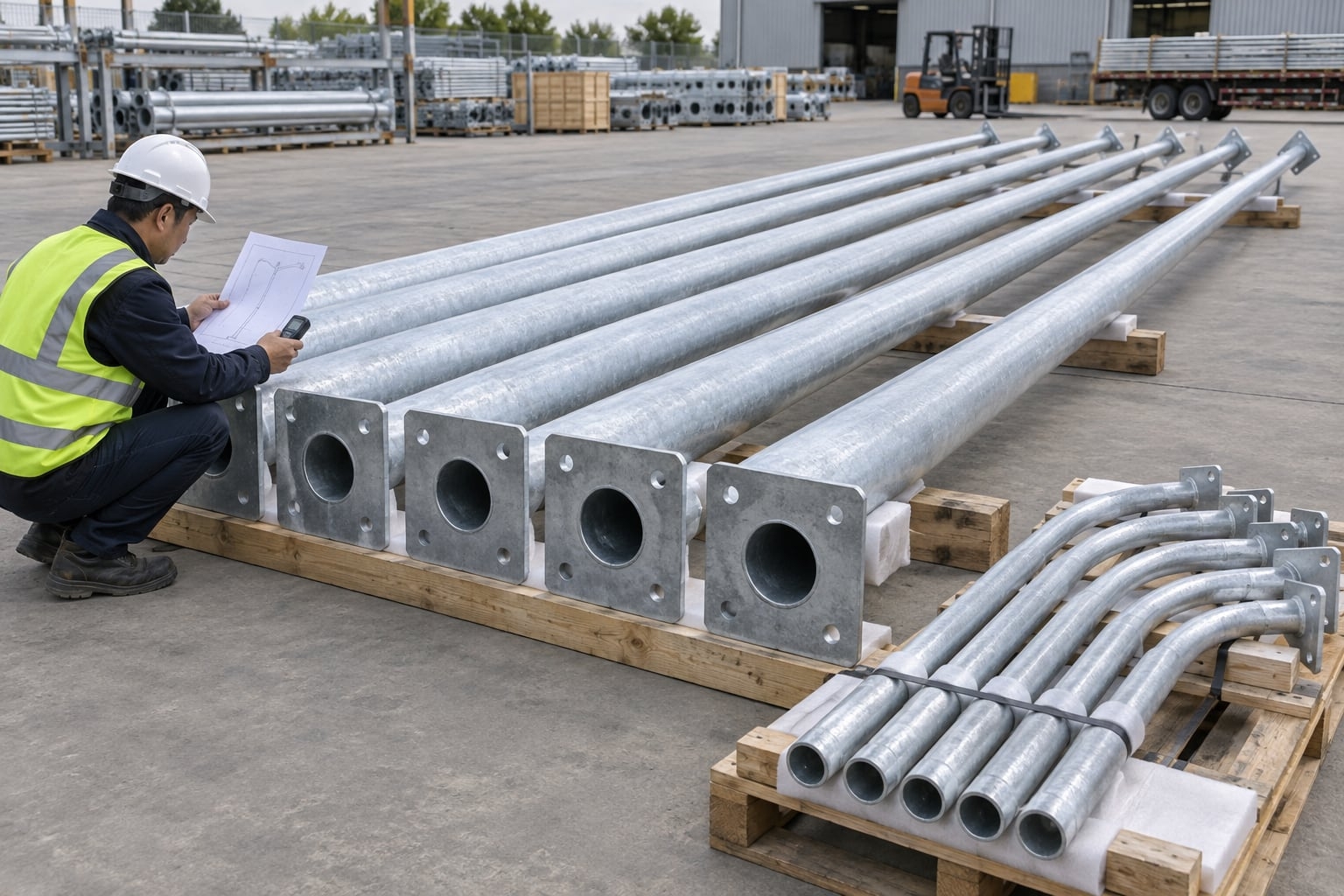
A dispatch date should follow the agreed inspection and release evidence.
Hold a short release meeting with the drawing revision, responsible approvers and open issues visible to both sides. Track each hold as “awaiting buyer input,” “awaiting supplier revision” or “released,” and record the date on which the dependency actually cleared. Keep a separate log for approved changes after production release. The material traceability guide explains how the material record follows the manufactured part. At each reporting interval, request the next verifiable milestone and any impact on the dispatch sequence, rather than relying on a generic “on schedule” label.
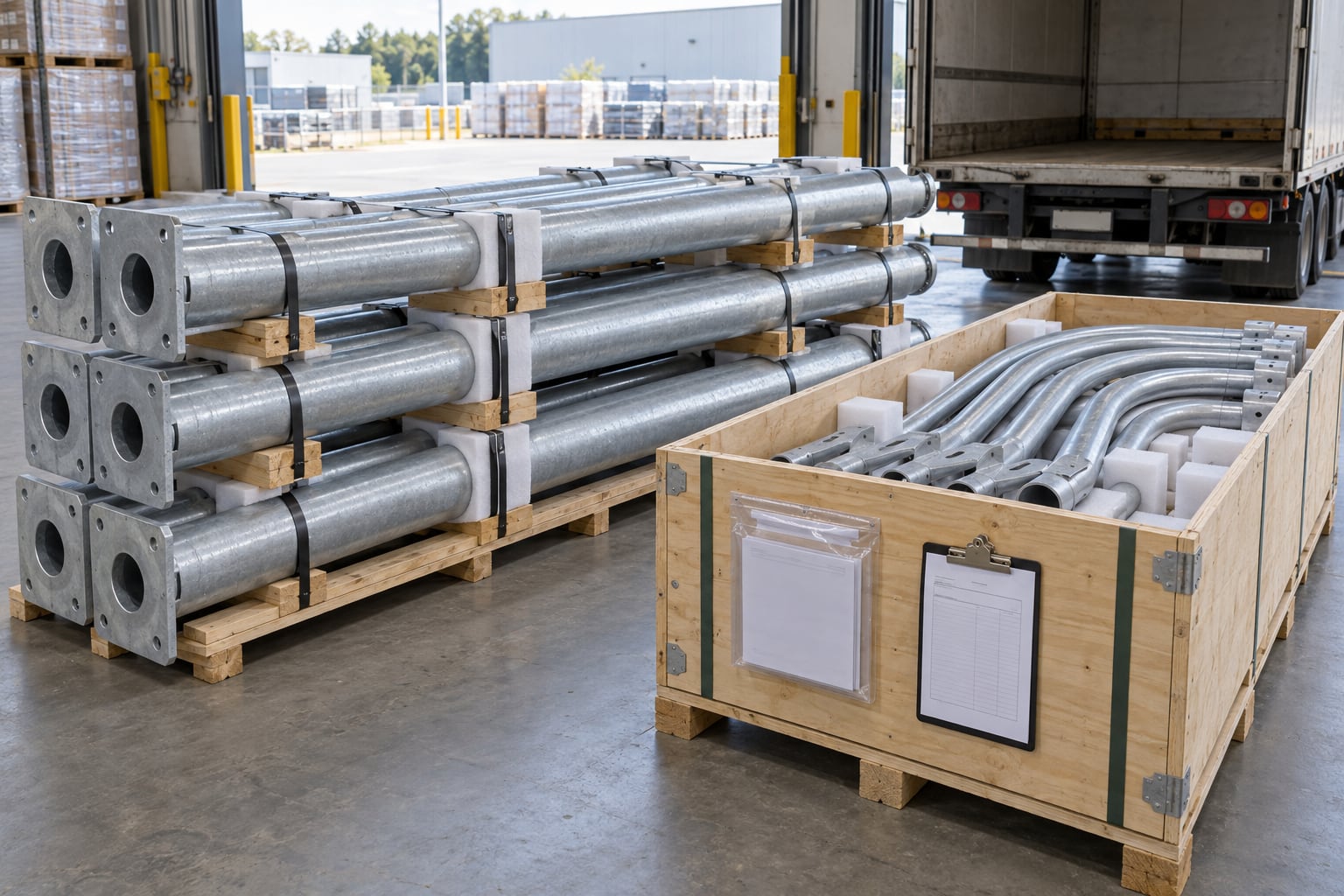
Bundle IDs and packing records link the production lot to the receiving plan.
Only if the contract explicitly says so and all manufacturing-release inputs are available. For a custom pole, drawing and interface approval may be a separate start condition.
It can when the contract, inspection plan, packing list and receiving plan permit split lots. Define the lot and acceptance records before scheduling partial dispatch; the export packing and container loading checklist addresses the shipping handoff.
Ask which milestone or dependency changed, the affected quantity and configuration, evidence of current status, the revised forecast and a recovery proposal. Preserve the approved revision history.
For an RFQ: Provide Jieyao Lighting with a location-by-location pole schedule, approved interface drawings, finish requirements, inspection scope and requested delivery basis so the proposed production and shipment plan can be evaluated against the actual project.
Contact Us
Get a custom lighting solution and quotation for your project. Outdoor lighting manufacturer in Yangzhou, ChinaAbout Jieyao LightingYangzhou Jieyao Lighting Equipment Co., Ltd. is an outdoor lighting manufacturer focused on solar street light systems and high mas... Do you have any questions or requests?
Email: jay@jieyaolighting.com

Click to Chat.
Im online now.