

Short answer: A road lighting pole quantity takeoff should count configurations at named locations, not just the total number of poles. Before requesting a quotation, map each proposed location to a pole type, mounting height, arm arrangement, luminaire quantity, base/foundation interface, finish and any signal, camera or other attachments. Separate confirmed quantities from allowances and record the drawing revision used for the count.
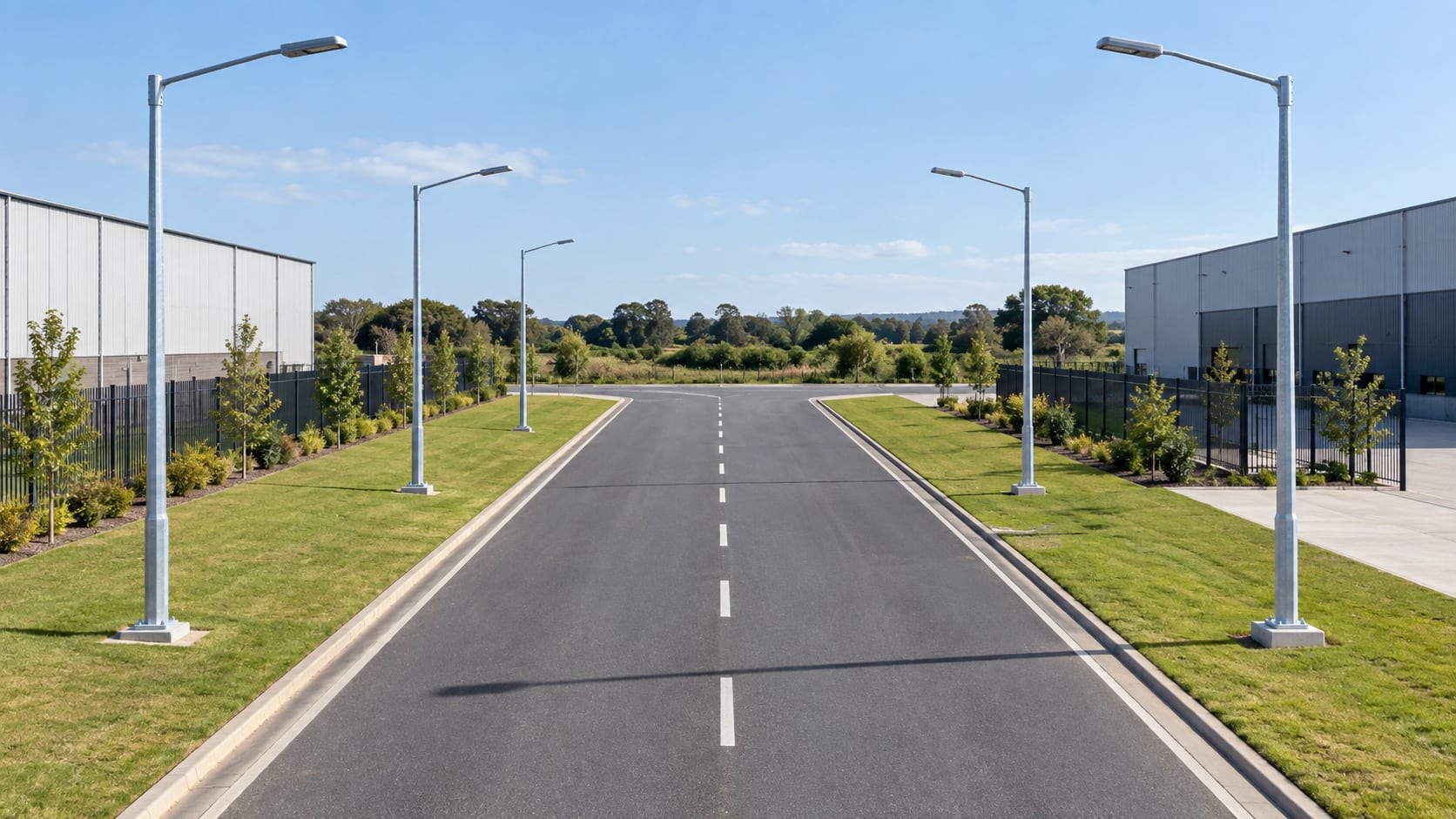
Count pole locations and luminaire interfaces separately.
Use an issued lighting layout or coordinated site plan as the source. Assign one stable location ID per proposed pole, then capture road segment, side or median position, pole type and any shared equipment. For a divided road, a double-arm median pole is one physical structure with two luminaire interfaces; it is not two poles. At junctions and boundaries, compare the layout against the civil and electrical plans so the same location is not counted twice or omitted.
The divided-road lighting guide addresses layout decisions; this page addresses how to turn an agreed layout into a clear buying schedule. Preserve the design team's responsibility for photometric and structural approval rather than treating a count sheet as a design certificate.
| Field | What to record | Common error prevented |
|---|---|---|
| Location and source revision | Unique ID, plan sheet, revision, road segment and side/median | Duplicate or obsolete counts when the layout changes. |
| Structure and height | Single-arm, double-arm or other pole type; nominal mounting height | Combining unlike shafts under one generic line item. |
| Arm and luminaire interface | Arm quantity, outreach, inclination, luminaire count and mounting detail | Counting luminaires as poles or missing a second median arm. |
| Base and cable interface | Base plate or direct-burial arrangement, anchor template and cable entry | Ordering a pole that does not meet the civil/electrical interface. |
| Finish and accessories | Galvanizing, optional coating, door, terminals, brackets and identification | Hidden differences between nominally equal-height poles. |
| Status | Confirmed, provisional, alternate or future provision | Turning an allowance into a firm order quantity without approval. |
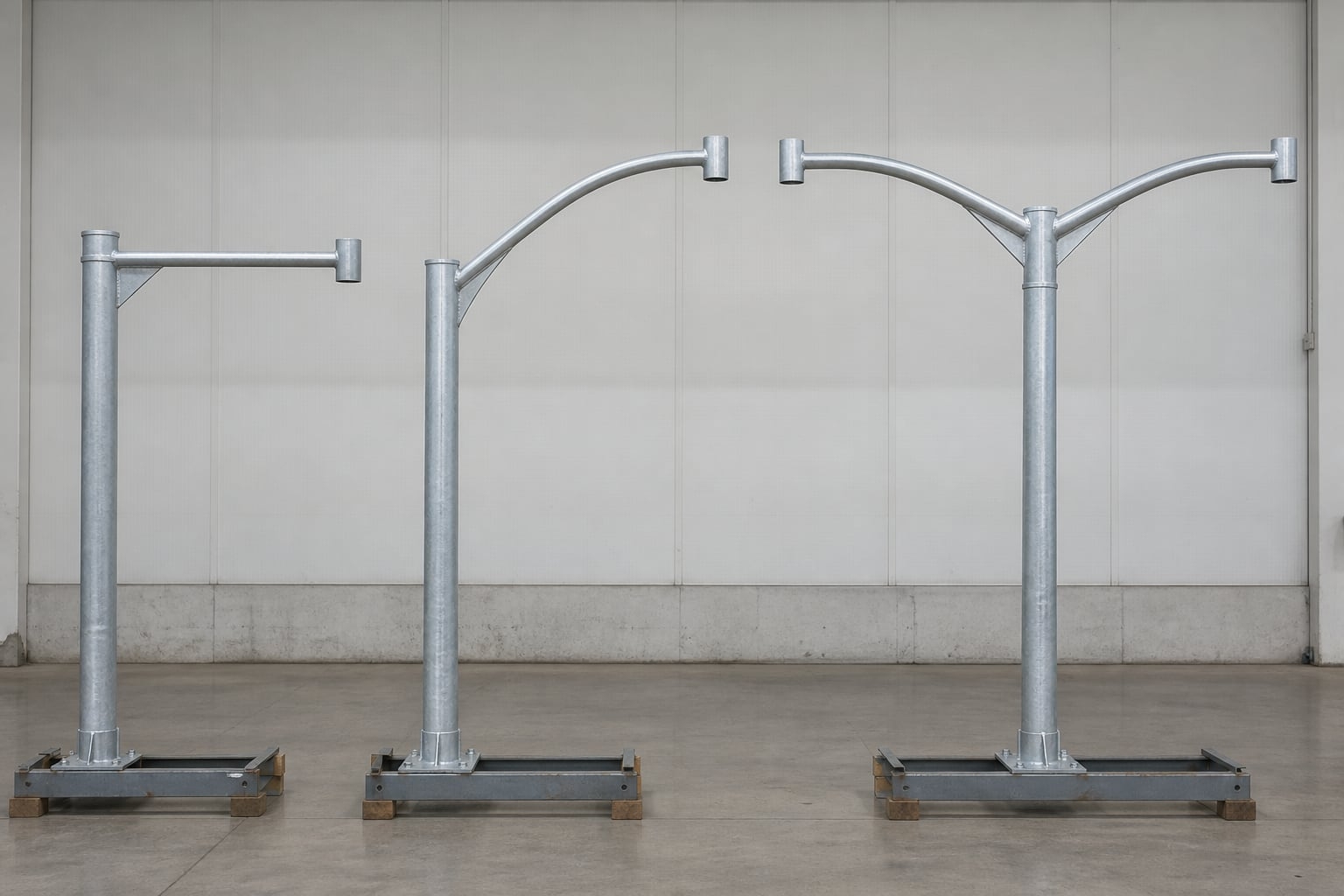
Different arm arrangements should receive separate type codes even when nominal height is the same.
Once every location has a type code, group identical, approved configurations into quotation lines. Include a schedule attachment listing every location that belongs to each line. If the same pole uses a different coating, arm, base or attached device, keep it in a separate line until the engineering review confirms interchangeability. Distinguish poles, luminaires, arm assemblies, anchor cages and spare parts as separate quantities where the supply boundary requires it.
The 10m double-arm pole and 10m single-arm pole illustrate why arm geometry defines a different procurement item. Final pole dimensions remain project-configured and must be checked against approved design inputs.
| Cross-check | Question to resolve | Output |
|---|---|---|
| Layout versus schedule | Does every plan symbol have one location ID and one type code? | Count of confirmed and provisional pole locations. |
| Pole versus luminaire count | Do multi-arm or multi-fixture locations have the right luminaire quantity? | Separate structure, arm and luminaire totals. |
| Civil interface | Does each type have an agreed base or embedment concept and location constraint? | Open-interface list for engineering approval. |
| Electrical interface | Are cable entry, door orientation, circuit and control provisions coordinated? | Electrical hold list and drawing references. |
| Scope boundary | Are anchors, luminaires, brackets, wiring and installation included or excluded? | Clear quotation scope and exclusions. |
| Revision change | Which locations were added, removed or reconfigured since the last issue? | Change log and updated quantity baseline. |

The foundation and cable interfaces should be reviewed before apparently identical poles are grouped.
Assign type and lot marks in the purchase order so the manufacturer can label, inspect and pack the correct assemblies. The export packing checklist covers dispatch identification; the asset register guide covers what happens after installation. The takeoff is the pre-order baseline between those phases, not an as-built record. If a pole moves or changes type during construction, preserve the original ID and record the approved change.
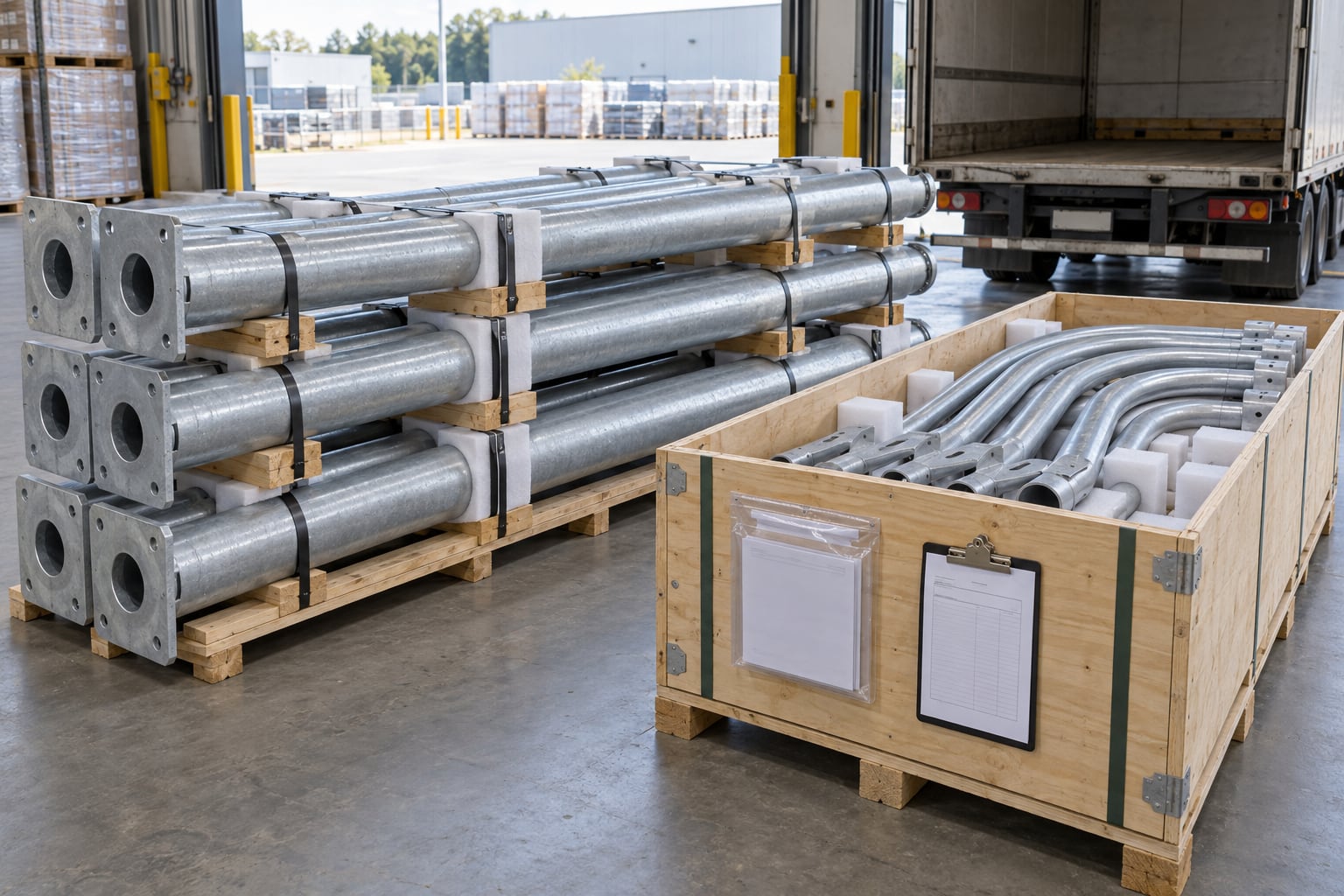
Type and lot marks should remain traceable through packing and receiving.
One controlled master schedule can work if it includes every location, type and revision. Separate phase or lot extracts may be needed for procurement and delivery, but they should reconcile to that master.
They may be priced as clearly identified options or allowances. Keep them separate from firm production quantities until the buyer approves the layout and interfaces.
Only when the shaft, arms, loading, base, finish and supply scope are genuinely interchangeable under the approved drawings. Nominal height alone is not enough.
For an RFQ to Jieyao Lighting: Send the location-based schedule, current layout and pole-detail revisions, luminaire equipment list, structural criteria, interface drawings, finish requirements and a clear included/excluded supply boundary. Jieyao can then return a configuration-based quotation rather than guessing from a total pole count.
Contact Us
Get a custom lighting solution and quotation for your project. Outdoor lighting manufacturer in Yangzhou, ChinaAbout Jieyao LightingYangzhou Jieyao Lighting Equipment Co., Ltd. is an outdoor lighting manufacturer focused on solar street light systems and high mas... Do you have any questions or requests?
Email: jay@jieyaolighting.com

Click to Chat.
Im online now.