Jieyao Lighting · Parking-area power selection
Compare solar and grid-powered parking lot lights against the same night-time service. A stand-alone solar system is worth investigating where a suitable grid connection is difficult and the panels have reliable solar access. Grid-powered lighting is worth investigating where usable electrical infrastructure already exists or the required duty would make autonomous solar storage and collection impractical. The parking layout, operating hours and permitted reduced-output states decide what each proposal must deliver.
A staff car park that closes after the evening shift presents a different energy problem from a hotel entrance or transport interchange that remains active overnight. The difference is the work the lights must keep doing after most bays become empty. Establish that duty before comparing a solar package with an electrical installation.
Define the parking service
Distinguish the power arrangements
Work through a night schedule
Check the solar duty
Check the grid work
Compare three site situations
Verify the operating result

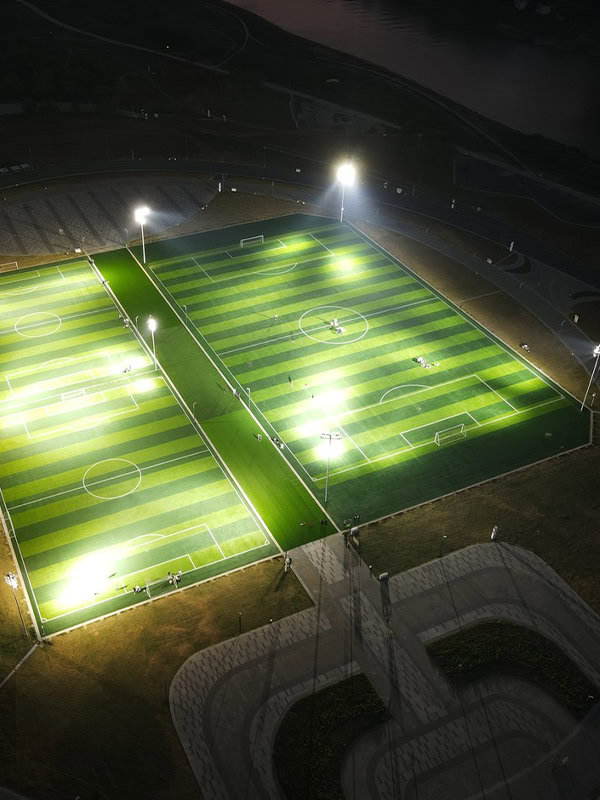
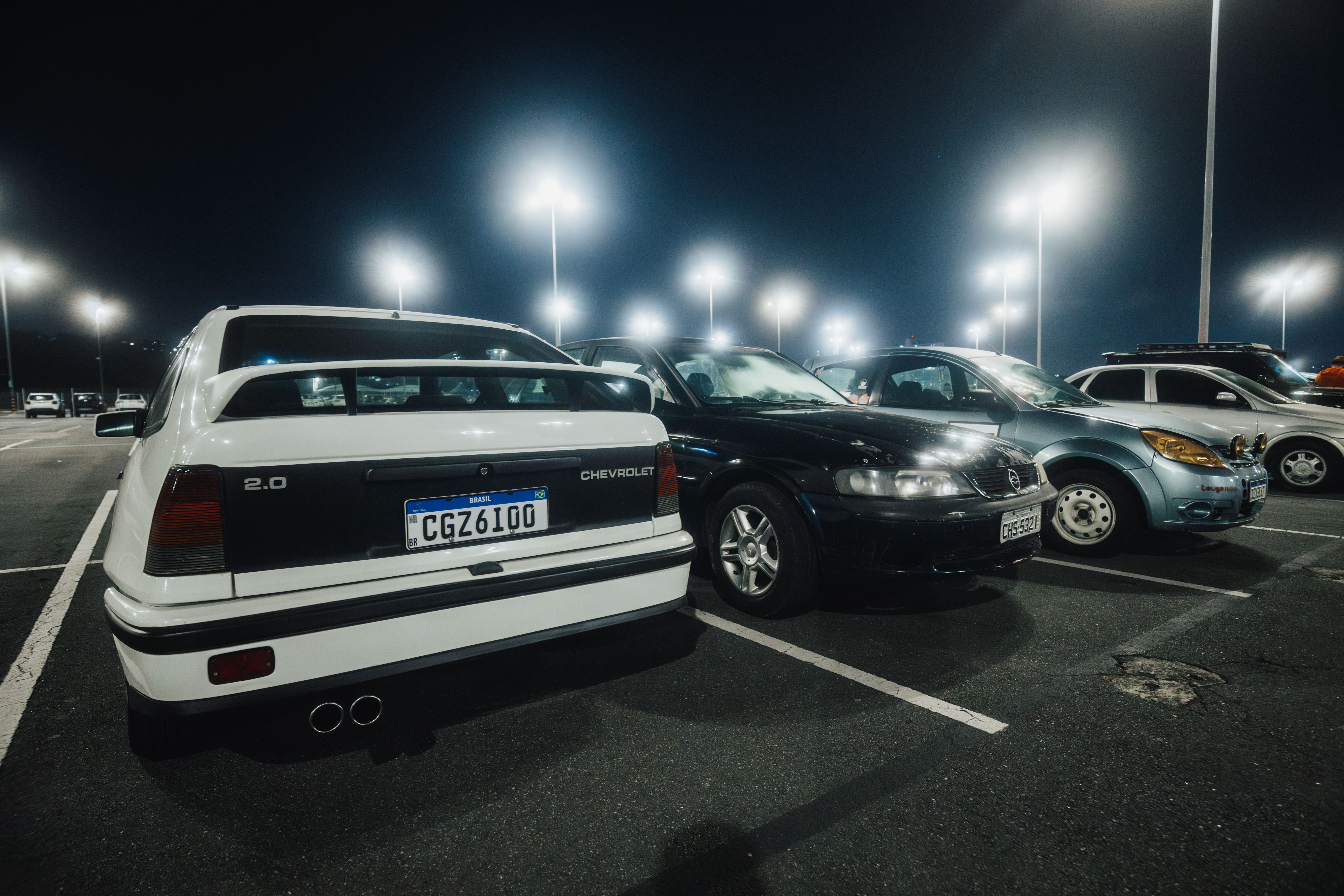
Parking-area lighting during night-time use — an application example.
Map the parking bays, drive aisles, walking routes, payment points and exits. Then add a time schedule to that map. The last customer may leave at closing time while cleaners, security staff or an overnight tenant still need an entrance and a route through the site.
That distinction often matters more to the supply choice than the total number of bays. A large section might support an approved reduced-output state after closing, while a smaller access route continues at its normal setting. A site that must retain its full lighting service throughout a long night has another duty entirely.
Ask the owner to define what reduced operation means in each zone. It might be a scheduled lower output, an occupancy response or no reduction. Establish how a person entering late will obtain the required lighting and what happens if a sensor or communications link fails. A controller's ability to dim does not establish that the proposed reduced state is acceptable.
The existing parking lot lighting design guide covers the optical layout, uniformity and glare questions. Here, those lighting requirements become inputs to the operating programme and power comparison.
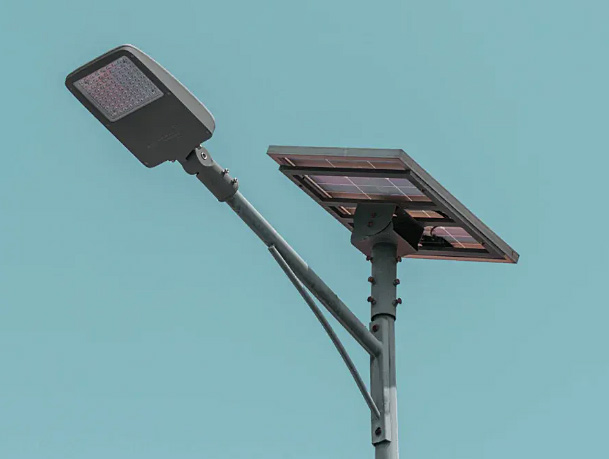
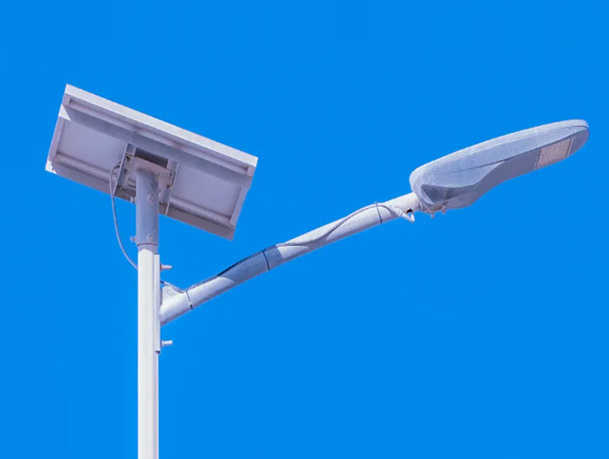
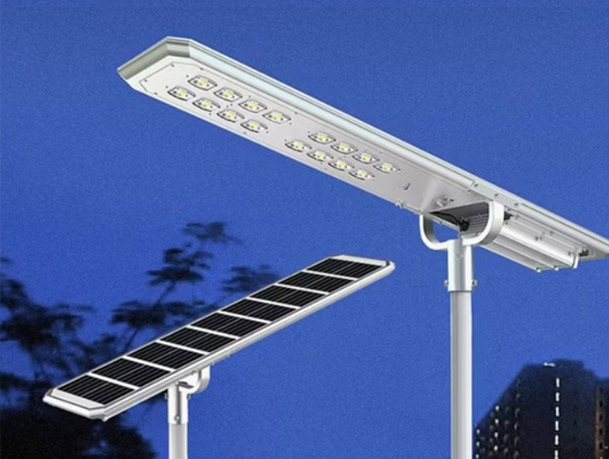
A stand-alone pole system collects energy through its panel, stores it and supplies its luminaire according to the controller's programme. The proposal needs to identify those components and their electrical relationship. Several independent lights in one car park do not automatically share their stored energy.
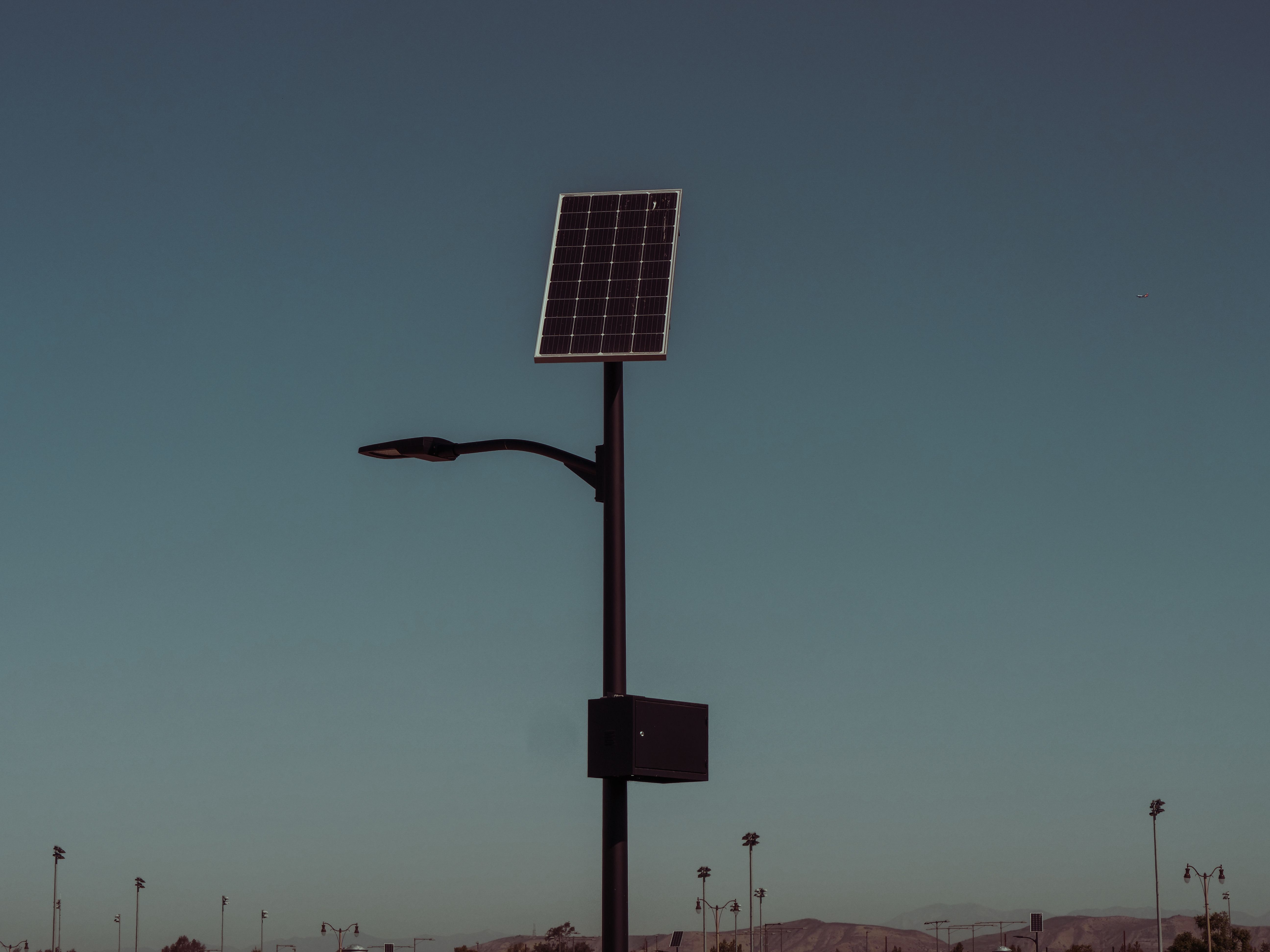
Solar panel, light head and equipment enclosure on a pole — an installed example.
The photograph shows the separate physical elements clearly. It does not identify the equipment inside the enclosure or establish a backup duration. For a purchase, connect the actual component schedule to the site's required operating programme.
Here, the luminaires receive energy from the site's electrical supply through the agreed distribution and control equipment. They can also use photocells, time schedules or compatible dimming controls. Those functions should be compared with the same operating states proposed for the solar alternative.
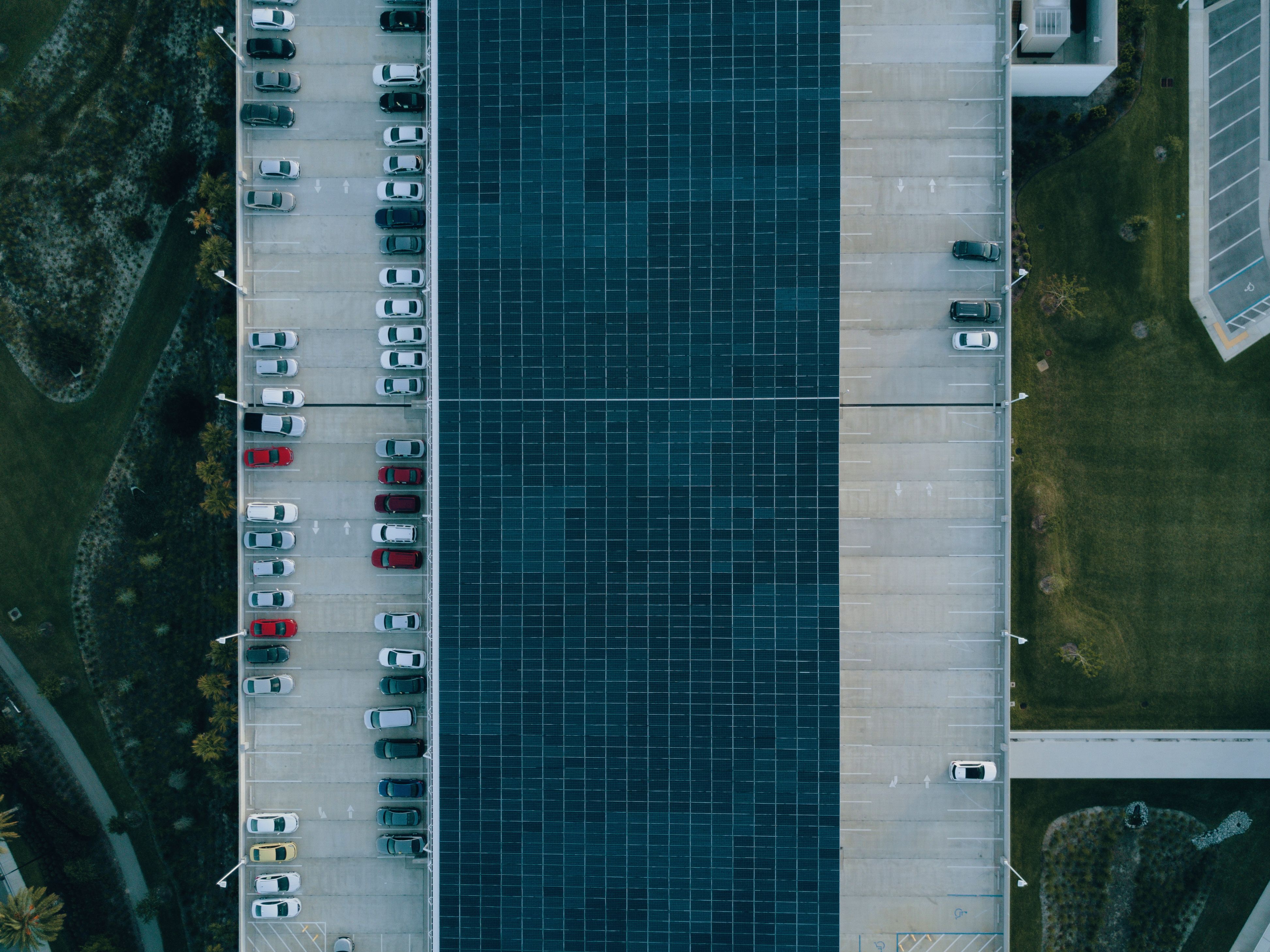
Photovoltaic canopy and surrounding parking bays — an application example.
A canopy covered in PV modules does not, on its own, establish that the parking lights run independently of the grid. The array may connect to the building's electrical system. A hybrid system may include both storage and a grid connection. Identify which equipment supplies the lighting at night and during a supply interruption.
The U.S. Department of Energy explains resilience in terms of generation combined with suitable storage and system arrangements. Solar generation alone is not a complete description of outage support. [1] Treat the canopy photograph as a site-layout example, rather than evidence of a particular electrical architecture.
Consider an illustrative lot with eight luminaires: six serving parking bays and two serving a retained access route. Assume each complete luminaire draws 40 W at the normal setting. The example uses a 12-hour night from 18:00 to 06:00.
Profile A holds all eight at 40 W throughout the night. Profile B keeps the same normal setting during busy and reopening periods, but assumes the six parking luminaires can operate at a documented 10 W input during an approved quiet period. The two access-route lights remain at 40 W.
↔ Swipe the table to read the energy calculation.
| Period | Parking zone | Access route | Total input | Energy |
|---|---|---|---|---|
| 18:00–23:00 · 5 h | 6 × 40 W | 2 × 40 W | 320 W | 320 × 5 = 1,600 Wh |
| 23:00–05:00 · 6 h | 6 × 10 W | 2 × 40 W | 140 W | 140 × 6 = 840 Wh |
| 05:00–06:00 · 1 h | 6 × 40 W | 2 × 40 W | 320 W | 320 × 1 = 320 Wh |
| Night total | 12 hours across three operating periods | 2,760 Wh = 2.76 kWh | ||
Profile A: 8 × 40 W × 12 h ÷ 1,000 = 3.84 kWh per night.
Profile B: (1,600 + 840 + 320) ÷ 1,000 = 2.76 kWh per night.
Arithmetic difference: 1.08 kWh, or about 28.1% of Profile A. This difference comes from the assumed operating profile. Either supply architecture could use compatible controls to follow Profile B.
The example does not demonstrate that a 10 W state provides acceptable illumination. It assumes that state has been separately approved for the six-light parking zone. Input power is also not a direct percentage of useful light on the ground. Use the selected driver's input data and a lighting assessment for each intended state.
The result is a load schedule that can be issued to both suppliers. Compare a solar option following Profile B with a grid option following Profile B. Comparing reduced solar operation against full-output grid operation would combine a service change with a power-supply change.
For the worked Profile B, the luminaires require 2.76 kWh for the stated night. A solar design must account for that delivered energy, the other loads in the offered system and losses along the actual power path. The battery's nominal voltage and ampere-hour label are not themselves the usable energy delivered to the lights.
As a simple reserve illustration, two nights at that programme with no charging would require 2 × 2.76 = 5.52 kWh delivered to the luminaires. That is not a recommended battery nameplate capacity: the selected storage needs its own permitted operating range, conversion losses, auxiliary demand and environmental assessment.
For eight independent pole systems, the total also cannot be treated as one shared battery. Each unit needs to meet its assigned duty. In Profile B, the two access lights carry a longer full-input duty than the six parking lights, even though all eight have the same assumed 40 W normal setting.
Evaluate solar access where the panels will actually stand. A clear central island and a perimeter shaded by a building can present different collection conditions within one parking lot. Include seasonal tree cover, canopy structures and planned development in the site review.
NASA POWER's solar-storage guidance highlights consecutive periods of low solar input as a storage-design issue. [2] A favourable annual average does not by itself establish the service available through a difficult sequence of days.
Ask how the proposed configuration recovers after drawing on its reserve while continuing the agreed nightly service. Do not accept a backup claim that silently assumes the busy period is shortened, the access route is dimmed further or normal service stops while the battery recharges.
“Automatic power management” needs a practical explanation. Which zone changes first? Does the entrance retain its intended setting? How is the owner alerted? If the controller prioritises battery protection by reducing output, record the resulting service rather than treating the original lighting programme as unchanged.
Locate the proposed connection point and establish whether the available supply and distribution equipment are suitable. An existing building nearby does not automatically mean the lighting feeder, trench route or control circuit is ready for reuse.
On an operating parking lot, the construction route may cross vehicle aisles, pedestrian paths or finished surfacing. Review the actual cable route, reinstatement work and disruption alongside the solar alternative's foundations, panel supports and internal connections. A stand-alone system may avoid a new feeder, while still requiring its own installation work.
Include the controls needed to follow the agreed profile. For the example, the parking and retained-access duties must be implemented by an appropriate circuit or control arrangement. A single switch that turns off every pole at closing time cannot deliver the stated overnight access service.
Define any outage requirement separately. If lighting must remain available during a loss of supply, identify the proposed backup or alternative supply and its commissioning checks. Likewise, inspect the condition and compatibility of equipment to be retained instead of assigning a blanket reliability advantage to grid connection.
Autonomous solar deserves investigation where the intended poles have good solar access and bringing a feeder to the new area adds substantial work. Compare the actual collection and storage configuration against the required busy and quiet periods. Keep permanent access routes in the programme, including use after the extension's main opening hours.
The decision should include where each panel will fit, how it affects the pole assembly and how components will be serviced. “No new grid feeder” is a defined advantage to evaluate; it does not mean no wiring, foundation or maintenance.
A grid-powered option is a useful starting point where suitable infrastructure is already available and the site needs its full service throughout the night. A solar alternative remains a candidate if the specific collection, storage and operating design can meet that same duty.
Confirm what can actually be reused. The existing pole locations may be useful while an aged feeder or control arrangement needs work. Conversely, moving panels to obtain sunlight can change otherwise acceptable pole positions. Show those changes explicitly in the comparison.
The canopy can create opportunities for central solar generation while also obstructing sunlight at individual light poles. Identify the electrical architecture before treating it as the same option as autonomous pole lights.
If lighting is mounted beneath the canopy, coordinate the fixtures and their control zones with the covered spaces. If a new light must serve an open perimeter or exit, assess that task separately. The visible presence of PV modules does not establish where the lighting's storage, isolation or backup equipment is located.
↔ Swipe to read the complete scope comparison.
| Scope item | Autonomous solar proposal | Grid-powered proposal |
|---|---|---|
| Normal operation | Defined pole-system components and the same approved zone schedule. | Defined luminaires, distribution and controls for that schedule. |
| Installation | Foundations, supports, panel orientation, internal wiring and commissioning. | Connection work, feeder route, protection, reinstatement and commissioning. |
| Continuity | Agreed reserve, low-energy response and recovery assumptions. | Agreed supply-interruption response and any specified backup. |
| Service | Panel access, component identification and storage/control replacement arrangements. | Luminaire, feeder and control maintenance; backup service where included. |
Build any cost comparison from those defined alternatives and a stated evaluation period. Use the site's actual tariff and operating assumptions for purchased electricity. Include the specified replacement and maintenance scope on each side. This guide does not assign a universal saving, battery replacement interval or payback period.
Commissioning should follow the accepted lighting and electrical design. Check that busy, quiet and reopening states occur in the correct zones. Confirm that an access route retained in the brief remains in its intended state while other areas change.
Record the selected model and settings, controller access and the response expected from any sensor or low-energy condition. Use the required lighting checks to confirm the installed state; a phone photograph of a bright parking lot cannot verify the calculation.
For subsequent review, keep operating changes separate from supply performance. Longer opening hours, a new overnight tenant or a changed sensor setting can increase demand. For solar, record local charging conditions and the service actually delivered during the observation period. For grid, use metered or otherwise documented energy on a matching schedule. Avoid attributing every change to the word “solar” or “grid.”
Send Jieyao Lighting the site plan, required lighting states, occupied hours, retained access routes, solar obstructions and available electrical connection information. Start with the split solar street-light configuration or the LED luminaire range, then define the complete installation scope around the parking task.
For a broader road-supply comparison, see the solar vs grid-powered highway lighting guide. The worked parking schedule above addresses a different decision: which areas need which service throughout this site's night.
[1] U.S. Department of Energy, Solar and Resilience Basics. Used for the relationship between generation, storage and outage support; no residential switching claim is transferred to a parking installation.Source: https://www.energy.gov/cmei/systems/solar-and-resilience-basics
[2] NASA POWER, Solar Storage System Design. Consecutive low-solar periods and reserve planning. Application-specific examples on that page are not parking-light requirements.Source: https://power.larc.nasa.gov/docs/methodology/data/derived/storage/
The eight-light schedule and energy arithmetic are original illustrative calculations using stated assumed inputs. They are not product ratings, a field study or a validated lighting design.
Contact Us
Get a custom lighting solution and quotation for your project. Yangzhou Jieyao Lighting Equipment Co., Ltd. manufactures outdoor lighting and steel poles in Guoji Town Industrial Park, Gaoyou City, Yangzhou, Jiangsu, China. The company reports a 10,000 m² factory site, more than 60 employees including more than 10 technical personnel, and more than 100 production and testing machines. The present company name dates from 2017; Jieyao Poles’ published history traces the team’s manufacturing lineage to 2006. The stated 15 years of experience refers to the team. The company reports exports to more than 60 countries. Do you have any questions or requests?
Email: jay@jieyaolighting.com

Click to Chat.
Im online now.
 English
 Español
 Bahasa Indonesia