

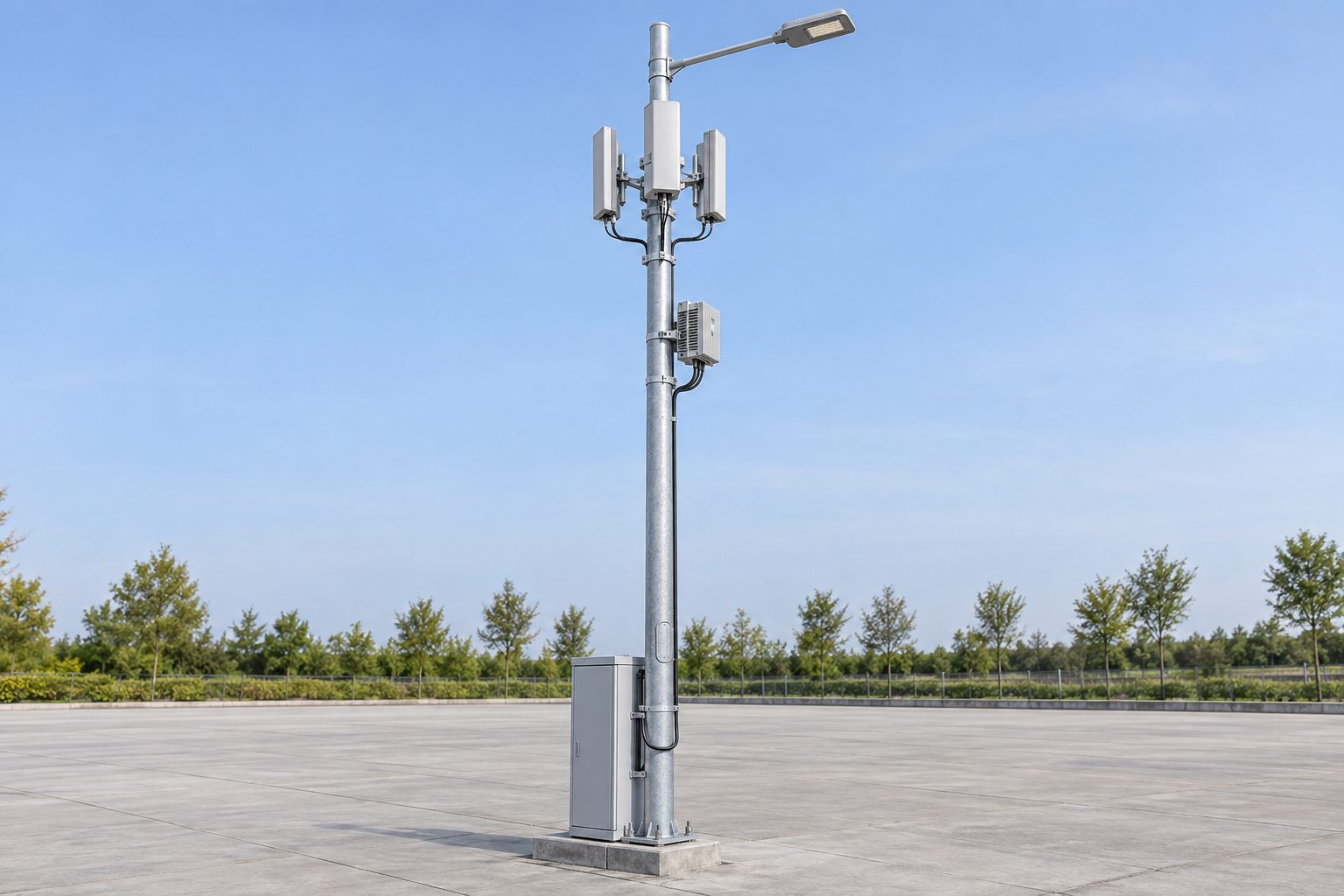
Short answer: A smart pole is a roadside structure planned to support lighting plus defined power, data or public-service equipment as one coordinated asset. It is not a fixed bundle of 5G, cameras, sensors and chargers. The word “smart” should lead to a project-specific device schedule, interface drawings and named operating responsibilities, not an assumption that every function is supplied or connected.
This overview helps city buyers and project designers separate the pole structure from the devices and services attached to it. A pole with a photocell or dimming controller can be an intelligent lighting asset without being a multifunctional city platform. Conversely, a pole intended for several operators requires more than spare mounting space: the attachments, cable pathways, access doors, energy supply and network handoff need to be planned together. NIST's smart-city framework treats interoperability, cybersecurity, privacy and procurement as cross-cutting design concerns; no single pole configuration is universal.
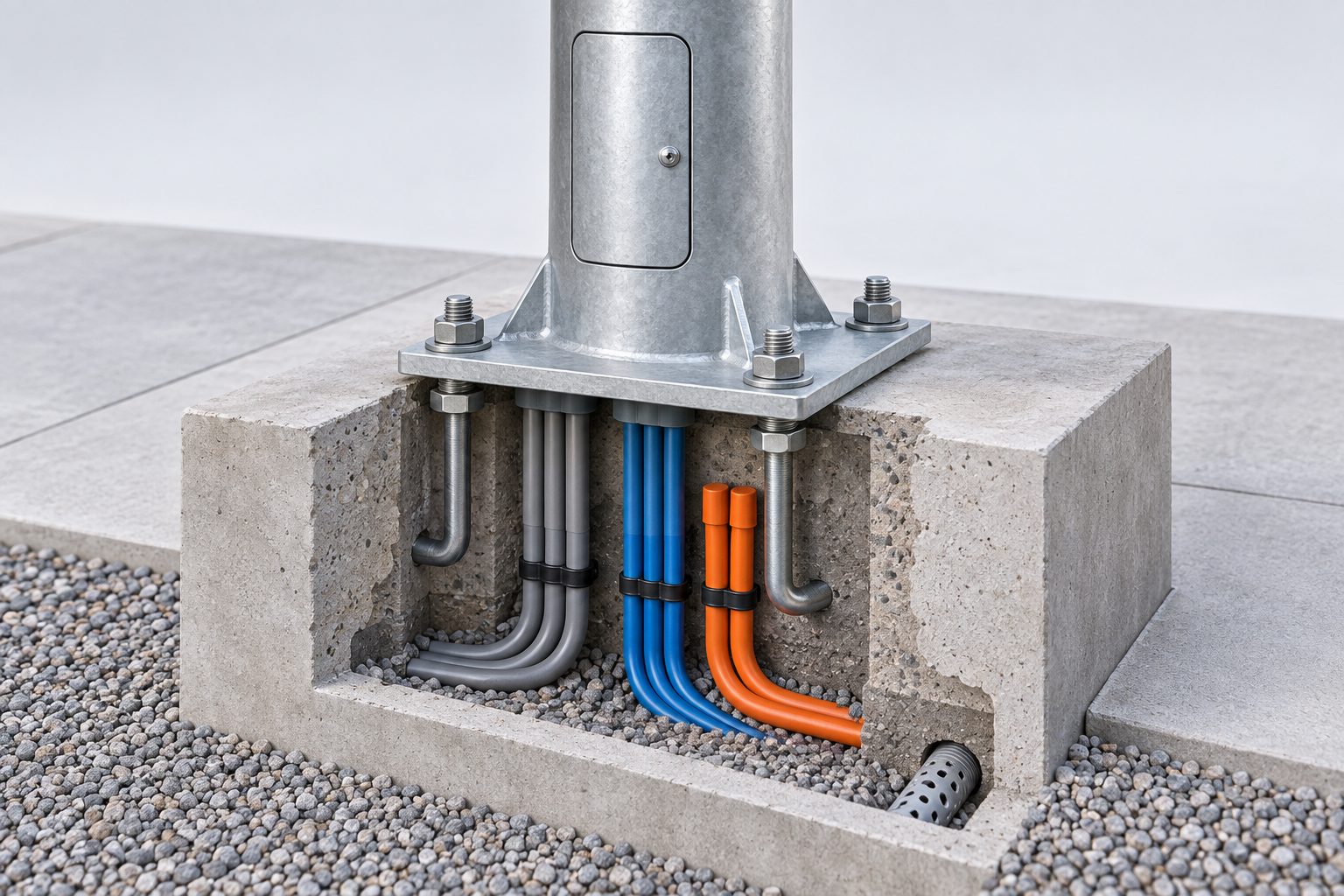
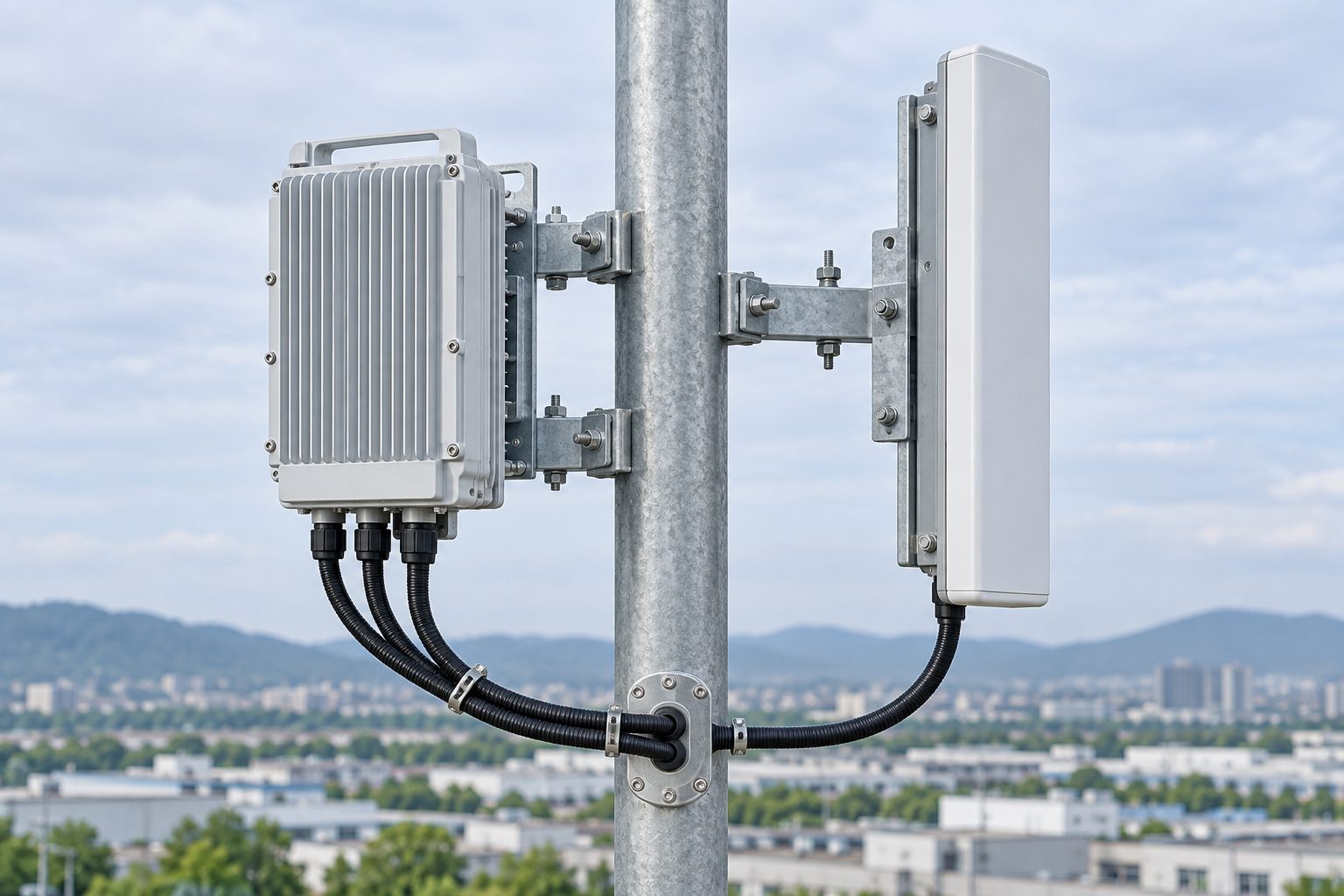
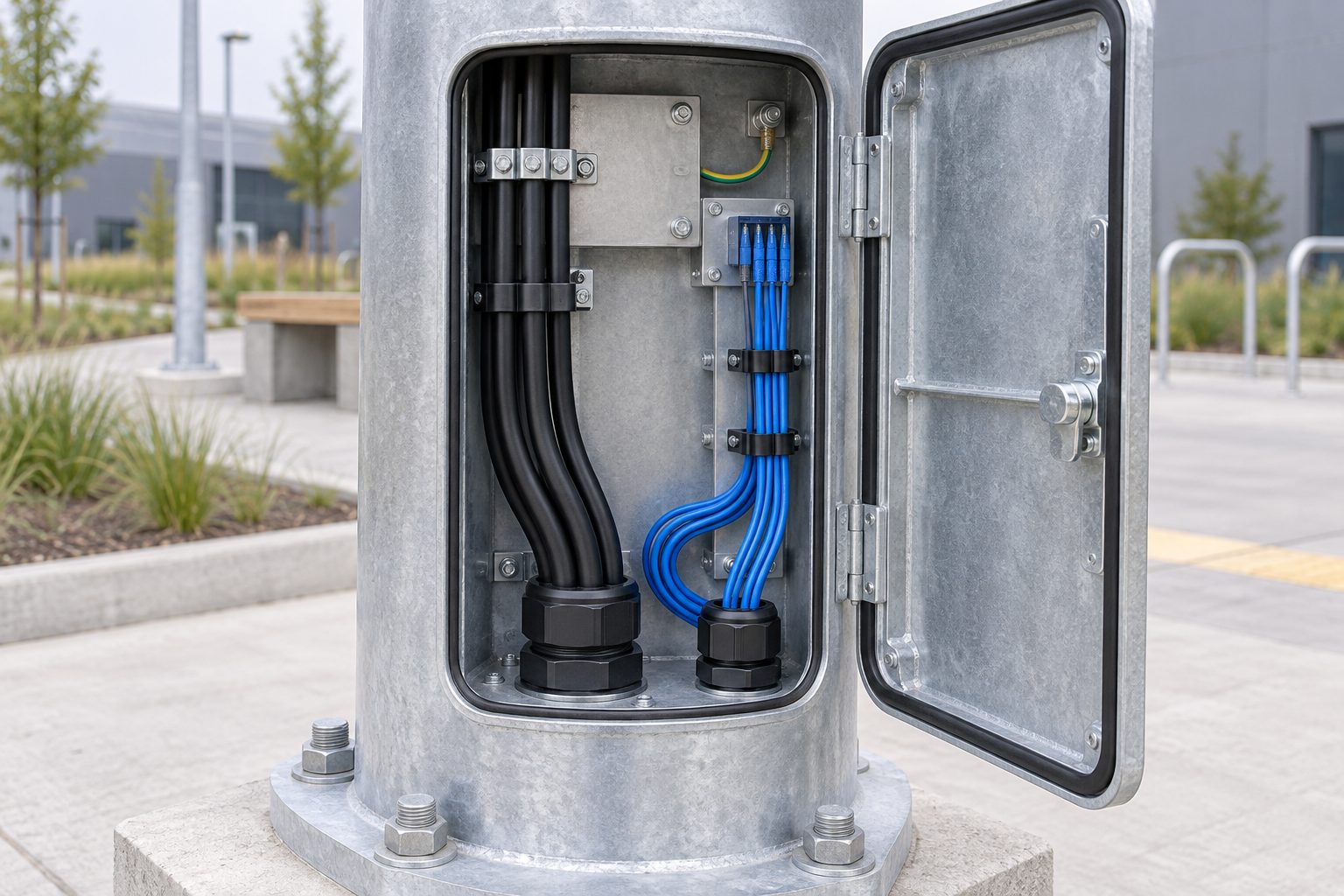
Start with the steel body, arm, base and foundation interface. Next identify electrical supply and protection, then the communications pathway, then the actual end devices and the people responsible for operating them. A camera, radio or display can be supplied by a different party from the pole fabricator. Procurement documents should state whether the price covers only prepared mounting positions and conduits, installed devices, commissioning, software subscriptions, or continuing service.
| Layer | What belongs in the design | Who must confirm it |
|---|---|---|
| Structure | Pole, arm, attachments, base, foundation and access doors | Structural designer and pole supplier |
| Power | Supply capacity, circuits, isolation and equipment loads | Electrical designer and supply owner |
| Data | Cable pathways, backhaul, network equipment and access | Network designer and service operator |
| Services | Lighting, camera, radio, sensor, display or charger as specified | Each device owner and contracting authority |
A conventional street-light pole is principally specified to support lighting equipment. A multifunctional smart pole is specified around a confirmed combination of loads, utilities and service operators. The difference cannot be judged from the silhouette alone. Check whether the drawing gives attachment coordinates, equipment masses and projected areas, access provisions and as-built identification for every planned function. A proposed future device should be labeled as a future provision until its model, power, data and structural effects are approved.
The 5G smart pole specification guide goes deeper into radio, power and data interfaces. The CCTV, Wi-Fi and EV interface review focuses on those three specific services. This page stays at the system-definition level so buyers can choose the correct scope before detailed engineering.
Describe the road or site, intended services and responsible organizations first. Then attach a preliminary equipment schedule, the requested pole height and appearance, the site utility assumptions and any future-expansion requirements. A supplier can only price a defined supply boundary: a pole with prepared interfaces is not the same deliverable as a connected, commissioned multi-service system. Ask each bidder to identify exclusions and the documents it will provide for technical review.
| Decision | Question to answer | Minimum record |
|---|---|---|
| Installed functions | Which devices are included now, and which are future provisions? | Device and load schedule |
| Supply boundary | Who supplies each device, connection and service? | Scope and exclusions matrix |
| Design responsibility | Who approves structural, electrical and data interfaces? | Review and drawing-approval plan |
| Operations | Who maintains equipment and controls network access? | Handover and ownership schedule |
When the scope is settled, compare the proposed configuration with a real product family such as the Smart Street Light with CCTV. Ask for project-specific drawings and configuration evidence instead of treating one product photograph as proof that all optional services are installed.
No. Radio equipment is included only when the project specifies it and the responsible operator accepts the arrangement.
No. Dimming makes lighting controllable, while a multifunctional pole adds separately defined structural, power, data or service interfaces.
Do not assume so. A changed attachment, load or cable route should be checked against the approved structural and utility design.
A device-and-responsibility schedule is the clearest starting point, supported by a site plan and stated supply boundary.
Contact Us
Get a custom lighting solution and quotation for your project. Outdoor lighting manufacturer in Yangzhou, ChinaAbout Jieyao LightingYangzhou Jieyao Lighting Equipment Co., Ltd. is an outdoor lighting manufacturer focused on solar street light systems and high mas... Do you have any questions or requests?
Email: jay@jieyaolighting.com

Click to Chat.
Im online now.