

Short answer: Accept a road-lighting dimming scheme by testing the actual installed groups in every approved operating scene, not by confirming that fixtures merely switch on. The commissioning record should connect each pole or luminaire mark to its control address, programmed schedule, override, communication-loss behavior and the lighting criteria approved for that road zone.
This checklist is for a grid-connected LED street-lighting project with time-based or networked controls. It is not a substitute for a lighting design, electrical test or local authority approval. A percentage set in a controller describes a command or driver setting; it does not, by itself, prove the maintained road illuminance, luminance, uniformity or glare result. The project designer should define the applicable criteria and calculation basis before the installer tests reduced scenes.
List each road segment, junction, crossing and adjacent pedestrian area separately. For every group, identify the normal scene, any scheduled reduced scene, permitted operating hours, transition method and who can authorize a temporary override. Record the final luminaire model, optic, output setting, mounting position and aiming. If one of those inputs differs from the approved design, resolve it before treating the scene test as an acceptance test.
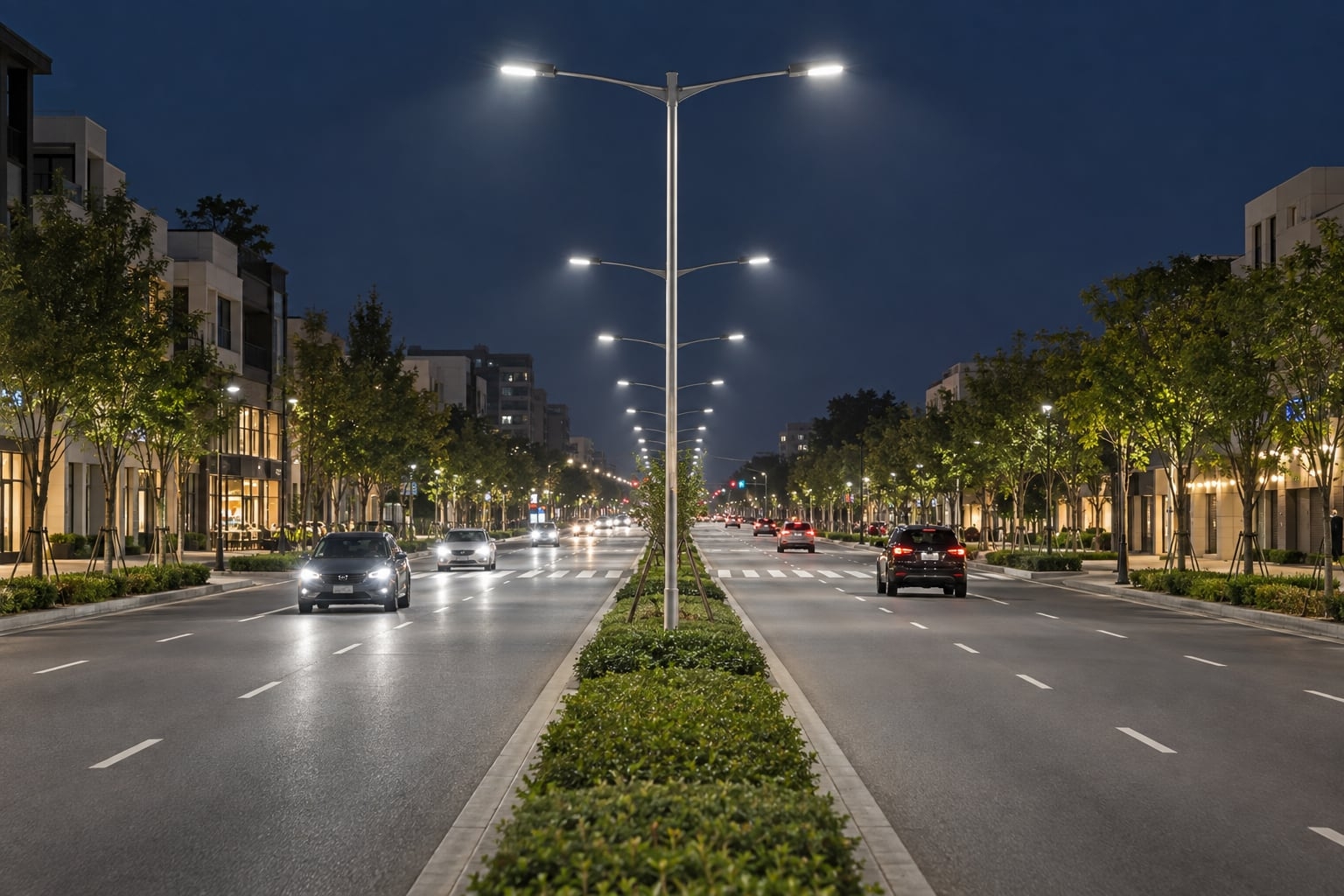
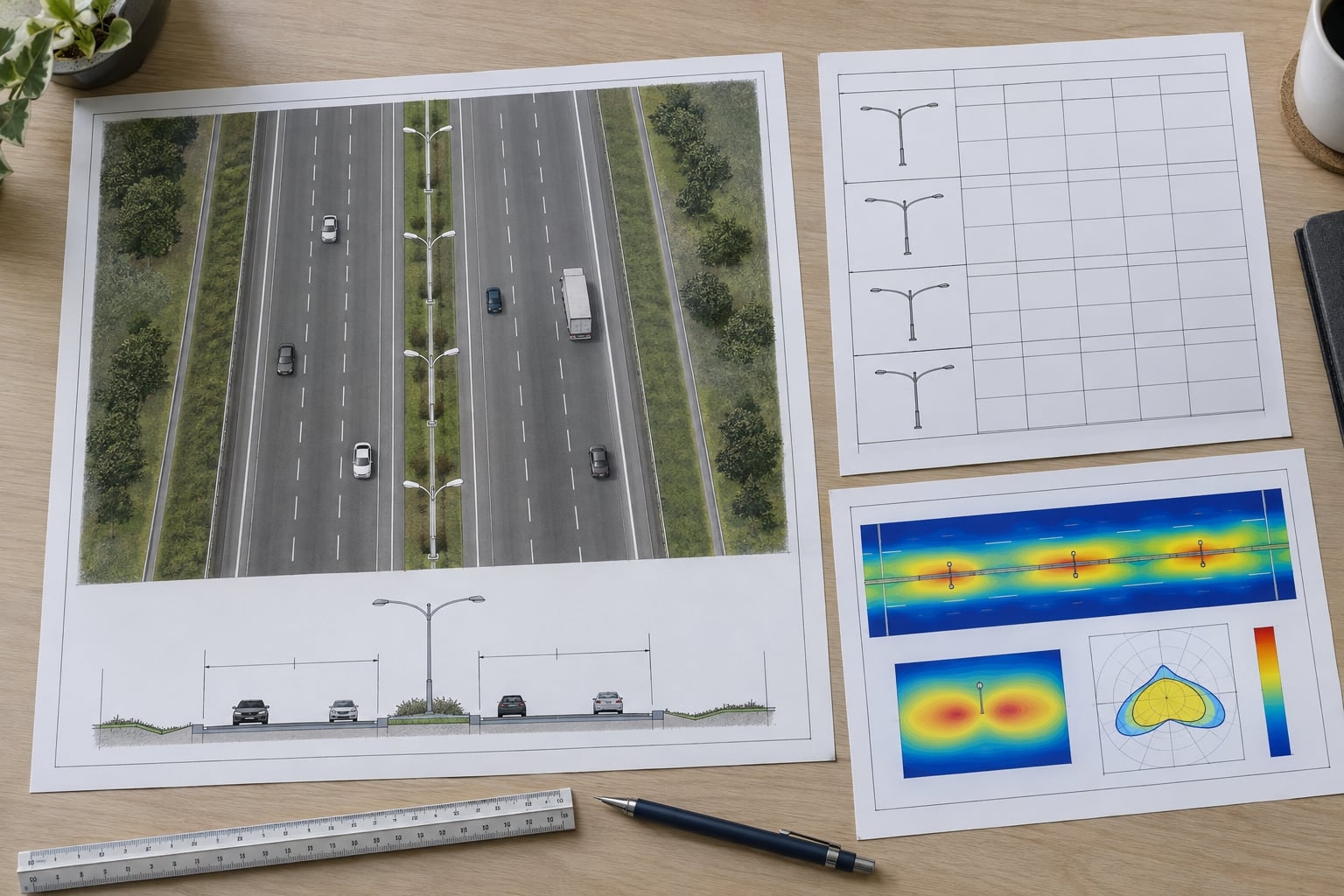

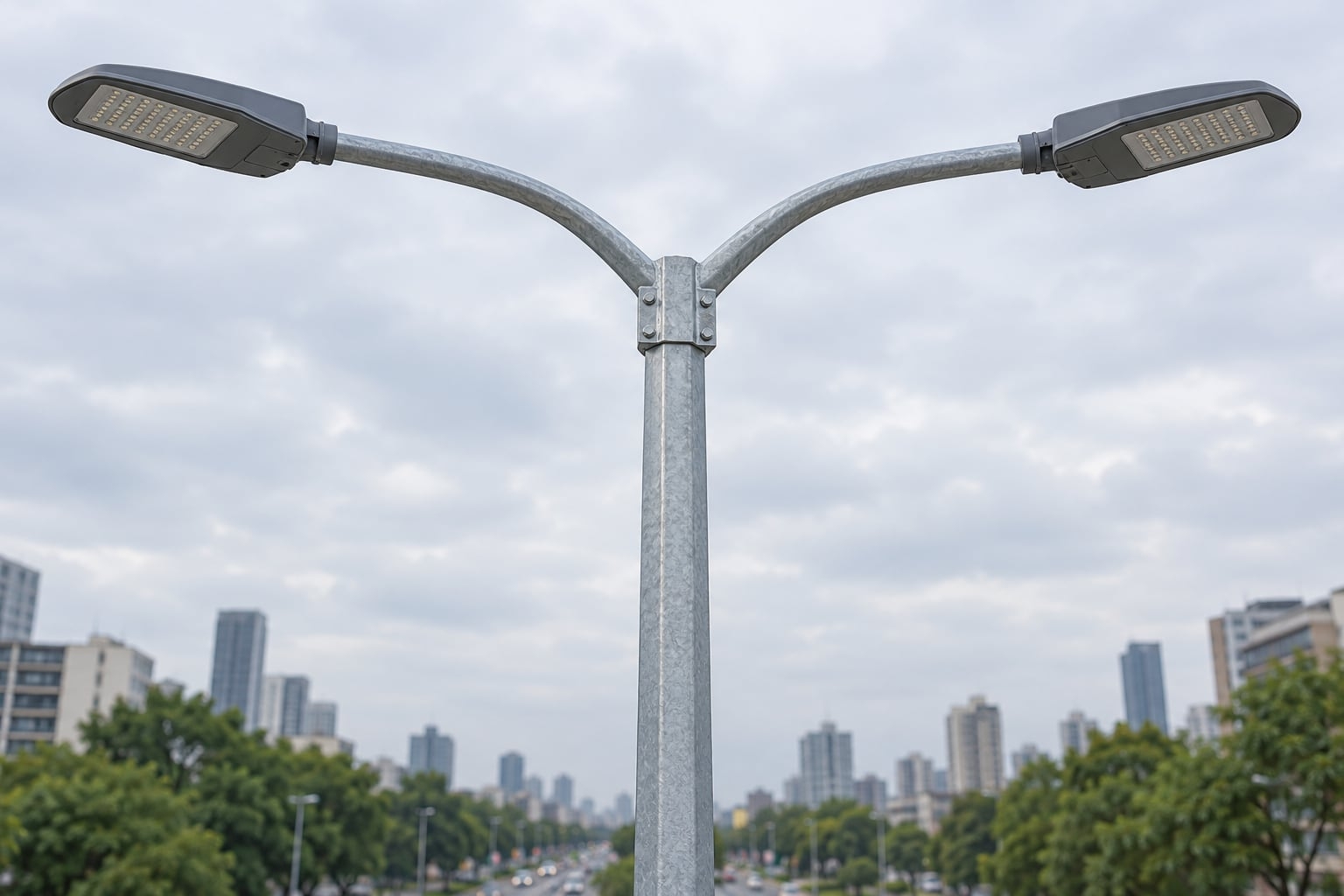
Use the actual control interface, not a demonstration handset alone. Observe the correct group responding and log the time, command, response and any discrepancy. A reduced scene should be assessed across the whole road segment after output stabilizes, especially at transitions to junctions and areas outside the dimmed group. Where the contract calls for field photometry, use its approved grid, instrument, weather conditions and initial-versus-maintained basis. Do not invent a universal dimming percentage for every road.
| Scene | What the witness checks | Evidence to retain |
|---|---|---|
| Normal output | Correct fixtures, group, aiming and programmed setting | Asset list, control log and night observation |
| Scheduled reduction | Correct transition time, affected group and road-zone performance | Schedule export, response log and agreed lighting check |
| Authorized override | Command takes effect and later returns to the approved program | Operator identity, timestamps and restoration record |
| Communication loss | Observed local behavior matches the contract's defined fallback | Fault event, fixture state and recovery test |
Commissioning is incomplete if the operating team cannot identify a fixture or recover its accepted settings after replacement. Agree on the owner of the controller platform, user permissions, time source, connectivity, firmware/configuration backup and fault notifications. Keep the physical pole mark, circuit, luminaire mark and logical control address in one cross-reference. If the controls are supplied by another contractor, mark the handoff boundary and witness responsibility explicitly rather than assuming the pole or luminaire supplier has commissioned the network.
| Record | Why it is needed | Responsible party |
|---|---|---|
| Pole, circuit and address map | Locates a failed or misgrouped unit | Installer and controls integrator |
| Approved scene schedule and revision | Preserves the accepted operating intent | Designer and asset owner |
| Test log and open defects | Separates passed scenes from punch items | Commissioning witness |
| Configuration backup and access transfer | Allows controlled restoration after service | System operator |
For the physical installation sequence, use the street-light pole erection checklist. The divided-road lighting guide explains why median, junction and transition zones may need different treatment. For an industrial campus with mixed truck and pedestrian areas, compare the industrial-park road-lighting guide. These pages support the site context; the project-approved control and lighting documents remain the acceptance basis.
No. Verify the response and the applicable road-lighting performance using the approved design and any contract-required field measurement.
Not automatically. The designer and authority should assign zones and scenes based on that location's users and approved criteria.
The fallback must be defined in the contract, demonstrated on site and recorded. Do not assume that every controller behaves the same way.
The asset owner should receive the approved schedule, access rights, backup and change-control process, regardless of who supplied the pole or controller.
Contact Us
Get a custom lighting solution and quotation for your project. Outdoor lighting manufacturer in Yangzhou, ChinaAbout Jieyao LightingYangzhou Jieyao Lighting Equipment Co., Ltd. is an outdoor lighting manufacturer focused on solar street light systems and high mas... Do you have any questions or requests?
Email: jay@jieyaolighting.com

Click to Chat.
Im online now.