

Short answer: LED street light maintenance is an asset-management process, not simply cleaning a lens when a road looks dim. Record the exact luminaire and control configuration, inspect visible condition, investigate faults with qualified personnel, and decide whether a component repair will restore the intended performance or whether the fixture should be replaced. The interval and acceptance criteria belong in the owner's maintenance plan and the product documentation; no single schedule suits every exposure or model.
The luminaire plan covers the housing, lens or optic, seals, driver, surge protection where fitted, mounting connection and control device. The feeder, cabinet, cable, pole and foundation may sit with different asset owners or contractors. Set that boundary before assigning work orders so a dark street light is not automatically classified as a failed LED fixture.
Visual checks can reveal damaged housings, water evidence, missing covers, changed aim, dirty optical surfaces or an abnormal day-burning pattern. Those observations are prompts for investigation, not a diagnosis. Qualified personnel must assess electrical faults, isolation and safe access under the applicable site rules. A manufacturer should be asked for model-specific cleaning, sealing, replacement-part and reassembly instructions rather than relying on a generic internet checklist.

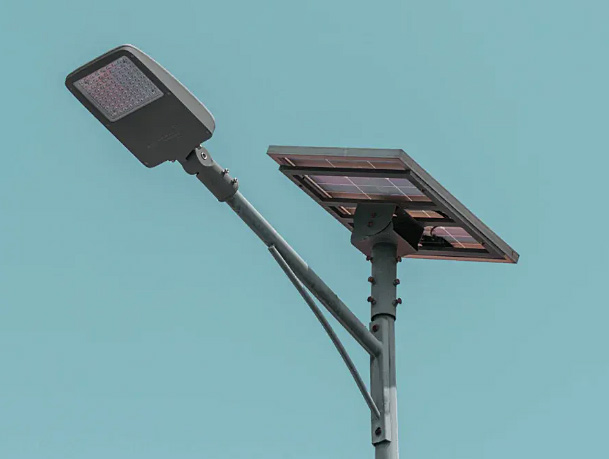
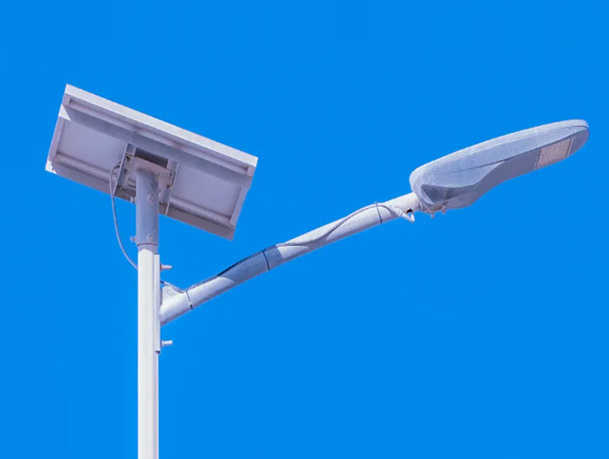
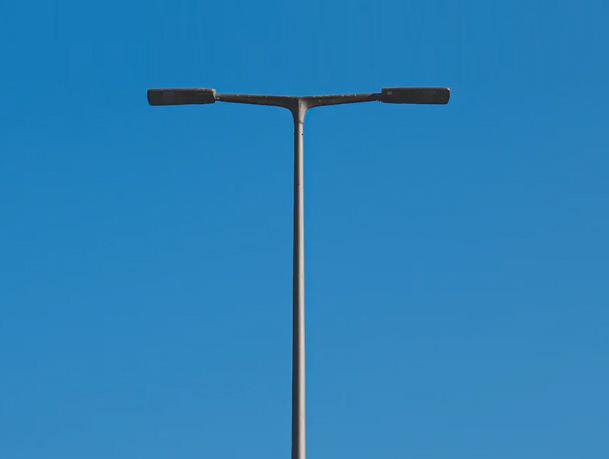
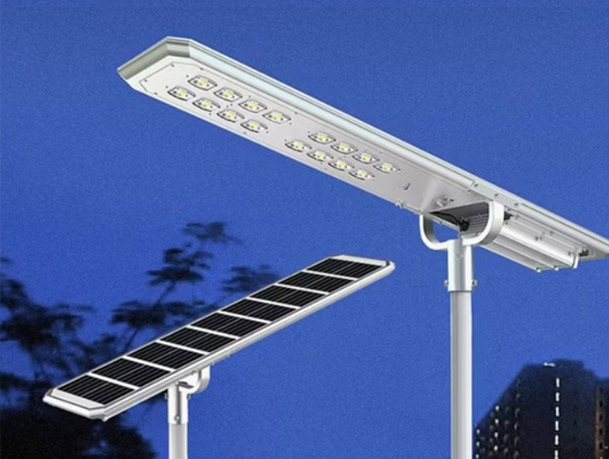
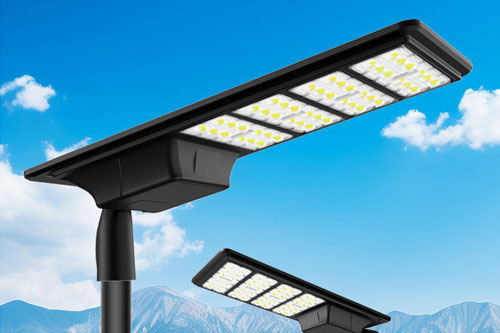
Exterior product-gallery view; it does not establish which components are field-replaceable.
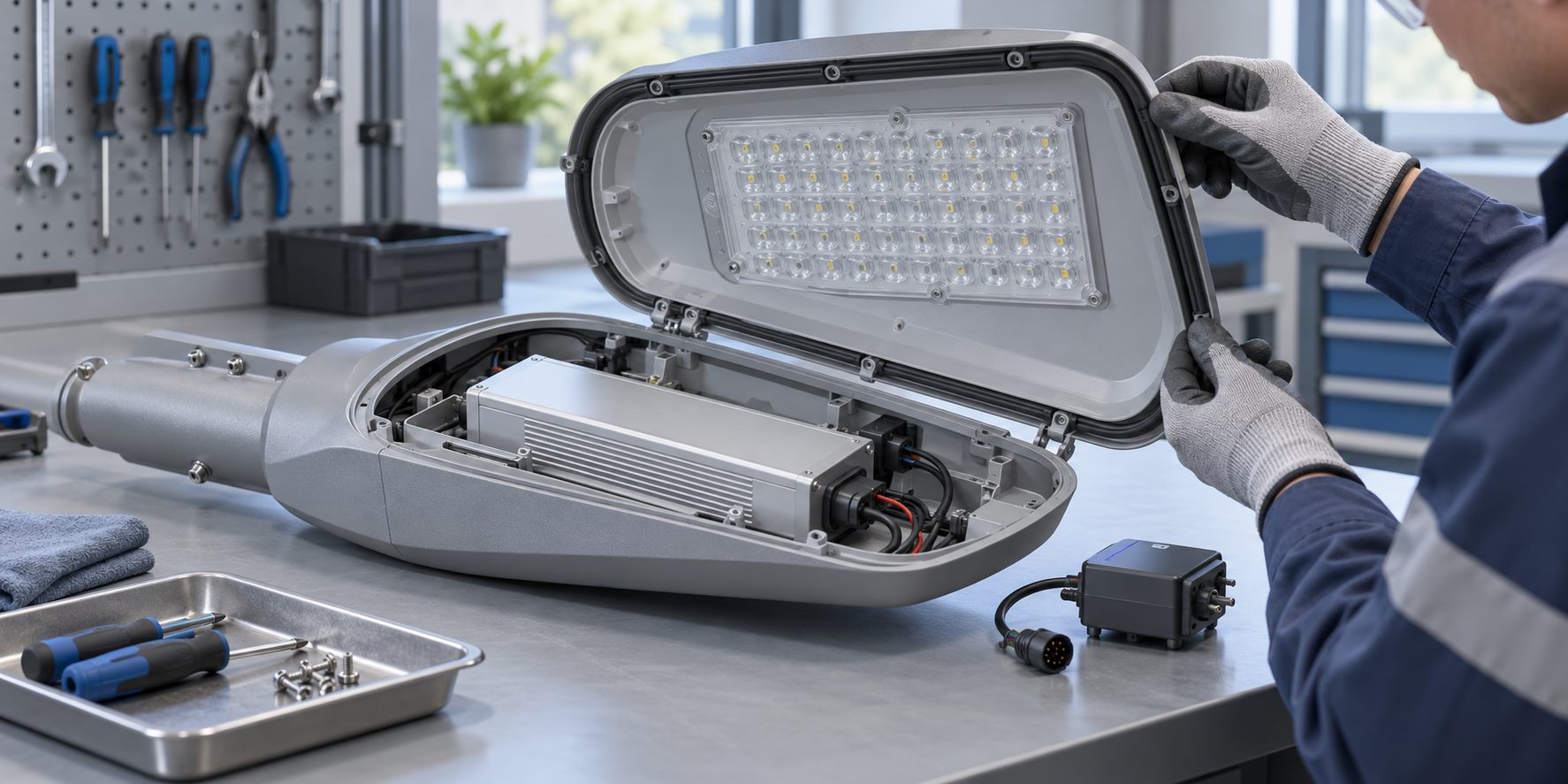
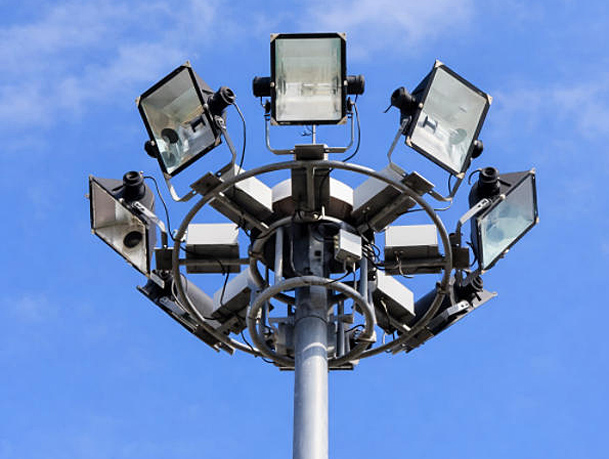
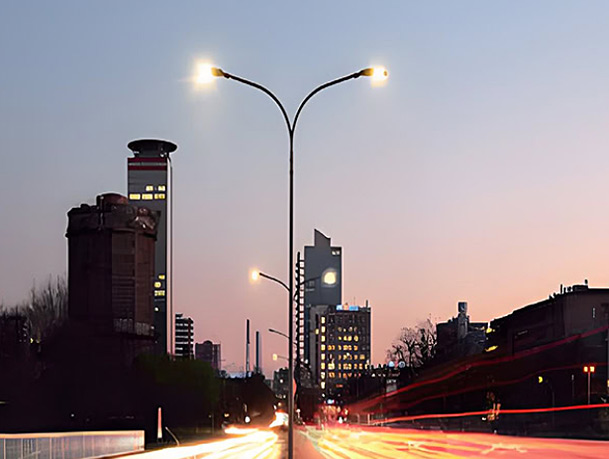
Illustrative maintenance concept only; not a Jieyao product model or repair procedure.
A useful record connects the physical location to the exact fixture, optic, driver and control revision installed there. Similar-looking luminaires can contain different components or settings, especially after partial upgrades. Capture the original approved submittal, photometric file, warranty terms if applicable, replacement-part list, commissioning settings and any field changes. The record should distinguish a product's published claim from the version actually delivered to the project.
| Record | Why retain it | Question it helps answer |
|---|---|---|
| Location and equipment ID | Links observations and work orders to the installed unit. | Is this a single-unit fault or a repeated pattern on one circuit or batch? |
| Luminaire, optic and driver revision | Prevents visually similar but incompatible parts being substituted. | Which approved component may be replaced without changing the lighting result? |
| Control hardware and settings | Separates scheduled dimming or photocell behavior from a fault. | Was the fixture expected to be on, off or dimmed at the reported time? |
| Installed geometry and calculation | Provides the reference for restored aim and output. | Will a replacement preserve the accepted road-lighting distribution? |
| Inspection and repair history | Shows recurrence, exposure and previous changes. | Is another repair reasonable, or is a wider cause still unresolved? |
One symptom can have several causes. A dark luminaire could reflect supply interruption, a protective device, a controller state, a connection or a fixture failure. Flicker may involve a driver, supply or control interaction. Apparent dimness can arise from a changed scene, dirty optic, depreciation, vegetation or altered aim. An asset-management record should state the observed behavior and the evidence checked before a part is ordered.
| Observed symptom | Possible areas to investigate | Useful evidence for the work order |
|---|---|---|
| One fixture is dark | Command state, supply, connection, driver or LED assembly. | Time of observation, neighboring fixture behavior, control log where available, equipment ID and qualified test findings. |
| Several fixtures go dark together | Shared feeder, cabinet, schedule, network or environmental event. | Map of affected units, circuit relationship and event timeline before bulk fixture replacement. |
| Fixture flickers or cycles | Supply fluctuation, driver, thermal condition or control signal. | Operating scene, duration, ambient conditions and qualified measurements under the approved procedure. |
| Fixture stays on in daylight | Photocell or control setting, sensor exposure, wiring or network command. | Control type, last configuration change, sensor condition and command history. |
| Light distribution looks changed | Dirty or damaged optic, changed aim, obstruction or an incorrect replacement module. | Photographs from repeatable viewpoints, installed component revision and comparison with the approved layout. |
| Moisture or physical damage is visible | Seal, cover, impact, assembly or mounting integrity. | Location and extent of damage, product identification, enclosure condition and manufacturer repair guidance. |
A component repair is worth considering when the cause has been identified, the housing and mounting remain acceptable, an approved compatible part exists and the repaired assembly can be returned to its intended electrical, environmental and photometric condition. A replacement luminaire may be preferable when the enclosure or optic cannot be restored, compatible parts are unavailable, repeated failures point to a wider problem, or a new fixture is needed to meet the current road-lighting brief. There is no universal percentage-of-new-price threshold: labor, access, traffic management, remaining service expectations and the project's acceptance requirements all matter.
Any decision should distinguish the fixture from the pole. Corrosion, base damage, arm movement or foundation concerns belong in a structural assessment, not a luminaire work order. Jieyao has a separate street light pole maintenance guide for that scope. Likewise, the maintenance-factor guide concerns a calculation assumption for maintained light, not a prescribed cleaning interval.
Maintenance starts with the procurement specification. Ask bidders how a unit is identified, which modules or drivers are replaceable, whether opening and resealing require special parts, how controls are documented, and how an equivalent optic is maintained across future deliveries. Request clear drawings, model/revision labels, component schedules, installation guidance and a defined change-control route. This avoids ordering a spare by appearance alone.
Evaluate a serviceable design against the whole installation, including access, mounting and cleaning conditions. A modular fixture can be useful where a compatible module can be obtained and replaced under the manufacturer's procedure, but “modular” by itself does not prove easy field service or ongoing part availability. Jieyao's modular LED street light is a product family to review against the actual submittal. For a model-specific maintenance or replacement inquiry, provide the luminaire and component identifiers through the contact page.
Use the site exposure, observed soiling, manufacturer instructions and owner maintenance plan to set a schedule. A universal interval can be too frequent for one site and too slow for another.
No. The supply and control arrangement can produce similar behavior. Document the operating conditions and have qualified personnel establish the cause before ordering parts.
Only if the exact product is designed for that service and a compatible approved module and reassembly procedure are available. Check the impact on sealing, electrical safety and light distribution.
Keep equipment IDs, as-built locations, model and component revisions, control settings, approved submittals, replacement-part information and service records. The project contract and manufacturer documents determine any additional requirements.
Contact Us
Get a custom lighting solution and quotation for your project. Outdoor lighting manufacturer in Yangzhou, ChinaAbout Jieyao LightingYangzhou Jieyao Lighting Equipment Co., Ltd. is an outdoor lighting manufacturer focused on solar street light systems and high mas... Do you have any questions or requests?
Email: jay@jieyaolighting.com

Click to Chat.
Im online now.