

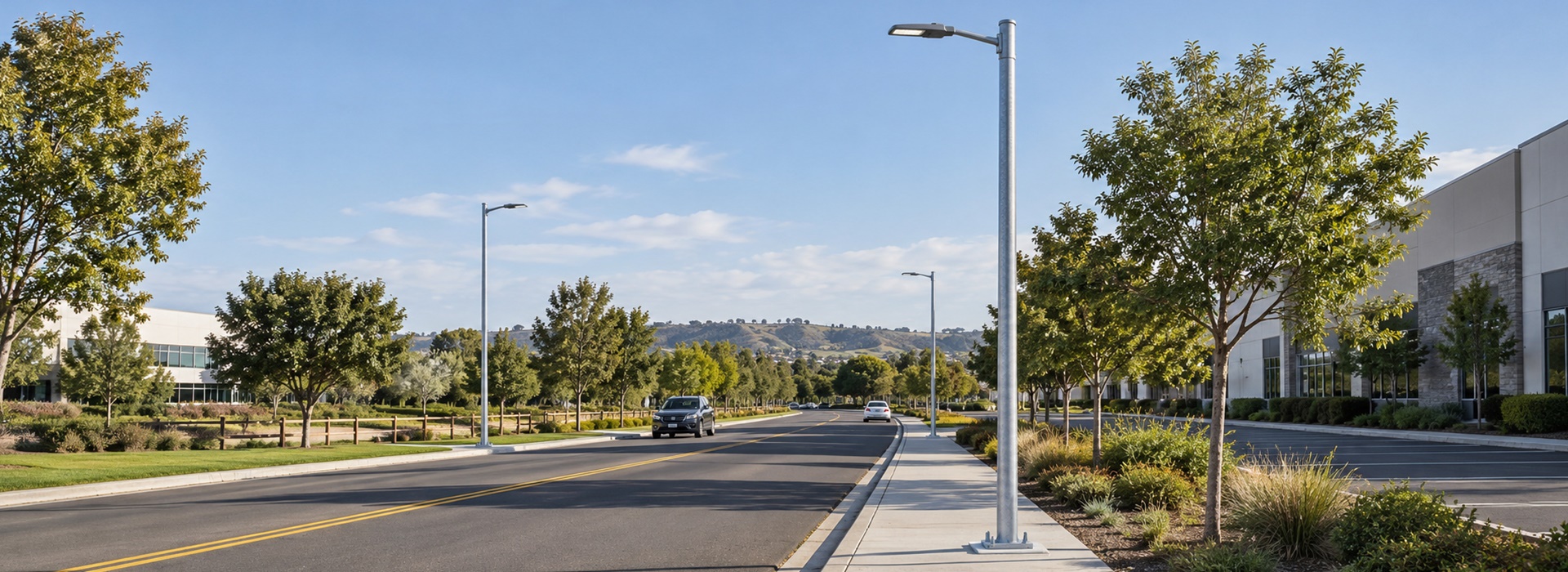
Jieyao manufactures steel lighting poles for roads, parking areas, industrial sites and public infrastructure. Select the shaft, arms, attached equipment, base connection and protective finish against the project loads, site exposure and approved drawings. The quotation should identify the pole assembly, mounting components and documents included in supply.
Start with the structure and supply task. Match the pole, attachments, base and finish to the project drawing before comparing quotations.
For a new road or area-lighting layout, compare the shaft, luminaire mounting and arm arrangement.
For a specified drawing or retained installation, identify the required geometry, interfaces and supplied parts.
For solar attachments or loading-yard lighting, review equipment loads, clearances and the boundary between pole supply and lighting equipment.
For elevated multi-luminaire layouts, review high mast poles with fixed or lowering lighting assemblies and the associated maintenance method.
For a quotation, send the project location, quantity, drawing revision, equipment layout, design basis, base interface and required finish. Discuss your pole supply requirements.
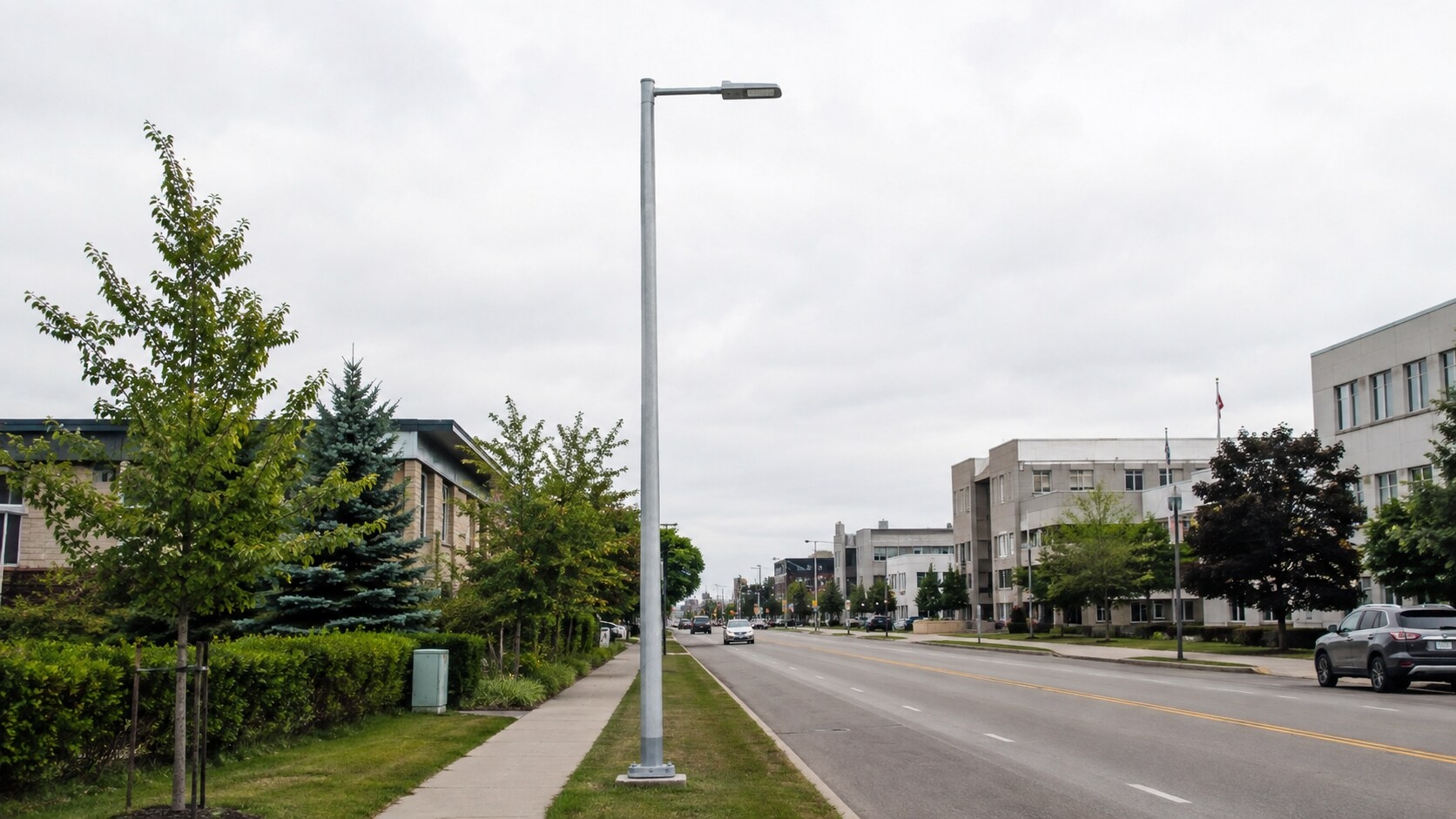
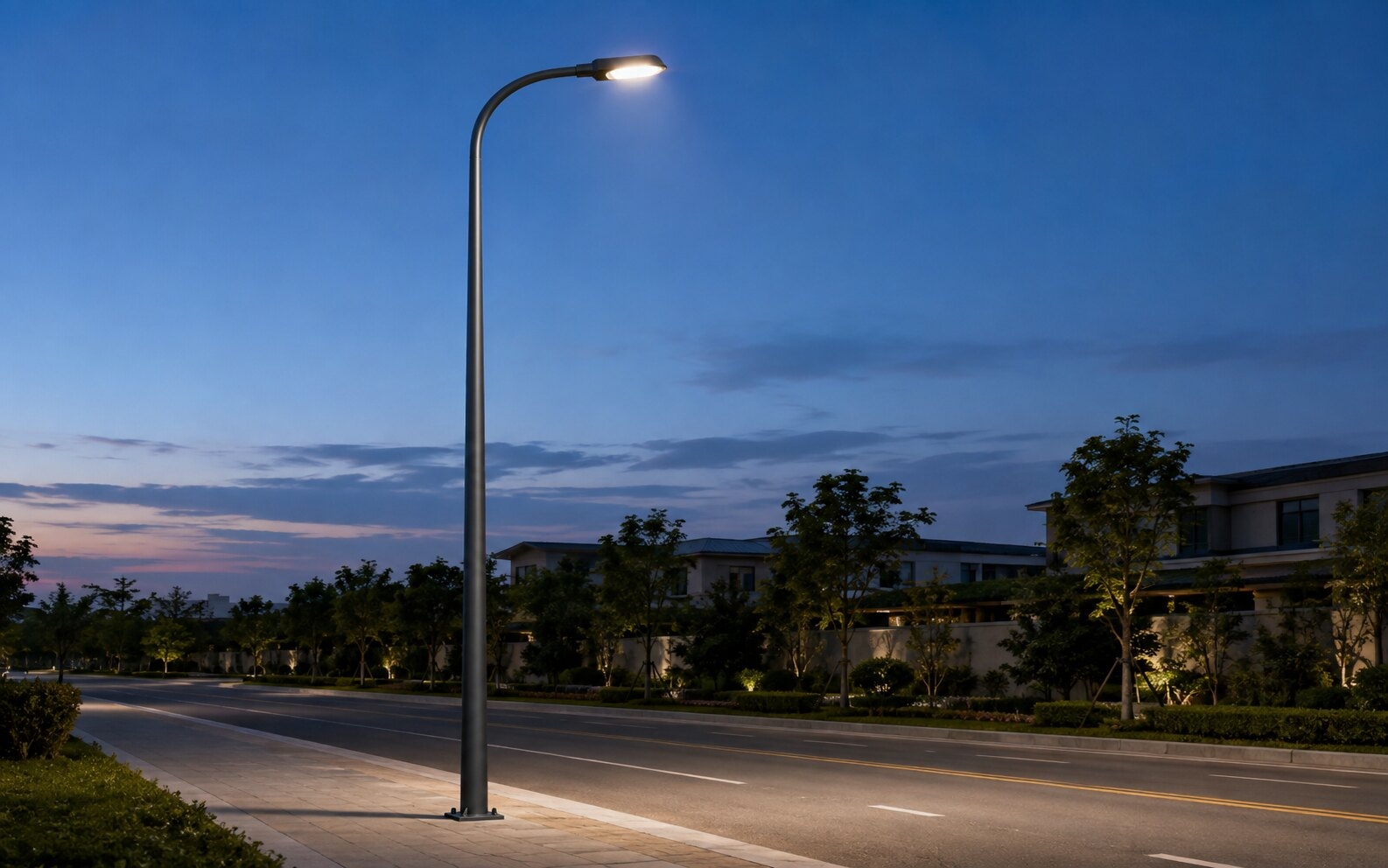
Send the site location, quantity, drawing revision, pole and attachment layout, design basis, foundation interface and finish requirements. Identify which arms, anchors, mounting parts and inspection documents should be included in the quotation.
Send Your Pole RequirementsPlan a parking lot light pole layout with photometric files, protected pole locations, glare control, structural loads, foundations and maintenance access. Height and spacing are project-specific.
Learn how to choose lighting poles for airports and ports. Understand key selection standards including wind load resistance, corrosion protection, pole height, material choice, and safety requirements for aviation and marine environments.
Compare hot-dip galvanizing, direct-to-steel paint and compatible duplex coatings for street light poles by exposure, detailing, inspection and repair scope.
Compare galvanized steel, aluminum and stainless steel light pole assemblies by structural design, fabrication, corrosion control, finish, handling and inspection evidence. Select materials for the project exposure and approved supply scope.
Compare single arm and double arm street light poles for roads, highways, parking areas, and municipal projects. Learn the differences in lighting coverage, installation cost, application scenarios, and how to choose the right street light pole for long-term project performance.
The best pole for solar street lights depends on wind load, environment, and project scale. Learn when to choose steel, aluminum, or galvanized steel poles for different outdoor lighting applications.
Discover the life expectancy of street light poles based on materials like steel, aluminum, and concrete. Learn how climate, installation quality, and maintenance affect pole lifespan in real outdoor lighting projects.
Learn how to install a solar street light with pole step by step, including foundation construction, pole erection, wiring, and system testing. A practical guide for road lighting, parking lots, and outdoor solar lighting projects.
Confirm steel grade, pole dimensions and corrosion protection in the approved drawing and quotation. Alternative materials and supporting documents depend on the specific order.
Taper describes a change in shaft size; cylindrical and polygonal describe geometry. Compare the complete pole design and interfaces for the actual project loads.
Assess pole wind resistance for the actual site, wind definition, equipment layout, connections and foundation. Confirm the documented design and rating conditions.
Wall thickness is determined with the shaft geometry, material, attached equipment, design loads and connections. Confirm the specified thickness and tolerances in the approved pole drawing and structural design for the quoted configuration.
Hot-dip galvanizing protects steel with zinc. Protective life depends on coating thickness and exposure; confirm project coating requirements, inspection records and maintenance conditions.
Use foundation and anchor drawings approved for the selected pole and site. Coordinate supplier interface details with the project foundation design before construction.
Confirm the weld inspection method, coverage, acceptance criteria and required records against the approved pole drawing and project specification.
Review current factory certificates by holder, site, activity and validity. Check lighting-pole product conformity documents separately against the proposed model and destination requirements.
Discuss sample poles for finish or workmanship review. Agree the sample format, testing scope, approval criteria, charges and freight before ordering.
Compare steel, wood and concrete poles for the same duty using actual weights, installation needs, lifecycle costs and documented environmental assumptions.
Lighting poles need an inspection plan even when galvanized. Set intervals for the actual exposure and condition, and retain records of defects and approved repairs.
Document transit scratches before repair. Confirm damage scope, coating-compatible materials and an approved repair method; cosmetic paint alone does not establish acceptance.
Pole base plates are not universal. Match plate dimensions, anchor layout, orientation and the approved foundation design before production or replacement.
Anti-climb guards deter unauthorized pole access. Review the site, pole attachment, public access and maintenance arrangements before selecting a guard.
Section lengths can be reviewed against transport and erection limits. The proposed segmentation must also satisfy the structural design, splice or slip-joint details, required overlap and installation method shown in the approved drawings.
Contact Us
Get a custom lighting solution and quotation for your project. Yangzhou Jieyao Lighting Equipment Co., Ltd. manufactures outdoor lighting and steel poles in Guoji Town Industrial Park, Gaoyou City, Yangzhou, Jiangsu, China. The company reports a 10,000 m² factory site, more than 60 employees including more than 10 technical personnel, and more than 100 production and testing machines. The present company name dates from 2017; Jieyao Poles’ published history traces the team’s manufacturing lineage to 2006. The stated 15 years of experience refers to the team. The company reports exports to more than 60 countries. Do you have any questions or requests?
Email: jay@jieyaolighting.com

Click to Chat.
Im online now.
 English
 Español
 Bahasa Indonesia