


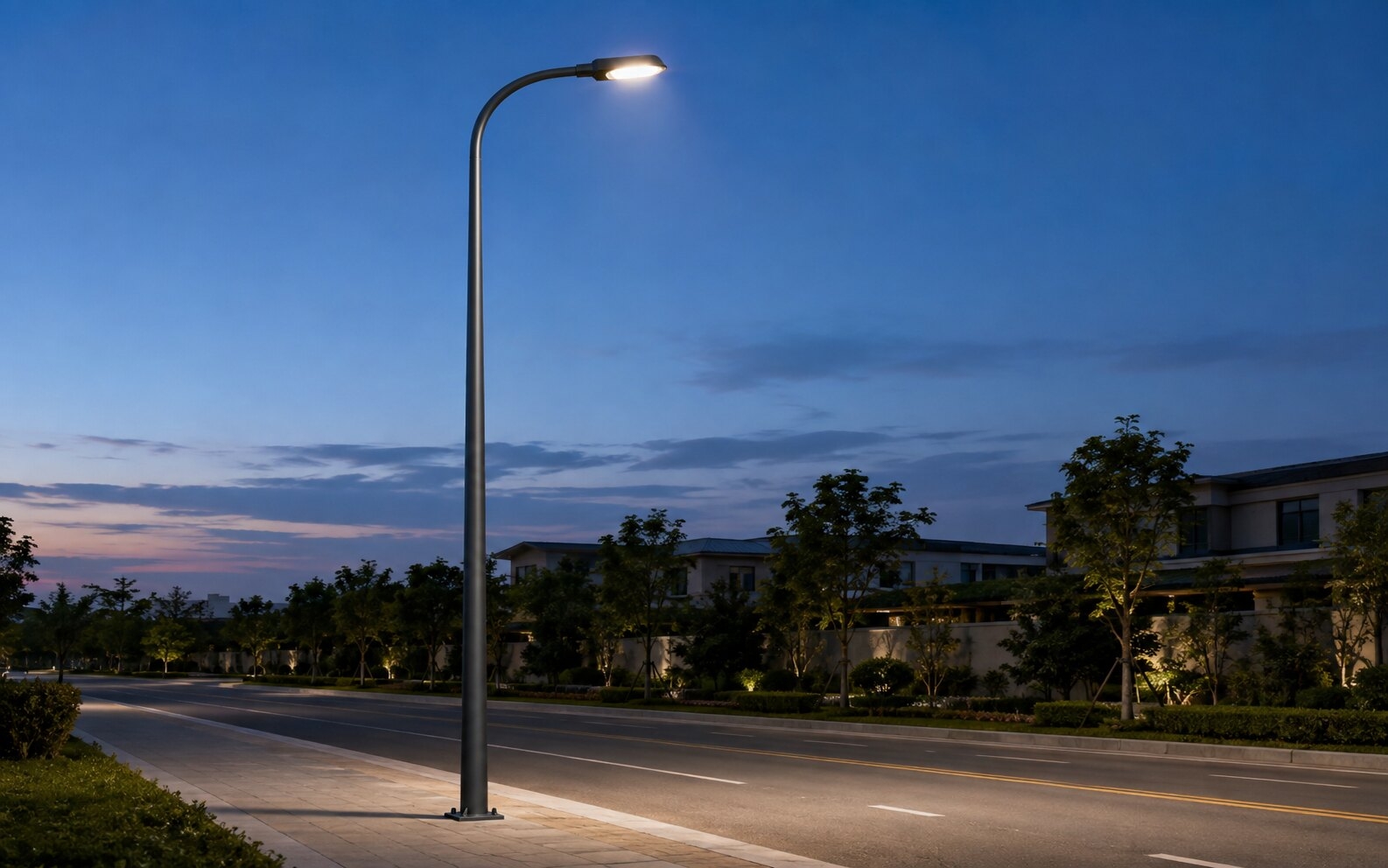
Product answer: Jieyao Lighting's 6m galvanized street light pole is a tapered Q235 steel, single curved-arm configuration for local roads and site lighting. The published 6m geometry is a reference product, not a universal wind or foundation design: final wall thickness, arm outreach, flange, anchors and luminaire interface are set from the project's equipment and site inputs. A hot-dip galvanized finish is standard to the referenced design, with project-specified powder coating available.
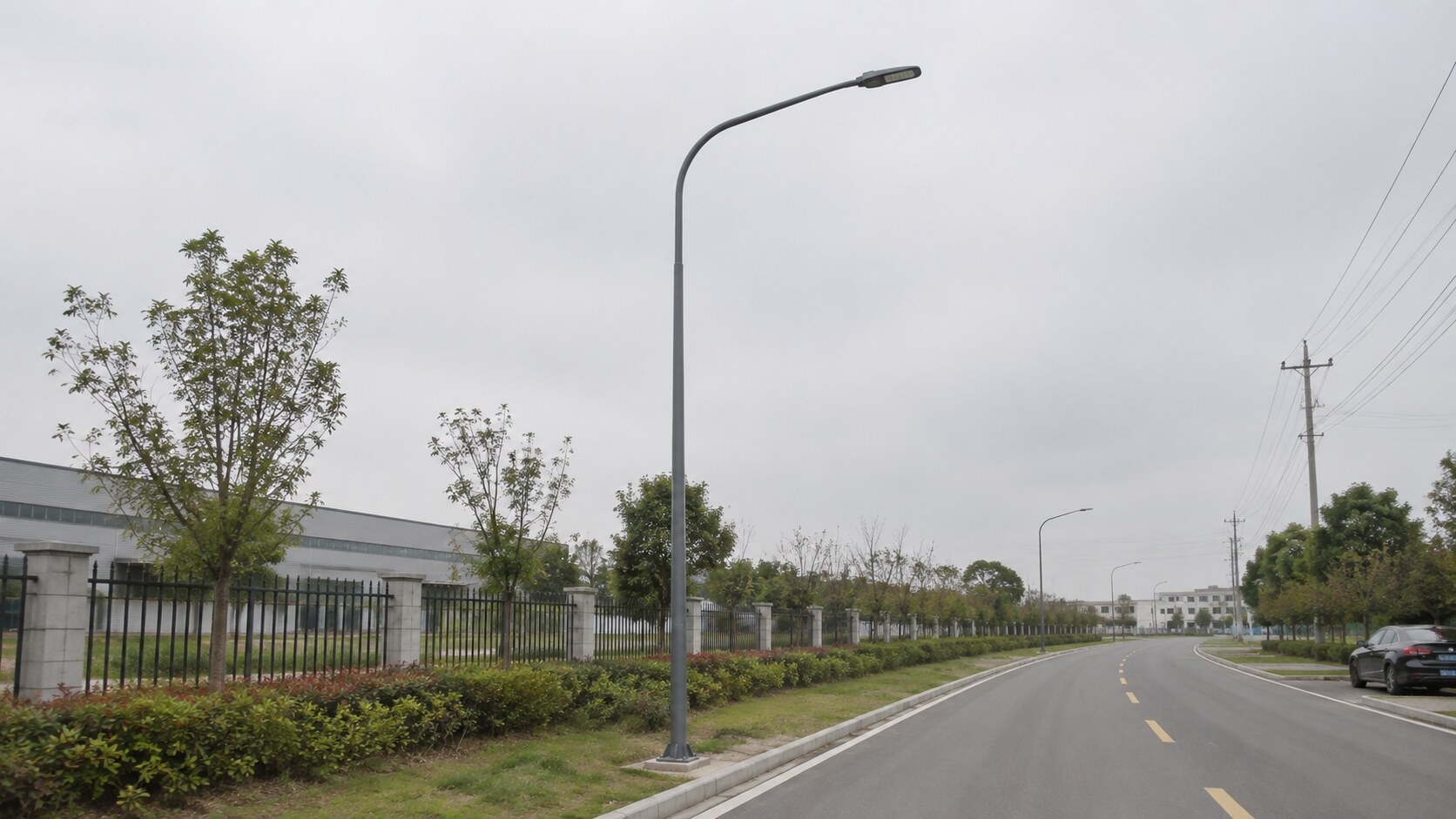
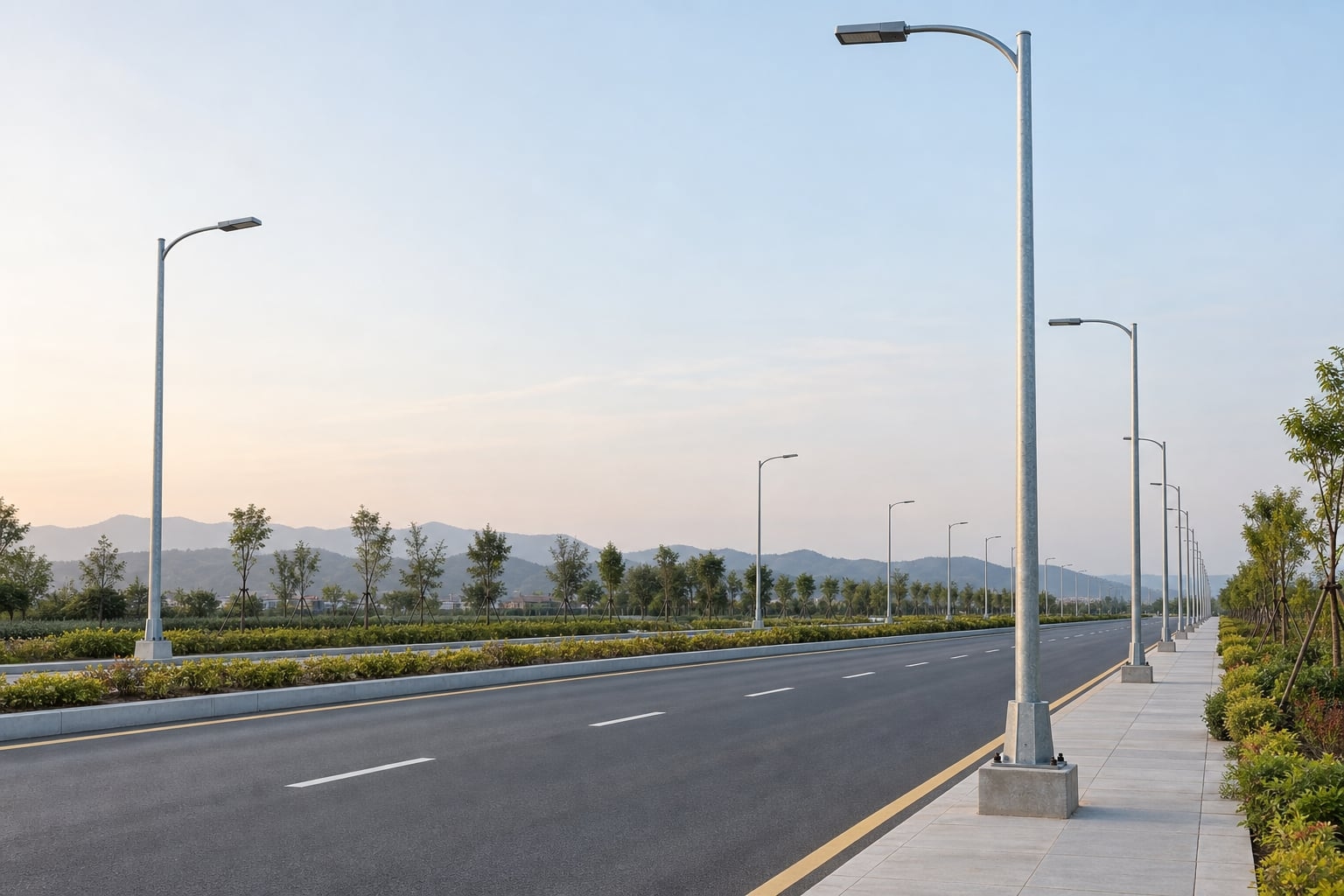
Six-metre tapered pole with a continuous curved arm; the approved order drawing defines the final geometry.
The following values describe the existing Jieyao reference configuration. They help buyers request a comparable quote but must be reviewed against the governing structural and electrical requirements for each project.
| Item | Published reference | Confirm for the order |
|---|---|---|
| Nominal height and form | 6 m tapered shaft with one curved arm | Mounting position, road width and optical layout. |
| Steel | Q235 carbon steel | Required material grade and documentation. |
| Reference taper | 60–140 mm shaft diameter | Final shaft geometry and equipment loading. |
| Reference wall thickness | 2.3 mm | Wind basis, luminaire load, arm and door effects. |
| Reference flange | 320 × 320 × 10 mm | Foundation reactions, hole pattern and anchor design. |
| Surface protection | Hot-dip galvanizing; optional powder coat | Exposure, finish specification and color. |
A 6m pole can be considered for community streets, campus circulation, factory access routes and similar locations where the lighting calculation supports that mounting height. Pole spacing and fixture wattage cannot be selected from height alone. Ask the lighting designer to check the required distribution, uniformity, glare, setback and maintainability. For taller layouts, compare the 8m galvanized street light pole; for central medians, compare the 10m double-arm pole. Those are different configurations, not automatic substitutes.
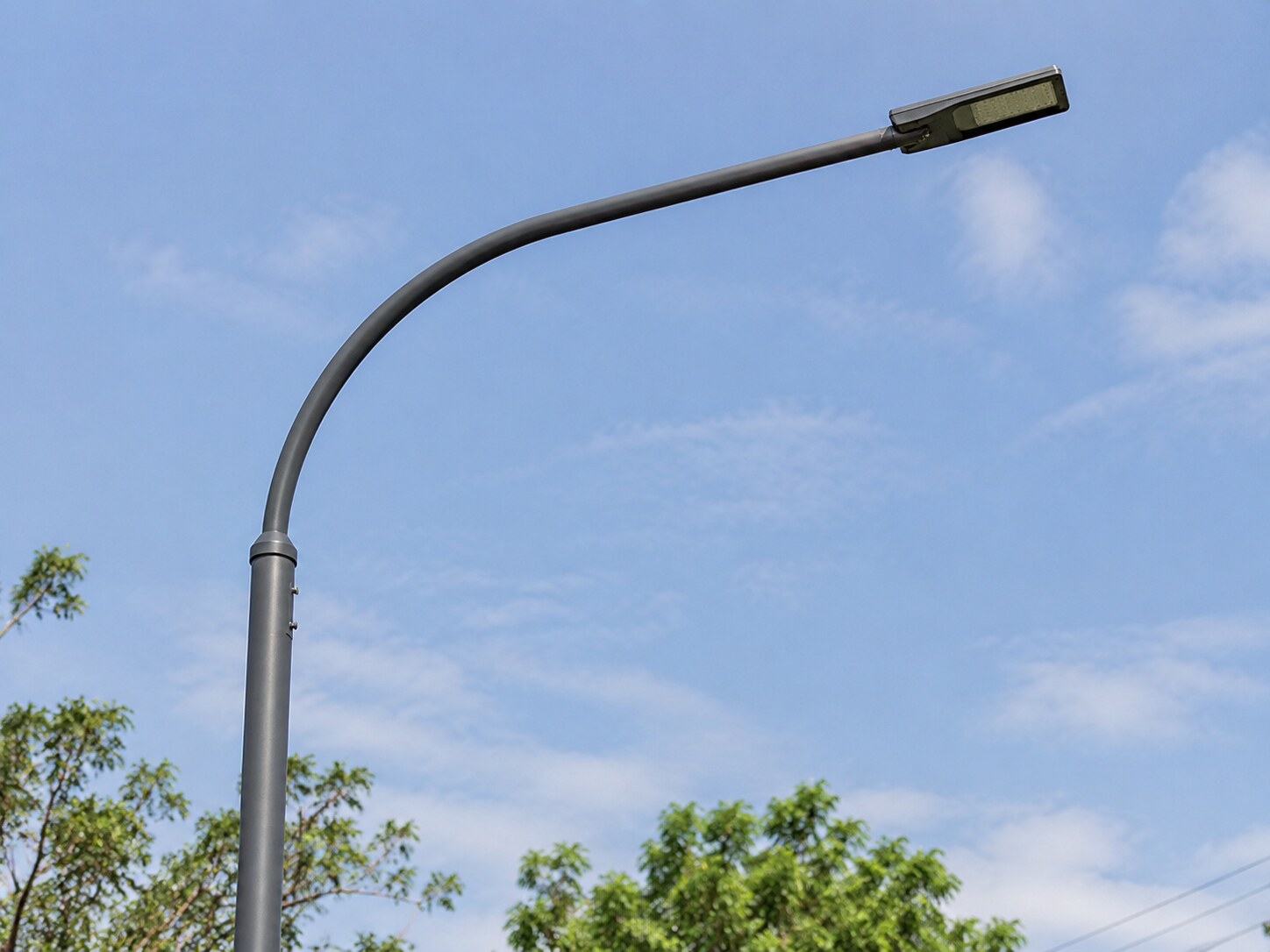
Confirm the actual luminaire spigot, insertion, clamp, tilt and cable path before releasing the arm drawing.
The luminaire weight and projected area, curved-arm outreach, attachment height and site wind criteria are structural inputs. The foundation designer must coordinate the base-plate and anchor layout with the pole drawing. The electrical designer should confirm door orientation, cable entry, internal terminal space and grounding provision. If the pole is coated after galvanizing, specify surface preparation, appearance and any repair method for transport or installation damage. The arm and luminaire interface guide and foundation and anchor-bolt guide provide detailed pre-order checks.
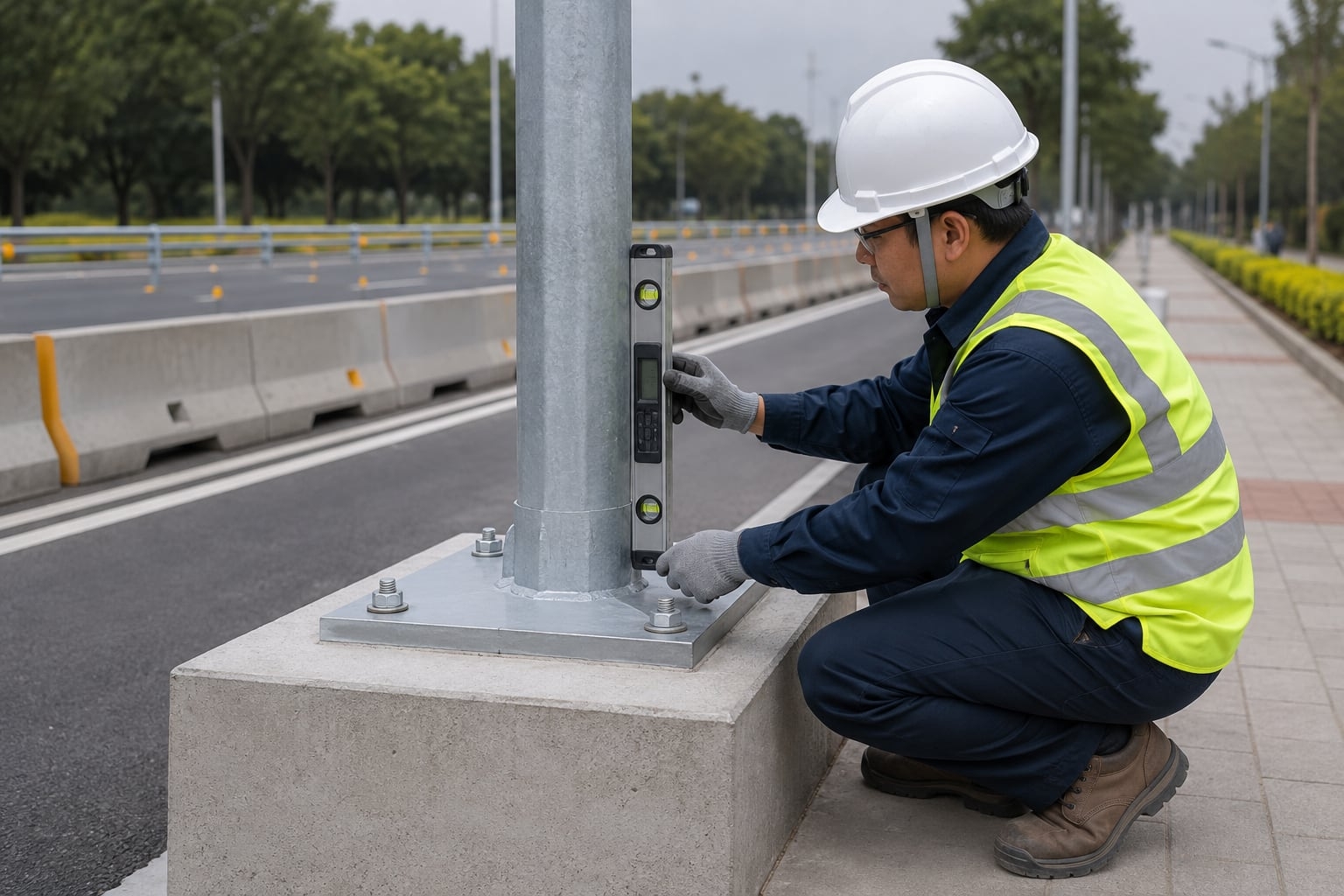
The base and anchor detail is a project interface, not a dimension selected solely by the 6m height label.
Agree the inspection-and-test plan before manufacture. Review the formed shaft, arm, welds, door and flange dimensions before surface finishing; then check the specified finish, markings and packing against the released drawing. Jieyao should identify which records are included with the order rather than implying every test or certificate is automatic. The inspection and test plan guide explains how to assign witness and release decisions.
| Decision | Buyer input | Expected output |
|---|---|---|
| Lighting and loading | Layout, luminaire model, weight, projected area and arm position | Approved pole/arm configuration and equipment interface. |
| Site and foundation | Wind/design criteria, base or embedment concept and anchor constraints | Coordinated structural and foundation drawing. |
| Electrical access | Cable entry, door orientation, terminal/grounding scope | Service-access and cable-routing detail. |
| Finish | Exposure, galvanizing/coating specification and color | Finish scope and agreed inspection criteria. |
| Supply and evidence | Pole-only or complete assembly, accessories and witness points | Itemized quote, inspection records and packing list. |
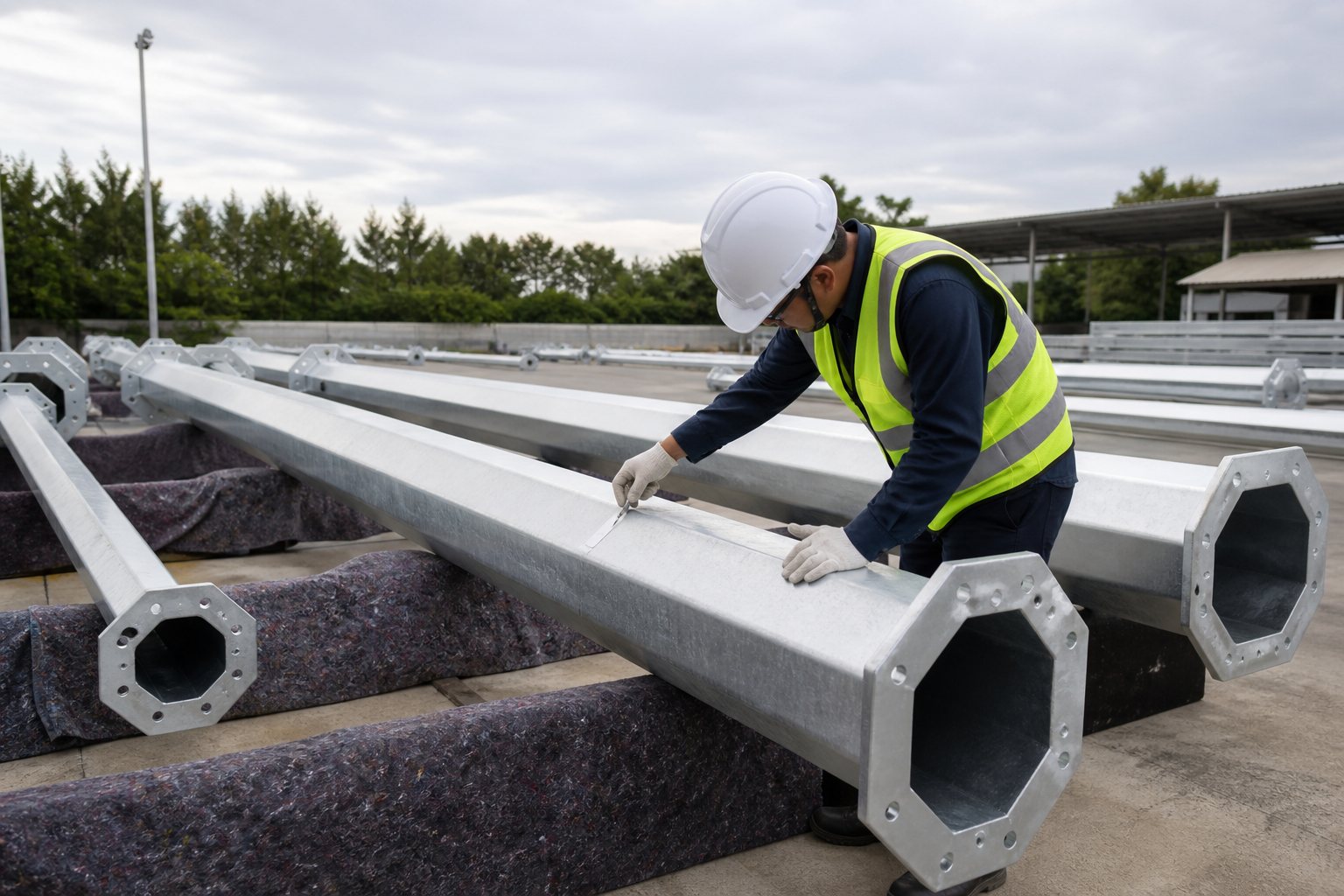
Finish checks belong to the agreed inspection scope before packing and dispatch.
No. It is a reference product value. The specified site wind, luminaire, outreach, shaft and opening details govern the final structural design.
The supply boundary should be defined in the RFQ. If the buyer supplies the luminaire, provide its complete mounting and loading data before the arm is finalized.
No. The flange and anchor arrangement must be coordinated with the project foundation design and released drawings.
Request a 6m pole quotation: Send Jieyao the pole schedule, location plan, luminaire data, wind/design basis, foundation and cable interfaces, finish requirements and expected document set. The response can then identify the proposed configuration and any items needing project approval.
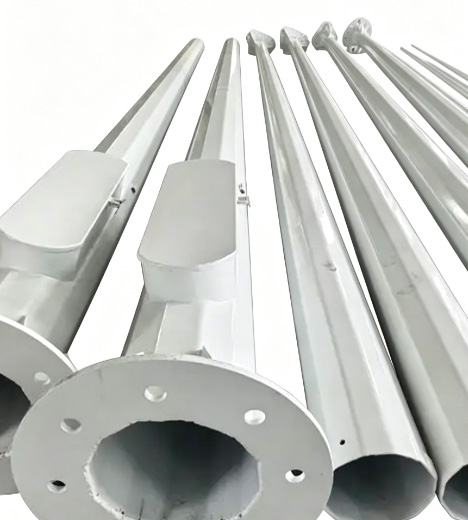
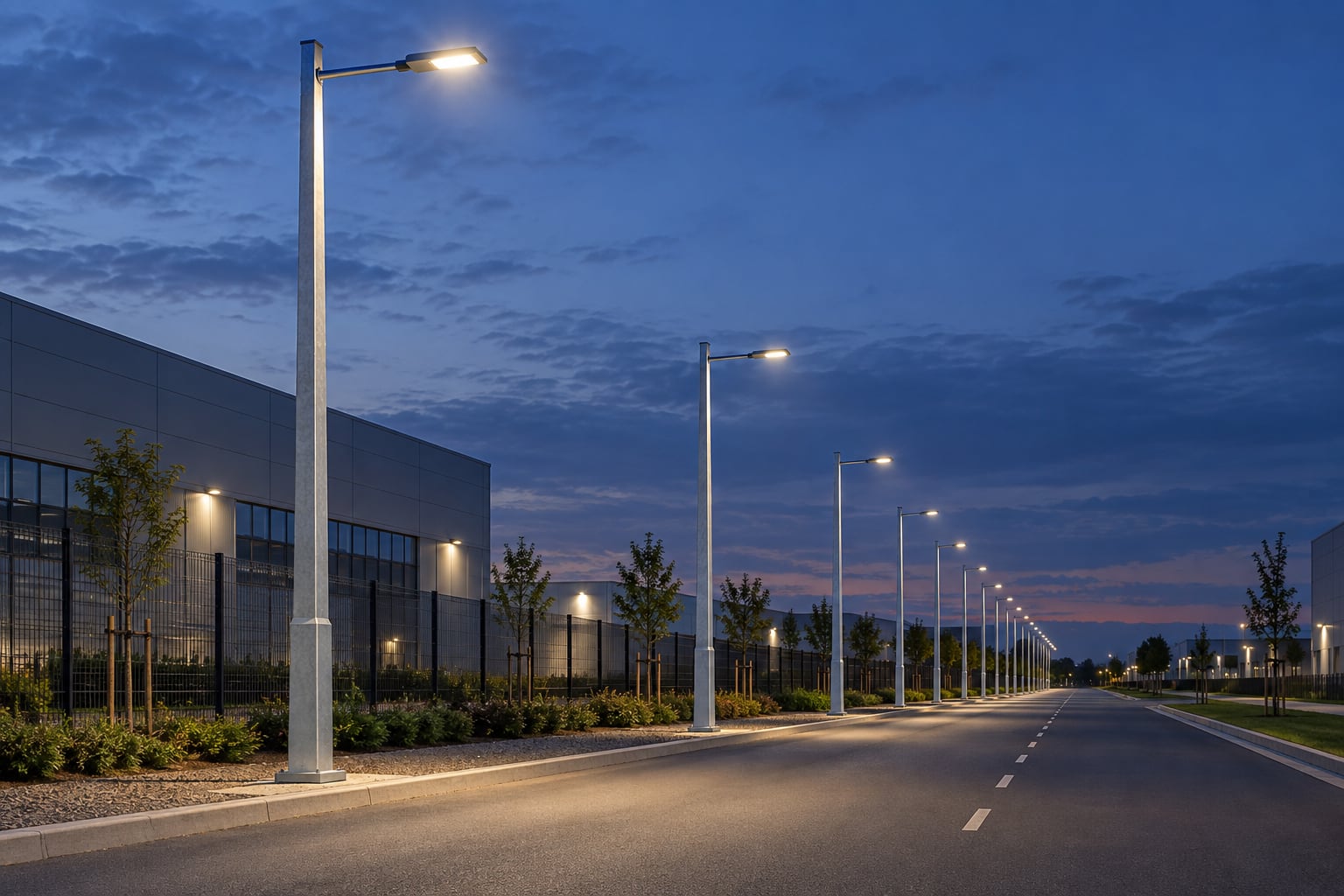
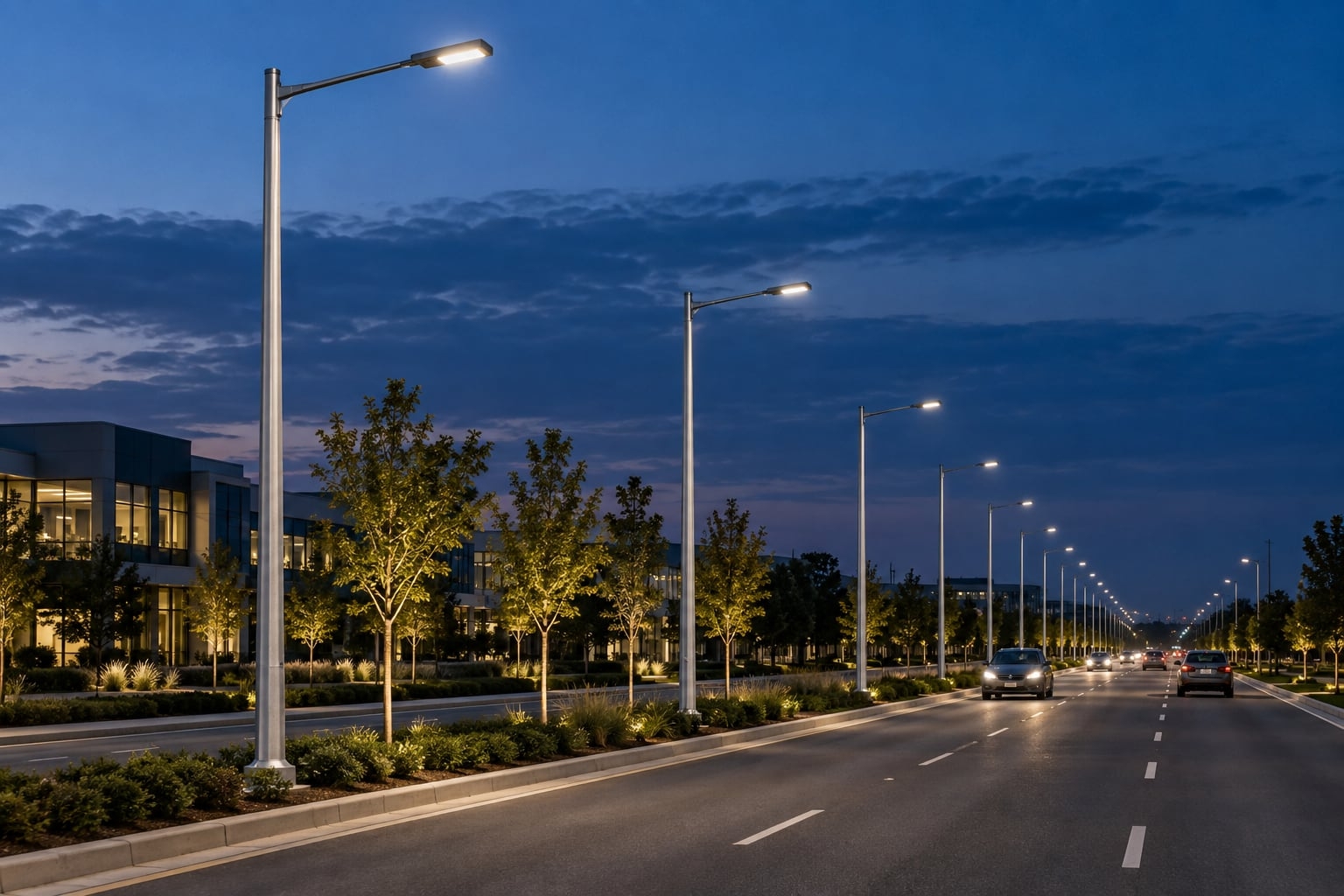
Plan a parking lot light pole layout with photometric files, protected pole locations, glare control, structural loads, foundations and maintenance access. Height and spacing are project-specific.
Learn how to choose lighting poles for airports and ports. Understand key selection standards including wind load resistance, corrosion protection, pole height, material choice, and safety requirements for aviation and marine environments.
Compare hot-dip galvanizing, direct-to-steel paint and compatible duplex coatings for street light poles by exposure, detailing, inspection and repair scope.
Compare galvanized steel, aluminum and stainless steel light pole assemblies by structural design, fabrication, corrosion control, finish, handling and inspection evidence. Select materials for the project exposure and approved supply scope.
Compare single arm and double arm street light poles for roads, highways, parking areas, and municipal projects. Learn the differences in lighting coverage, installation cost, application scenarios, and how to choose the right street light pole for long-term project performance.
The best pole for solar street lights depends on wind load, environment, and project scale. Learn when to choose steel, aluminum, or galvanized steel poles for different outdoor lighting applications.
Discover the life expectancy of street light poles based on materials like steel, aluminum, and concrete. Learn how climate, installation quality, and maintenance affect pole lifespan in real outdoor lighting projects.
Learn how to install a solar street light with pole step by step, including foundation construction, pole erection, wiring, and system testing. A practical guide for road lighting, parking lots, and outdoor solar lighting projects.
We primarily use high-strength carbon steel (Q235/Q345/ASTM A36). We also offer premium aluminum alloy and stainless steel poles specifically for coastal regions.
Tapered poles are aesthetic with low wind resistance; cylindrical poles are more cost-effective; polygonal poles (usually 8/12/16 sides) offer the highest structural strength, ideal for high mast lighting.
Our engineers perform mechanical calculations based on your local wind speed data, adjusting wall thickness and base design to ensure the poles can withstand winds up to 160km/h.
It typically ranges from 3mm to 12mm, depending on the pole height, weight of the fixtures, and local wind load requirements.
This is an anti-corrosion process of immersing steel in molten zinc. It provides over 25 years of maintenance-free rust protection in standard outdoor environments.
Yes. We provide complimentary foundation reference drawings, including concrete depth, rebar specs, and bolt positioning data.
We follow AWS welding standards and use Ultrasonic Testing (UT) or Magnetic Particle Testing (MT) to ensure welds are free of pores or cracks.
We hold ISO 9001 (Quality), ISO 14001 (Environmental), and CE certification (EN 40) specifically for the European market.
Yes. We can produce sample poles for craft and color confirmation, though sample shipping costs are typically covered by the client.
Steel poles are lighter, easier to transport and install, have a long lifespan after galvanization, and offer high scrap value, making them more eco-friendly.
Galvanized poles are virtually maintenance-free. We recommend checking anchor bolt tightness and the powder coating surface every 3-5 years.
We provide touch-up paint with each shipment. Simply clean the scratch and apply the paint to restore the appearance.
No. Base plate size and hole spacing are designed based on pole height and stress loads. We provide detailed dimensional drawings for each order.
These are accessories (like anti-climb spikes) installed on the lower section of the pole to prevent unauthorized climbing and enhance security.
Yes. We can flexibly adjust section lengths (e.g., 6m+6m or 5m+7m) based on logistics constraints and on-site installation conditions.
Contact Us
Get a custom lighting solution and quotation for your project. Outdoor lighting manufacturer in Yangzhou, ChinaAbout Jieyao LightingYangzhou Jieyao Lighting Equipment Co., Ltd. is an outdoor lighting manufacturer focused on solar street light systems and high mas... Do you have any questions or requests?
Email: jay@jieyaolighting.com

Click to Chat.
Im online now.