
 English
 Español
 Bahasa Indonesia

- Product details
-
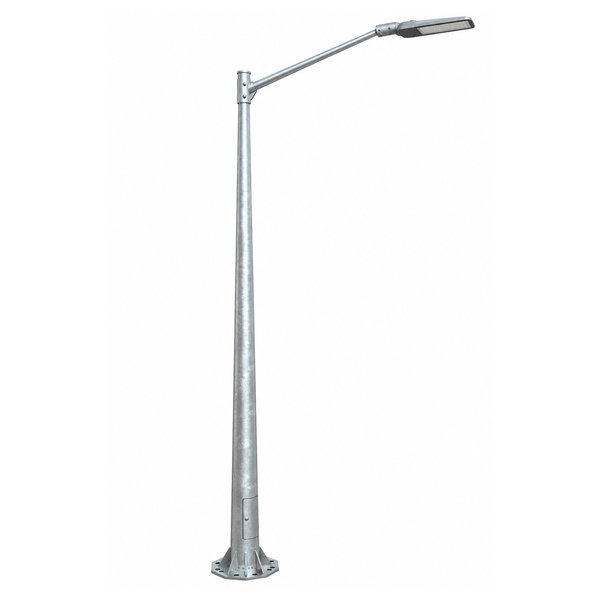
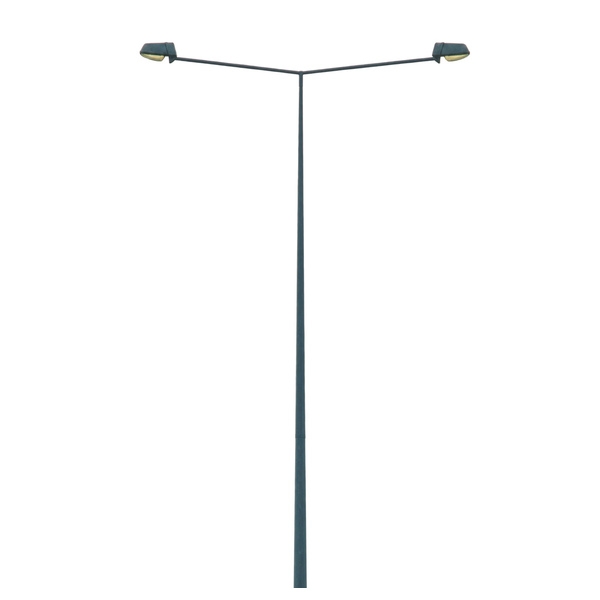
In brief: A single-arm pole generally carries one luminaire outreach in a defined direction; an opposed double-arm pole can support luminaires toward two directions from one shaft. The right choice depends on roadway geometry, lighting layout, mounting interfaces and the project’s structural design—not on arm count alone.
Road lighting poles configured around the project
A street light pole is a structural support and interface assembly. The arm arrangement affects where the luminaire sits relative to the shaft, which direction it faces and what loads the pole designer must consider. For procurement, specify the complete arrangement instead of relying on a product name alone.
Single arm vs. double arm: what changes in procurement?
The comparison below is a scoping aid, not a substitute for photometric calculations or structural approval. Use the same project assumptions when comparing alternatives.
Review item Single-arm configuration Double-arm configuration What the buyer should confirm Direction served One defined outreach direction Two directions from one shaft, often opposed Road centerline, median, carriageway width and pole orientation Arm geometry One arm’s reach, rise and end interface Both arms’ reach, rise, spacing and relative orientation Dimensioned plan/elevation and any non-symmetrical requirement Equipment interface One luminaire fixing position Two luminaire fixing positions and combined attachment schedule Luminaire dimensions, mass, projected area and fixing detail Structural review Loads and eccentricity from one arm and attached equipment Combined loads, directions and geometry for both arms Governing design code, wind basis, pole section and foundation input Quotation documents Pole, arm, base and finish scope Pole, two-arm assembly, equipment interfaces and base scope Included items, exclusions, inspection records and delivery terms No universal pole dimensions or load capacity are stated here. The approved project design and the confirmed quotation schedule govern the offered product.
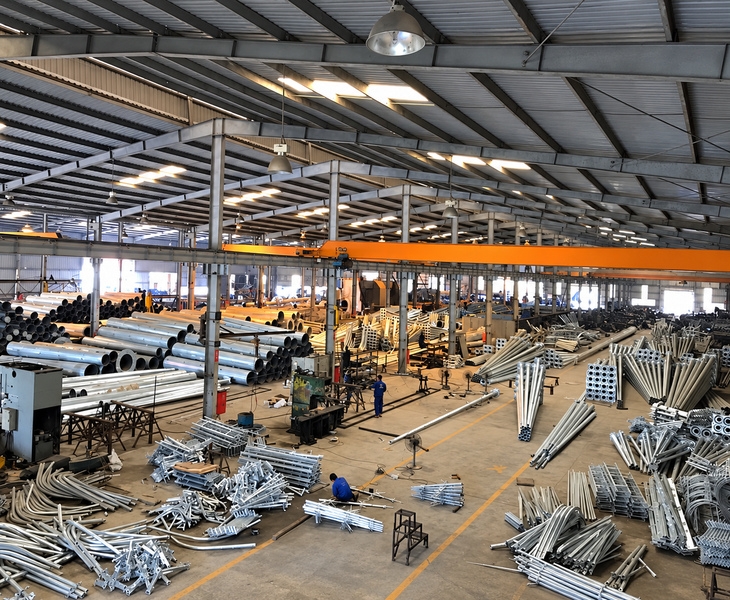
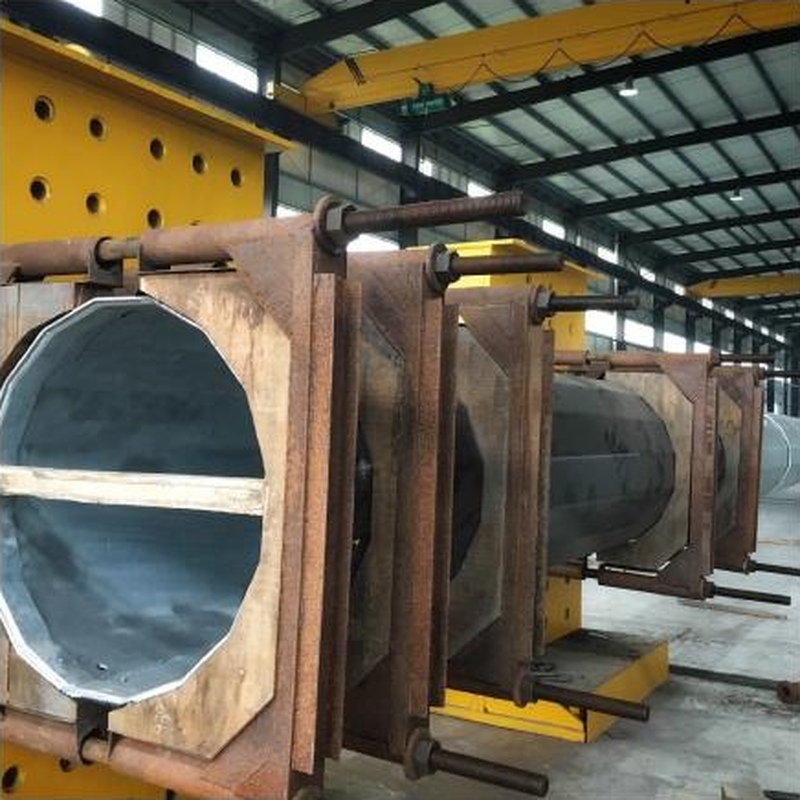 Factory fabrication reference: a pole section held in a fixture for dimensional checking. The image is not a project-specific inspection record.
Interfaces to define before ordering
Most supply mismatches happen at interfaces: arm-to-shaft, luminaire-to-arm or pole-to-foundation. Resolve these on the drawing before production release.
Arm-to-shaft connectionShow whether the arm is integral, socketed, bolted or otherwise connected, and identify the relevant connection dimensions and access for assembly.
Luminaire mounting endProvide the luminaire spigot or bracket dimensions, insertion length, fixing method and required tilt. Avoid assuming that two luminaires use the same interface.
Base and orientationConfirm flange outline, bolt arrangement, pole orientation and foundation reference. For embedded arrangements, provide the embedment and cable-entry details from the approved design.
Access and cable routeLocate the access door and cable entry so they remain reachable after installation and align with the intended internal wiring route.
Where these pole arrangements are used
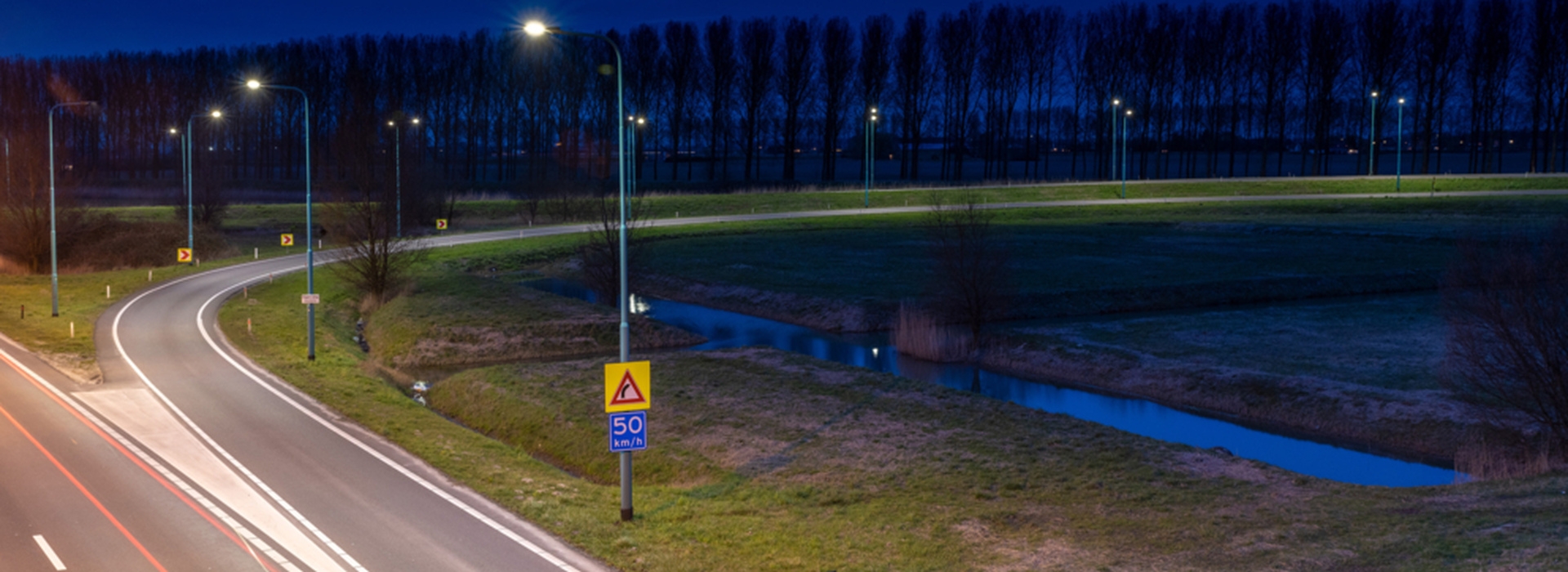
The arm arrangement should respond to how a road is divided and where luminaires need to sit. The example images below show roadway contexts only; they are not identified as a named Jieyao customer installation.
What a project quotation should define
A useful quote makes the supply boundary visible. List the pole and arm hardware separately from luminaires, foundation materials, electrical items, installation and engineering services so the buyer can compare offers on the same basis.
Schedule line Information to state Why it matters Pole shaft Profile, section arrangement, material specification and drawing reference Defines the physical support and identifies the revision being quoted Arm assembly Single or double, orientation, outreach, rise and connection details Prevents a generic “double arm” label from hiding geometry differences Luminaire interface Fixture model or interface drawing, mass and projected area supplied by the designer Allows the attachment and pole schedule to be reviewed against the actual equipment Base interface Flange/anchor or embedded arrangement, bolt and orientation drawing Aligns the pole supply with the foundation prepared by the project team Finish and inspection Specified coating system, color, applicable checks and required records Clarifies acceptance and documentation rather than assuming a generic standard Shipment scope Quantity by pole mark, destination, packing, marking and included accessories Supports a comparable delivered-scope quotation From inquiry to a confirmed pole schedule
A drawing-led review is the safest route when a project uses more than one arm layout or luminaire type.
Share the project basis
Send the location plan, pole schedule, drawings, adopted standard and quantity split.
Resolve interfaces
Match arm geometry, luminaire mount, base and cable access; identify open points before quotation.
Confirm the offer
Review configuration, materials, finish, inspection scope, exclusions and delivery terms in writing.
Release the revision
Record the approved drawing revision and pole marks before manufacturing and packing instructions are issued.
Documented 9 m twin-arm configuration
The archived 9 m twin-arm solar-pole drawing provides a specific mechanical configuration in Jieyao product materials. It is presented here to show how arm geometry is recorded with the shaft and base. It is not a standard specification for every double-arm road pole, and it is not an offer to fit the same solar equipment to a smaller single-arm shaft.
Drawing item Recorded value Product scope Pole height 9,000 mm Twin-arm solar-pole reference Steel and cross-section Q235; octagonal Across-flats dimensions, not round diameters Shaft across flats 150 mm top / 240 mm bottom 5.0 mm wall shown in drawing Arm 1,200 mm outreach; Ø60 mm Each arm and its luminaire interface Base plate 550 × 550 × 20 mm Eight Ø26 mm holes; M22 anchors noted Additional equipment Two PV modules; two battery boxes Present in this drawing; not implied in a road-pole-only quotation The panel and luminaire labels in the source drawing are equipment identifiers. They do not establish the electrical consumption, battery autonomy or structural approval of another combination. For a grid-powered single-arm or double-arm pole, the confirmed schedule can omit solar supports entirely; the shaft and connection design must still match the actual arm and luminaire loads.
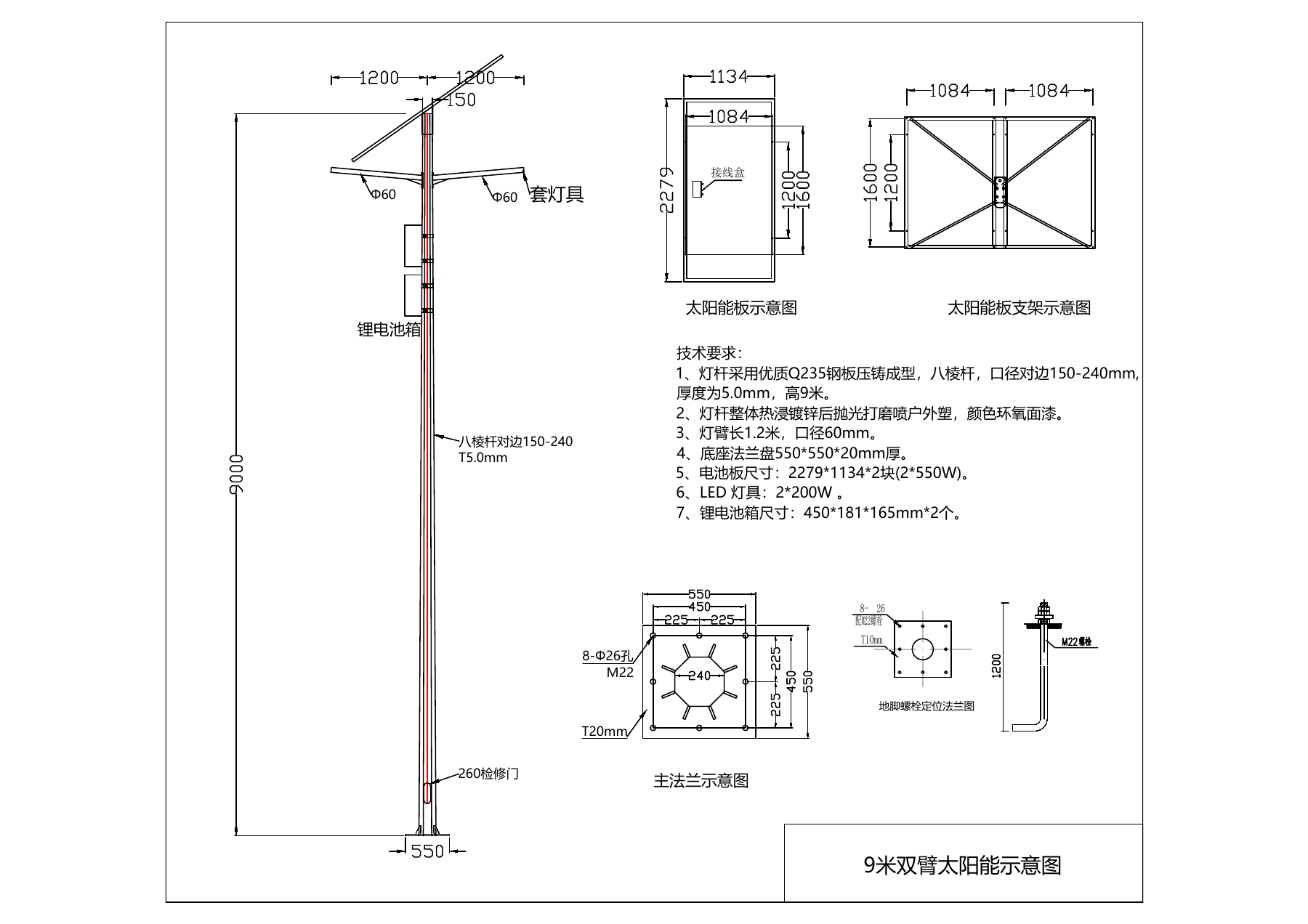 9 m twin-arm solar configuration: a dimensional reference for one assembly, not a universal road-pole specification.
The base-plate hole count, hole diameter and anchor designation belong to this drawing only. An eight-hole base cannot be substituted for an existing four-hole foundation because both poles have the same height. Likewise, across-flats measurements for a polygonal shaft should not be quoted as the outside diameter of a circular shaft. Keep those dimensional conventions explicit in the order schedule.
Configuration and specification schedule
Use this table as a product-data checklist. The actual values come from the project design and approved technical submittal; the table does not imply one standard size or capacity.
Product field Project entry Basis for confirmation Arm count and direction Single / opposed double / project-defined Road layout and pole orientation drawing Pole profile and sectioning Round / polygonal / other specified profile; one or multiple sections Approved pole elevation and transport constraints Arm dimensions Outreach, rise, spacing and tilt Luminaire location plan and structural design Material and wall details Project grade, thickness and connection schedule Specification and approved calculation/design documents Mounting interface Flange/anchor or embedded; orientation and cable entry Foundation and electrical drawings Surface protection Galvanizing, paint or specified combined system Project environment, finish schedule and acceptance criteria Quality documents Inspection points and required test/traceability records Purchase specification and agreed inspection plan RFQ checklist for single and double arm poles
Send the information already available. Mark unresolved items as questions in the enquiry so the quote can identify its assumptions.
✓Project context
Country/region, road type, number of locations and governing design standard.✓Drawings and schedule
Plan/elevation, pole marks, arm direction, quantities and current drawing revision.✓Luminaire data
Fixture model or interface drawing, mass, projected area, fixing and required tilt.✓Foundation details
Flange or embedded arrangement, anchor information, orientation and cable entry.✓Finish and inspection
Material specification, coating, color, inspection plan and documents required at handover.✓Commercial scope
Quantity by type, destination, packing/marking, requested shipment basis and included accessories.If the project is still at concept stage, send the available road layout and luminaire information first. The technical schedule can then identify which dimensions and structural inputs still need the responsible designer’s confirmation.
Factory controls for the pole-and-arm assembly
Pole production starts with the released shaft and arm drawings. Material identification, plate thickness, taper and seam preparation are checked before forming and welding. Arm bends and welded attachment sleeves should be checked against the reference axes on the drawing, because a correct outreach dimension alone does not establish luminaire orientation.
Production stage Observable check Delivery evidence Forming and fit-up Profile, taper, shaft length, seam alignment and arm geometry Dimensional inspection record tied to pole mark Welding Seam and attachment weld appearance; specified examination scope Visual inspection and any contracted weld-test record Base assembly Plate thickness, hole pattern, opening orientation and arm direction Base-interface measurement against released drawing Protective finish Coverage, surface condition and specified coating measurements Coating readings identified to the order/sample Trial fit and packing Arm-to-shaft joint, fasteners, cable openings and identification Packing list with matched arms and pole marks Jieyao enterprise standard Q/321084 JYZM002—2023 provides a factory inspection framework for steel road-lighting poles. That framework is not an order-specific inspection certificate. The actual purchase should identify the relevant drawing revision, acceptance criteria and inspection records for the supplied pole-and-arm configuration. Where project requirements call for additional examinations, state their method and sampling scope before fabrication.
Separate detachable arms from the shaft in the packing list when they are shipped loose. Identify the arm pair, bolts and covers for each pole mark. Keeping those parts traceable helps prevent a left/right or unequal-arm arrangement being assembled against the wrong orientation after delivery.
Frequently asked questions
What is the difference between a single-arm and a double-arm street light pole?
A single-arm pole carries one outreach direction; a double-arm pole carries two luminaire positions from one shaft. The actual geometry and design basis must be shown on the project drawing.
Can I use a double-arm pole on a road median?
It can be considered when the lighting layout calls for luminaires serving two directions from a median position. Confirm the photometric design, pole orientation, arm geometry, attached-equipment loads and foundation with the project designer.
Are both arms always equal in length?
No universal equality should be assumed from the product name. If the project needs unequal outreach, different mounting heights or non-opposed angles, show those details on the drawing and quote schedule.
What dimensions should I send for a quotation?
Send the pole height and profile required by the design, arm outreach and rise, luminaire interface, base details, material/finish specification, quantities and destination. Where a value is not yet fixed, identify it as an open design item.
Does the pole quotation include luminaires and foundation bolts?
Do not assume that accessories, luminaires or anchor bolts are included. The quotation should list each included item and state exclusions, so different offers can be compared on an equivalent supply basis.
Can Jieyao make a custom arm arrangement?
Project-specific arrangements can be reviewed from drawings and interface data. Feasibility, final geometry, structural approval, supplied scope and inspection requirements must be agreed before order release.
Related product pages
Continue with the page that matches the main purchase intent.
Contact JieyaoNeed a pole-and-arm quotation?
Send the drawing revision, single/double-arm schedule, luminaire interface, base detail, quantity and destination. Jieyao can review the defined supply scope and return project-specific quotation assumptions for confirmation.
Visual references show photographed pole configurations and roadway/production contexts from the supplied product-media folders. Road scenes are illustrative context and are not represented as named customer projects. Exact dimensions, loads, finish, included accessories and compliance documents are confirmed against the applicable project documents and quotation.
-
-