

Quick answer: a good solar street light tender defines required lighting performance, operating schedule, autonomy, climate data, product documentation, pole and foundation criteria, testing and warranty responsibilities. It should not specify only nominal LED watts, panel watts and battery amp-hours, because those values do not prove that the system will illuminate the road through the design season.
| Requirement | Minimum tender information | Why it matters |
|---|---|---|
| Road geometry | Width, lanes, shoulder, median, curves and intersections. | Determines pole location and optical coverage. |
| Installation | Single-side, staggered, opposite or median; proposed spacing and height. | Allows a comparable lighting model. |
| Lighting target | Maintained illuminance/luminance, uniformity and applicable class or standard. | Defines performance instead of equipment size. |
| Light quality | Colour temperature, CRI if relevant, glare and spill-light limits. | Addresses visibility, comfort and environmental requirements. |
| Maintenance factor | Required value or calculation basis. | Prevents comparing initial and maintained results. |
Specify the actual dimming schedule, not only “dusk to dawn.” One example may be 100% for the early evening, reduced output during low traffic and increased output before dawn. If motion sensing is required, define standby brightness, detection behaviour and the design assumption used for the energy calculation.
The tender should ask bidders to state real LED input power at each stage and the resulting daily watt-hours. This allows the buyer to verify the battery and solar-panel calculations.
Each compliant proposal should show the nightly load, system losses, usable battery energy, permitted depth of discharge, temperature assumptions, charging efficiency and lowest-month solar input. Ask the bidder to demonstrate both one-night operation and recovery after the specified autonomy period.
Battery nameplate capacity alone is not enough. The calculation should identify battery chemistry, nominal voltage, usable energy, protection settings, cell configuration and expected operating temperature.
| Component | Requested evidence |
|---|---|
| LED luminaire | Photometric file, input power, efficacy basis, optical distribution, ingress protection, thermal design and driver information. |
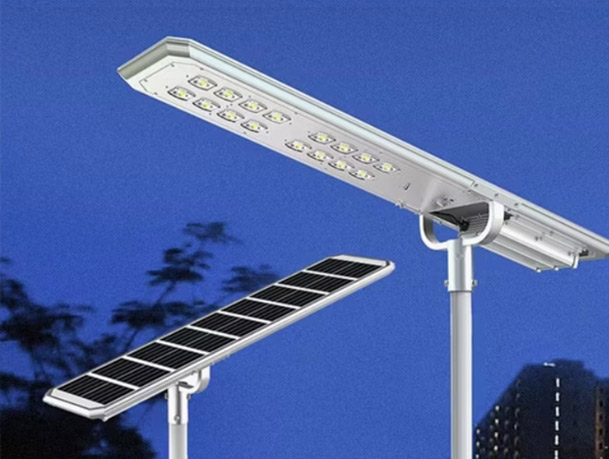
| Solar module | Technology, rated power, dimensions, electrical data, temperature coefficients and product certification requested by the project. |
| Battery | Chemistry, rated and usable energy, BMS functions, cycle-life test basis, temperature limits and enclosure. |
| Controller | Charge method, protections, programmable stages, efficiency, sensor and communication functions. |
| Pole and bracket | Material, steel grade, dimensions, coating, wind calculation, weld inspection and foundation interface. |
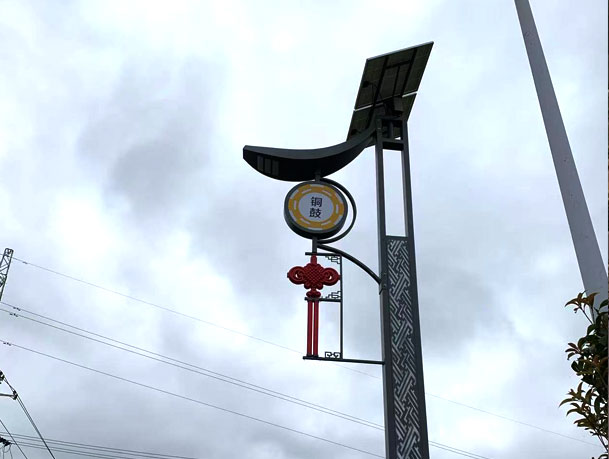
The solar panel adds significant wind-exposed area. Require a structural calculation using the submitted panel and luminaire arrangement. Define steel grade, coating and any paint system, and require an approved base plate and anchor-bolt drawing before civil work starts. Foundation design must use local soil data and the calculated pole reactions.
Define separate warranty terms for the luminaire, controller, battery, solar module and pole. State who performs diagnosis, who supplies replacement parts, acceptable response time and whether labour or freight is included. Require a component compatibility guarantee so the buyer is not left to coordinate multiple unrelated suppliers.
It may set a maximum power or preliminary range, but acceptance should be based on verified lighting and energy performance. Better optics may meet the target with lower power.
The owner should select this from local weather risk, service criticality, dimming strategy and budget. It must be stated consistently so all bids are comparable.
Controller selection should match system voltage, climate, module configuration and project requirements. Ask bidders to provide a reasoned design rather than relying on one feature name.
At minimum: compliance schedule, lighting calculation, solar energy calculation, component datasheets, pole drawing, structural basis, warranties and deviation list.
Explore Jieyao's solar street light systems, compare the 8m municipal road system, or request a project-based quotation.
Contact Us
Get a custom lighting solution and quotation for your project. Outdoor lighting manufacturer in Yangzhou, ChinaAbout Jieyao LightingYangzhou Jieyao Lighting Equipment Co., Ltd. is an outdoor lighting manufacturer focused on solar street light systems and high mas... Do you have any questions or requests?
Email: jay@jieyaolighting.com

Click to Chat.
Im online now.