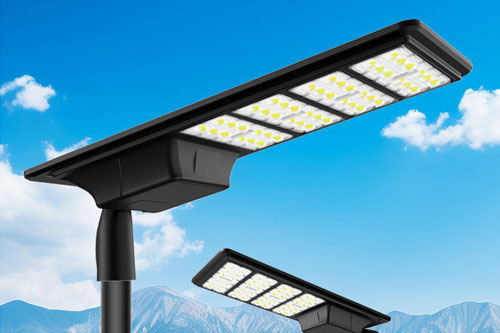


For a solar street light, select the battery and its enclosure as one site-specific subsystem. Give the supplier the expected ambient conditions, sun exposure, installation location, service access and operating schedule. Ask for the exact battery chemistry and model, manufacturer-specified charging, discharging and storage limits, BMS protective behavior, enclosure and mounting detail, and evidence that the proposed system meets the required nighttime duty within those limits. Do not accept “all-weather battery” or a generic IP label as proof that a pole-mounted box, in-ground compartment or integrated luminaire will maintain capacity and charge safely at every site.
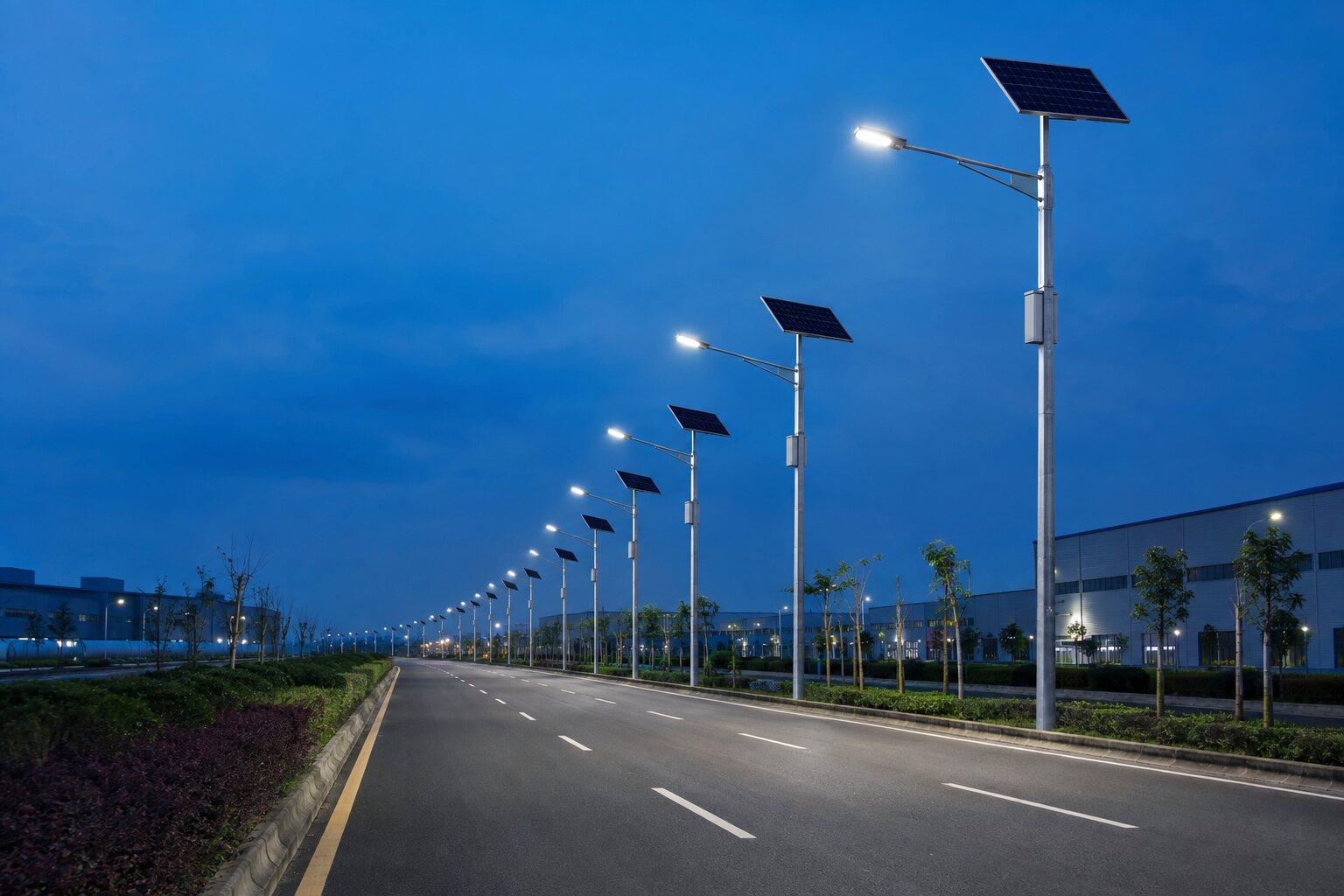
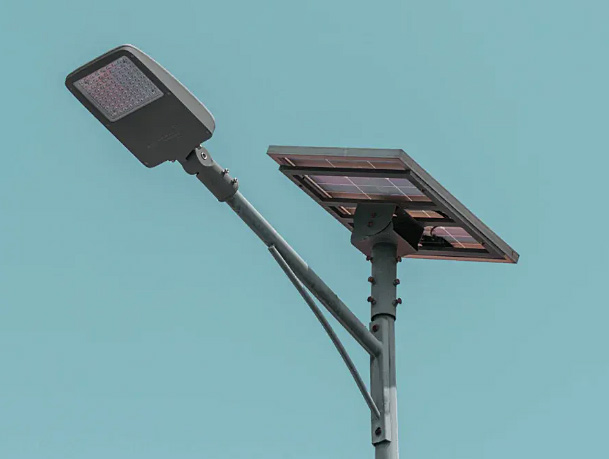
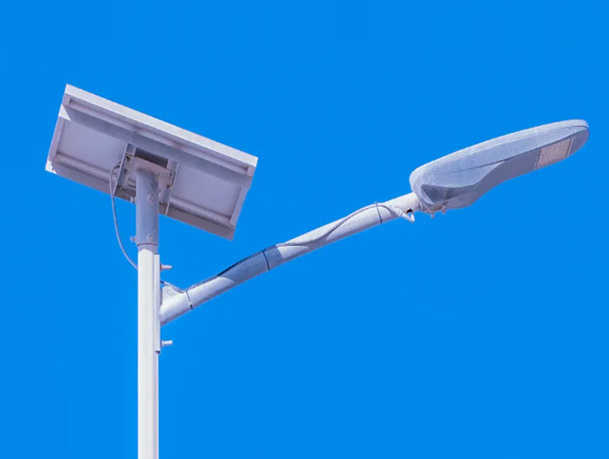
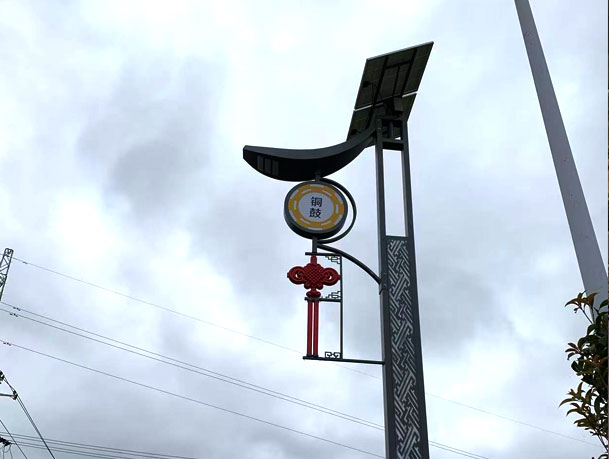
The visible enclosure position affects sun exposure, cable routing and qualified service access; the photo does not establish the internal battery model or temperature limit.
The battery and panel sizing calculation establishes how much usable energy is needed for the agreed lighting and autonomy schedule. Temperature acceptance asks whether the selected cell, pack, BMS and location can deliver and recover that energy across the project's relevant seasons. A battery capacity printed at one reference condition is not automatically the usable capacity at every field temperature or discharge rate. Ask the pack supplier to state the conditions behind its capacity data and the BMS limits that will actually be programmed or fixed in the delivered assembly.
The buyer should not invent one universal hot- or cold-weather derating percentage. The exact behavior depends on chemistry, cell design, pack construction, charge method and the manufacturer's approved operating envelope. A cold-site design may need a different charging strategy or system architecture; a hot exposed box may need a different placement and ventilation/thermal approach. Any proposed heating, insulation or fan adds load and maintenance questions that must return to the energy balance and wiring design.
| Site and system input | Buyer evidence to provide | Supplier evidence to return |
|---|---|---|
| Ambient and exposure | Design weather basis, direct sun, shade, seasonal extremes and installation location | Pack-level allowable charge/discharge/storage conditions and thermal assumptions. |
| Night load and autonomy | Agreed dimming profile and required sunless operating period | Usable energy at the relevant conditions and the BMS cut-off/recovery logic. |
| Charge source | PV/module/controller design, charging schedule and possible auxiliary power | Charge-voltage/current limits and control behavior at temperature boundaries. |
| Enclosure position | Pole-mounted, luminaire-integrated or other approved location; access and drainage constraints | Dimensioned enclosure, mounting, cable entry, service clearances and environmental evidence. |
| Service plan | Inspection interval, asset ID, spare strategy and qualified access rules | Replaceable assembly identity, fault indication, isolation method and handover records. |
An integrated all-in-one unit can simplify external wiring but may place the battery near the luminaire and PV module; the actual thermal path and service method must be checked for that model. A separate pole-mounted enclosure can allow a different battery position and replacement approach, but adds brackets, cables, penetrations and structural demand. A recessed or buried arrangement raises different flood, drainage, access and utility questions and is not automatically cooler or safer. Select the arrangement from the approved site layout and the pack maker's requirements rather than assuming one format is best everywhere.
For each candidate, request a drawing that shows the actual battery, BMS, controller, protective device, cable route, gland orientation, opening direction and mounting connection. The enclosure ingress rating should refer to the offered configuration and its installed cable entries; it does not by itself explain condensation control or safe battery temperature. A photograph of a sealed box is not a test report. If the enclosure sits on the pole, include its mass and exposed area in the structural equipment schedule. Keep pedestrian clearance, theft resistance and qualified service access in the design review.
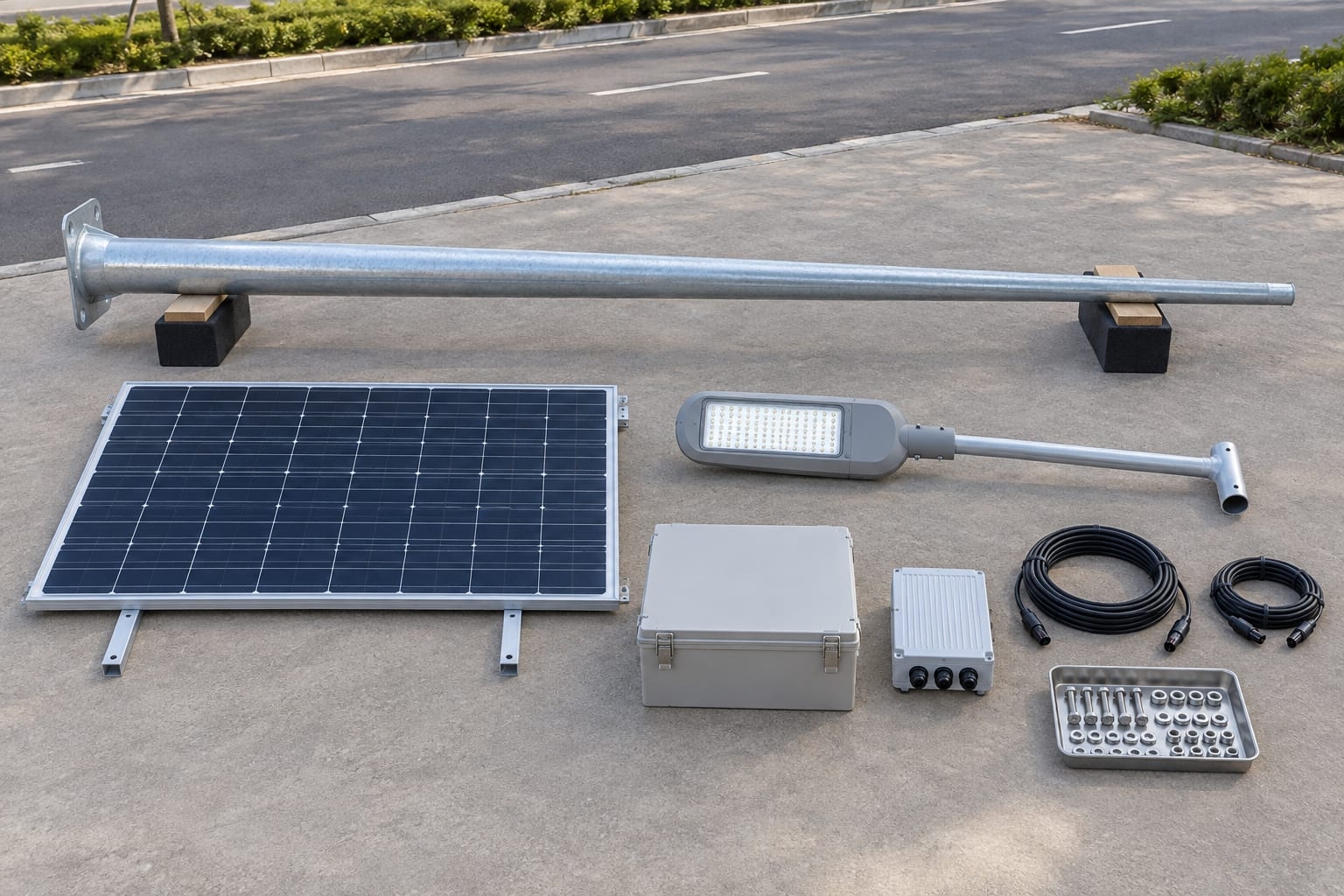
Compare the offered enclosure, controller and cable-entry drawing against the exact bill of materials before approval.
| Enclosure option | Interface to verify | Common procurement hold point |
|---|---|---|
| Integrated luminaire assembly | Battery location relative to LED/driver/PV components, seal and replacement access | No model-specific thermal and service description. |
| Separate pole-mounted box | Bracket load, cable protection, height, gland direction and safe access | Box and pole drawings do not share one equipment schedule. |
| Ground-level or recessed box | Drainage, flood exposure, utilities, security and access authorization | A generic IP claim is used in place of a site-specific civil detail. |
| Any arrangement with heater or fan | Added energy load, controller logic, failure indication and maintenance | The sizing sheet omits the auxiliary load or its failure mode. |
The battery-management system may restrict charging or discharge under conditions defined by its manufacturer. Obtain the actual limits and the operator-visible alarms rather than writing a universal rule into the RFQ. Ask what the lighting controller does when a protective limit is reached: dim, shorten the operating period, shut down, recover automatically, or require service intervention. The answer must be consistent with the agreed lighting duty and public-safety responsibilities. A supplier should not imply that the BMS alone guarantees uninterrupted light during prolonged poor weather.
At commissioning, record the battery model/lot, controller and BMS settings where readable, temperature-sensor placement, enclosure configuration and functional checks required by the project. The solar street light installation guide covers the wider field sequence; this RFQ guide focuses on the battery and enclosure evidence to approve before procurement. Preserve the asset ID and approved manual so a later replacement uses a compatible pack and installation method. Inspect a sample or first article against the same bill of materials intended for production. If a battery chemistry, enclosure or controller changes after approval, require a documented impact review of energy sizing, mounting, wiring and maintenance access.
No. Compare the required nighttime energy with the pack's usable-energy data and protective behavior at the project's relevant conditions. Check that PV charging and auxiliary loads are included in the system design.
No. Ingress protection and thermal behavior are different questions. Ask for the exact enclosure configuration, installed cable-entry detail and battery-maker operating limits.
Not necessarily. It may reduce external wiring, but the battery's location, access height, replacement procedure and approved part availability determine serviceability.
The battery and BMS model/revision, pack operating limits and capacity basis, enclosure/mounting drawing, wiring and protection schedule, control behavior at limits, commissioning record, spare-part identity and warranty terms.
Contact Us
Get a custom lighting solution and quotation for your project. Outdoor lighting manufacturer in Yangzhou, ChinaAbout Jieyao LightingYangzhou Jieyao Lighting Equipment Co., Ltd. is an outdoor lighting manufacturer focused on solar street light systems and high mas... Do you have any questions or requests?
Email: jay@jieyaolighting.com

Click to Chat.
Im online now.