

 English
 Español
 Bahasa Indonesia
 Français

- Product details
-
SOLAR STREET LIGHTING · MAINS-BACKUP CONFIGURATION
Solar Street Lights with Mains Backup
Solar generation and battery storage, with an agreed route to utility power.
Jieyao supplies project-configured solar street lights with mains-complementary control. The package combines the lighting head, photovoltaic modules, battery, controller and steel support, with automatic source switching defined for the selected equipment. It suits enquiries where a mains connection is available and the lighting plan calls for a supplementary supply.
Order the operating programme and switching behaviour together with the hardware. The quotation identifies the offered controller and power interface, while the project electrical design defines the incoming supply and site protection.
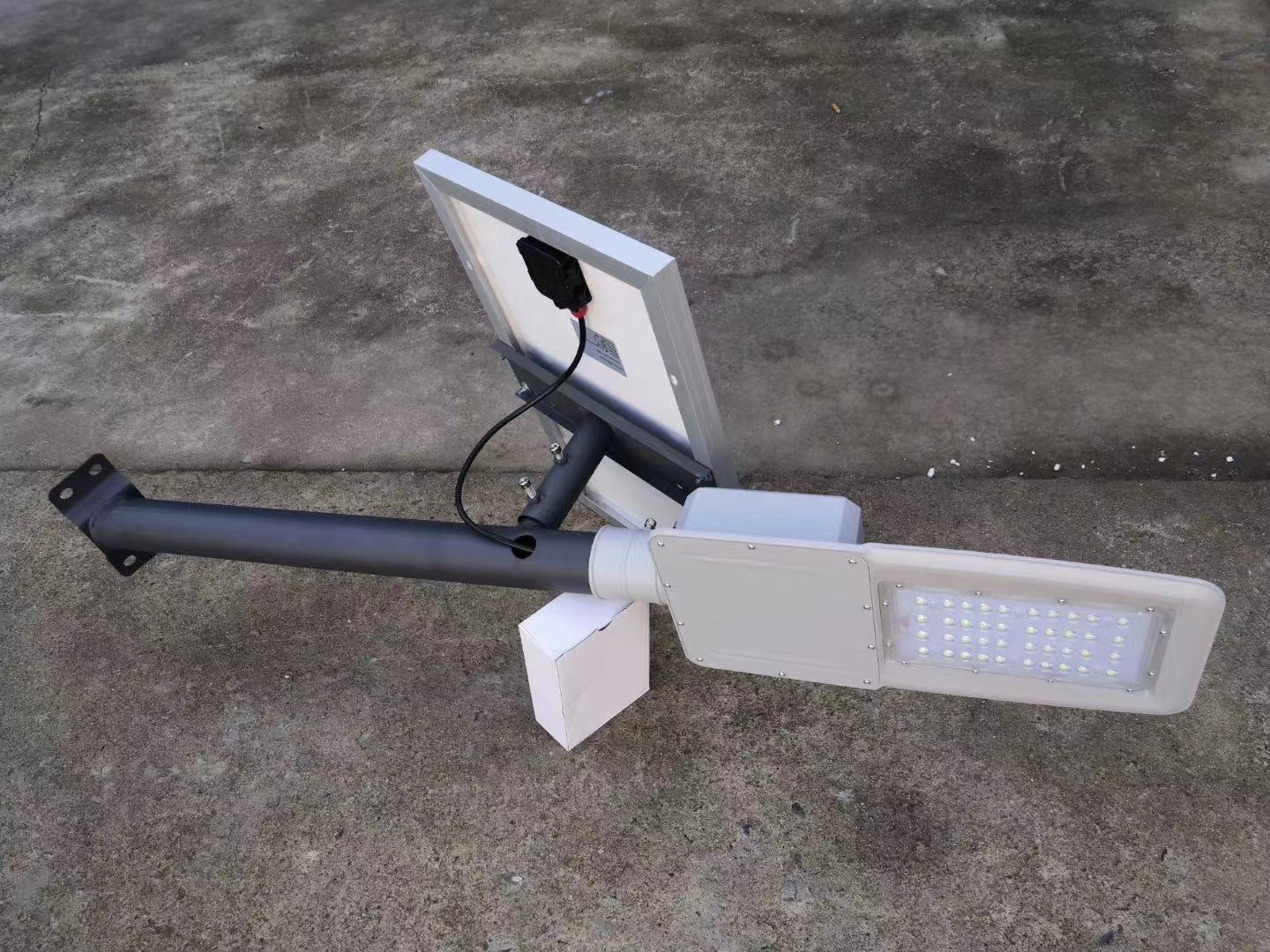
Discuss a mains-backup solar configuration ↗ Separate-panel hardware reference. The photograph shows the physical arrangement; it does not identify a mains-backup controller or the configuration below.
What changes when mains backup is included?
A separate solar panel describes the mounting layout. Mains backup describes an additional electrical supply and how the equipment uses it. A light can have a separate panel without any mains input. A mains-complementary order therefore needs a defined control function as well as the normal solar component schedule.
This is also different from a solar-wind hybrid street light, which adds wind generation. For a site without a usable mains connection, start with the split solar street lighting configuration and its off-grid energy requirement.
One documented supply configuration
A 2023 supply contract naming Jieyao as the supplier records an 8 m solar street light with a mains-complementary controller and automatic switching between solar and mains operation. It is a configuration reference for a new enquiry, rather than a current stock code or a performance result measured from the photographs.
Component Recorded example Selection for your order Steel support 8 m Q235 pole, galvanized and powder coated; arm and PV support Set mounting geometry, equipment loads and site design inputs. LED lighting head 80 W stated rating Identify the actual luminaire, optic, operating input and dimming stages. Photovoltaic modules 2 × 60 W; 120 W combined module rating Match the module electrical data and connection arrangement to the controller. Battery LiFePO4; 12 V / 60 Ah as recorded Confirm the selected pack's nominal voltage, usable energy, protection and temperature limits. Control Mains-complementary controller; automatic source switching; timed and battery-responsive dimming described Fix the controller model, switching rules and lighting programme in the offer. Installation boundary Internal pole wiring included; external mains supply laid by the buyer; site installation excluded State the handover point, incoming supply and civil/electrical responsibilities. The example's 12 V × 60 Ah gives 720 Wh nominal. By comparison, a hypothetical constant 80 W load for 12 hours would need 960 Wh before losses. That comparison does not describe the actual dimming programme or mains contribution: it shows why a 12-hour lighting window cannot be read as 12 hours of constant 80 W battery-only operation.
Agree what the controller does in each condition
The automatic-switching function needs an operating description that can be checked against the offered controller. The archived configuration does not identify the detailed circuit, switching thresholds or transfer time. A new proposal should state whether mains feeds a compatible lighting power path, charges storage, or serves another specified function; those arrangements are not interchangeable.
Normal night programme
Specify start and stop conditions, each lighting stage and its actual input. State how solar/battery operation and mains use relate to that programme, rather than assuming the word “hybrid” fixes the source priority.
Low available battery energy
Record the condition that requests mains support and the condition for returning to solar/battery operation. Include any delay, recovery condition or dimming response in the controller specification.
Mains loss or a fault
Define the required behaviour when the incoming supply is absent, and distinguish normal low-energy operation from a fault. Battery support during an outage depends on the available energy and the selected controller's actual operating mode.
A mains-backup description does not promise uninterrupted transfer, zero mains consumption or power export to the grid. Any such function must be expressly supported by the offered equipment and the project design.
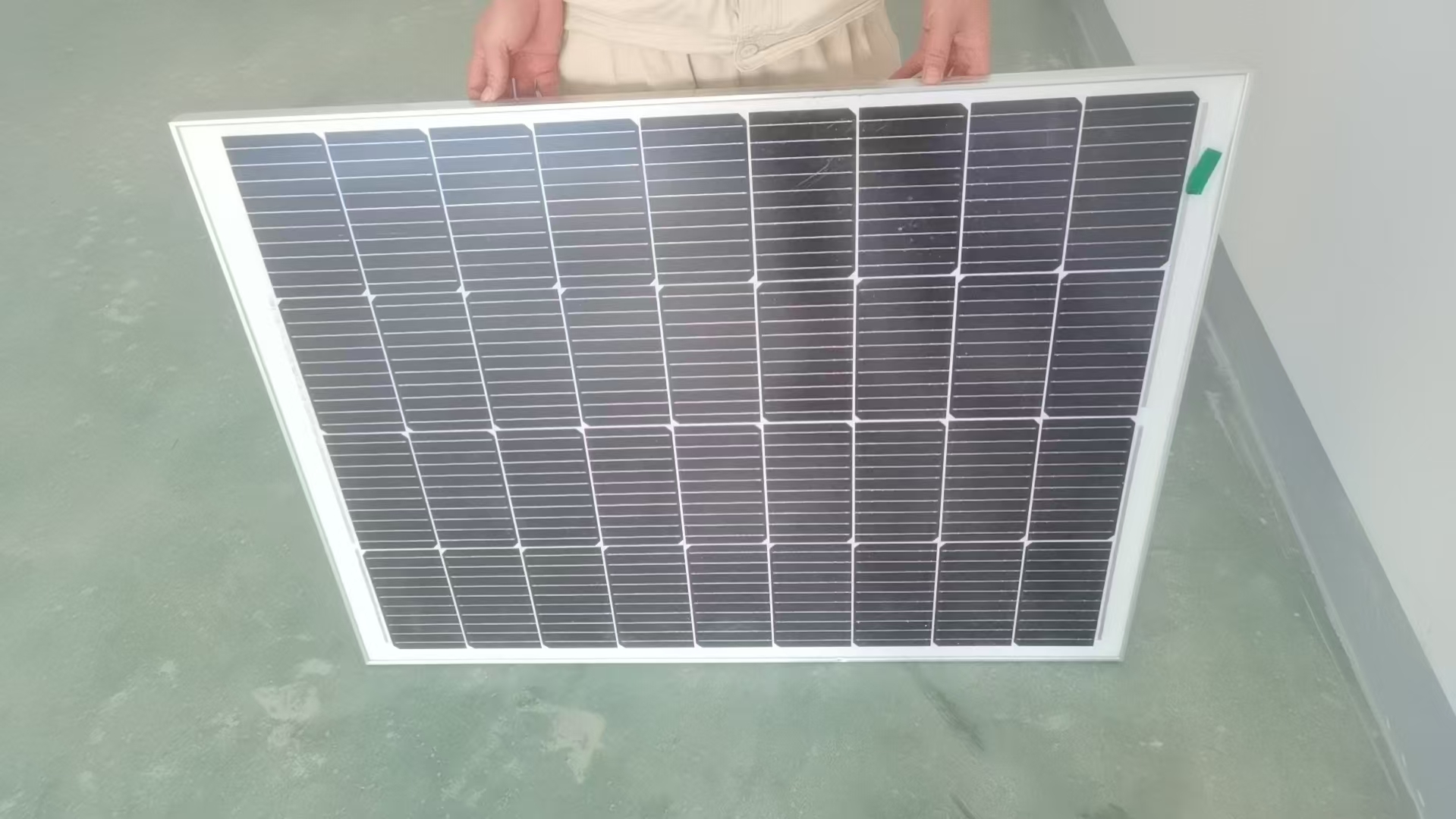 PV module appearance reference. Its wattage and electrical values are not identified as the historical 60 W modules.
Size solar contribution around the service you need
Start with the lighting requirement and the seasonal solar conditions. A site may need a full operating window, a later dimmed stage or a specific response during an outage. The PV and battery selection needs to support that duty together with the agreed role of mains power.
For a road with an available feeder, this arrangement lets the project evaluate solar contribution alongside mains support. Where trenching and a connection are impractical, the additional mains interface may offer little benefit. At a shaded location, adding a grid connection does not make the solar panel productive; compare the proposed arrangement with a conventional mains-fed light on the same lighting basis.
Use the two-module rating as a starting specification, not a wiring instruction. The selected module voltage/current data, battery charging requirements and controller input limits determine the permissible PV connection.
Bring the electrical supply into the pole scope
The recorded order separates internal pole wiring from the buyer's external mains feeder. Keep that handover explicit in a new quotation: identify the incoming supply characteristics, termination location, cable entries, protective devices and isolation arrangements required by the project electrical design. Do not connect mains directly to low-voltage solar terminals.
Locate the battery, controller and any mains-interface equipment on the assembly drawing. Their enclosures and connections need accessible service space, a suitable environmental specification and a defined cable route. Panel orientation, luminaire direction and equipment positions must also fit the approved pole and bracket design.
The final parts schedule should distinguish the pole and arm, panel brackets, luminaire, PV modules, battery, controller, mains-interface equipment, internal wiring and foundation hardware. Foundations, feeder works, installation and commissioning remain separate scope lines unless the accepted offer includes them.
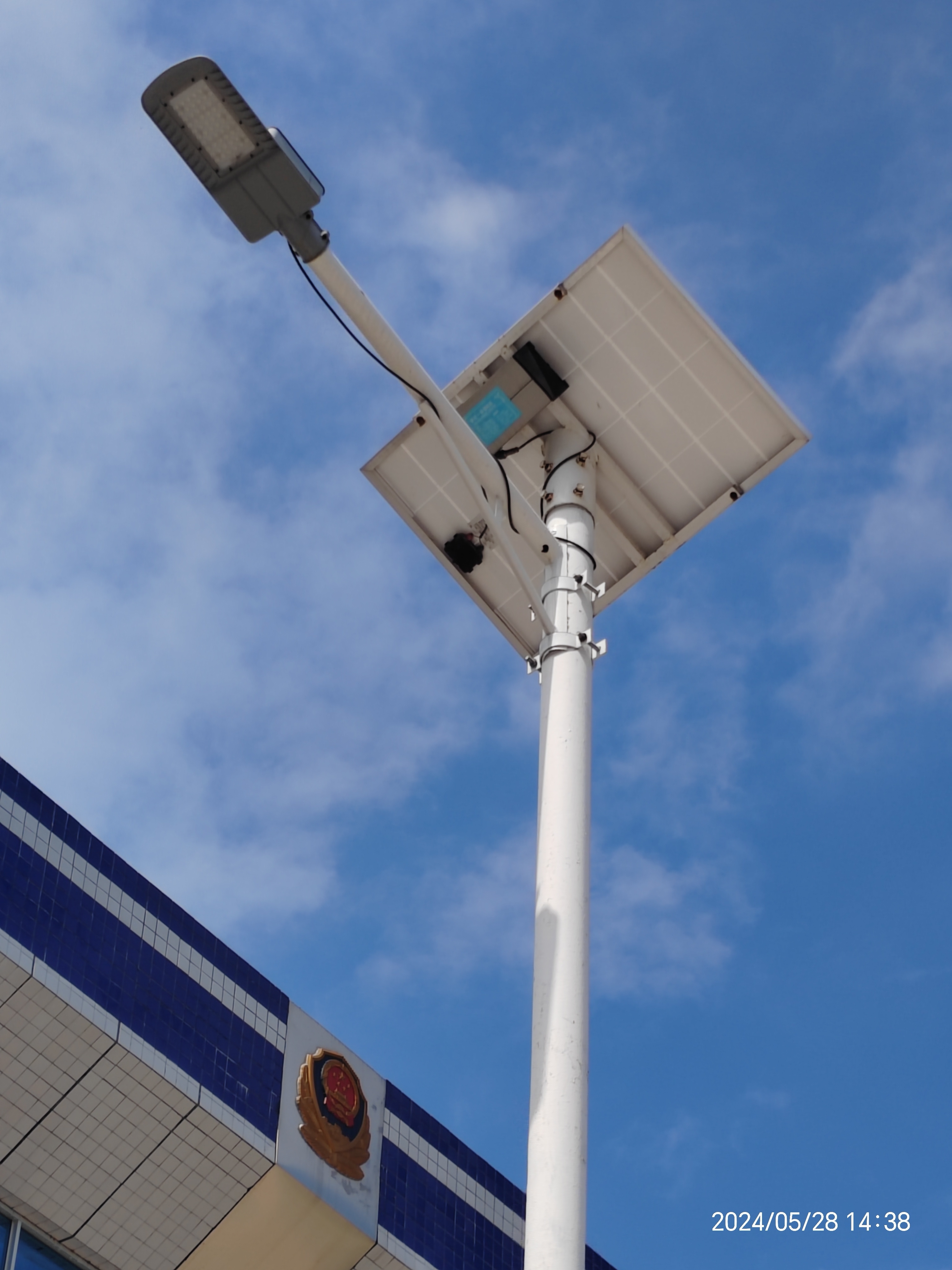 Installed separate-panel layout reference. The visible pole, panel and lamp do not establish a mains connection or project ownership.
Check the configured assembly before dispatch
Use one equipment schedule to identify the physical luminaire, battery, PV modules, controller and mains-interface parts. Agree checks for their labels, connectors, internal cable arrangement and mounting fit. The pole inspection should refer to the released geometry and finish requirements.
Include a function-check plan for the selected control logic: normal lighting stages, the specified request for mains support, recovery to the preferred source and the agreed response to mains loss. Record the settings and the conditions used. A brief switching demonstration verifies only that test condition; it does not establish seasonal autonomy or annual electricity savings.
For delivery, identify the pole marks and loose electrical sets so they can be matched on site. Agree protection for PV module faces, coating and connectors, and transport documentation for the selected battery. Provide the configuration drawing, parts list, wiring instructions and settings needed for that order; packing size and lead time follow the accepted supply schedule.
Questions before choosing this supply arrangement
Can mains backup be added to any existing solar street light?
It needs a compatibility review of the controller, driver, battery, enclosure space and wiring. A mains-complementary function is not established by adding a connector to a solar-only light. Send the existing component details and required operating behaviour for a configuration-specific proposal.
Will the lamp stay at full power when the grid fails?
That depends on the configured operating mode and available battery energy. Specify the outage duration and required light level, then assess the battery duty and controller response. The historical 80 W rating is not a full-power outage-duration promise.
Does a bigger panel eliminate mains use?
Not automatically. Seasonal solar input, shading, the nightly programme, storage and control logic determine how much mains support is needed. Use a project energy assessment if electricity consumption is part of the procurement decision.
Send the lighting duty and incoming-supply details
Include the site location, road layout, quantity, required lighting hours and dimming stages, solar exposure and desired behaviour during low battery energy or a mains outage. Add the available supply characteristics, connection point, pole arrangement and destination.
We can organize the proposed solar components, mains-complementary control and support package around those inputs. State which feeder, foundation and installation works are supplied by others so the quotation covers a clear, usable configuration.
Contact Jieyao about mains-backup solar lighting ↗ -
-


