

 English
 Español
 Bahasa Indonesia
 Français

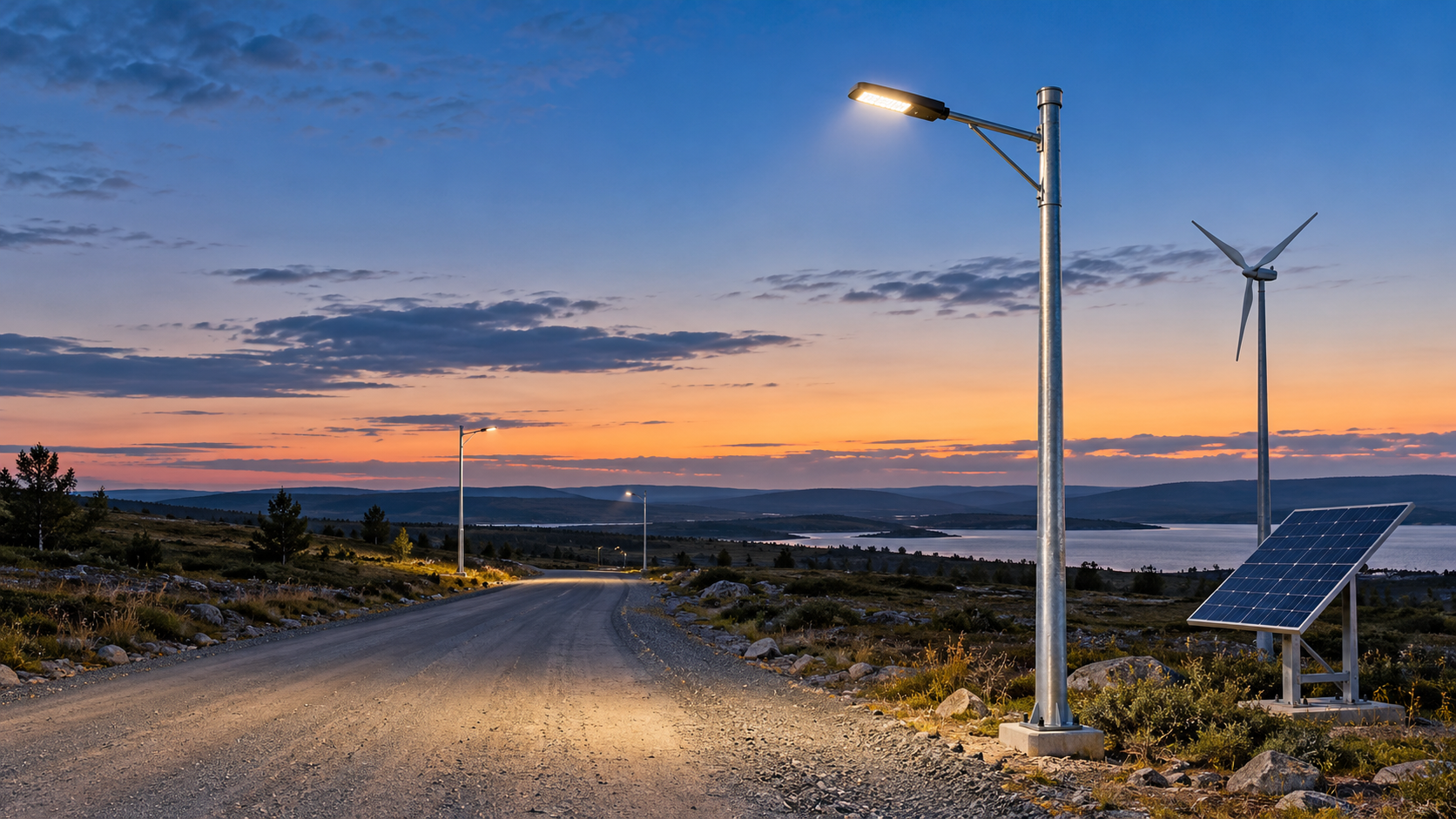
Quick answer: A solar-wind hybrid street light combines photovoltaic generation with wind generation to support an outdoor lighting load. Consider it for a remote or weak-grid site only after checking both energy resources, the lighting schedule, system architecture, pole loads, maintenance access and the project requirements. The name alone does not establish all-weather autonomy or any specific operating duration.

What the hybrid system includes
A hybrid outdoor lighting system couples an LED luminaire and support structure with energy-generation and storage components. A proposal may include a PV module, wind generator, charge control, battery and protection or switching equipment. The actual architecture is model- and project-specific. Request a system diagram that identifies supplied components, control logic and operation when one source is unavailable.
| Element | Project question |
|---|---|
| PV module | Where will it be mounted, and what orientation, shading and soiling conditions were assumed? |
| Wind generator | What site wind evidence supports it, and how will it be safely accessed and serviced? |
| Controller and protection | How are charging sources coordinated, and what protection and fault indications are provided? |
| Battery and enclosure | What chemistry, capacity, temperature range, enclosure and replacement access apply to the offered model? |
| Luminaire and schedule | What lighting task, distribution, operating schedule and load are required by the project? |
When to evaluate a solar-wind hybrid
Start with the site, not a product label. Remote roads, isolated compounds and locations with constrained grid access may justify comparing standalone renewable lighting with a grid-fed alternative. A hybrid arrangement is worth evaluating only when solar and wind resources are useful at the site and generation equipment can be installed, protected and maintained. If the wind is weak, turbulent, obstructed or difficult to service, adding a wind generator may add complexity without addressing the energy requirement.
Compare a hybrid proposal with a solar-only system and a grid-fed LED design using the same operating schedule, lighting criteria and lifecycle assumptions. Jieyao's stated portfolio includes wind-solar hybrid street lights; the exact configuration and model data must be confirmed for the project. See the solar street-light product range for a related category.
Site information to collect before sizing
Record the project location, seasonal weather, shading, nearby obstructions, mounting constraints, required operating nights, dimming or curfew logic, load data and maintenance access. A site visit can identify turbulence, salt exposure, dust, vandalism risk and service constraints. Do not use a generic annual average as a substitute for seasonal design conditions or the project's required service level.
Structure, safety and maintenance
Adding a wind device can change forces on a support. The pole, bracket, foundation and anchors must be checked for the complete proposed assembly under the project's design basis. The RFQ should identify mounting location, cable route, service isolation, access method, grounding and approvals. Confirm how each component is inspected and replaced; do not assume the luminaire and energy components share a service life.
| RFQ input | Evidence to request |
|---|---|
| Site and climate | Location, seasonal resource data, shading, turbulence and environmental exposure |
| Lighting task | Road or area layout, project lighting criteria, operating schedule and controls |
| Supply scope | Pole, PV, wind generator, storage, controller, luminaire, cabling and installation responsibilities |
| Engineering basis | System diagram, structural inputs, electrical protection, foundation interface and applicable documents |
| Service plan | Inspection, fault reporting, safe access and component replacement process |
A practical selection sequence
- Define the lighting task and operating schedule.
- Collect site-specific solar and wind information across relevant seasons.
- Request system architecture and model-specific energy assumptions.
- Review structural, electrical, environmental and service implications.
- Compare hybrid, solar-only and grid-fed options against the same criteria.
Frequently asked questions
Does hybrid mean wind and solar always charge the battery at the same time?
Not necessarily. Charging logic depends on the system architecture and controller. Request a diagram for the exact offer.
Can a hybrid street light guarantee operation through any weather?
No generic product name establishes that. Performance depends on site resources, load, storage, controls and design assumptions.
Is a hybrid system automatically better than solar-only lighting?
No. It can add equipment and maintenance. Compare site evidence, the required schedule and lifecycle scope.
What should a quotation request include?
Provide location, lighting layout, operating schedule, climate data, mounting constraints, supply scope and required documents. Ask the supplier to identify assumptions and exclusions.
Does Jieyao supply wind-solar hybrid street lights?
The company profile lists wind-solar hybrid solar street lights. Confirm current availability, configuration and model-specific data for the project before ordering.
For a project review, send the location, lighting plan and operating schedule through the Jieyao project inquiry page.


