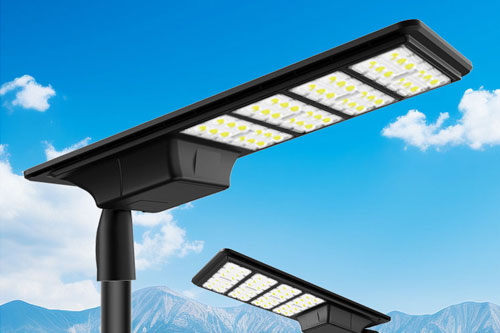


A traffic signal pole RFQ is complete enough to compare suppliers when it describes the intersection location and orientation, the actual signal/sign/equipment loads, the governing structural basis, the base and conduit interfaces, and the requested fabrication and delivery evidence. Pole height and arm reach alone cannot define a safe or comparable assembly. Mark each input as confirmed, provisional or by others so a bidder does not hide a design assumption inside a price.
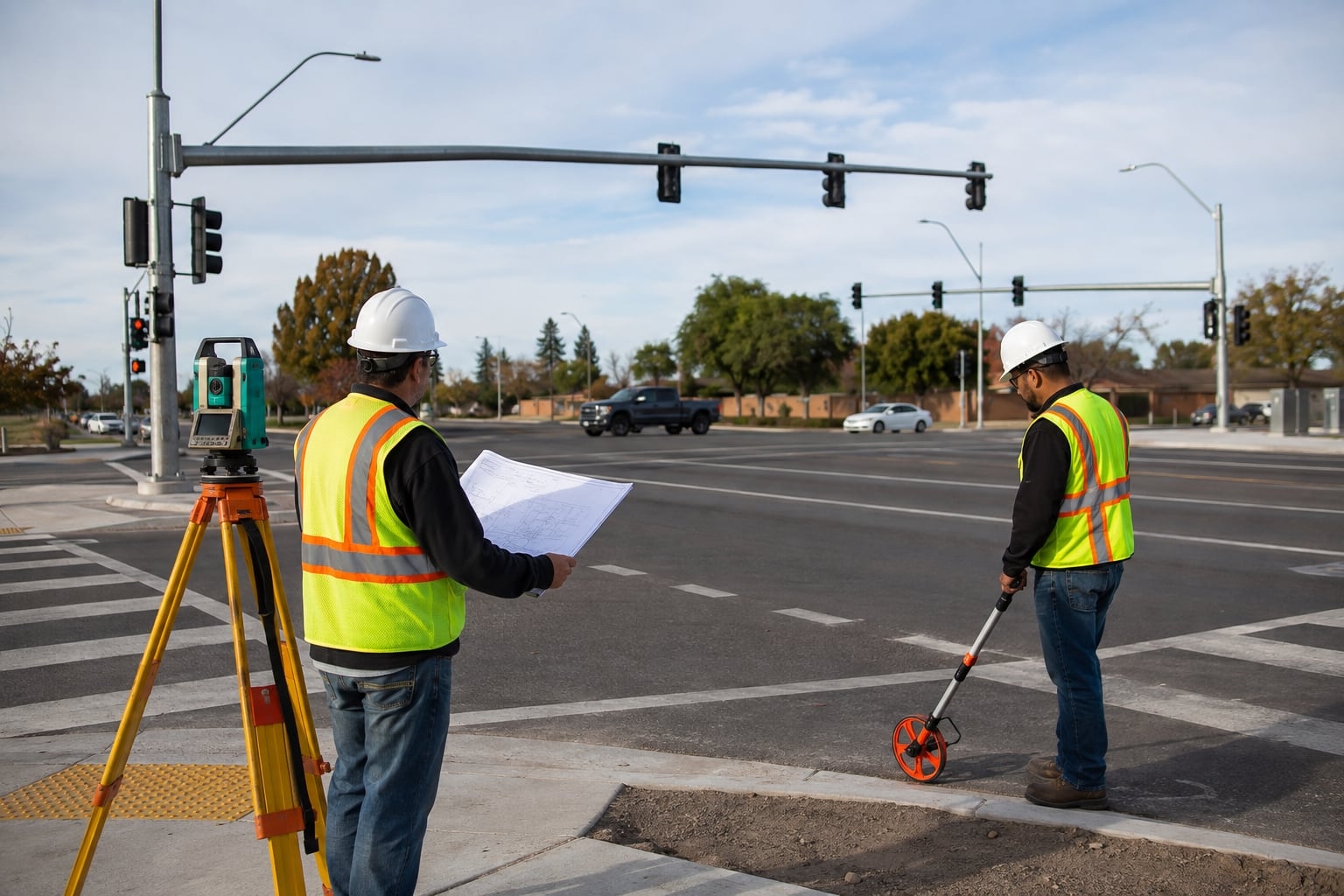
A complete RFQ begins with the actual intersection geometry and pole coordinates.
Provide a plan with road edges, lanes, stop lines, pedestrian crossings, islands, curbs, nearby utilities and each proposed pole coordinate. Add a north arrow or named approach so arm direction is unambiguous. Elevations should distinguish ground level, base elevation, mast-arm attachment and signal or luminaire mounting heights. Clearance must be checked against the local road authority's rules using the actual road profile and final equipment position; a generic catalogue dimension is not an approval.
If the site is congested, record maximum shipping length, crane reach, traffic-closure window and laydown space. These constraints may influence a bolted arm segment or erection sequence, which must be designed and approved rather than improvised after delivery. The project traffic engineer and roadway authority remain responsible for signal placement and visibility.
List signal heads, backplates, pedestrian indicators, signs, cameras, luminaires and approved future devices separately. For each, give model or envelope dimensions, mass, effective projected area (EPA) or data to calculate it, mounting position, orientation, bracket and cable needs. Wattage is not a structural load. A free-issued signal head still contributes gravity and wind action to the pole. The actual equipment list also determines whether access openings, internal cable space and bracket fittings are sufficient.
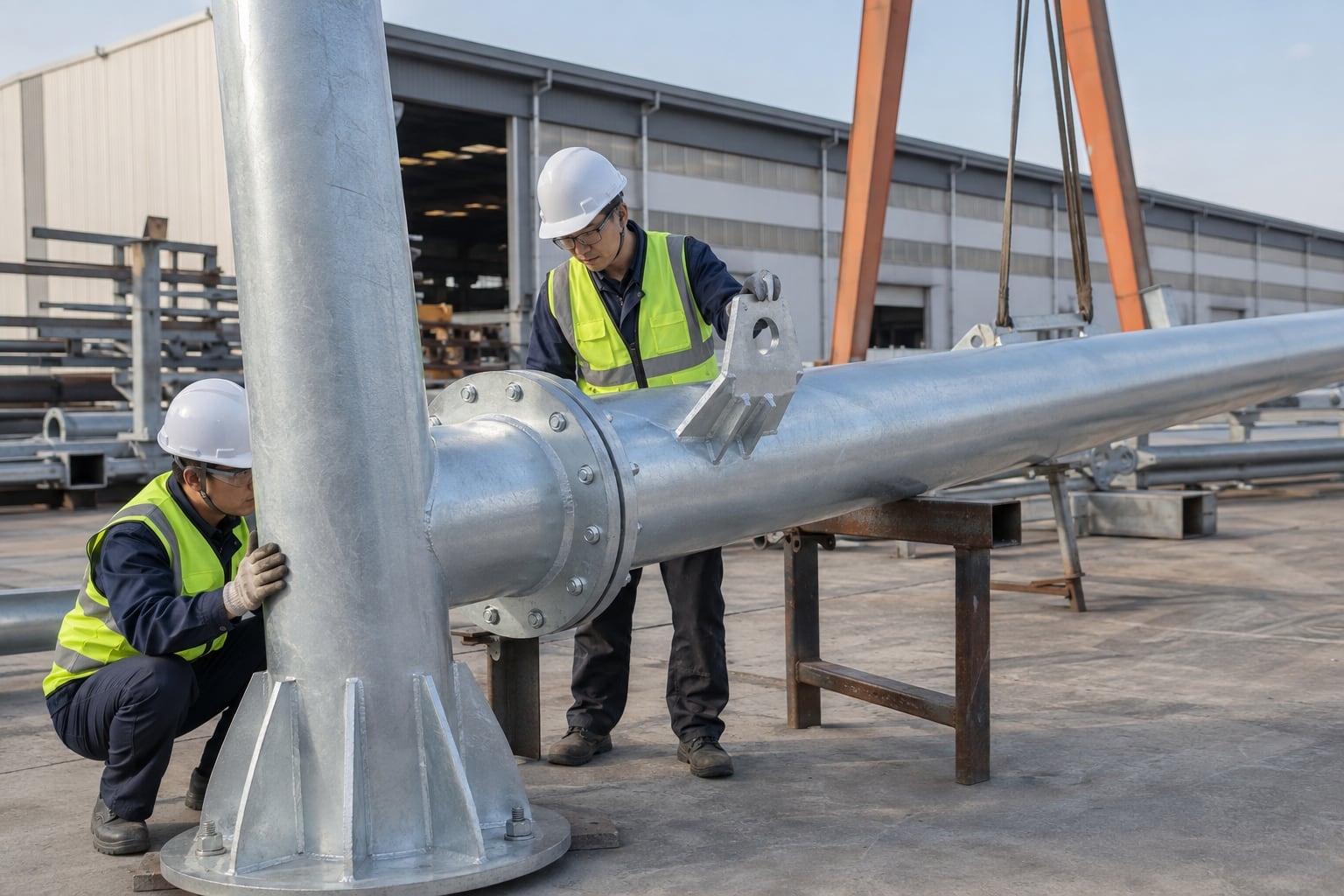
A specified trial fit can expose connection and orientation conflicts before packing.
| Input group | Buyer supplies | Bidder returns |
|---|---|---|
| Intersection | Plan, road levels, pole coordinates, arm direction and clearance criteria | Confirmed arrangement and open geometry questions |
| Equipment | All signal, sign, camera and light details, weights, EPA and mounting points | Load schedule, interface assumptions and exclusions |
| Design basis | Governing standard, wind speed definition, exposure/topography and any fatigue/serviceability criteria | Structural basis and proposed pole/arm arrangement |
| Civil/electrical | Geotechnical/reference basis, foundation responsibility, anchors, conduits, earthing and circuits | Reactions, base/anchor interface and cable-access details |
| Quality/logistics | Finish, inspection records, witness points, shipping limits and delivery phasing | Fabrication/inspection plan, packing concept and document list |
This is a bid-input matrix, not a universal product specification. Resolve a provisional field before accepting final design, especially if it controls wind demand or a civil interface.
The RFQ should name the governing design standard and edition, wind-speed averaging basis, terrain/exposure, topographic or importance requirements and any fatigue or serviceability checks. A statement such as “160 km/h wind resistant” is incomplete without its method and attached equipment. The supplier should return assumptions and design reactions in a form usable by the responsible civil engineer. Do not copy anchor diameter or bolt circle from an unrelated pole; foundation design depends on reactions and local soil data.
The base drawing should coordinate flange size, bolt circle, number and grade of anchors, projection, nuts, washers, conduit opening, door orientation and installer access. For a combined signal and roadway-lighting support, include both systems in the equipment and cable schedules. The combination traffic signal and street lighting pole provides the related product context, while the foundation and anchor-bolt guide explains the civil review principle.
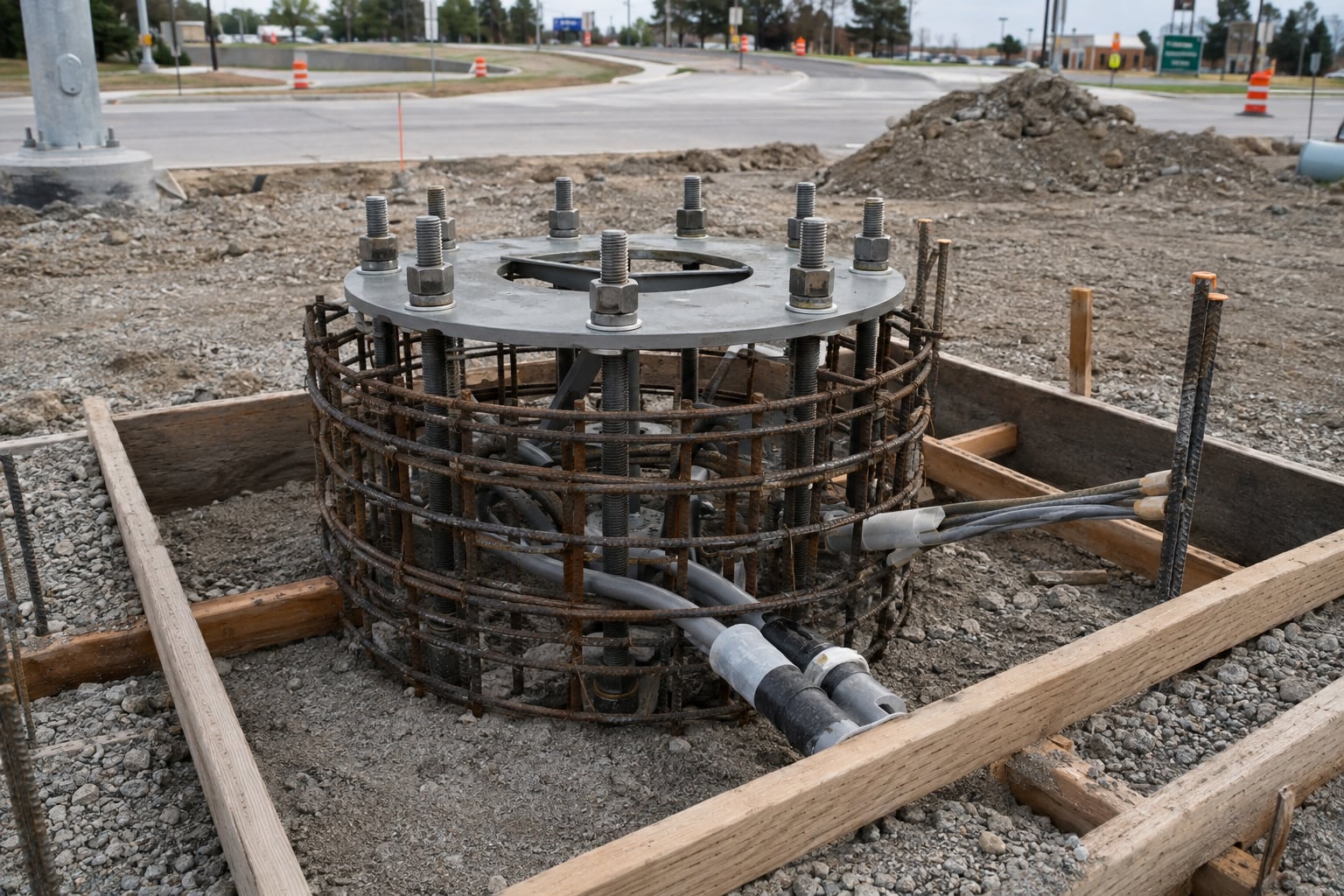
Pole reactions and anchor geometry must be coordinated with the responsible civil designer.
Request the approved arrangement, material/steel grades, welding and inspection basis, coating system, trial fit where valuable, marking and final record index. Inspection requirements should identify method, scope and acceptance criteria rather than “100% quality” language. Define third-party witness or hold points early enough for production scheduling. A long arm or mirrored pair may benefit from controlled trial fit before packing, but the RFQ must say which connection and what evidence are required.
| Compare | Evidence to check | Typical clarification |
|---|---|---|
| Pole/arm geometry | Type marks, reach, height datum, orientation and section arrangement | Has the bidder interpreted the approach direction correctly? |
| Complete load basis | Returned attachment schedule and wind/design method | Are third-party signs and lighting included? |
| Civil and cable interfaces | Reaction sheet, flange/anchor sketch, door and duct route | Who owns the foundation and anchor design? |
| Finish and inspection | Specified system, planned checks, records and any witness points | Is a quoted coating or test scope truly equivalent? |
| Delivery package | Section lengths, component marks, accessories, packing and timing | Can the site unload, identify and erect the parts? |
The first table tells the buyer what to send. This table tests whether returned quotations cover the same scope. Preserve deviations and exclusions alongside price instead of treating a shorter offer as a cheaper equivalent.
Send the intersection plan and elevations, full equipment schedule, wind/standard inputs, quantities, finish, foundation boundary, document requirements and destination. Identify every unconfirmed item. Jieyao can use the package to identify missing structural and manufacturing inputs and prepare a project-specific response. The combined signal-and-lighting pole and street light pole range are adjacent product paths; contact is the place to submit the drawings and schedule.
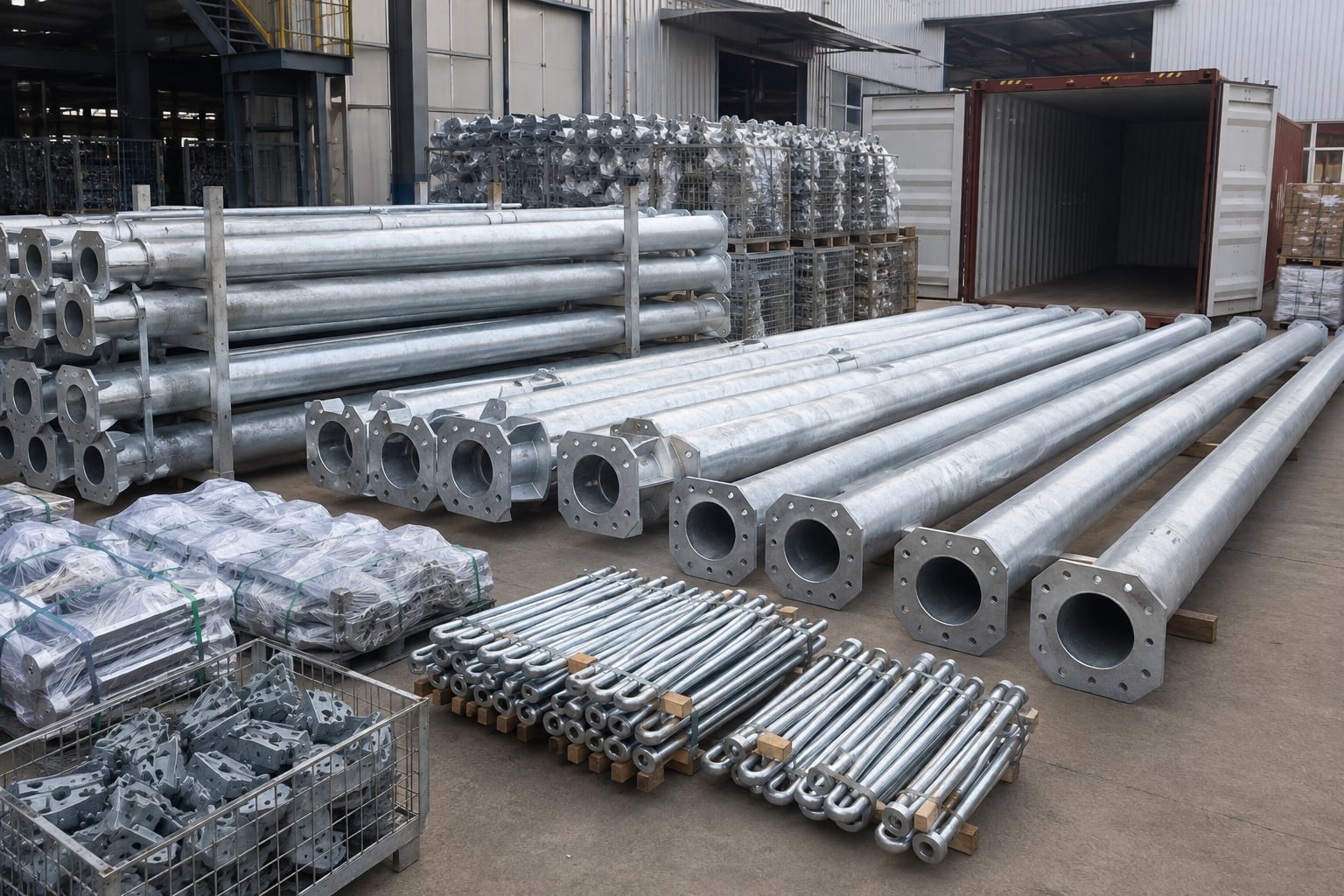
Long arms, matched hardware and marks need a practical delivery plan.
Yes if the combined equipment, arm, cable interface and wind/design basis are included in the approved structure and authority review.
No. Reach, orientation, equipment weights/areas, wind, foundation interface, finish and documentation change the design and scope.
The responsible civil engineer uses the correct pole reactions and local soil/site information. The RFQ should identify who supplies each input and drawing.
Not automatically. Bolt circle, quantity, material, projection and reactions must match the approved base and civil design.
Return both to one confirmed load and interface schedule; record differences in design assumptions, finish, records, packing and exclusions before comparing price.
Contact Us
Get a custom lighting solution and quotation for your project. Outdoor lighting manufacturer in Yangzhou, ChinaAbout Jieyao LightingYangzhou Jieyao Lighting Equipment Co., Ltd. is an outdoor lighting manufacturer focused on solar street light systems and high mas... Do you have any questions or requests?
Email: jay@jieyaolighting.com

Click to Chat.
Im online now.