

Short answer: If a street light pole or accessory arrives with suspected transit damage, identify and isolate the affected item before installation. Record the pole/lot mark, packing-list line, condition at delivery, damage location and clear photographs. The buyer, carrier, supplier and responsible engineer should then agree whether the issue is packaging-only, requires inspection or repair approval, or requires replacement. A driver signature or a visually small dent is not a structural acceptance decision.
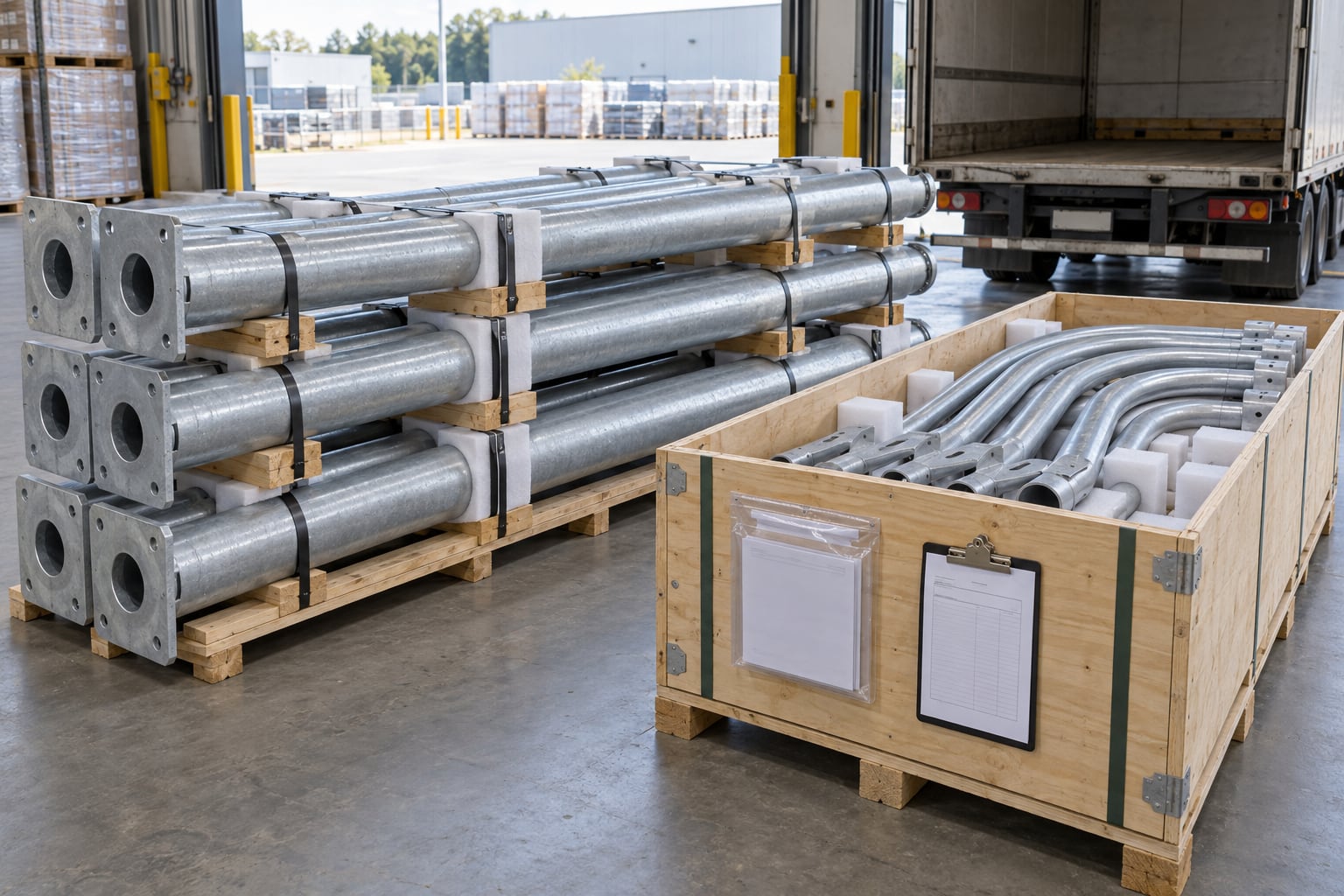
At receiving, compare bundle identification and condition with the packing list before parts are dispersed.
Before unloading or removing protective packing, record visible impacts, shifted supports, wet or torn wrapping, missing restraints and any contact between steel parts. Photograph the load from more than one angle with the delivery identification visible. Follow the agreed site lifting and receiving procedure; do not create a new safety risk merely to photograph a hidden surface. After unloading, inspect the shaft, arm, base plate, door, coating and loose accessories under suitable light. The export packing checklist addresses how parts should leave the supplier; this guide addresses the receiving-side exception process.
| Evidence | What to capture | Why it matters |
|---|---|---|
| Shipment identity | Delivery date, carrier reference, packing list, pole/arm marks and quantity | Connects a damaged unit to the correct order and type. |
| Loaded condition | Wide photographs of supports, straps, wrapping and point of contact | Shows where and when a handling concern was first observed. |
| Damage close-ups | Location on part, scale reference, orientation and multiple views | Helps distinguish a surface mark from a dent, crack or distortion. |
| Dimensions and function | Straightness, flange flatness, holes, arm mount, door fit and cable opening as applicable | Identifies whether assembly interfaces may be affected. |
| Finish condition | Scrape, bare steel, coating loss, moisture or staining | Defines the corrosion-protection review and repair scope. |
| Site action | Quarantine tag, storage location, persons notified and installation hold | Prevents the suspect unit being installed while review is pending. |
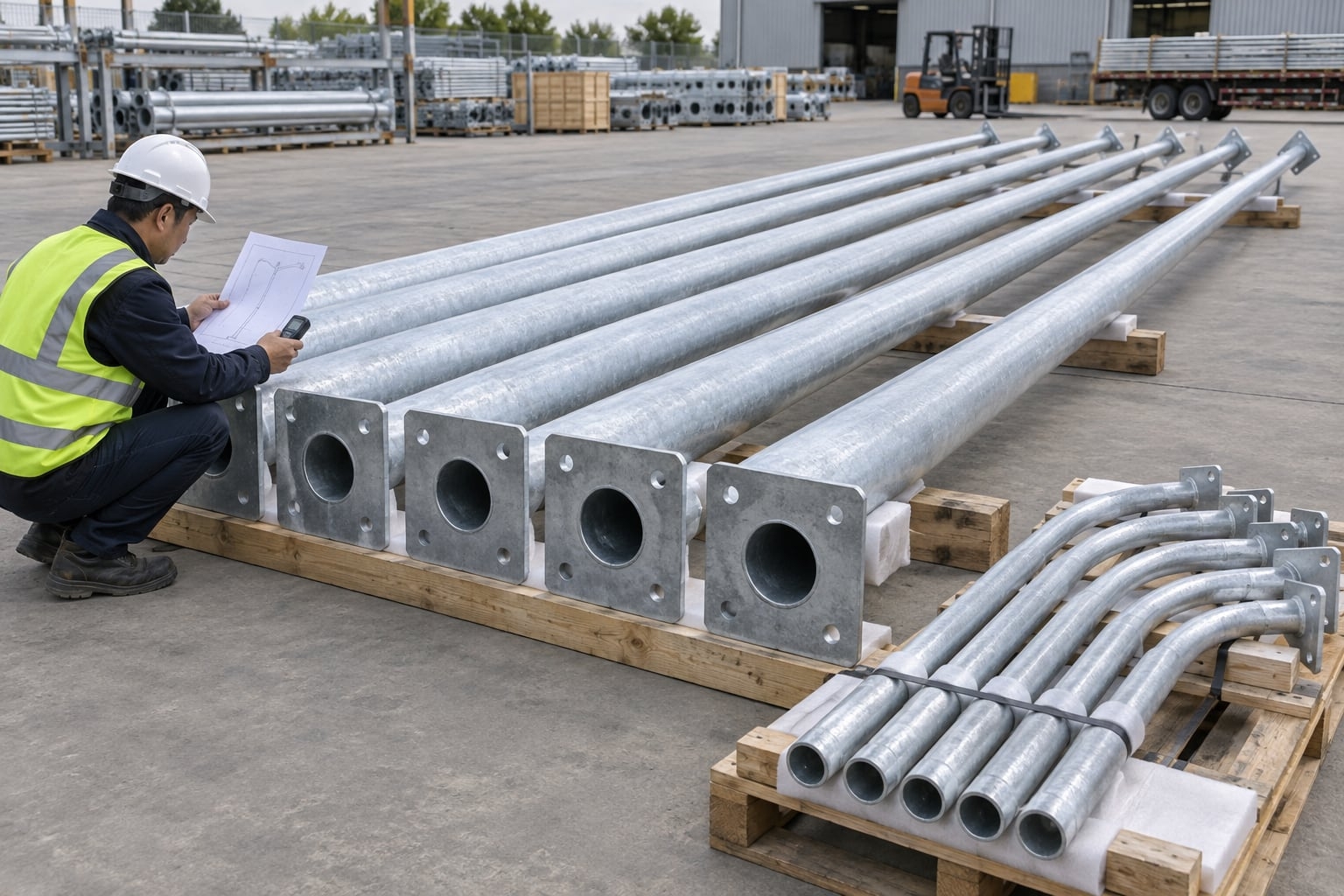
Compare receiving evidence with the release condition and exact manufactured lot.
Do not apply one remedy to every visible mark. A damaged label or outer wrapping may need repacking and record correction, while a bent shaft, cracked weld, deformed base, altered door opening or compromised arm connection needs a technical hold. Finish damage can require a specified repair method and inspection; it is not automatically a reason to scrap or to accept. The responsible engineer and buyer should review any change that can affect structural strength, alignment, corrosion resistance or electrical service access. The maintenance repair-decision guide covers installed assets; use this receiving process before a shipped part enters service.
| Observed condition | Immediate control | Decision authority/evidence |
|---|---|---|
| Damaged packaging or missing mark | Identify and segregate affected bundle | Reconcile packing list and re-identify the part before release. |
| Surface abrasion with protection uncertain | Hold affected area from installation | Review finish specification, repair method and post-repair inspection. |
| Dent, bend or flange distortion | Quarantine the complete component | Engineering assessment against released drawings; repair or replacement only by approved disposition. |
| Door, arm or luminaire connection mismatch | Do not force-fit or modify on site | Check dimensions and drawing revision; obtain interface disposition. |
| Missing anchors or loose accessories | Count and protect received items | Supplier/buyer reconciliation before the installation lot is released. |
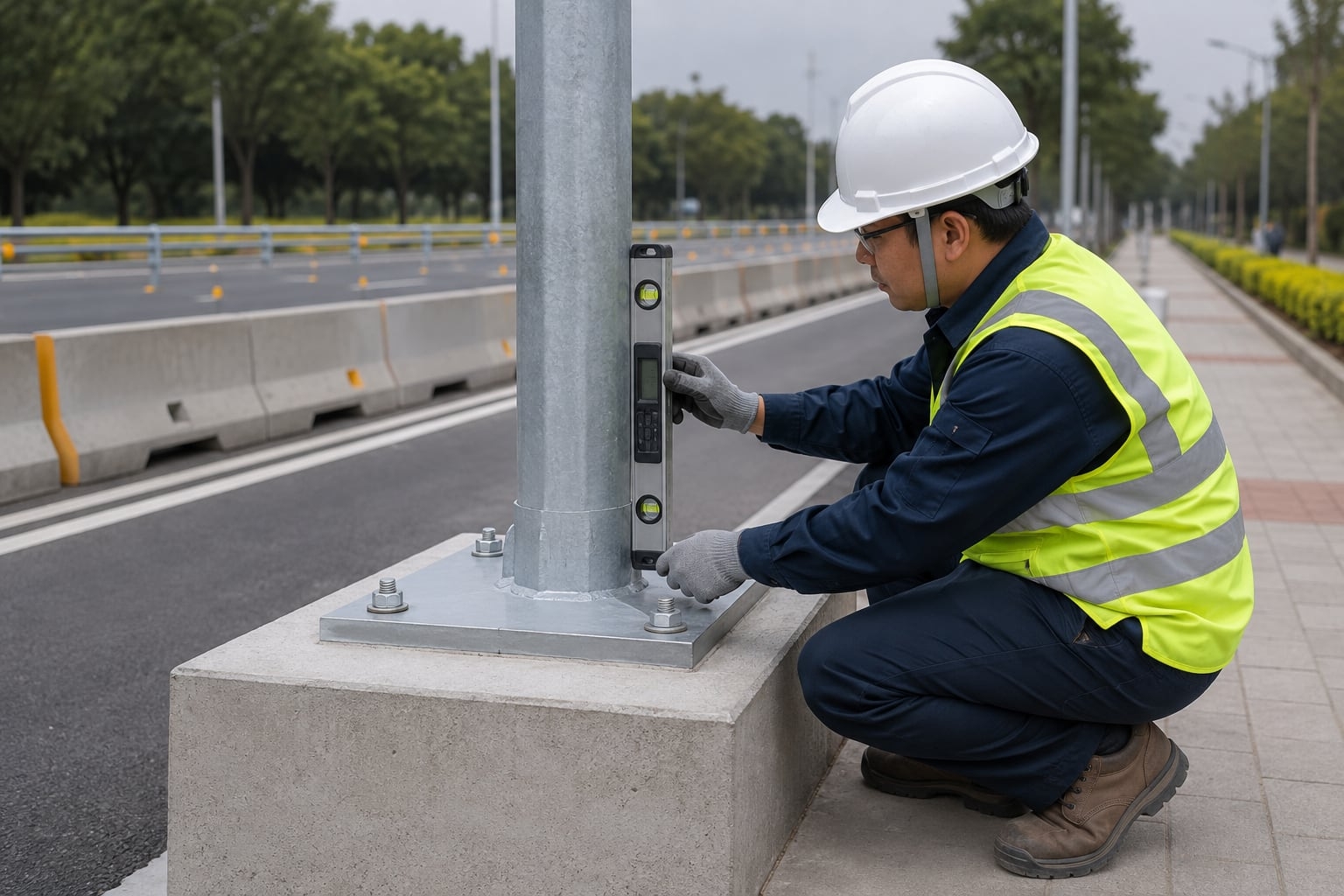
A base plate or anchor interface that may be distorted should be held for dimensional review.
Send a concise exception notice through the contract's required channel and within its specified timing; this page does not set a universal claim deadline. Include evidence, affected IDs, requested disposition and any site-sequence impact. Keep suspect parts clearly separated from accepted parts. If an approved repair or replacement is supplied, match its mark and release documents to the original location schedule. The asset register guide explains how to retain that chain after installation.
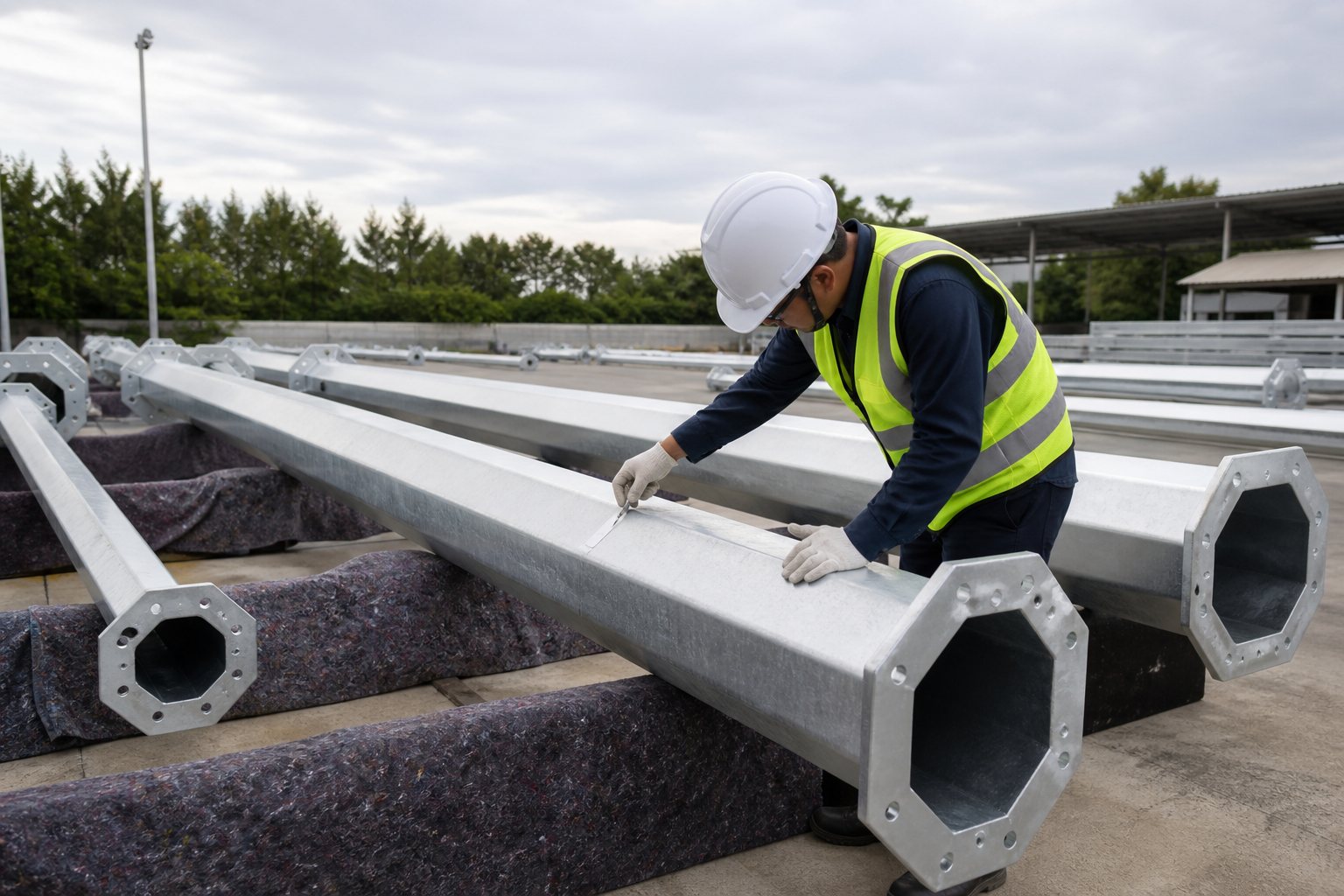
Finish issues need a defined acceptance or repair review, not an unrecorded touch-up.
Do not install a suspect structural part until the responsible engineer and buyer accept a documented disposition for that exact unit.
No. The specified protection system, extent of damage and approved repair/inspection criteria determine the response.
Identify and hold that unit while confirming whether nearby components or shared packing were affected. Unaffected units may proceed only after their identity and condition are verified.
When contacting Jieyao Lighting: Provide the order and packing-list references, pole mark, delivery photos, damage location and dimensions, affected interfaces and the site need date. A traceable record lets the supplier and project team review a unit-specific disposition.
Contact Us
Get a custom lighting solution and quotation for your project. Outdoor lighting manufacturer in Yangzhou, ChinaAbout Jieyao LightingYangzhou Jieyao Lighting Equipment Co., Ltd. is an outdoor lighting manufacturer focused on solar street light systems and high mas... Do you have any questions or requests?
Email: jay@jieyaolighting.com

Click to Chat.
Im online now.