
 English
 Español
 Bahasa Indonesia

- Product details
-
INTEGRATED SOLAR LIGHTING · ATTACHED CCTV CAMERA
Solar lighting and a camera at one mounting point
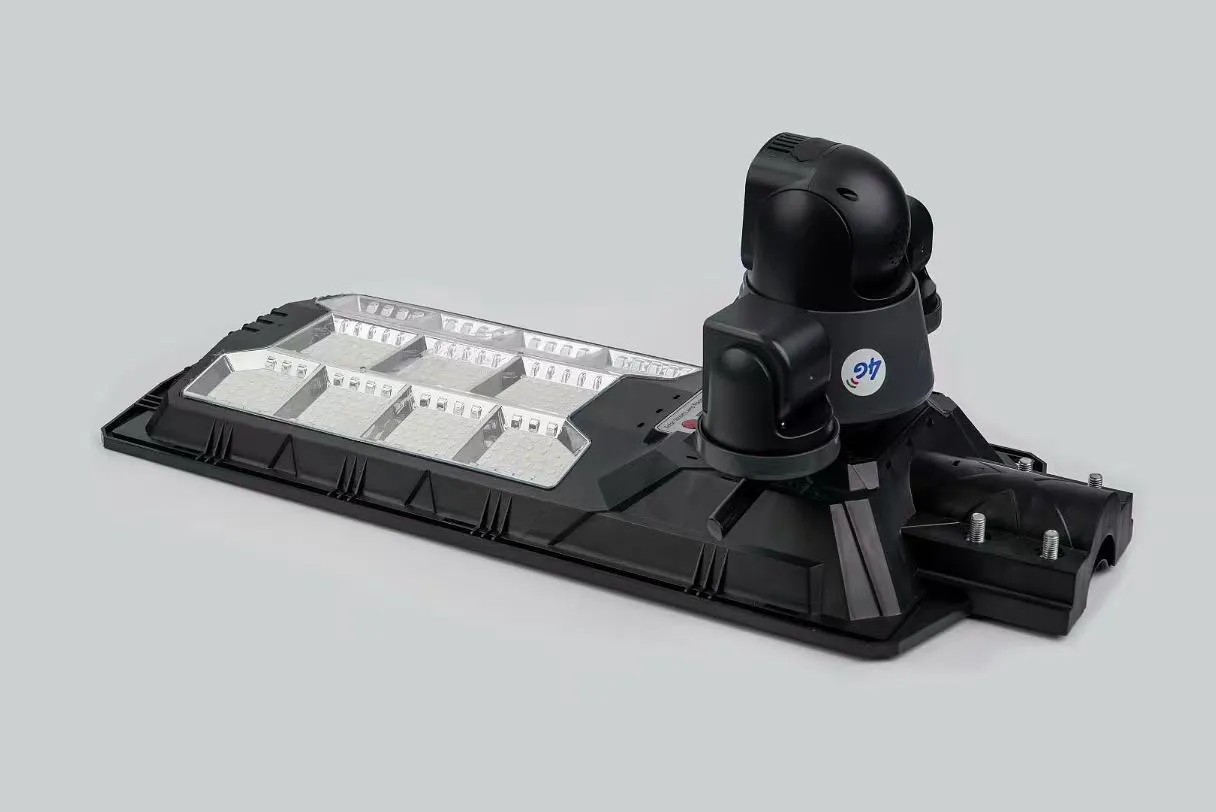
Jieyao offers integrated solar street lights with an attached camera for local entrances, pedestrian approaches and access areas. The product combines the solar panel, rechargeable battery, LED lighting, camera and the charging/lighting control needed for the selected unit. The compact black style pictured has six main optical sections, a camera below the light body and a bolted rear mounting connection.
The purchase described here is a complete solar camera-light unit, with its energy components included in the matched configuration. A steel pole, foundation, site installation, SIM/data service and recording subscription are separate scope items unless expressly added to the quotation.
Enquire about a complete solar camera light ↗Camera-light head reference: six main optical sections, attached camera housing and a rear mounting clamp.What distinguishes the pictured camera-light head?
Six main light-emitting sections
The underside is arranged around six principal optical sections within an elongated body. The camera occupies a separate position near the rear of the head. This makes the lighting surface and camera housing easy to identify without mistaking a motion sensor for the camera.
Optical section count describes the visible layout. Lamp input power, light output and beam distribution belong to the selected light-engine configuration and should be listed together in the offer.
A camera below the body
The projecting camera housing sits below the luminaire near the mounting end. Its position needs clearance from the arm and any nearby signs or attachments. Establish the view required at the proposed installed height before choosing the final mounting arrangement.
The camera’s appearance does not establish optical zoom, automatic tracking or a particular viewing app. Order the functions needed for the job against the selected camera version.
Rear mounting connection
The photograph shows a clamp with visible fasteners at the back of the head. Match the connection to the actual arm or support: outside diameter, usable engagement length, installed orientation and space for cable routing. Those dimensions also matter when the enquiry concerns a replacement head.
For an existing installation, send a straight-on photograph of the arm end and its dimensions. The luminaire mounting-interface guide explains the measurements; direct interchangeability is established by the matched connection and electrical requirements.
What is included in the solar camera-light unit?
Part of the purchase Integrated unit Additional project scope Solar lighting and camera LED light assembly with the attached camera selected for the order. Choose the required view, lighting duty and connection method together. Solar generation The photovoltaic panel belonging to the integrated solar-light configuration. A separately located PV array is a different arrangement, designed and quoted separately. Energy storage and control Rechargeable battery and matched charging/lighting control in the selected solar unit. Battery replacement arrangements and any monitoring interface are identified in the order documents. Mounting connection The rear connection supplied for the selected unit; confirm the clamp/adapter and fixing pack on the order. Steel arm, pole, anchors and foundations are separate items when required. Video connection and storage The selected camera and its delivered connection/setup information. Site internet, mobile data, cloud subscriptions and existing recording-platform integration are separately allocated. Site works Product supply does not include construction work by default. Local installation, electrical protection and commissioning responsibilities agreed for the project. On a phone, swipe the table sideways to read every column.
The panel, battery and control must belong to the same delivered solar-light configuration as the lamp and camera. Establish their actual ratings on the selected quotation and sample record; the number of visible LED sections is not a system power rating. The catalogue contains several appearances, so the order should identify the selected physical style rather than rely on a generic family name alone.
When a compact head fits—and when separate equipment is useful
One compact mounting assembly
A compact camera-light head brings the camera and luminaire together at one support point. This can simplify the visible arrangement around a local entrance or an access route. The shared position also creates a selection constraint: the light needs an appropriate aim while the camera needs an unobstructed view.
Keep the camera clear of the arm and allow access for cleaning its cover. Check that normal viewing directions are not blocked by the luminaire body. If the project requires a camera at a different height or a substantially different direction, a separate mounting position may be more practical.
The lighting pole with CCTV equipment interfaces covers the related steel-support purchase. It is the route for projects buying a pole and equipment interfaces rather than this complete solar camera-light unit.
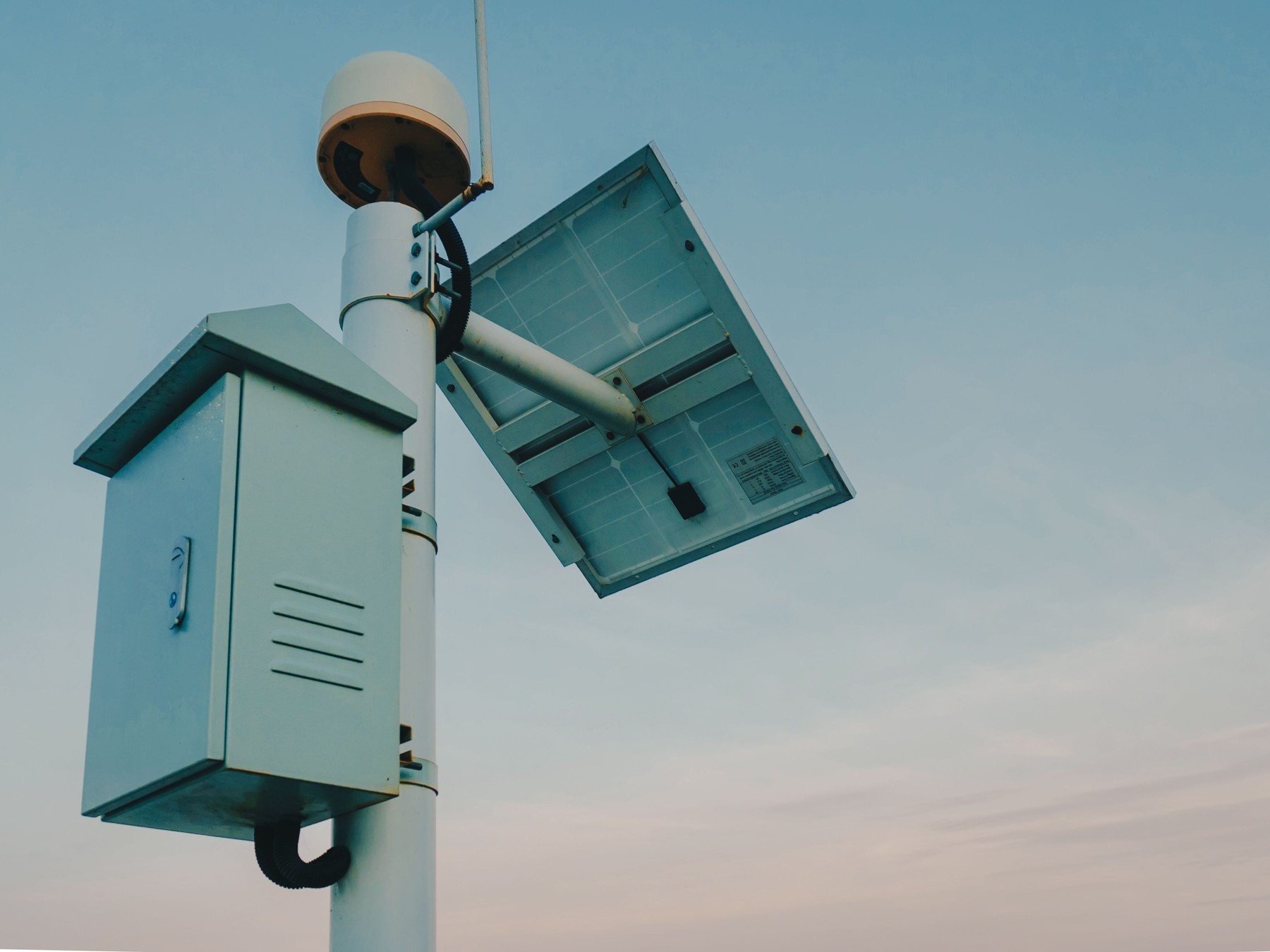
Separate-equipment reference: panel, camera, enclosure and cable routes occupy different parts of the support.The separate-equipment reference shows why a PV bracket, enclosure and camera cannot simply be added without considering the support. Each item uses mounting space and adds cables and exposed area. For that arrangement, the camera pole with panel and equipment-box supports provides a more relevant structural starting point.
Choose the camera around the view the buyer actually needs
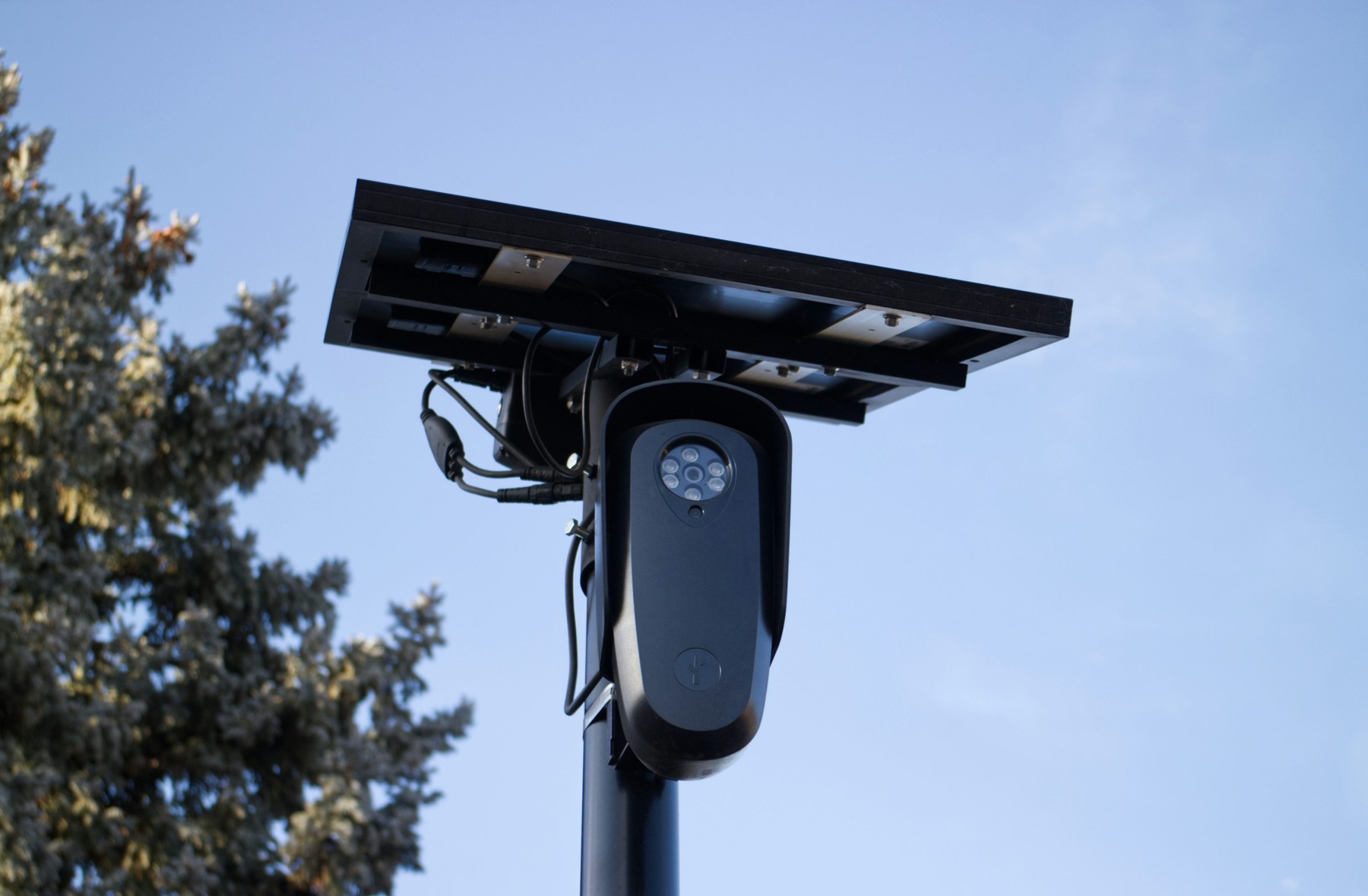
Dedicated solar-camera reference. A solar camera serves a different purpose from a road-lighting head with an attached camera.Define the target before the feature list
At an entrance, the useful image might be a person approaching a gate, activity in a small yard or a vehicle moving through a lane. These are different viewing tasks. Establish the target area, likely distance and obstructions before settling the camera version and head location.
A dedicated solar camera, such as the external reference pictured, is not automatically a street light. Likewise, an attached camera does not turn the luminaire into a licence-plate reader. Specify specialised recognition only when the chosen camera and installation are documented for it.
If the site already uses a recording platform, identify the required connection and demonstrate it with the proposed camera. App-based remote viewing, local recording and integration into an existing CCTV system are separate requirements.
Network and account handover
State whether the project uses a managed local network or an appropriate mobile connection. The selected camera version must match that choice and the destination service. Include who owns the account, storage and recurring service charges. A communications label on a product photograph does not confirm these arrangements.
Match the energy arrangement to the selected head
For a solar-powered installation, identify where the photovoltaic module, battery and charging control are housed. An integrated head and a separate-panel system have different mounting and service arrangements; the product name alone is not a wiring diagram.
Lighting duty
Record the required night hours and any staged dimming settings. If the light operates at several levels, calculate each stage using its own power and duration. Light-engine wattage should refer to the chosen electrical configuration rather than the number of visible LED sections.
Camera duty
Record when the camera must be powered and how it is expected to record or communicate. Daytime camera operation, nighttime illumination and network activity can add load outside the lamp’s lighting hours. Match the power arrangement to those duties.
The selected battery voltage, usable energy and controller limits need to be compatible with the connected equipment. Larger advertised amp-hours do not establish compatibility or reserve duration. Use the battery and solar-panel calculation guide for the method, then retain the actual component values and conditions with the project schedule.
For a new installation requiring separately positioned energy components, compare the project-configured split solar street-light package. It is a different physical arrangement from ordering an integrated solar camera-light unit for an identified support.
Apply the head where lighting and viewing needs meet
Local entrance and pedestrian approach
A shared position can serve an entrance area where the light and camera need to face broadly the same part of the site. Keep the approach visible and check the panel’s solar access if energy collection is integrated with the head. Separate extra lighting points may still be needed along the walking route.
Yard gate and access lane
Check the camera view with the normal gate position, parked vehicles and nearby signs. Vehicle headlights and bright surfaces can change the image. Select the head position and light aim together so the camera does not look directly into the luminaire.
Check the night view at the actual lighting settings, including the lower-output stage. Camera image quality depends on illumination and exposure as well as resolution. Axis’s lighting-for-network-video guidance (https://whitepapers.axis.com/en-us/lighting-for-network-video) explains uneven illumination and glare; its IR reflection guidance (https://whitepapers.axis.com/en-us/ir-reflections-in-dome-cameras) explains how nearby surfaces and dirt can affect infrared-equipped cameras. These principles inform the installation review without assigning another manufacturer’s performance to this head.
Assembly, inspection and delivery should identify the selected head
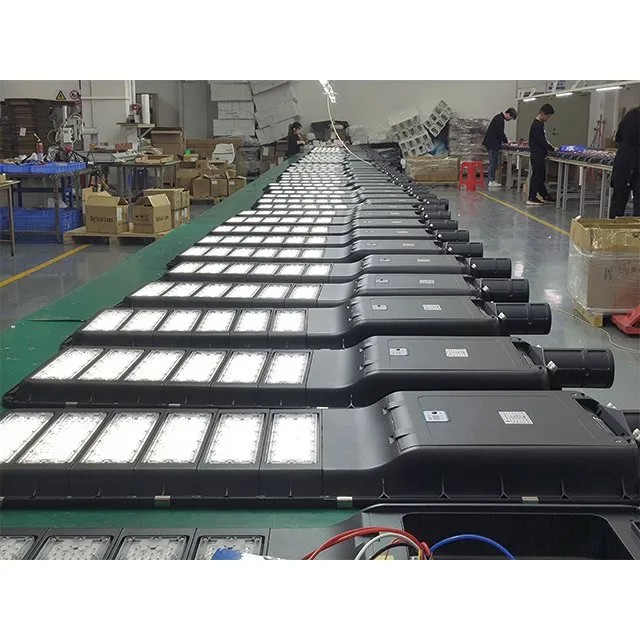
LED-head assembly reference. Camera fitting and video-function checks are additional to the light-head assembly work.Settle the configuration before repeating it
Use the agreed sample or configuration schedule to identify the head body, camera, mounting connection and electrical arrangement. Keep those identifiers on the production order and inspection record, particularly if a camera or driver is changed between sampling and a larger order.
The assembly reference shows light-head work on a bench, not a completed camera-head test. The camera fitting, its cable route and the requested video functions require their own checks after the relevant assembly work.
For receiving inspection, ask for a clear delivered-parts list and a photograph of the actual selected assembly. Those are more useful than a mixed gallery of similar-looking heads with different cameras or mounting hardware.
Inspection point Check against the selected order Mechanical fit Correct head and clamp/adapter; supplied fixings identified; cable space and camera clearance checked. Electrical identification The actual input, power connections and any energy components match the delivered configuration. Lighting function Switching and any specified dimming programme demonstrated on the supplied setup. Camera function The agreed viewing, recording and connection functions demonstrated with the identified camera. Packing Optical surfaces and projecting camera parts protected; mounting pieces counted and matched to their head. Handover Connection information, setup instructions, account responsibilities and agreed records supplied. On a phone, swipe the table sideways to read every column.
Specify any model-linked reports required by the order. A company certificate, a photograph of an assembly bench or a report for a different luminaire does not establish this selected head’s electrical, enclosure or video performance.
Questions about the integrated solar camera light
Does the unit include the panel and battery?
Yes. The integrated solar-light supply combines the LED lighting and attached camera with its photovoltaic panel, rechargeable battery and matched charging/lighting control. Their actual ratings and arrangement must identify the selected unit on the quotation and sample record.
Does it include a steel pole?
A steel pole, arm, anchors and foundations are separate from the integrated light unit unless listed in the quotation. When a new pole is required, the complete assembly and exposed equipment must be included in the support design.
Can I use it on an existing pole?
An existing support can be considered after checking the mechanical connection, usable arm length, cable arrangements, condition and equipment loading. Similar appearance alone does not establish a direct replacement.
Which camera connection should I order?
Choose the camera version around the available site network and the required viewing or recording method. Do not select from a communication sticker alone: the delivered version and its setup information need to match the ordered service and destination network.
Will the light and camera run for the same hours?
They may have different duties. State the required lighting schedule and whether the camera must also run or record during daylight. Size the selected energy arrangement for both loads; no universal reserve duration is stated here.
Tell us what the installation needs to do
Send the installation location, required lighting hours, camera viewing task, quantity and mounting details. State whether the order needs the integrated solar camera-light unit alone or also a steel pole and project accessories. The quotation should identify one matched unit configuration and clearly allocate network, recording and site-work responsibilities.
Request a matched configuration ↗ -
-