

 English
 Español
 Bahasa Indonesia
 Français


- Product details
-
In brief: A highway lighting gantry is a project-engineered support structure, not a standard pole chosen from a height list. The enquiry should define the clear span, support locations, luminaire positions and loads, maintenance method, site exposure and governing design requirements.
Lighting gantry versus sign-support gantry
This page is about a structure whose defined purpose is to carry roadway luminaires. A sign-support gantry has a different equipment arrangement, panel area, access and load schedule. Do not use a lighting-gantry enquiry as a substitute for the separate road-sign support category, or combine the two scopes without an approved interface drawing.
Likewise, a single-arm road pole, high-mast system and overhead lighting gantry are not interchangeable products. The engineer of record selects the structure concept after reviewing the roadway layout, clearance envelope, maintenance plan and project-specific design actions.

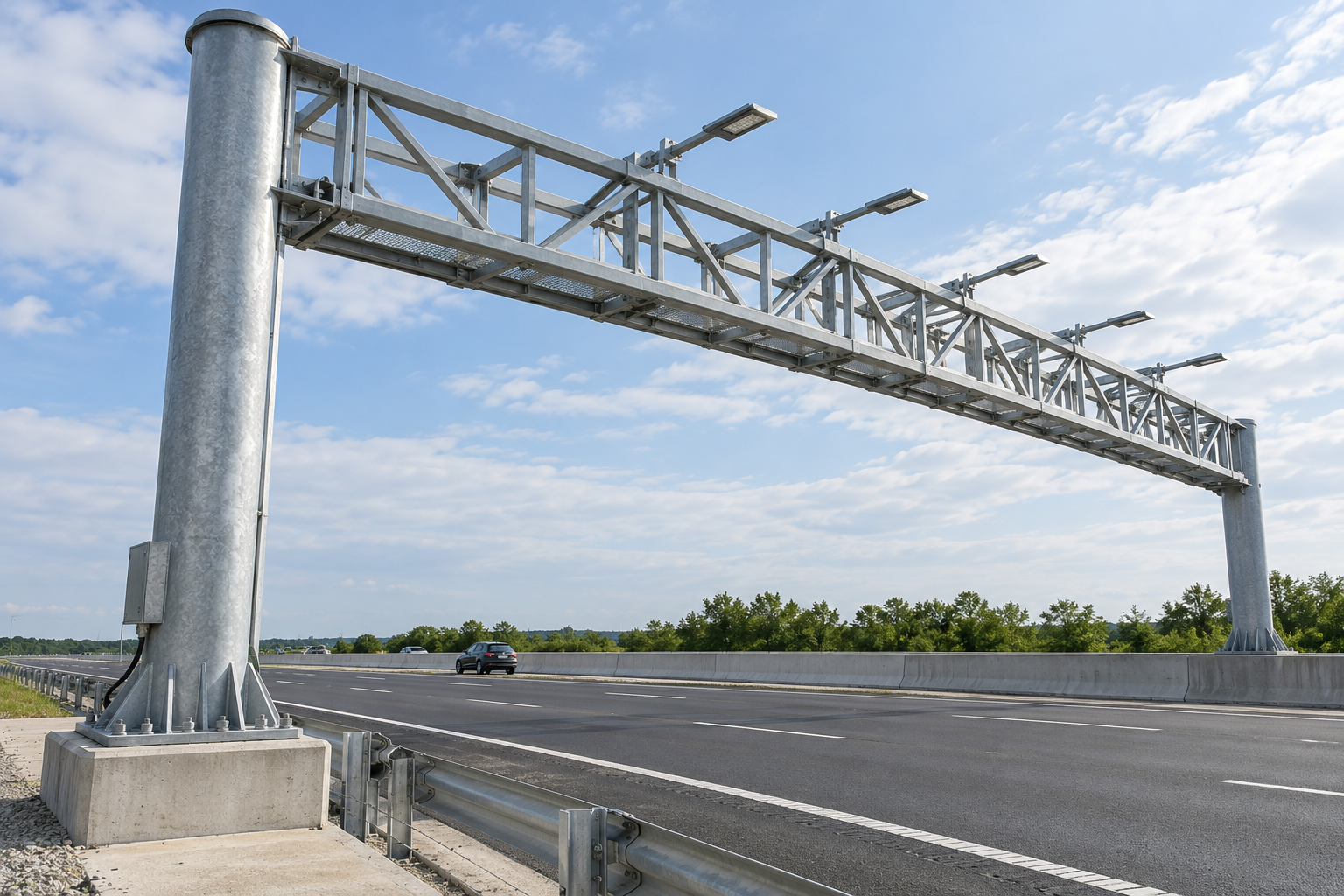
Overhead lighting-support concept; structural details shown are illustrative, not an approved design.
Inputs that control the gantry configuration
Input Why it changes the structure RFQ attachment Clear span and lane layout Determines the geometry and support arrangement to be engineered. Road plan, cross-section, lane widths and clearance envelope. Luminaire count and locations Defines equipment positions, orientation and cable/connection points. Lighting schedule, luminaire drawings and mounting interface. Structural design actions Loads, combinations and acceptance factors must come from the governing project design basis. Engineer-issued criteria and applicable standard/code list. Foundation/support interface Base plates, anchor groups or alternative supports must match approved structural details. Support and foundation drawings, material and anchor requirements. Access and maintenance Inspection and replacement method affects safe access provisions and clearance planning. Maintenance strategy, lane-closure assumptions and access constraints. Environment and finish Exposure and project documents guide material/finish specification. Site conditions, finish schedule and requested inspection records. What a coordinated supply package can include
Structure drawings
General arrangement, member/connection details, support interface and any design calculations included in the agreed scope.
Lighting interface
Luminaire positions, mounting details, electrical routing and model-specific documents needed for the tender review.
Manufacturing records
Inspection and material documentation only to the extent agreed in the project specification and quotation.
Jieyao structural and roadway coordination
Jieyao Lighting manufactures roadway lighting poles and related steel structures. For a lighting gantry enquiry, provide a clear scope and engineer-approved design basis so the structural and lighting interfaces can be reviewed. No span, wind rating, steel grade, coating thickness or load capacity is asserted on this page; these values belong to the approved project design and verified quotation.
For adjacent product categories, view road-sign support poles and galvanized steel light poles. Those pages address different support intents.
Highway lighting gantry RFQ checklist
- Road authority, country, project location and governing design codes.
- Plan/profile/cross-section, clear span, lane count, clearance envelope and support limits.
- Luminaire schedule, equipment weights, positions, mounting and electrical interfaces.
- Engineer-issued structural design actions, foundation details and acceptance requirements.
- Site exposure, finish/coating schedule, inspection and documentation requirements.
- Transport limits, assembly/erection method, access and programme dates.
Start with the design basis.Send approved drawings and the requested supply scope via the Jieyao contact page. A quotation should reference the same drawing revision and criteria.

Lighting-support gantry context; span, support locations and structural design remain project-specific.
Engineering and production handoff
A successful gantry order depends on a controlled technical handoff. The inquiry should identify who provides the structural design, who checks the connection to the foundation or supporting structure, and which party approves the luminaire and cable details. If design calculations are within the supplier's contracted scope, name the governing codes, design actions, combinations, material requirements and calculation deliverables in the tender. If those items remain with the customer's engineer, supply the approved criteria and interface drawing before fabrication.
At drawing approval, compare the general arrangement with the road clearance envelope and construction sequence. Confirm whether the gantry ships as one assembly or in transportable segments, how member identification will be marked and how bolted or welded field connections are inspected. Any change in luminaire count, bracket position or cable route can affect the final design and should be recorded in the revision history.
For acceptance, prepare a document index that links material records, inspection points, coating/finish requirements and final drawings to the purchase order. The exact inspection level and certificate package must follow the contract; a generic statement that a product is “compliant” is not a substitute for the requested evidence.
Gate Minimum coordination record RFQ review Scope matrix, design basis, supplied loads and missing-information register. Drawing approval Signed general arrangement, support interface and lighting equipment locations. Production release Approved material/finish schedule and inspection/test requirements. Dispatch/installation Marking, packing, lifting/assembly notes and controlled as-built changes. Protect the design through fabrication and site delivery
Fabrication drawings should be reviewed against the approved structural calculations and the final roadway layout before material is cut. Identify connection details, corrosion-protection requirements, weld and bolt inspection records, lifting points, transport splits and site assembly sequence where these are required by the contract. Any change in equipment weight, bracket location or opening can affect the accepted design and should be managed through a documented revision rather than an informal site adjustment.
Transport and erection planning also matter. Confirm route restrictions, maximum delivery lengths, lifting access, temporary traffic management and the order in which columns and beams will be installed. Define who surveys foundations, verifies anchor positions, inspects completed connections and signs off the electrical installation. A clear responsibility matrix prevents structural completion, luminaire installation and commissioning from being treated as one undefined handover.
Scope item Clarification for the RFQ Typical interface Structure Span, support arrangement, design actions and approved standard. Structural engineer and road authority. Equipment Exact luminaires and any additional mounted devices. Lighting supplier and other equipment vendors. Fabrication Drawings, material records, connection checks and finish requirements. Fabricator and inspector. Site work Foundation survey, lifting plan, traffic control and commissioning. Contractor, installer and asset owner. 
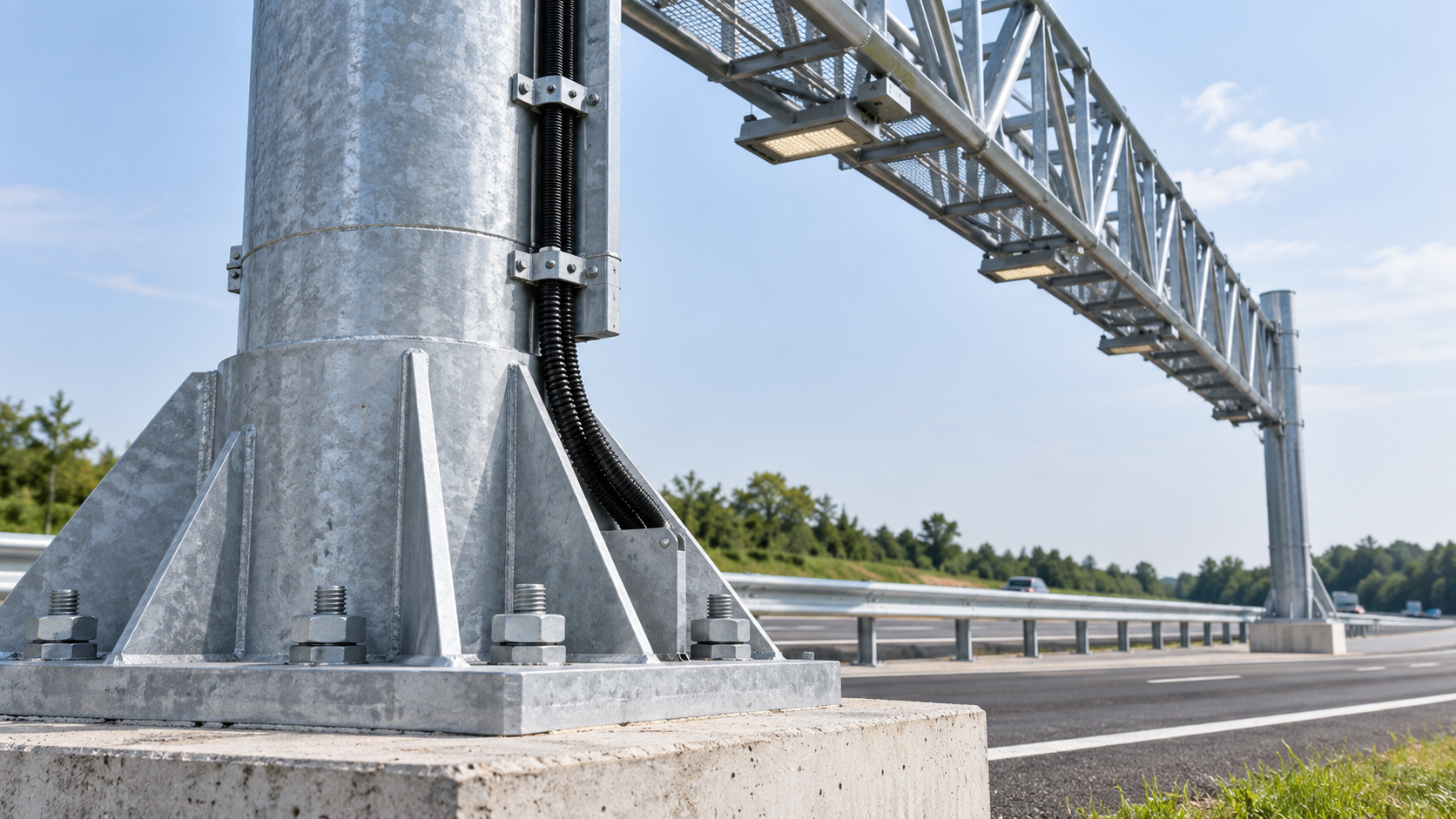
Base and luminaire interfaces shown for coordination discussion, not as an approved Jieyao design.
Frequently asked questions
Does a highway lighting gantry carry road signs?
This page covers lighting-support structures. Sign panels introduce a different load and interface schedule; include them only where the engineer and quotation explicitly define a combined scope.
Can you quote a span from a lane count alone?
No. The cross-section, support locations, clearance envelope and structural design basis are required to define the configuration.
Can a standard street-light pole replace a gantry?
Only the project designer can approve a different support concept. Compare coverage, clearances, structural actions, access and authority requirements.
Are the images verified gantry project photos?
No. The overhead gantry image is an illustrative application scene. The second image shows related roadway product imagery, not an approved gantry installation.
-
-


