
Home > Products > High Mast Light

High Mast Lighting Poles for Mines and Stockyards

short introduction:Project-configured high mast poles for mines and stockyards. Compare fixed radial heads, directional crossarms, lowering packages and access-platform arrangements, with clearly itemised steelwork, lighting, accessory and delivery scope.
  • Product details
  • STEEL MASTS · FLOODLIGHT HEADS · SERVICE ACCESS

    High Mast Lighting Poles for Mines and Stockyards

    Choose the mast around your material piles, working equipment and maintenance plan.

    Jieyao supplies project-configured steel high masts and floodlight supports for outdoor stockyards, mine service areas and material-handling sites. Compare circular heads, directional arrangements, lowering carriages and fixed access platforms before choosing the complete package.

    Four quotation starting pointsSteelwork or coordinated assemblySite-specific configuration
    Product focusPermanent area-lighting supportsPurchase scopePole, headframe and named accessories
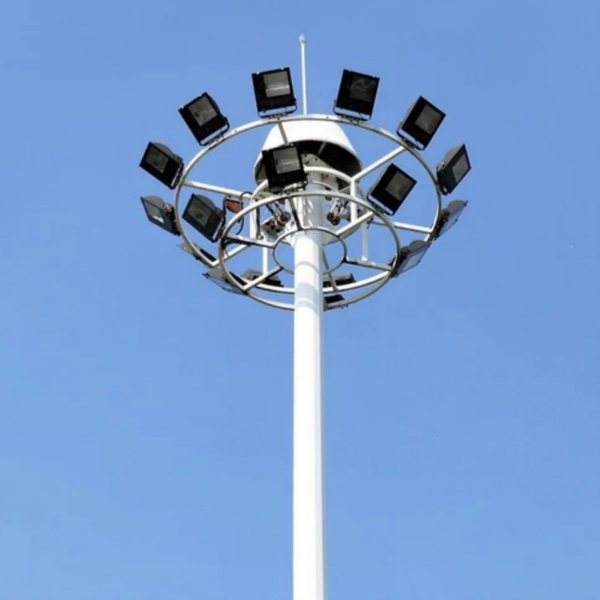
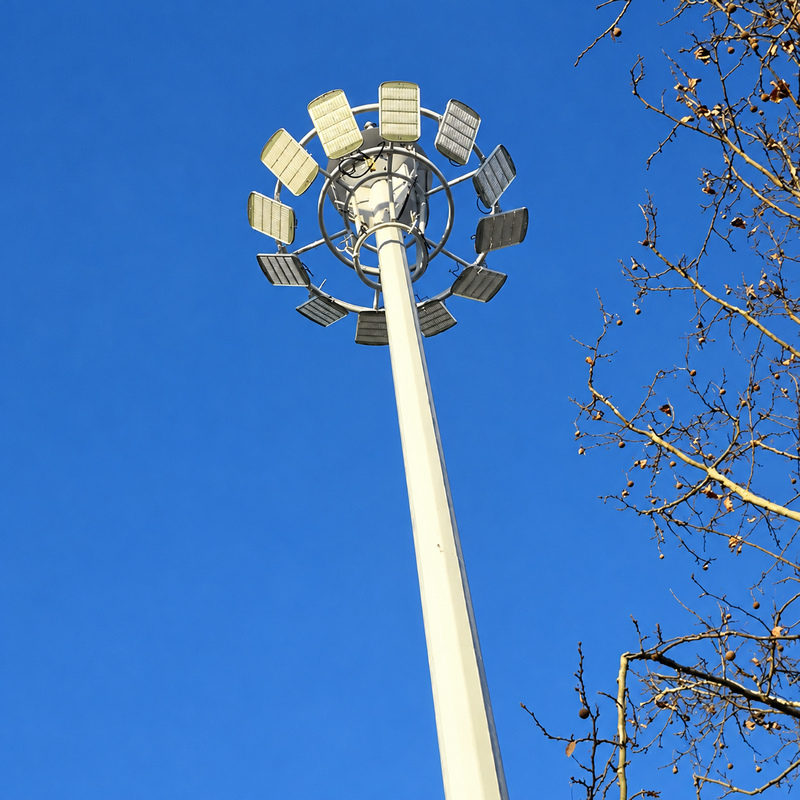
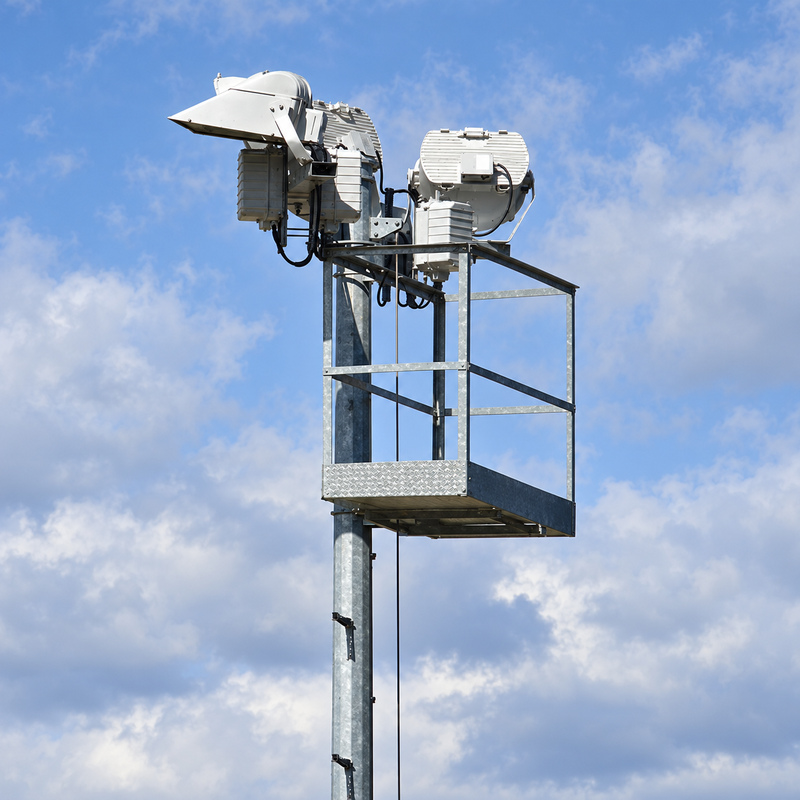
    Circular floodlight crown on a galvanized high mast
    PRODUCT REFERENCECircular floodlight head & galvanized shaft

    01 / PRODUCT PACKAGES

    Choose a package to start your quotation.

    Compare the steelwork, maintenance equipment and accessories you want supplied. Each option below gives you a clear starting scope for an itemised project quotation.

    Real circular floodlight head on a galvanized steel lighting mastOPTION 01

    OPEN-AREA STEELWORK

    Fixed radial-head mast

    A steel mast with a fixed circular lighting head, ready to coordinate with the selected floodlights. Discuss this package where working areas extend around the support.

    Scope to quote

    • Segmented steel shaft and base flange
    • Fixed circular headframe and fixture brackets
    • Specified section connections and fasteners
    Separately list
    LED floodlights, anchor assembly, cables and control cabinet.
    Send with enquiry
    Yard plan, top-load schedule and planned elevated-service access.
    Discuss forOpen stockyards and multiple working directions
    Request this package ↗
    Real fabricated lighting crossarm with adjustable floodlight mounting positionsOPTION 02

    YARD-EDGE STEELWORK

    Directional crossarm mast

    A mast and directional crossarm package for a defined work front. The bracket positions are coordinated with fixture aiming and the edge of the operating area.

    Scope to quote

    • Steel mast with the selected head connection
    • Crossarm and adjustable fixture mounting brackets
    • Connection details matched to the fixture schedule
    Separately list
    Floodlights, cable routing accessories, anchor assembly and finish colour.
    Send with enquiry
    Loading-front layout, approach directions and fixture bracket data.
    Discuss forLoading fronts, stockpile edges and service lanes
    Request this package ↗
    Real high mast lowering carriage with floodlights and guide componentsOPTION 03

    GROUND-LEVEL FIXTURE SERVICE

    Mast with lowering package

    A coordinated mast and movable lighting carrier for a planned ground-level service position. The drive and suspension are quoted as a matched package.

    Scope to quote

    • Steel mast and lowering light carrier
    • Matched head, suspension and guide components
    • Specified drive and locking arrangement
    Separately list
    Luminaires, electrical supply/control items and the anchor assembly.
    Send with enquiry
    Service-zone dimensions, power supply and operating requirements.
    Discuss forSites reserving clear space for lowering and maintenance
    Request this package ↗
    Real fixed floodlight head with ladder and guarded service platformOPTION 04

    FIXED ELEVATED ACCESS

    Mast with access platform

    A fixed-head steel mast coordinated with a ladder and working platform. Select the access arrangement with the site operator before finalizing the mast.

    Scope to quote

    • Steel mast and fixed floodlight headframe
    • Specified ladder and working platform
    • Platform connections and agreed access interfaces
    Separately list
    Luminaires, specified access-protection equipment and anchor components.
    Send with enquiry
    Maintenance tasks, access requirements and rescue arrangements.
    Discuss forSites with an agreed permanent elevated-access method
    Request this package ↗

    The package names describe supply arrangements, not stocked model numbers. Photographs show the head and access concepts; pictured luminaires are examples. The quotation and order drawing confirm the actual dimensions, equipment, inclusions and exclusions.

    A QUICK WAY TO NARROW THE CHOICE

    Match the arrangement to the work.

    A circular head can also be fixed or lowered. Keep light distribution and maintenance access as separate decisions.

    01 / COVERAGE

    Several working directions?

    Start with a circular or multi-direction head, then check the sightlines around the largest expected piles.

    02 / POSITION

    Mast at the yard edge?

    Discuss a directional arrangement that serves the work front without aiming unnecessary light beyond the boundary.

    03 / MAINTENANCE

    Service lights from the ground?

    Compare a complete lowering package with the access equipment and downtime needed for a fixed head.

    02 / PRODUCT DETAILS

    Look beyond the pole height.

    The shaft, headframe, cables and base connection need to work as one assembly. These are the details worth confirming before an order.
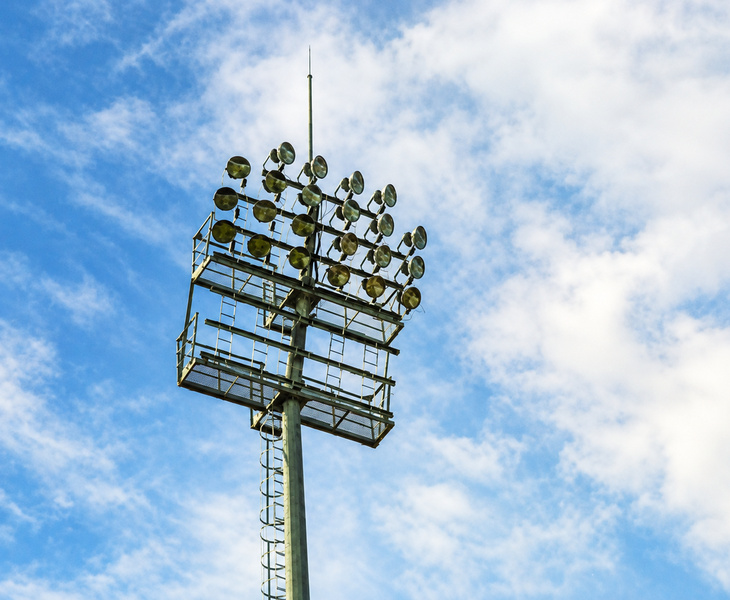
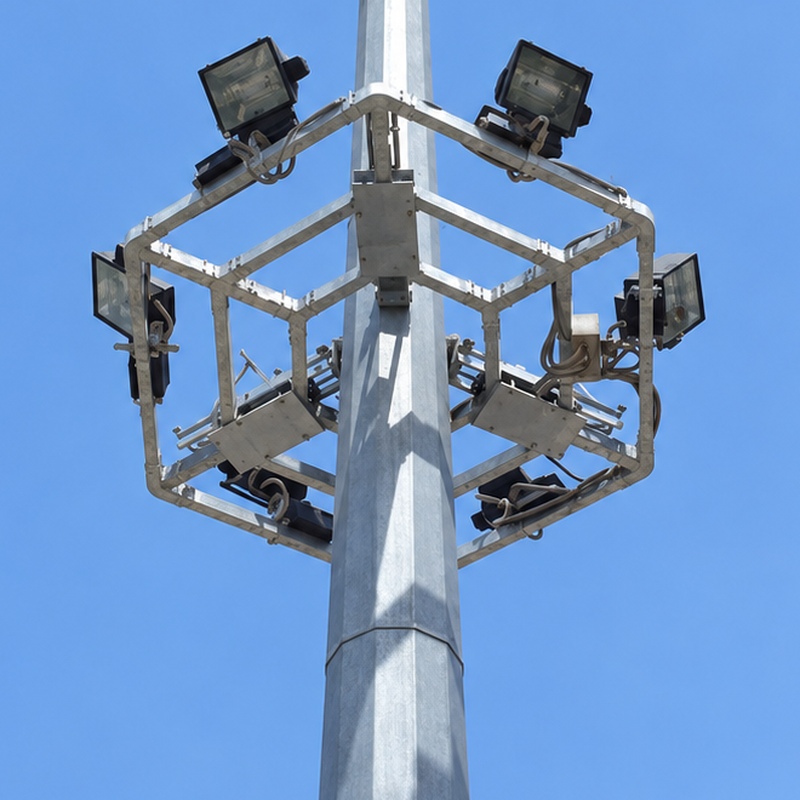
    Fixed floodlight array with braced steel headframe and service platform
    Braced steel headframe, fixture positions and working-platform arrangement.
    A

    Headframe and floodlight brackets

    Bracket spacing, tilt adjustment and cable routing affect how easily the luminaires can be installed, aimed and replaced. A neat-looking head is only useful if it accepts the actual equipment.

    • Match mounting holes to the selected fixture bracket.
    • Include fixture mass, projected area and driver position in the top-load schedule.
    • Keep cables clear of adjustment points and moving carrier parts.

    For your enquiry: send the fixture datasheet or ask for a coordinated light-and-mast package.
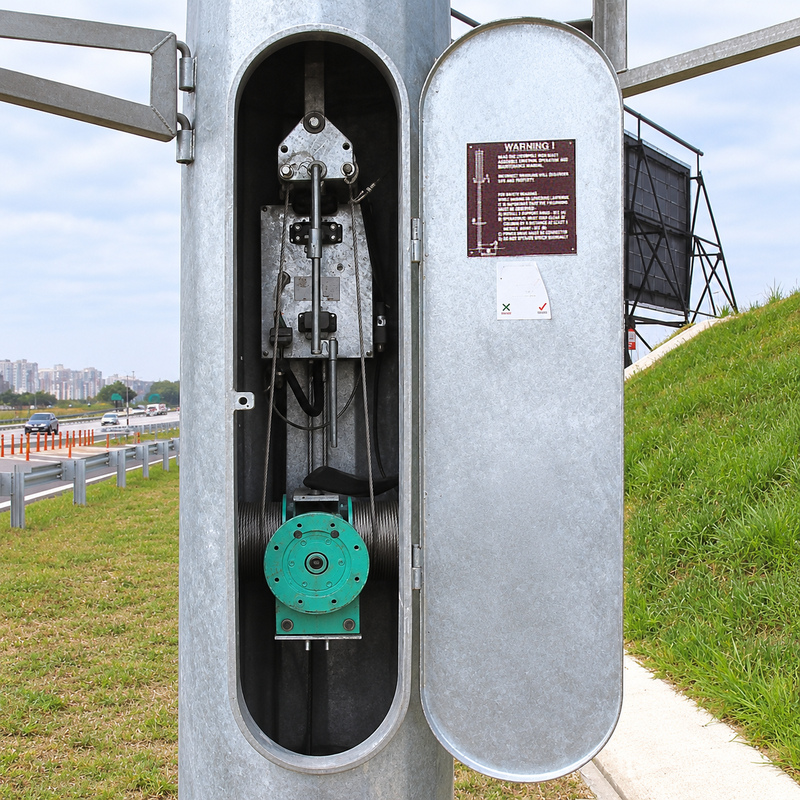
    Winch, wire ropes and operating hardware inside a high mast access door
    Drive and suspension equipment inside a high-mast access opening.
    B

    Lowering equipment and base access

    A lowering mast is a matched mechanical and electrical assembly. Carrier guides, suspension ropes, locking arrangements and the drive must be specified together, with access to the operating equipment.

    • Agree the service position and the clear working area around the base.
    • Identify the operating power, electrical isolation and cable management.
    • Include the selected system’s inspection and operating instructions.

    Practical benefit: plan fixture service without treating a truck lane as an improvised maintenance bay.
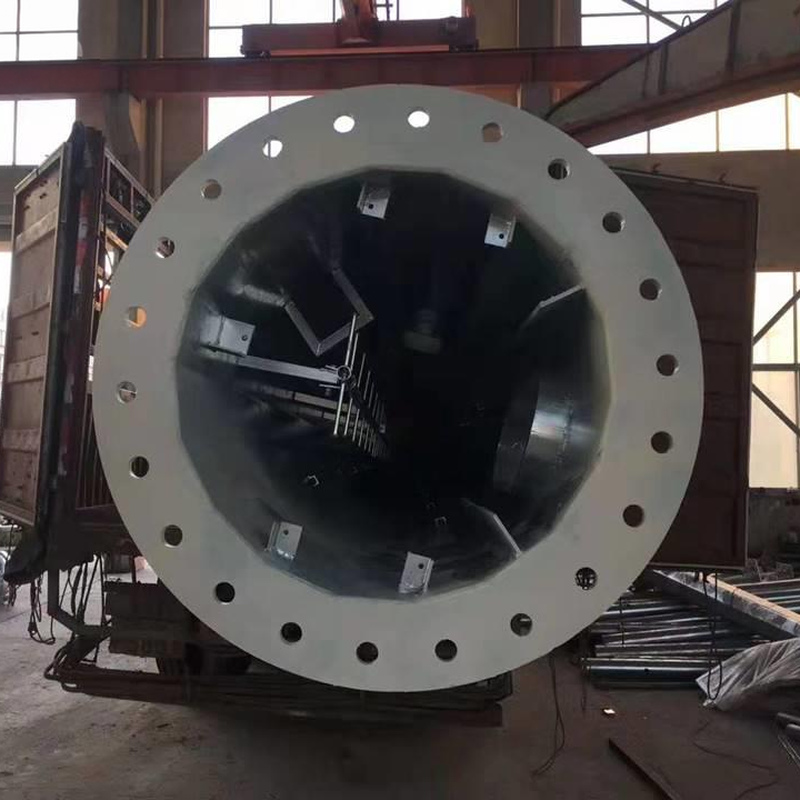
    Large steel mast base flange and bolt-hole pattern viewed before installation
    Base flange and hole pattern: the interface between mast and civil design.
    C

    Segmented shaft and anchor interface

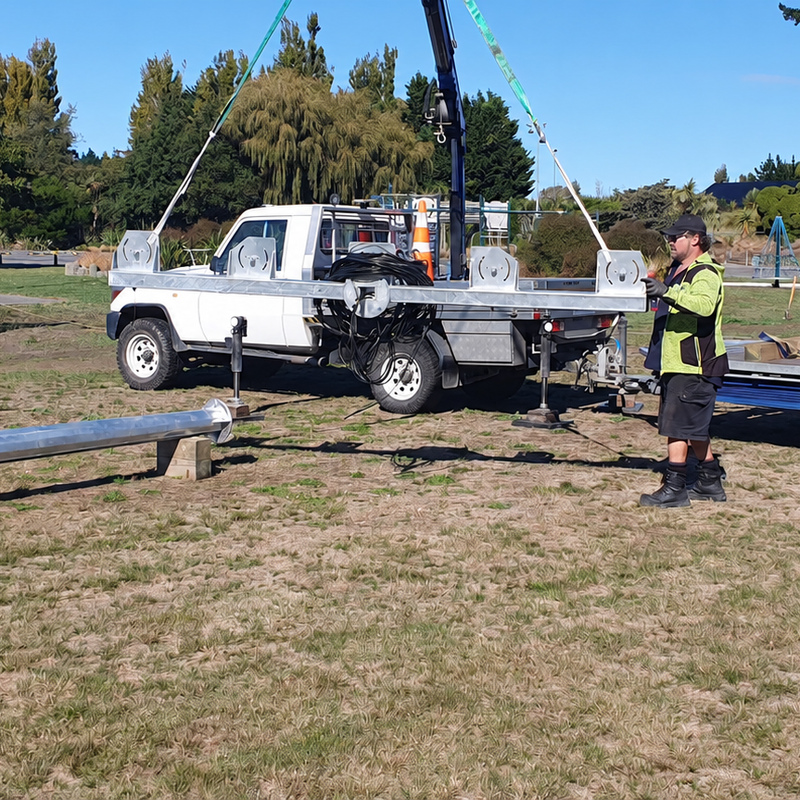
    Transport length, section joints and the anchor layout influence delivery and site assembly. The foundation designer needs the selected mast’s base details and design reactions, rather than a foundation size copied from another project.

    • Confirm section lengths and the released joint details.
    • Coordinate bolt pattern, orientation, cable entries and foundation level.
    • Check that lifting and unloading arrangements suit the actual components.

    For your enquiry: include site location, design criteria and any existing foundation drawing.

    03 / APPLICATIONS

    Different yards need different lighting positions.

    Material height and moving machinery can change the useful light on the ground. Show us how the site works, not just its total area.

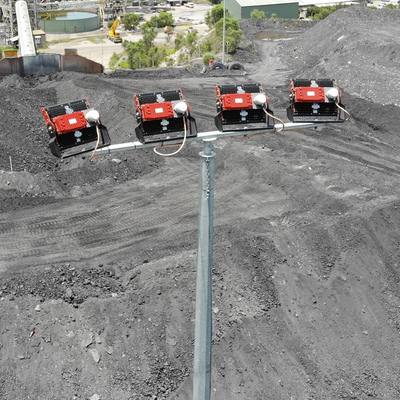
    Four directional floodlights above an outdoor bulk-material stockpile
    BULK MATERIALS

    Stockpiles and loading fronts

    Review the largest pile profiles and the working sides used by loaders. Consider lighting from more than one direction where a single mast would leave the far side in shadow.

    Key input: pile heights and loader routes
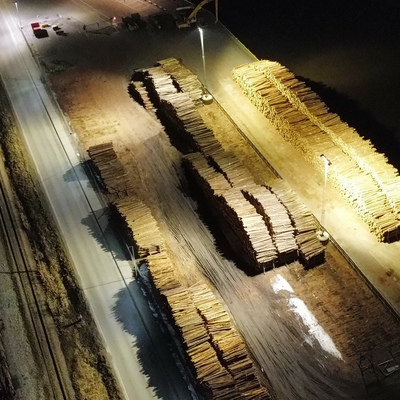
    High mast lighting between stacked timber and stockyard travel lanes
    STACKED STORAGE

    Timber and outdoor stockyards

    Lighting between tall stacks needs attention to cross-aisles, end-of-row movements and pedestrian crossings. Position masts where vehicles can circulate and maintenance space remains available.

    Key input: stack rows and travel lanes
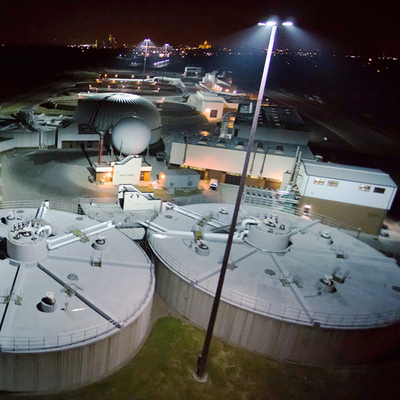
    Elevated floodlights serving an outdoor process plant at night
    MINE-SITE SUPPORT AREAS

    Service yards and process areas

    Buildings, tanks and plant can interrupt otherwise open-area coverage. Combine the mast layout with local task lighting where equipment blocks the view of a working surface.

    Key input: equipment elevations and service tasks

    Application reference photographs illustrate operating settings, not identified Jieyao mine installations. Hazardous-area equipment, where required by the site classification, needs separate selection.

    04 / SUPPLY SCOPE & CONFIGURATION

    See what is supplied, what is optional and what happens on site.

    Ask for line items for the mast, head, lighting equipment and accessories. This keeps a pole-only price comparable with a complete equipment package.

    01

    Core package

    The selected steel shaft and headframe, plus the lowering or fixed-access equipment named for that package. State the connection fasteners and finish in the scope.

    Confirm in the equipment schedule
    02

    Separately priced items

    Luminaires, anchors, cabinets, cables and special accessories are included only when identified in the quotation. Customer-supplied fixtures need mounting and load data.

    Request an itemised quotation
    03

    Site responsibilities

    Foundation design and construction, unloading, erection, wiring and commissioning need named responsible parties. They do not follow automatically from buying the mast.

    Agree before the order

    Configuration choices for your order

    On a small screen, swipe the table or focus it and use the arrow keys.

    Part of the packageWhat can be configuredWhat to confirm
    Mast shaftHeight, section arrangement, steel specification and connection detailsSite design criteria, top loads and released structural drawing
    Headframe & bracketsCircular or directional layout; fixed or lowering carrierFixture bracket pattern, mass, projected area and aiming access
    LuminairesSelected model, quantity, wattage, optics and driver arrangementLighting calculation, equipment datasheets and inclusion in the price
    Maintenance accessLowering package or agreed fixed-head accessService envelope, operator requirements and protection arrangements
    Surface finishHot-dip galvanizing; additional coating where specifiedExposure conditions, coating specification, colour and inspection scope
    Anchors & electrical itemsNamed anchor components, cables, cabinet and accessoriesExact quantities, interfaces and any items supplied by others
    CUSTOMISE THE CONFIGURATION

    Choose the details that change the package.

    Coordinate these choices before the drawing is released. A colour or fixture change can also affect fabrication, electrical routing and the delivery schedule.

    • Head layoutCircular or directional fixture positions; mounting and aiming clearances.
    • MaintenanceFixed access or a matched lowering arrangement and service envelope.
    • Surface systemGalvanizing and any specified additional coating; colour and acceptance criteria.
    • Delivery arrangementSection lengths, component identification and destination handling constraints.
    A REAL SHAFT REFERENCE

    15 m floodlight-pole configuration

    Jieyao’s archived factory inspection record for JYZMTGD-5688 provides a concrete steel-pole reference. Its specified shaft and flange details are shown here to make the configuration discussion more useful.

    This is a historical 15 m sample, not a certified mining assembly or a design for every site. The current mast and head are selected for the order.

    Nominal height
    15 m
    Top / base shaft diameters
    120 / 280 mm
    Section wall thicknesses
    5.0 / 6.0 mm
    Base plate / bolt circle
    25 mm / Ø550 mm
    Record
    Factory No. (2026) 219 · 1 July 2026

    Have a yard layout but no final mast schedule?

    Send the working-area plan, pile profiles and preferred maintenance method to start the configuration review.

    Discuss your layout↗

    05 / FABRICATION & CHECKS

    From steel sections to a coordinated shipment.

    The order drawing and equipment schedule guide fabrication, fit checks and the selected finish. The process photographs below illustrate the work; the agreed inspection records identify the actual supplied batch.

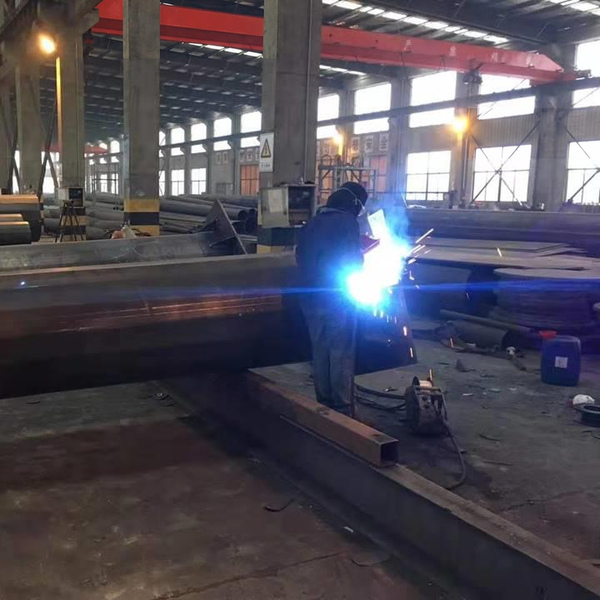
    Worker welding a large steel pole section in a workshop
    01 / SHAFT FABRICATION

    Form and join the steelwork

    Manufacture the sections to the released drawing and review the welded areas. Confirm material identity, section dimensions and the agreed weld-inspection scope.

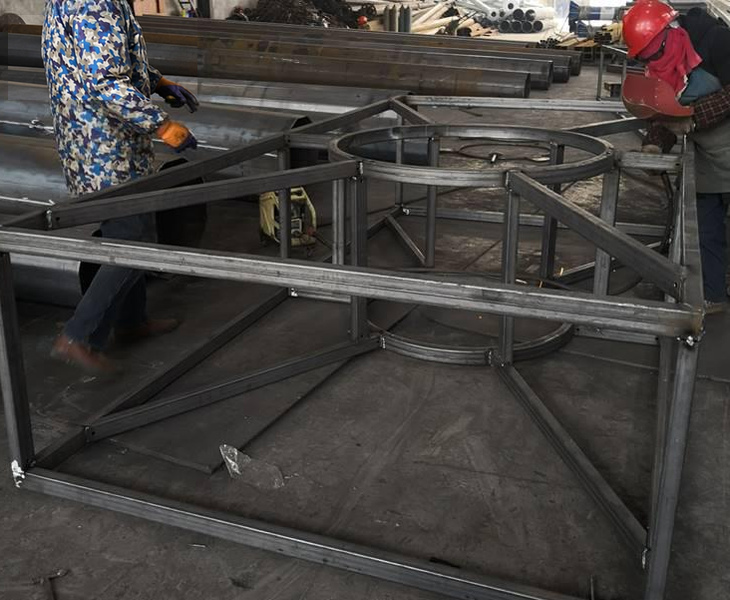
    Workers fabricating a circular steel lighting headframe
    02 / HEADFRAME FIT

    Check the mounting arrangement

    Review bracket locations, connections and alignment against the fixture and carrier arrangement. Confirm access for fasteners and cable routing before dispatch.

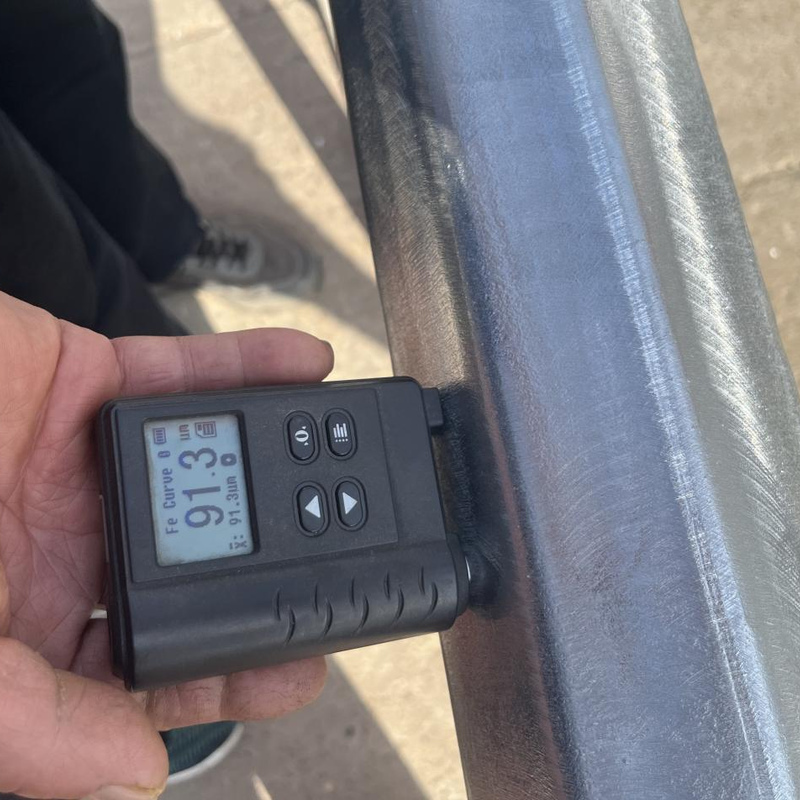
    Coating-thickness gauge applied to the surface of a galvanized steel pole
    03 / SURFACE FINISH

    Inspect the selected coating

    Record the coating type, measurement locations and acceptance basis. Zinc thickness and an additional paint or powder layer are different measurements.

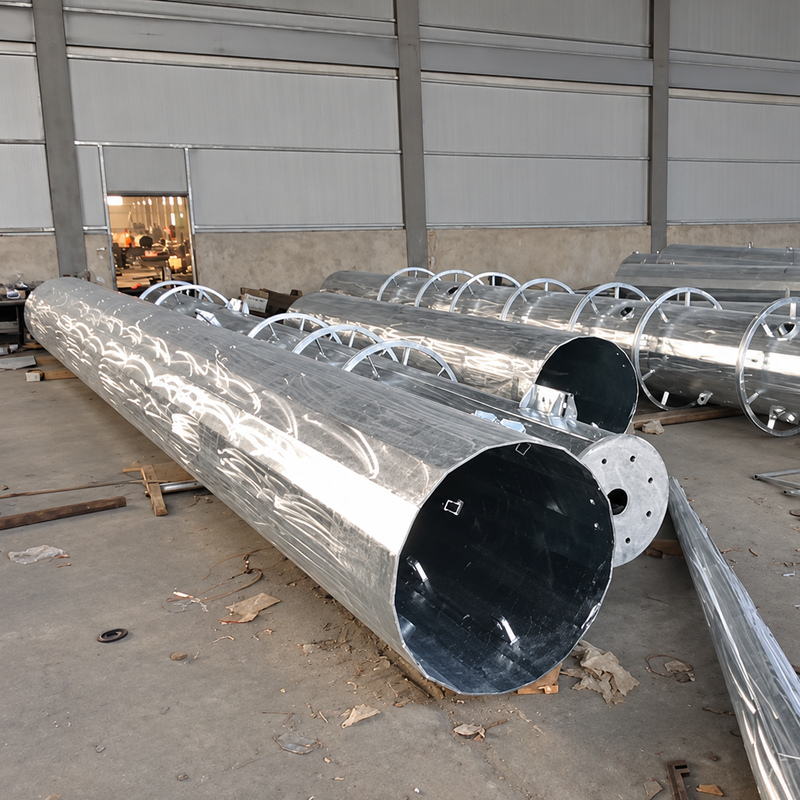
    Wrapped galvanized mast sections with lighting carriages arranged in a workshop
    04 / RELEASE & PROTECT

    Identify the shipment components

    Match section marks and accessories to the packing list. Protect finished surfaces, open ends and vulnerable connections for the agreed transport route.

    06 / FROM ORDER TO DELIVERY

    A clear route from the approved drawing to site receipt.

    Agree the configuration first, then carry the same component schedule through fabrication, checks, packing and dispatch.
    1. 01

      Define the order

      Package, quantity, location, loads and electrical scope.

    2. 02

      Release drawings

      Shaft, head, anchors and equipment interfaces.

    3. 03

      Build and check

      Specified material, fit, finish and system checks.

    4. 04

      Pack and dispatch

      Marked components, packing list and agreed shipping terms.

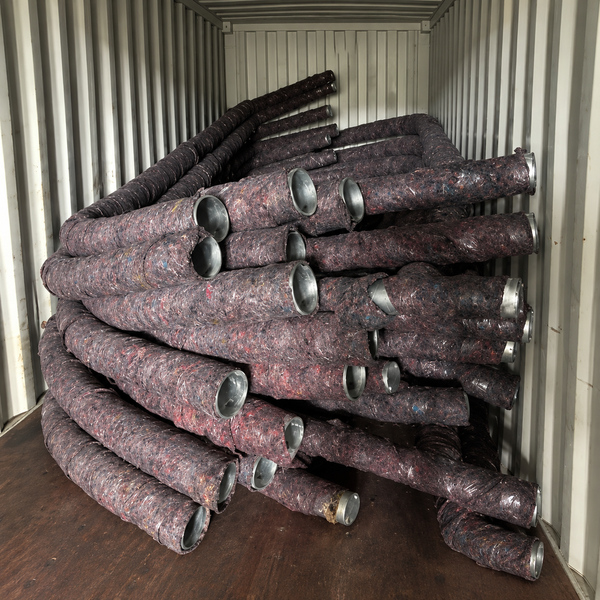
    Protected tubular steel components packed in a shipping container
    Protected steel components in a container. The loading plan follows the actual section sizes and shipment.

    Make receiving the equipment straightforward.

    Section lengths, component weights and the available unloading equipment affect how the mast can be delivered and handled. Confirm access at the destination before the packing arrangement is finalized.

    A

    Component identificationMatch shaft section marks, headframe parts and separately packed accessories to the packing list.

    B

    Document packageAgree the order drawings, specified inspection records and operating instructions for included mechanical and electrical equipment.

    C

    Surface and connection protectionSpecify protection for finished steel, component ends and vulnerable connections for the agreed route and handling method.

    Lead time

    Confirm after the quantity, drawing, finish and equipment scope are agreed. Special accessories and document requirements should be stated at enquiry stage.

    Freight and unloading

    Ask the quotation to name the shipping basis and destination. Identify who handles inland transport, unloading, lifting equipment and storage at site.

    07 / BUYER QUESTIONS

    Before you choose a mast.

    These are the details that help turn a general product enquiry into a comparable quotation.

    Send your project information ↗

    What is the difference between a circular head and a lowering mast?

    A circular head describes the fixture arrangement. A lowering mast describes the maintenance system. A circular carrier may be part of a lowering system or a fixed arrangement, depending on the selected design.

    Can I purchase the poles without the floodlights?

    A steelwork-only scope can be discussed. Identify the shaft, headframe, brackets and anchor components required, and provide the top-load and mounting data for any customer-supplied fixtures.

    How many lights and what wattage does a stockyard need?

    The answer depends on the work tasks, site dimensions, pile profiles, lighting criteria and the selected optics. Compare the lighting calculation and equipment schedule, rather than selecting the mast from total installed watts alone.

    What should I send for a quotation?

    Send the site plan, country and location, pile or stack heights, vehicle routes, working tasks, available power, preferred maintenance method and required quantity. Add any existing lighting or foundation drawings.

    Can a standard mast be used in a hazardous area?

    A mine-site location does not by itself define the equipment rating. Provide the site’s hazardous-area classification, if applicable. The luminaires, electrical items and installation method need to match that classification; this page does not offer a blanket explosion-protection rating.

    Are installation and foundations included?

    The quotation must state this explicitly. The mast supply, anchor package, civil foundation, erection, wiring and commissioning are separate work items unless the agreed scope combines them.

    BUILD A PACKAGE AROUND YOUR SITE

    Request an itemised high-mast quotation.

    Tell us which of the four packages interests you and what you want included. Share the yard plan, pile profiles and maintenance approach so the steelwork and equipment can be quoted on the same basis.

    Contact Jieyao about this project ↗

    Useful information to include

    • Site location, layout and working tasks
    • Material pile or stack profiles
    • Truck, loader and pedestrian routes
    • Fixture data or lighting requirements
    • Maintenance method and supply scope
    • Quantity, destination and required schedule

FAQ,If you have any other questions, please contact us immediately

What is the wind resistance of your high mast poles?

Wind resistance is project-specific, not a single standard speed. Confirm the site wind basis, exposure, mast height, headframe and fixture loads, then review the approved structural calculation and foundation interface for the exact offered pole.

How do I choose the right LED power for high mast lighting?

Select high mast floodlight power from a project photometric calculation, not a fixed wattage by pole height. Check target illuminance, uniformity, glare, mounting geometry and the exact IES/LDT file.

What is high mast light, and where is it typically used?

High mast light refers to poles typically 20m (65ft) or taller. It is widely used in airports, seaports, highways, stadiums, and logistics hubs to provide uniform illumination over a vast area.

High Mast Pole Steel Grades: Is Q345B Always Better Than Q235?

A steel grade alone does not establish high mast wind or fatigue performance. Compare project loads, shaft details, mill certificates and approved calculations before fabrication.

Can your fixtures pass high-standard salt spray tests?

Match salt-spray requirements to the specified coating system, test specimen, method and acceptance criteria. Request a report applicable to the proposed finish.

What Are the Most Common Heights for High Mast Poles?

High mast poles are designed for large-area outdoor lighting, and their height usually depends on the size of the space that needs to be illuminated.

What material is used for the high mast poles?

We use high-strength carbon steel such as Q235B or Q345B, bent into polygonal shapes (usually 12 or 16 sides) and hot-dip galvanized both internally and externally.

Fixed vs Raising/Lowering High Mast Light Systems

Raising & Lowering systems feature an electric winch to lower the light ring to ground level for maintenance. Fixed systems require a bucket truck or ladders for servicing.

How does the lifting system of a high mast light work?

It consists of an electric winch, stainless steel wire ropes, pulleys, and an automatic latching mechanism. Once reaching the top, the ring locks mechanically to relieve tension from the ropes.

Will the light ring fall if the wire rope breaks?

Check the exact lowering system, ring position and load path. Verify the locking and failure-protection arrangements in the manufacturer’s procedures and test records.

Do high mast poles include lightning protection?

Yes. Each pole is equipped with a lightning rod at the top and dedicated grounding bolts to connect to the foundation grounding system.

What type of lenses are used for high mast lighting?

We use professional asymmetrical optical lenses (such as Type IV or Type V) to ensure uniformity over large areas and minimize glare.

What is glare control in high mast lighting?

Through shields and precise light distribution design, we confine excess light to the target area, reducing interference for the surrounding environment and drivers.

How is the foundation of a high mast pole constructed?

A concrete foundation must be poured based on pole height and soil conditions. We provide detailed foundation drawings and anchor bolt cages.

How Long Does Hot-Dip Galvanizing Protect a High Mast Pole?

There is no single anti-corrosion lifespan for every galvanized high mast pole. The coating, site exposure and maintenance criterion must be specified together.

Can high mast poles be shipped in sections?

Yes. Due to height limits, poles over 20m are typically split into 2-3 telescopic sections for convenient shipping in 40ft containers.

Do telescopic poles require welding during installation?

No. Sections are joined via overlap (telescopic fit) using gravity or hydraulic force. This mechanical joint is more flexible and fatigue-resistant than welding.

Do you provide Dialux lighting simulations?

Yes. Our professional lighting design team provides free Dialux simulation reports based on your site’s CAD drawings to optimize lighting layouts.

Do you have project references for airports or seaports?

Yes, we have extensive project references in the Middle East, Southeast Asia, and South Africa. We can provide photos and technical parameters upon request.

What is the warranty period for high mast lighting?

Warranty terms for a high mast project must be confirmed in the written quotation or contract for the exact pole, luminaires, controls and lifting components; no single period applies to every assembly.

Can high mast poles integrate surveillance systems?

Yes. Our light rings can be customized with brackets to accommodate CCTV cameras or other security sensing devices.

What is the EPA (Effective Projected Area) of a high mast?

EPA refers to the Effective Projected Area of the pole and fixtures under wind pressure. It is a critical parameter for calculating structural safety.

Can high mast lights be solar-powered?

Technically yes, but due to high power consumption, very large solar arrays and battery banks are required. We typically recommend grid-tied or hybrid systems.

How do you prevent the internal wire ropes from rusting?

We use high-quality stainless steel or plastic-coated wire ropes and recommend regular greasing during annual inspections.

Do your LED floodlights support 0-10V or DALI dimming?

Yes. With intelligent control systems, you can remotely adjust brightness and scheduling to maximize energy savings.

Contact Us

Get a custom lighting solution and quotation for your project.
Jieyao Lighting Yangzhou Jieyao Lighting Equipment Co., Ltd. manufactures outdoor lighting and steel poles in Guoji Town Industrial Park, Gaoyou City, Yangzhou, Jiangsu, China. The company reports a 10,000 m² factory site, more than 60 employees including more than 10 technical personnel, and more than 100 production and testing machines. The present company name dates from 2017; Jieyao Poles’ published history traces the team’s manufacturing lineage to 2006. The stated 15 years of experience refers to the team. The company reports exports to more than 60 countries.

Do you have any questions or requests?

Email: jay@jieyaolighting.com
Tel: +86 13815843784
WhatsApp: +86 13815843784
Contact
Copyright © 2026 Yangzhou Jieyao Lighting Equipment Co., Ltd. All rights reserved
×
Send Your Inquiry Today
We use cookie to improve your online experience. By continuing to browse this website, you agree to our use of cookie.

Cookies

WhatsApp avatar

Click to Chat.

Im online now.

Hey, I'm Xu Jie from Jieyao Lighting. What can I do for you? Welcome to contact me, WhatsApp: +86 13815843784

WhatsApp Us

WhatsApp us