

 English
 Español
 Bahasa Indonesia

- Product details
-
JIEYAO · POLE CONNECTION COMPONENTS
Light Pole Anchor Bolts and Foundation Cages
Light pole anchor bolts connect a flanged pole base to its concrete foundation. Specify individual bent anchors or a coordinated cage with the required positioning components, nuts and washers. The bolt layout must match the selected pole base and the project connection design.
Choose the bolt geometry and package from the approved interface. These components are supplied separately from the pole shaft, decorative base cover and concrete work unless the quotation includes those items.
Request a Pole Anchor Package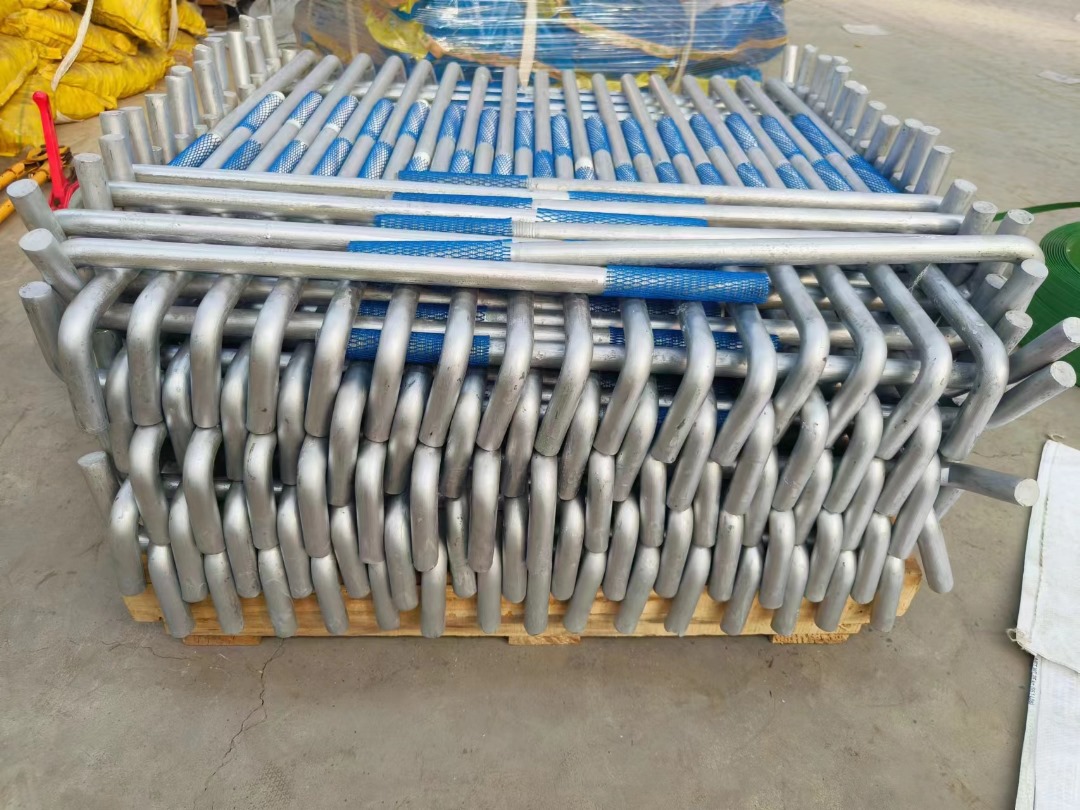
Bent anchor bolts prepared for packing; dimensions and finish follow the selected order.
Select the supply format
Individual bent anchor bolts
Order named bolts with the specified diameter, length, bend and thread. Include the required nuts and washers as explicit line items.
Prefabricated anchor cage
Coordinate the anchor arrangement and holding members as one assembly. Bolt count, spacing, projection and identification must match the pole mark.
Positioning template
Specify the matching hole pattern, centre opening and orientation marks. A template sets geometry; it does not establish the structural capacity of the connection.
Anchor cage layout and pole-base fit
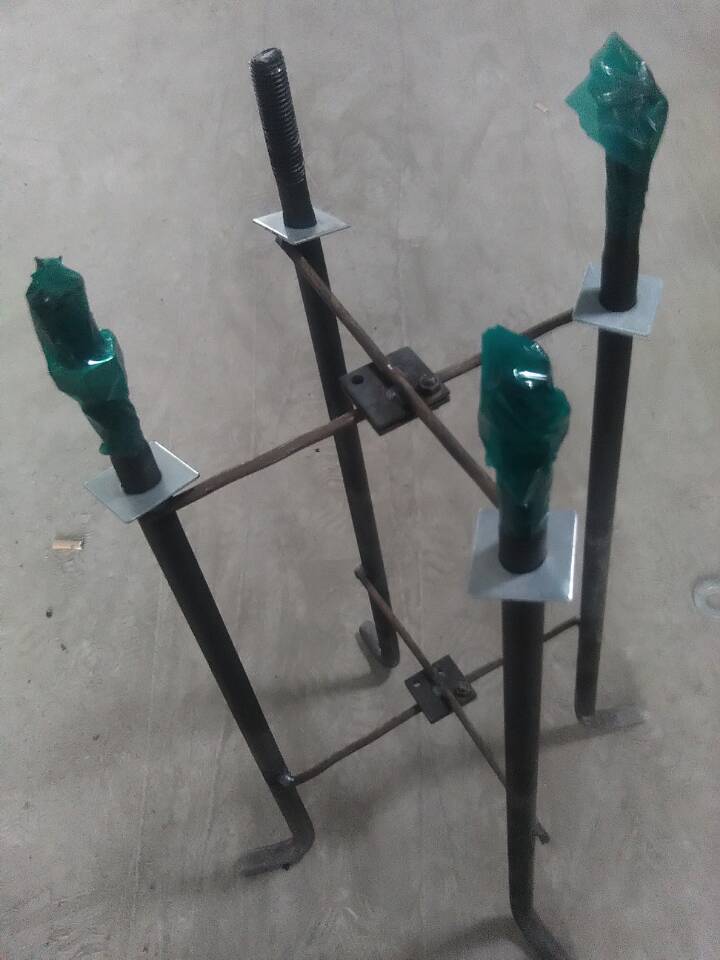
Four-bolt cage arrangement from the supplied reference collection.
The number of anchors and their pattern are separate choices. Four bolts may form a square or another defined arrangement; six bolts may follow a circular pattern. Neither a bolt count nor a nominal pole height defines the actual hole positions.
Provide the base-plate drawing with hole or slot dimensions, centre distances, orientation and any conduit opening. Identify whether a dimension is a bolt-circle diameter, a side distance or a diagonal. Keep the same reference directions on the pole drawing and template.
Check threaded projection against the complete connection stack, including the selected nuts, washers and any levelling arrangement. Embedment and the concrete foundation are specified by the responsible project designer.
Configuration data for an anchor-bolt enquiry
Item Specify for the order Why it affects the package Anchor identity Diameter, material designation and required mechanical properties Defines the supplied bolt; a nominal diameter alone does not establish strength. Geometry Overall dimensions, bend length/radius and threaded length Coordinates embedment and the exposed fastening interface. Pattern Bolt count, centre coordinates or circle diameter, orientation Must agree with the pole-base drawing and template. Cage assembly Holding members, spacing and connection details Keeps the intended arrangement identifiable during handling. Nuts and washers Quantity per anchor, material/class, size and finish Identifies what is supplied with the bolts. Protective system Specified finish and thread protection Coordinates corrosion protection with mating nuts and site conditions. Identification Pole mark, drawing revision and packing quantities Prevents similar-looking cages being assigned to different poles. Drawing example: six M24 anchors
The archived cage drawing shows six M24 anchor positions on a 450 mm bolt circle. The side view identifies a 1,000 mm overall vertical dimension and an 80 mm hook detail, with reinforcing members holding the assembly together.
This is a configuration reference for explaining an enquiry, not a universal base for every street light. Use the exact issued drawing to confirm threads, cage members, projection, material and accessories for the selected connection.
The Φ14 material-test example below is a different sample. Its measured values are not the properties or capacity of this M24 drawing arrangement.
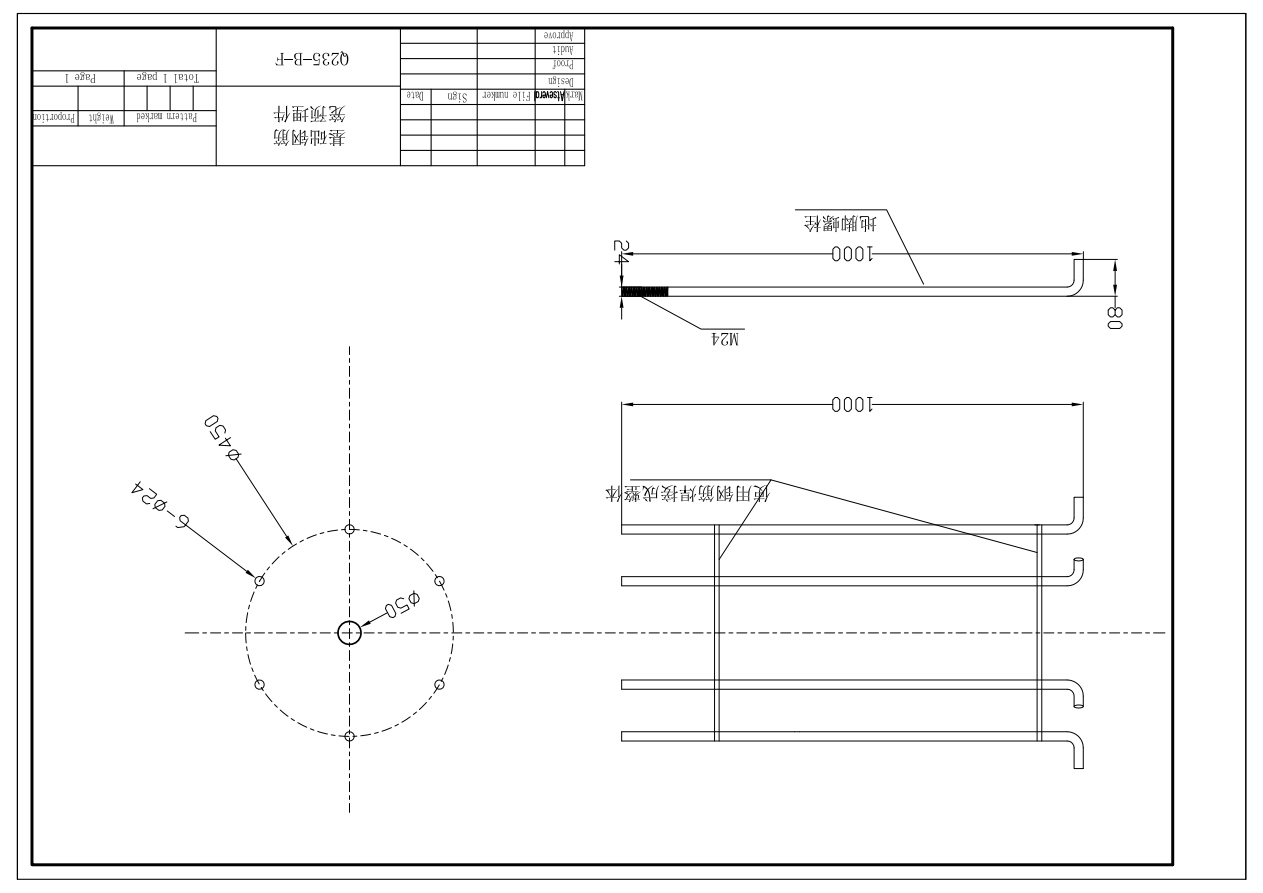
Six-bolt cage reference; geometry and material are confirmed on the order drawing.
Material evidence: a documented Φ14 sample
Jieyao commissioned report AJDA323W01426 for embedded steel components identified as Φ14. The report, issued on 20 December 2023, records two supplied samples tested between 14 and 19 December 2023. It lists room-temperature tensile testing and Vickers hardness methods.
Test item Sample 1 Sample 2 Lower yield strength 431 MPa 433 MPa Tensile strength 591 MPa 593 MPa Elongation after fracture 37.5% 37.0% Vickers hardness 182.5 HV30 185.7 HV30 These are reported results for the named historical Φ14 samples. They do not identify an anchor-bolt property class, certify every diameter or establish a pole-foundation pull-out rating. Agree the material and test documentation for the actual ordered anchors.
Fabrication and inspection of the supplied components
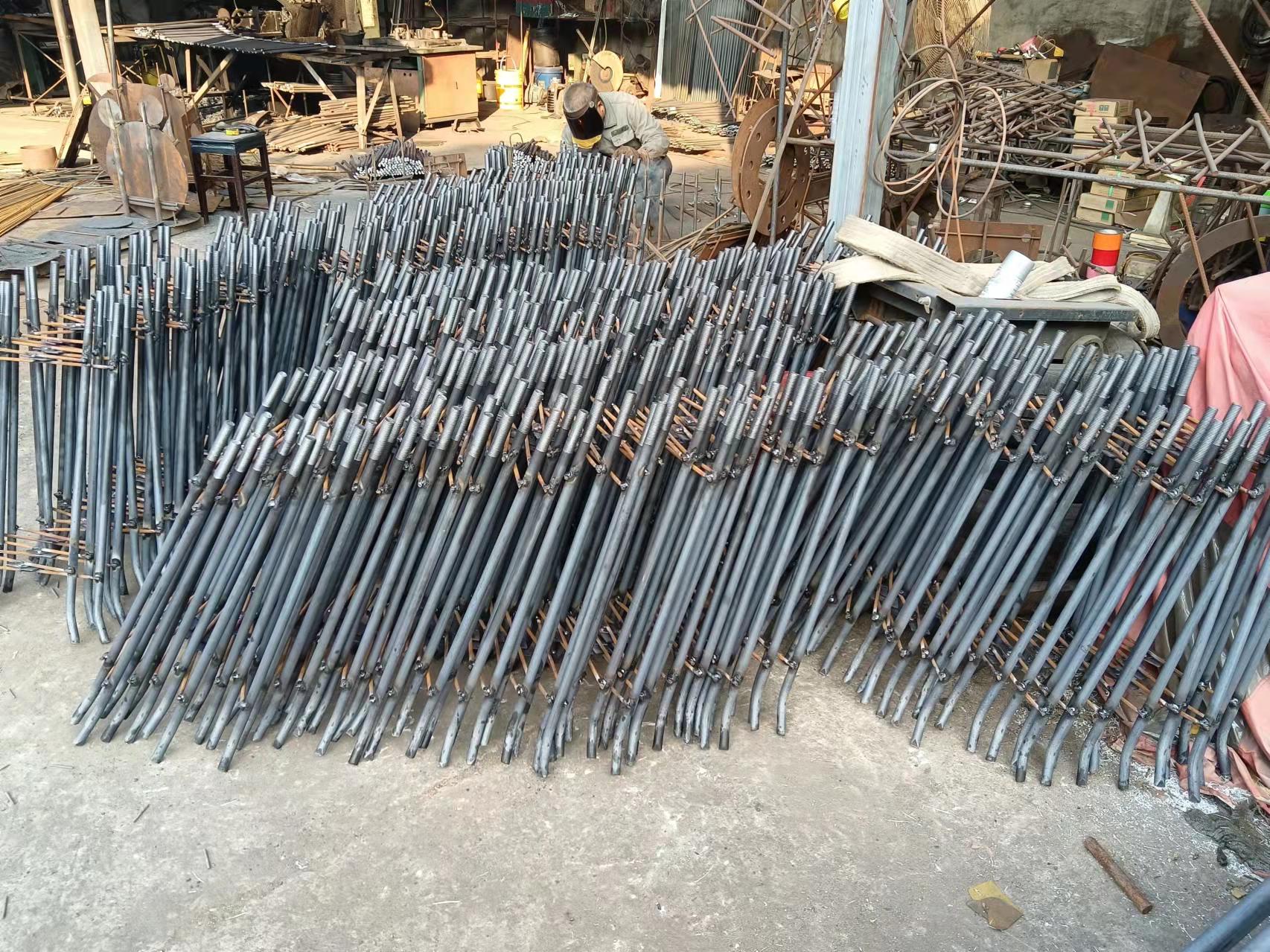
Anchor rods and assemblies during fabrication; photograph separate from the tested sample.
Review the material identity and the required bolt geometry before fabrication. Inspect the dimensions relevant to the connection, including thread, bend, pattern and projection. For an assembled cage, compare the anchor positions with the released layout and verify the cage identification.
Holding bars and cage welds should follow the specified detail. Do not treat an assembly weld as permission to modify an anchor or change its material properties. Where welding or particular examination is required, define the method and acceptance basis in the order.
Check the specified coating and the condition of mating threads. Protect exposed threads during packing and count the nuts, washers and other loose accessories against the packing list.
Keep three different base components separate
Pole base plate
The steel flange attached to the pole shaft. Its holes or slots define the matching anchor interface.
Anchor bolts and cage
Embedded connection components arranged for the designed foundation. The anchor package is the subject of this page.
Base cover
A separate cover around the exposed connection. It does not replace the flange, anchors or structural foundation.
A screw-pile foundation is also a different product. It is installed into soil as a designed foundation system and should not be confused with an anchor cage cast into concrete.
Replacement and site coordination
For replacement work, provide measured bolt locations, thread dimensions, projection, orientation and condition information together with the proposed pole-base drawing. Similar-looking bases or equal-height poles may have different connections.
Confirm compatibility before ordering. A new cage does not automatically make an existing foundation suitable, and mismatched bolts should not be bent or the base plate enlarged as an improvised fix.
For a new installation, agree who provides the foundation design, excavation, reinforcement, concrete, template setting and final connection inspection. Record those responsibilities separately from the anchor-component supply.
Quotation package and related products
Send quantity, destination, pole mark and the base/anchor drawings. List bolt materials, dimensions, pattern, nuts, washers, template, finish and required inspection records. Identify whether the enquiry is for loose anchors, a complete cage or a package with the pole.
Compare custom steel light poles for a complete pole assembly. The foundation and anchor-bolt design guide covers the wider design inputs; this product page defines the separately quoted hardware.
Request a Pole Anchor PackageLight pole anchor bolt questions
Are anchor bolts included with every pole?
Only when the quotation lists them. Confirm the anchor drawing, quantities and loose accessories.
Can I select a cage from pole height alone?
No. Use the selected base plate, equipment/design basis and approved foundation interface.
Is the six-M24 drawing your standard for all products?
It is one archived reference configuration. The order drawing defines the actual supplied assembly.
Do the Φ14 test results apply to M24 anchors?
No. They concern different named samples and do not establish an M24 grade or connection capacity.
Can I order only nuts, washers or a template?
List the exact matching components and specifications in the enquiry so the quotation can identify that scope.
-
-