
Home > Products > High Mast Light

Airport Apron High Mast Lighting Poles

short introduction:Project-configured steel high masts for airport aprons and aircraft stands. Compare directional and multi-direction heads, lowering access, fixture interfaces, supply options and production-to-delivery scope.
  • Product details
  • APRON-FACING HEADS · STEEL MASTS · PLANNED SERVICE ACCESS

    Airport Apron High Mast Lighting Poles

    A mast package built around aircraft stands, controlled aiming and maintenance windows.

    Jieyao supplies steel high masts and coordinated floodlight supports for airport aprons, aircraft stands and adjacent ground-service areas. Choose the head arrangement, fixed or lowering access, and supply scope around the airport’s permitted mast positions and heights.

    Directional or multi-direction headsSteelwork or named equipment packageOrder-specific configuration
    Product focusPermanent apron floodlighting supportsSelection starts withStand layout + approved spatial limits
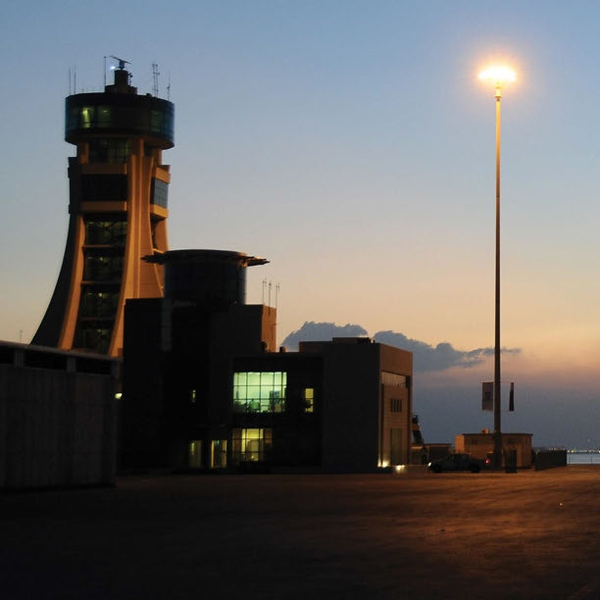
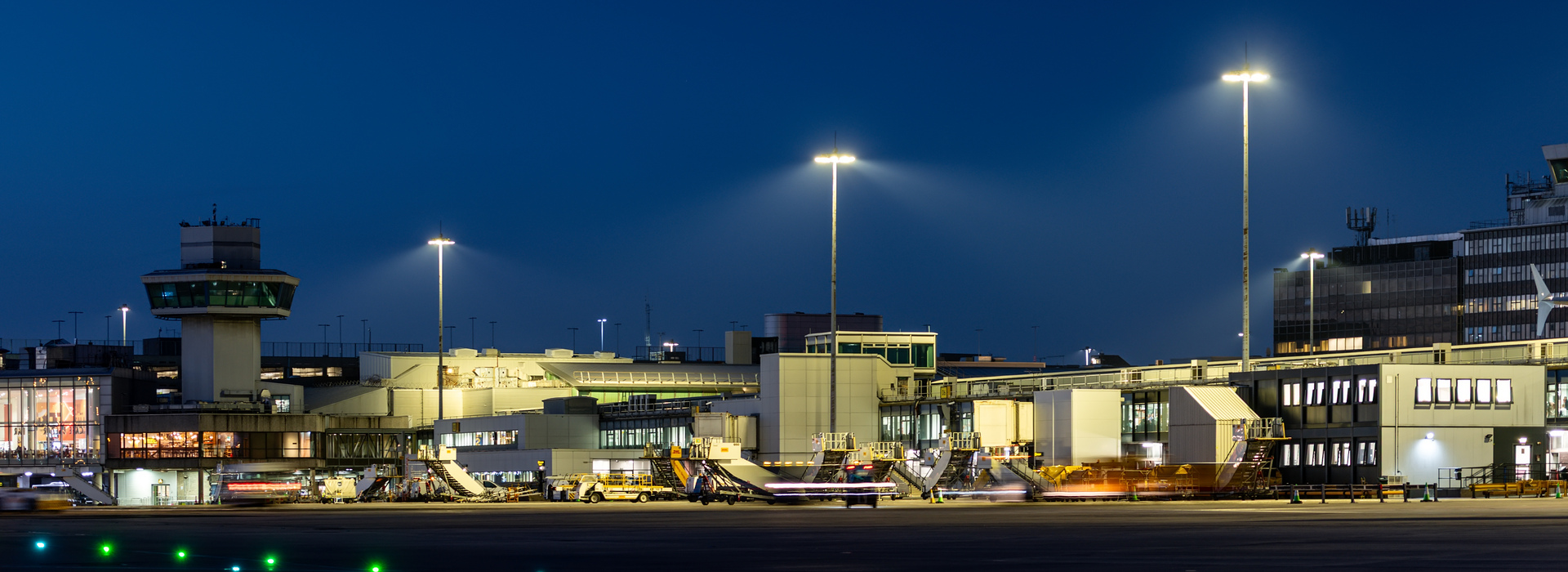
    Airport control tower and apron floodlighting mast at dusk
    APPLICATION REFERENCEHigh-mast floodlighting in an airport setting

    01 / PRODUCT OPTIONS

    Compare three practical mast packages.

    The mounting layout and maintenance method are separate choices. These reference photographs help identify the arrangement to quote; the order drawing fixes its dimensions and included equipment.

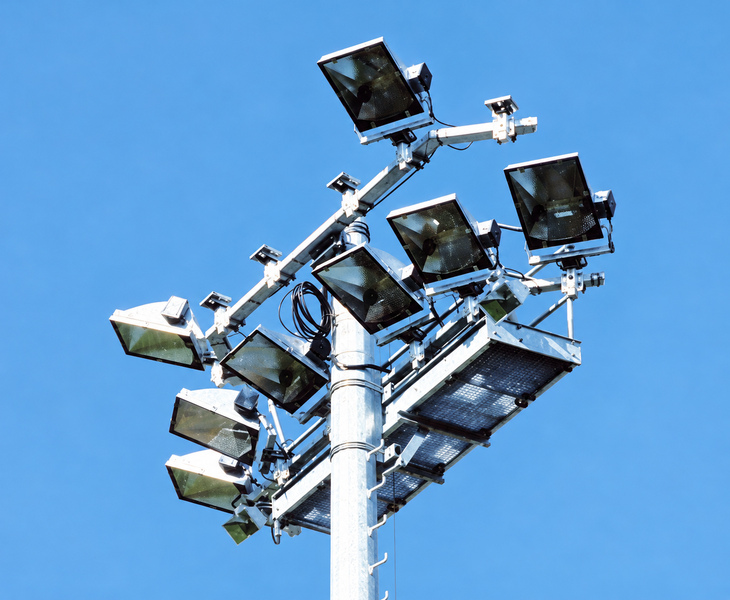
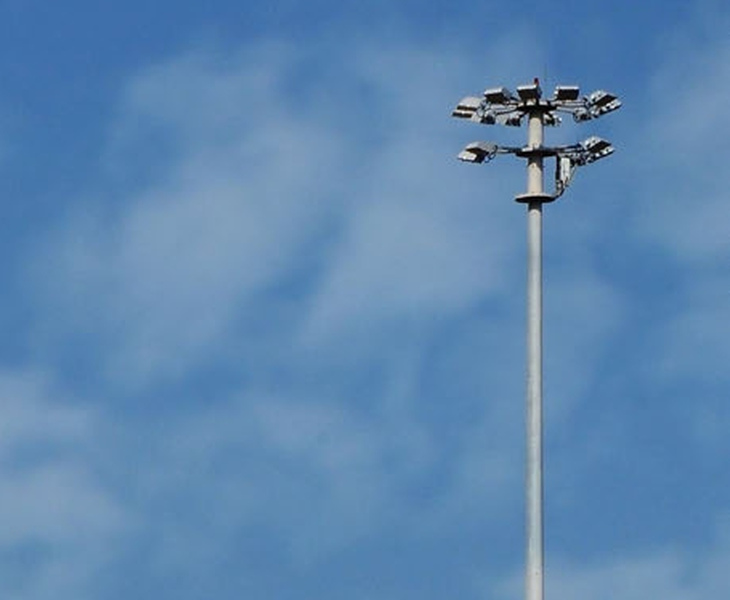
    Steel high mast carrying a bracketed directional floodlight arrayREFERENCE 01

    APRON-EDGE PACKAGE

    Directional-head mast

    Put the fixture brackets toward a defined stand or apron zone. This arrangement is worth comparing where the mast sits behind the working area and unnecessary rear-facing light positions would add little value.

    Define in the quotation

    • Steel shaft and apron-facing headframe
    • Fixture mounting positions and cable-routing provisions
    • Fixed access or a separately specified lowering design
    Discuss for
    Apron edges, stand rows and boundary locations
    Send with RFQ
    Stand orientation, aircraft envelope and restricted viewing directions
    Request this arrangement ↗
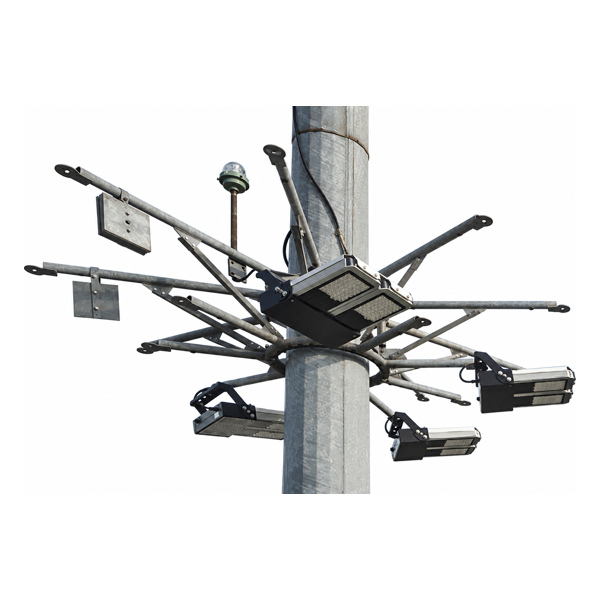
    Several floodlight brackets arranged around a steel high mastREFERENCE 02

    MULTI-ZONE PACKAGE

    Multi-direction head mast

    Distribute floodlight positions around a mast serving more than one working zone. Individual optics and aiming remain essential: a multi-direction head does not mean equal light is required in every direction.

    Define in the quotation

    • Steel shaft and multi-direction mounting head
    • Separate fixture positions and equipment load schedule
    • Named connection hardware and selected surface finish
    Discuss for
    Service-area junctions and open apron positions
    Send with RFQ
    Each target zone, adjacent masts and equipment mass / wind area
    Request this arrangement ↗
    Floodlight carriage lowered around a mast for serviceREFERENCE 03

    MAINTENANCE-LED PACKAGE

    Lowering-carriage mast

    Bring the lighting carriage to a planned service level. Choose the carrier, suspension, guides, drive, locking and electrical interfaces as a coordinated package rather than adding a winch to a fixed-head pole.

    Define in the quotation

    • Steel shaft, compatible carrier and top assembly
    • Specified drive, suspension and locking equipment
    • Operating documents for the selected mechanism
    Discuss for
    Mast locations with an agreed clear service zone
    Send with RFQ
    Carriage load, operating clearance, power and isolation
    Request this arrangement ↗

    Reference heads include different luminaire generations. The pictured lamp count, height and optical performance are not offered ratings. A lowering carrier may use a directional or multi-direction layout.

    MAKE THE FIRST CHOICE USEFUL

    Start with the stand, then select the mast.

    The same apron can need different head directions and service arrangements at different locations.

    01 / POSITION

    Where can it stand?

    Identify the permitted footprint, overall height, aircraft clearances and base-access zone before comparing pole sizes.

    02 / LIGHTING

    Where must the light go?

    Mark stand working areas and the viewing directions of pilots, apron personnel and the control tower for the lighting review.

    03 / SERVICE

    When can it be maintained?

    Compare lowering access with approved elevated-access equipment against stand closures, ground space and the operator’s maintenance policy.

    02 / PRODUCT DETAILS

    Specify the interfaces that make the package work.

    A mast supports a complete equipment arrangement. Head geometry, moving parts and the civil interface need to agree before fabrication starts.
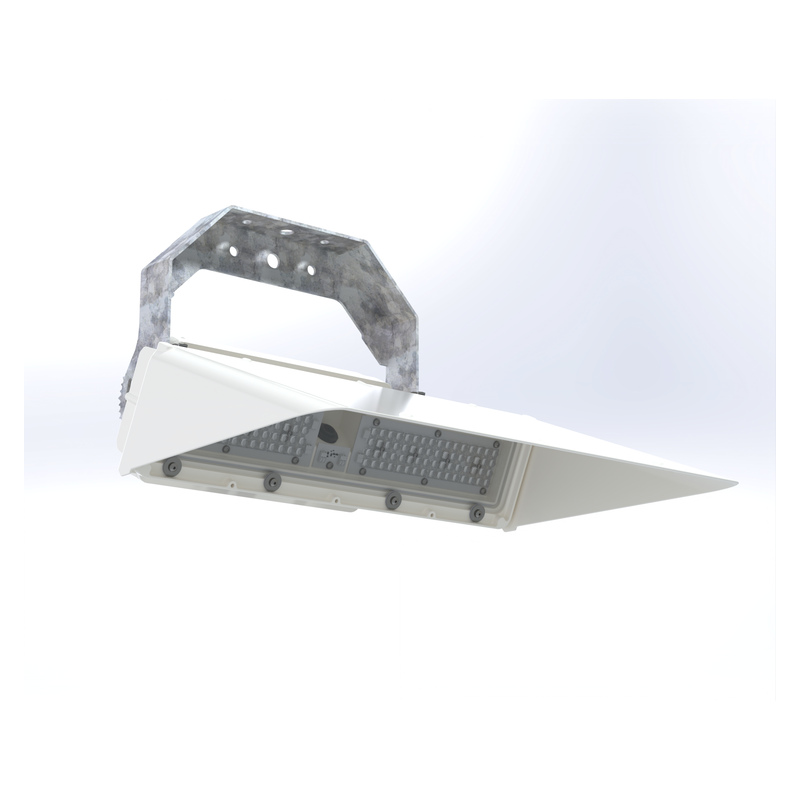
    Physical floodlight with a large projecting light-control shield
    Physical shielded floodlight reference; the selected model’s optical file must include the actual shield arrangement.
    A

    Fixture brackets, optics and optional shielding

    Choose mounting holes, bracket clearance and the available aiming range around the actual floodlight. If a shield is needed, coordinate it with the optic and the lighting calculation; a photograph of a shield cannot establish glare performance.

    • Record the luminaire model, optic, mounting direction and aiming angle.
    • Include the shield and driver arrangement in the equipment mass and wind-area data.
    • Keep fixture access and cable bends clear of bracket adjustment.

    Buyer benefit: the mounting drawing can be checked against the light that will actually arrive.
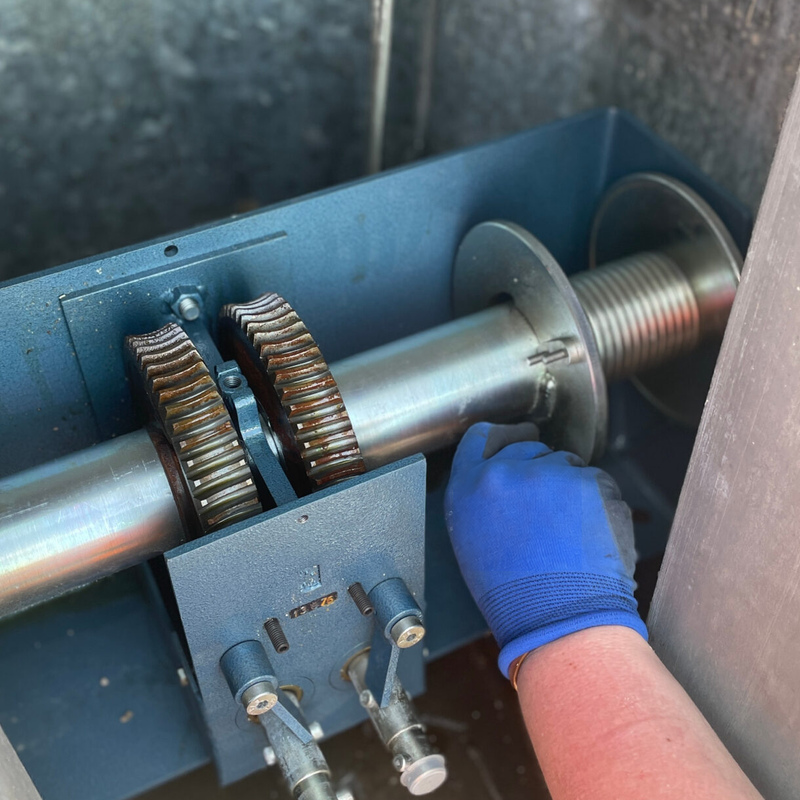
    Technician examining the gears and shaft of a winch
    Winch inspection reference. Drive type and operating limits depend on the selected lowering assembly.
    B

    Lowering drive and suspension

    The drive, suspension ropes, carrier guides, locking system and cable path work together. Agree the service position and safe operating procedure with the airport maintenance team, including how the surrounding stand or service lane will be kept clear.

    • Define the complete moving load and required travel.
    • Confirm operating power, electrical isolation and mechanical access.
    • Request the mechanism inspection schedule and replacement-parts identification.

    For the order: document the chosen mechanism; do not infer its capacity from the number of visible floodlights.
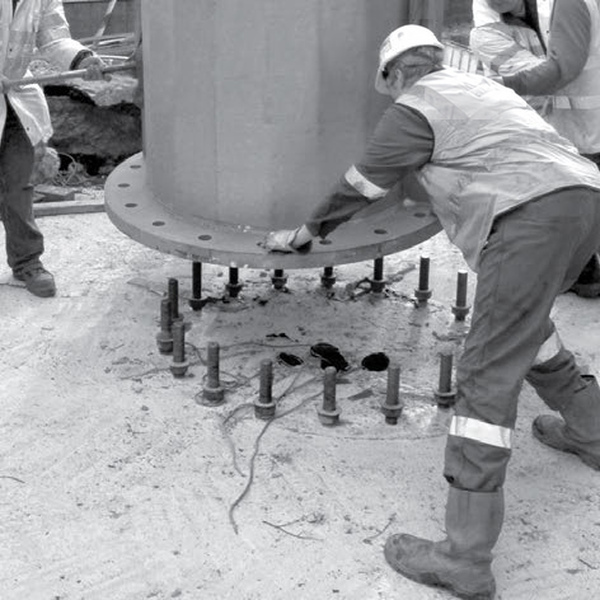
    Workers aligning a steel mast base flange with anchor bolts
    Mast-base alignment reference showing the flange and anchor interface.
    C

    Shaft sections, flange and anchor geometry

    Release the shaft joints, base plate, bolt pattern and orientation together. Pole height alone does not define the foundation: the civil designer needs the selected mast’s design reactions and the actual ground conditions.

    • Set transport section lengths and the approved joint arrangement.
    • Coordinate anchor projection, cable entry, level and orientation.
    • Retain access to door covers, drive equipment and electrical connections.

    For an existing foundation: send its survey and drawing before requesting a replacement mast.

    03 / APRON APPLICATIONS

    Choose around the aircraft and the work beside it.

    Aircraft, boarding equipment and service vehicles interrupt light. Review each operational area with its actual layout instead of applying one generic coverage radius.

    Passenger aircraft and numbered terminal stand under apron floodlights
    PASSENGER APRON

    Contact stands

    Coordinate masts with boarding bridges, aircraft parking positions, service lanes and terminal sightlines. Check the working surfaces beside the aircraft as well as the open pavement.

    Useful input: aircraft types + stand layout
    Cargo aircraft on an apron at dusk with an elevated lighting mast
    CARGO OPERATIONS

    Cargo stands and handling lanes

    High loaders, aircraft fuselages and loading activity change the shadows around a cargo stand. Review equipment positions and the routes used during loading and turnaround.

    Useful input: loading equipment + operating positions
    Aircraft at a remote stand illuminated at night
    REMOTE PARKING

    Remote aircraft stands

    Review adjacent stands, bus access, pedestrian movement and the ground area available for maintenance. Changing the aircraft mix can change which surfaces need closer attention.

    Useful input: stand envelope + service routes

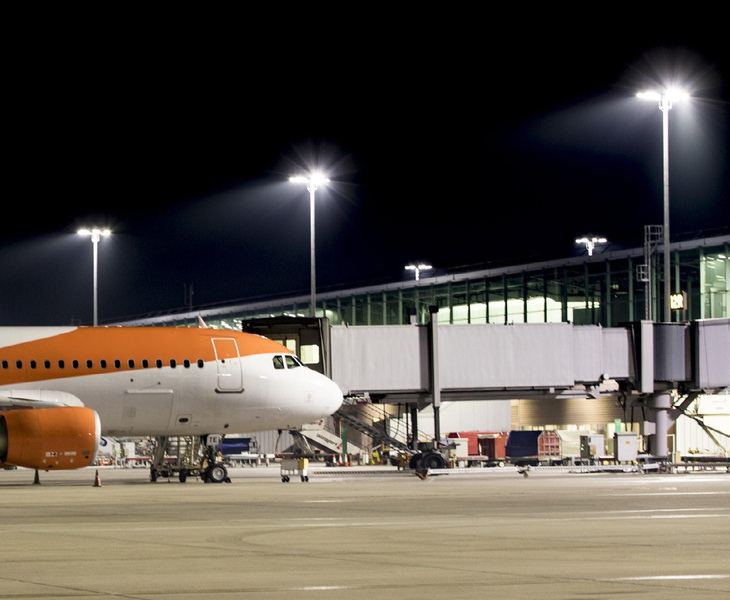
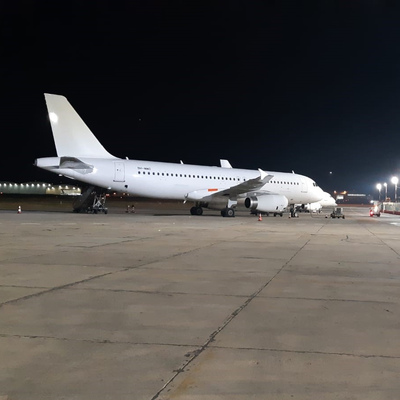
    Application photographs illustrate airport settings; they are not presented as verified Jieyao airport installations. This page covers apron floodlighting supports, not runway or approach guidance lights.

    04 / SUPPLY & CONFIGURATION

    A quotation you can compare line by line.

    Choose steelwork-only supply or specify the lighting, lowering and electrical items to be included. The agreed equipment schedule should make every inclusion visible.

    01

    Steel mast package

    Shaft sections, selected headframe, named connection hardware, base details and the specified finish. Confirm which anchors and setting accessories are included.

    Define by drawing and component list
    02

    Equipment options

    Floodlights, shields, lowering components, control equipment, cables and any required marking or obstruction-light provisions are separate line items unless expressly included.

    Match exact models and interfaces
    03

    Site work boundary

    Airport approvals, civil design, foundations, unloading, erection, wiring and commissioning need named responsible parties. Confirm any site-service scope in writing.

    Agree before purchase

    Configuration schedule for an apron mast order

    On mobile, swipe this table to see every column.

    Order itemChoices to discussInformation that fixes the selection
    Mast position and heightPermitted location and overall equipment envelopeAirport-approved limits, site coordinates and elevations; no universal airport mast height
    Shaft and jointsSteel section geometry; segmented connection arrangementStructural basis, equipment loads, transport lengths and erection method
    Head arrangementDirectional or multi-direction mounting; fixed or lowering carrierFixture positions, mass, projected area, aiming and maintenance reach
    Floodlights and shieldsNamed LED model, optic and any shieldingModel-specific photometry; project lighting criteria and restricted directions
    FinishHot-dip galvanizing and any specified additional coatingExposure, preparation, colour, inspection method and acceptance criteria
    Electrical and controlCircuit grouping, protection, isolation and control interfaceAvailable supply and project electrical design; state included equipment
    Anchors and foundationDefined anchor layout and mast base interfaceMast design reactions, ground information and civil design responsibility
    Delivery and recordsSection identification, packing and agreed document setDestination access, unloading equipment and required approval schedule

    Already have an apron layout?

    Send it with the allowable positions, height limits and preferred maintenance method.

    Request an itemised quotation ↗

    05 / PRODUCTION & INSPECTION

    Make the approved configuration traceable through production.

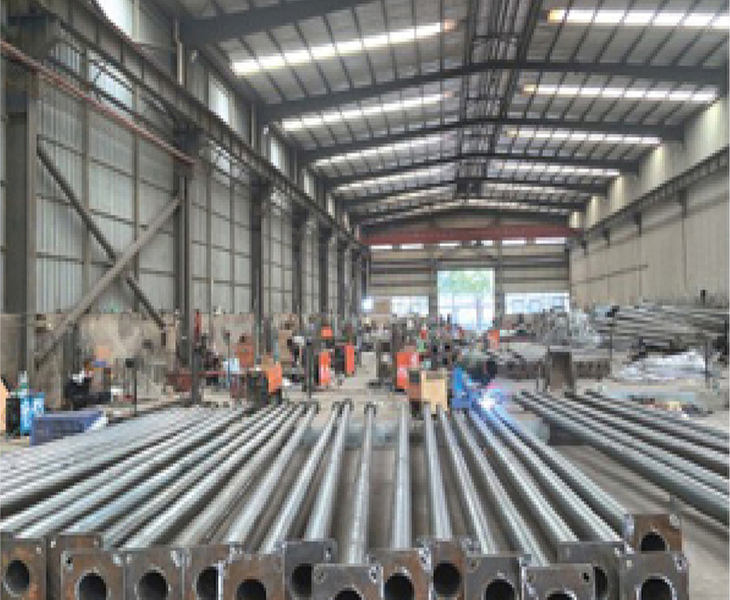
    Manufacturing follows the released drawing and equipment schedule. Reference photographs below illustrate relevant activities; the inspection records must identify the actual order and batch.

    Long steel mast sections arranged on workshop supports

    Steelwork and connection checks

    Confirm material identity, section geometry, joint preparation, flange dimensions and fixture attachment points against the order drawing. Agree the weld inspection scope and any specified additional examination before production.

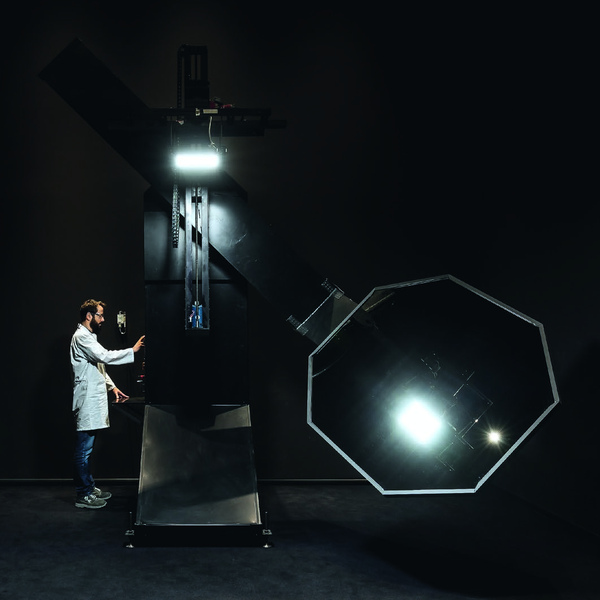
    Photometric test equipment with a floodlight in a dark room

    Model-specific lighting evidence

    If floodlights are included, connect each offered model and optic to its photometric data. Confirm how any shield or alternative driver affects the supplied configuration; do not substitute a test from a different fixture.

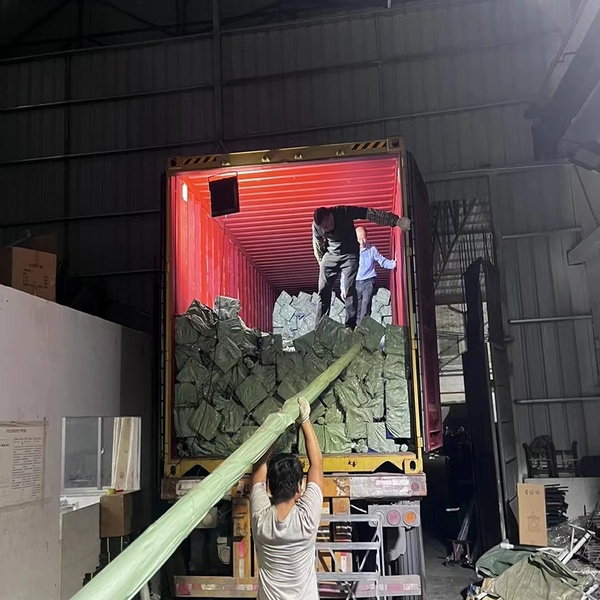
    Workers loading bundled steel components into a container

    Identification and shipment release

    Identify shaft sections, headframe parts, mechanical items and separately packed accessories. Check quantities and protective packing against the shipment list, with inspection documents linked to the supplied components.

    Workshop, testing and loading references do not prove a particular airport contract, batch result or certification. Order-specific records are agreed in the inspection and document schedule.

    06 / APPROVAL TO HANDOVER

    Keep the equipment, drawings and site work connected.

    The delivery programme depends on approved interfaces and the named supply scope. Confirm the drawing-review period and destination requirements when requesting a lead time.
    1. 01

      Freeze the inputs

      Record the airport constraints, selected head, maintenance method and equipment schedule.

    2. 02

      Approve the interfaces

      Coordinate mast, fixtures, electrical routing, anchors and civil design before release.

    3. 03

      Check the assembly

      Complete the specified dimensional, finish, fit and mechanism checks with traceable records.

    4. 04

      Deliver by identification

      Match components and documents to pole IDs, packing marks and the installation sequence.

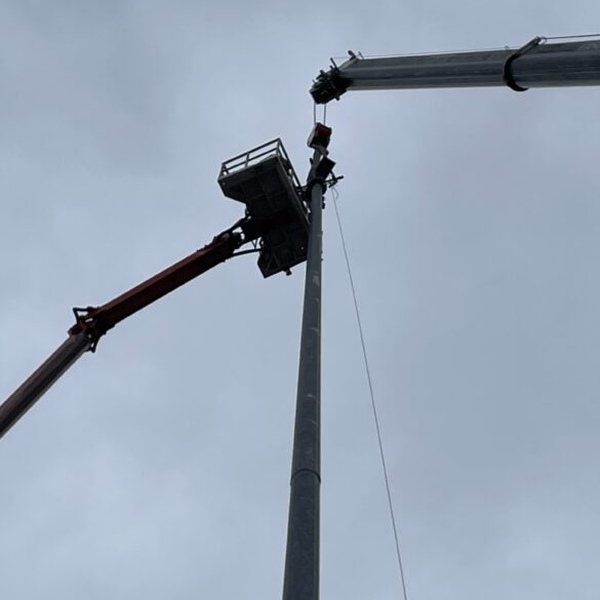
    Crane lifting a steel mast assembly during erection
    Mast-erection reference. The lifting method, exclusion zone and temporary works must suit the selected assembly.

    A usable handover package.

    A

    Approved configurationMast and headframe drawings, component schedule, anchor-setting information and the identified structural interface documents.

    B

    Equipment and controlsFixture IDs, optics and aiming schedule; circuit and wiring information for included equipment; identified spare parts.

    C

    Operation and receiptMechanism instructions where supplied, agreed inspection records, packing list and receiving checks. Site commissioning and airport acceptance remain separately defined responsibilities.

    Evidence to request before shipment

    On mobile, swipe this table to see every column.

    Inspection pointRecord to agreeWhat it confirms
    Steel mast and baseMaterial and dimensional records tied to drawing revisionThe supplied geometry and documented material identity
    Welds and finishSpecified weld examination and coating recordsThe agreed inspection scope; distinguish zinc from additional paint thickness
    Lowering assembly, if includedFunctional check record for the named carrier and driveOperation under the defined test conditions, not a generic all-model rating
    Lighting package, if includedExact model/optic files and configuration scheduleThe calculation uses the supplied equipment
    Packing and dispatchComponent IDs, quantities and protective packing checklistThe shipment can be reconciled to the order and installation documents

    Plan destination handling.

    Confirm maximum section length, package weights, container or vehicle access and unloading arrangements. Protect coated surfaces and connection ends during transport and storage.

    Keep changes controlled.

    A different fixture, shield, mounting angle or accessory can change the load and light distribution. Recheck affected drawings and calculations before accepting a substitution.

    AIRPORT-SPECIFIC REVIEW

    Ground lighting must fit the airside environment.

    Apron lighting should serve ground work while limiting glare toward pilots, controllers and apron personnel. Coordinate mast positions, overall height and aiming with the responsible airport team; a general mast catalogue cannot establish approval for an individual airfield.

    Technical reference: EASA Easy Access Rules for Aerodromes — apron floodlighting. The project’s applicable requirements and approvals govern the final design.

    07 / BUYER QUESTIONS

    Before you request an airport mast.

    Start with the location and the supply boundary. These answers help define a workable enquiry.

    Prepare your project brief ↗

    Is this the same as runway or approach lighting?

    No. This product page covers structural masts and floodlight supports for aprons and aircraft ground-service areas. Runway, taxiway and approach guidance equipment are separate systems with their own requirements.

    What height and floodlight wattage should we order?

    Provide the permitted height, mast locations, stand geometry, aircraft types and lighting criteria. Height, fixture quantity, optics and power follow the coordinated design. This page does not assign a universal airport height, wattage or coverage radius.

    Can the mast be supplied without luminaires?

    Yes, a steelwork-only scope can be discussed. Identify the required shaft, headframe and accessories, and supply the mounting, mass and wind-area data for customer-supplied fixtures.

    Does every apron mast need a lowering system?

    No. Compare a matched lowering assembly with the approved access method for a fixed head. The airport’s service window, available ground area, maintenance resources and operating procedures guide the choice.

    Does a shield guarantee that glare requirements are met?

    No. A shield is one configuration choice. Its effect must be considered with the exact optic, aiming, observer positions and project lighting calculation, then checked during the agreed commissioning process.

    Are airport approvals and site installation included?

    Only when explicitly identified in the agreed scope. Confirm airport reviews, civil design, foundations, erection, wiring, commissioning and acceptance responsibilities separately from equipment supply.

    Airport passenger terminal and apron lighting at night

    FROM STAND LAYOUT TO A DEFINED PACKAGE

    Give every mast a clear job.

    Choose the mounting arrangement and equipment around the apron’s actual working zones.

    REQUEST A PROJECT QUOTATION

    Tell us where the mast can stand and what it needs to light.

    Share your apron plan and the proposed supply scope. We can discuss the steelwork, head arrangement and named accessories around those inputs.

    Contact Jieyao about your project ↗

    Include with your enquiry

    • Country, airport location and required quantities
    • Apron / stand layout, aircraft types and service routes
    • Permitted mast positions, heights and relevant restrictions
    • Lighting targets, fixture data and available power
    • Fixed or lowering access and maintenance constraints
    • Supply boundary, documents and delivery destination

    No final configuration yet? Mark preliminary inputs so they can be reviewed before the drawing is released.

FAQ,If you have any other questions, please contact us immediately

What is the wind resistance of your high mast poles?

Wind resistance is project-specific, not a single standard speed. Confirm the site wind basis, exposure, mast height, headframe and fixture loads, then review the approved structural calculation and foundation interface for the exact offered pole.

How do I choose the right LED power for high mast lighting?

Select high mast floodlight power from a project photometric calculation, not a fixed wattage by pole height. Check target illuminance, uniformity, glare, mounting geometry and the exact IES/LDT file.

What is high mast light, and where is it typically used?

High mast light refers to poles typically 20m (65ft) or taller. It is widely used in airports, seaports, highways, stadiums, and logistics hubs to provide uniform illumination over a vast area.

High Mast Pole Steel Grades: Is Q345B Always Better Than Q235?

A steel grade alone does not establish high mast wind or fatigue performance. Compare project loads, shaft details, mill certificates and approved calculations before fabrication.

Can your fixtures pass high-standard salt spray tests?

Match salt-spray requirements to the specified coating system, test specimen, method and acceptance criteria. Request a report applicable to the proposed finish.

What Are the Most Common Heights for High Mast Poles?

High mast poles are designed for large-area outdoor lighting, and their height usually depends on the size of the space that needs to be illuminated.

What material is used for the high mast poles?

We use high-strength carbon steel such as Q235B or Q345B, bent into polygonal shapes (usually 12 or 16 sides) and hot-dip galvanized both internally and externally.

Fixed vs Raising/Lowering High Mast Light Systems

Raising & Lowering systems feature an electric winch to lower the light ring to ground level for maintenance. Fixed systems require a bucket truck or ladders for servicing.

How does the lifting system of a high mast light work?

It consists of an electric winch, stainless steel wire ropes, pulleys, and an automatic latching mechanism. Once reaching the top, the ring locks mechanically to relieve tension from the ropes.

Will the light ring fall if the wire rope breaks?

Check the exact lowering system, ring position and load path. Verify the locking and failure-protection arrangements in the manufacturer’s procedures and test records.

Do high mast poles include lightning protection?

Yes. Each pole is equipped with a lightning rod at the top and dedicated grounding bolts to connect to the foundation grounding system.

What type of lenses are used for high mast lighting?

We use professional asymmetrical optical lenses (such as Type IV or Type V) to ensure uniformity over large areas and minimize glare.

What is glare control in high mast lighting?

Through shields and precise light distribution design, we confine excess light to the target area, reducing interference for the surrounding environment and drivers.

How is the foundation of a high mast pole constructed?

A concrete foundation must be poured based on pole height and soil conditions. We provide detailed foundation drawings and anchor bolt cages.

How Long Does Hot-Dip Galvanizing Protect a High Mast Pole?

There is no single anti-corrosion lifespan for every galvanized high mast pole. The coating, site exposure and maintenance criterion must be specified together.

Can high mast poles be shipped in sections?

Yes. Due to height limits, poles over 20m are typically split into 2-3 telescopic sections for convenient shipping in 40ft containers.

Do telescopic poles require welding during installation?

No. Sections are joined via overlap (telescopic fit) using gravity or hydraulic force. This mechanical joint is more flexible and fatigue-resistant than welding.

Do you provide Dialux lighting simulations?

Yes. Our professional lighting design team provides free Dialux simulation reports based on your site’s CAD drawings to optimize lighting layouts.

Do you have project references for airports or seaports?

Yes, we have extensive project references in the Middle East, Southeast Asia, and South Africa. We can provide photos and technical parameters upon request.

What is the warranty period for high mast lighting?

Warranty terms for a high mast project must be confirmed in the written quotation or contract for the exact pole, luminaires, controls and lifting components; no single period applies to every assembly.

Can high mast poles integrate surveillance systems?

Yes. Our light rings can be customized with brackets to accommodate CCTV cameras or other security sensing devices.

What is the EPA (Effective Projected Area) of a high mast?

EPA refers to the Effective Projected Area of the pole and fixtures under wind pressure. It is a critical parameter for calculating structural safety.

Can high mast lights be solar-powered?

Technically yes, but due to high power consumption, very large solar arrays and battery banks are required. We typically recommend grid-tied or hybrid systems.

How do you prevent the internal wire ropes from rusting?

We use high-quality stainless steel or plastic-coated wire ropes and recommend regular greasing during annual inspections.

Do your LED floodlights support 0-10V or DALI dimming?

Yes. With intelligent control systems, you can remotely adjust brightness and scheduling to maximize energy savings.

Contact Us

Get a custom lighting solution and quotation for your project.
Jieyao Lighting Yangzhou Jieyao Lighting Equipment Co., Ltd. manufactures outdoor lighting and steel poles in Guoji Town Industrial Park, Gaoyou City, Yangzhou, Jiangsu, China. The company reports a 10,000 m² factory site, more than 60 employees including more than 10 technical personnel, and more than 100 production and testing machines. The present company name dates from 2017; Jieyao Poles’ published history traces the team’s manufacturing lineage to 2006. The stated 15 years of experience refers to the team. The company reports exports to more than 60 countries.

Do you have any questions or requests?

Email: jay@jieyaolighting.com
Tel: +86 13815843784
WhatsApp: +86 13815843784
Contact
Copyright © 2026 Yangzhou Jieyao Lighting Equipment Co., Ltd. All rights reserved
×
Send Your Inquiry Today
We use cookie to improve your online experience. By continuing to browse this website, you agree to our use of cookie.

Cookies

WhatsApp avatar

Click to Chat.

Im online now.

Hey, I'm Xu Jie from Jieyao Lighting. What can I do for you? Welcome to contact me, WhatsApp: +86 13815843784

WhatsApp Us

WhatsApp us