

Compare complete lighting-pole assemblies through structure, fabrication, corrosion control, finish, handling, interfaces and evidence—not through material names alone.
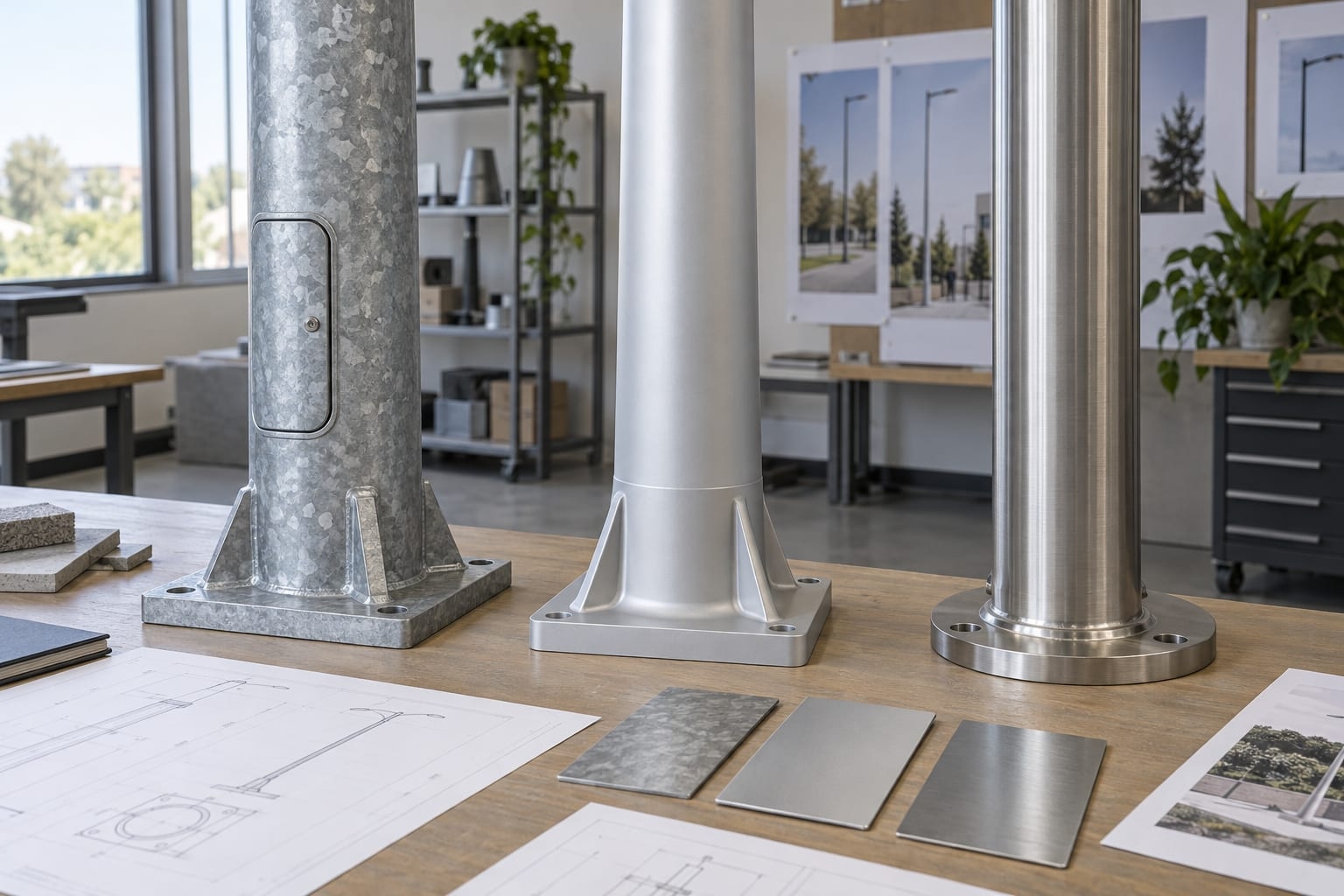
A pole is not an isolated tube. It is a structural assembly that can include a tapered shaft, longitudinal seam, transverse joints, base plate or embedded section, access opening, reinforcement, door, bracket, luminaire interface, anchors, fasteners, earthing provisions and a finish system. Material selection affects each part, yet geometry and detailing can be just as important as the alloy or grade named in a schedule.
Use this light pole material comparison to build questions for design and procurement, not to substitute one material for another without review. The final decision belongs to the project's governing standards, responsible designers, environmental data, appearance requirements and supplier scope. Jieyao's relevant product path is fabricated steel lighting poles; references to aluminum and stainless steel provide neutral comparison context and do not state that every option is supplied.
Record mounting height, shaft position, road or site geometry, every luminaire and arm, projected area, mass, center of gravity, signs, cameras, banners and future attachments. Add the governing wind basis, terrain or exposure, topography, importance requirement, vibration concerns and other actions required by the project. Material cannot be ranked meaningfully while those loads remain undefined.
Describe atmospheric exposure, marine salts, deicing salts, industrial contaminants, irrigation, standing water, soil contact, temperature range, cleaning chemicals and physical damage risks. Include installation access, expected inspection method and finish expectations. The same nominal material can behave differently when drainage, crevices, coating continuity, handling and maintenance change.
Terms such as steel, aluminum and stainless steel describe families, not complete purchase specifications. A proposal should identify the applicable material standard, grade or alloy designation, product form and required property evidence. The correct design values and fabrication rules follow that defined product, its condition and the governing structural standard.
Check that the cited specification covers the delivered plate, sheet, tube, extrusion, casting, bar or fastener. Do not accept a generic material label where the design depends on yield strength, temper, toughness, weldability or corrosion properties. Traceability expectations should be proportionate to project risk and stated before production.
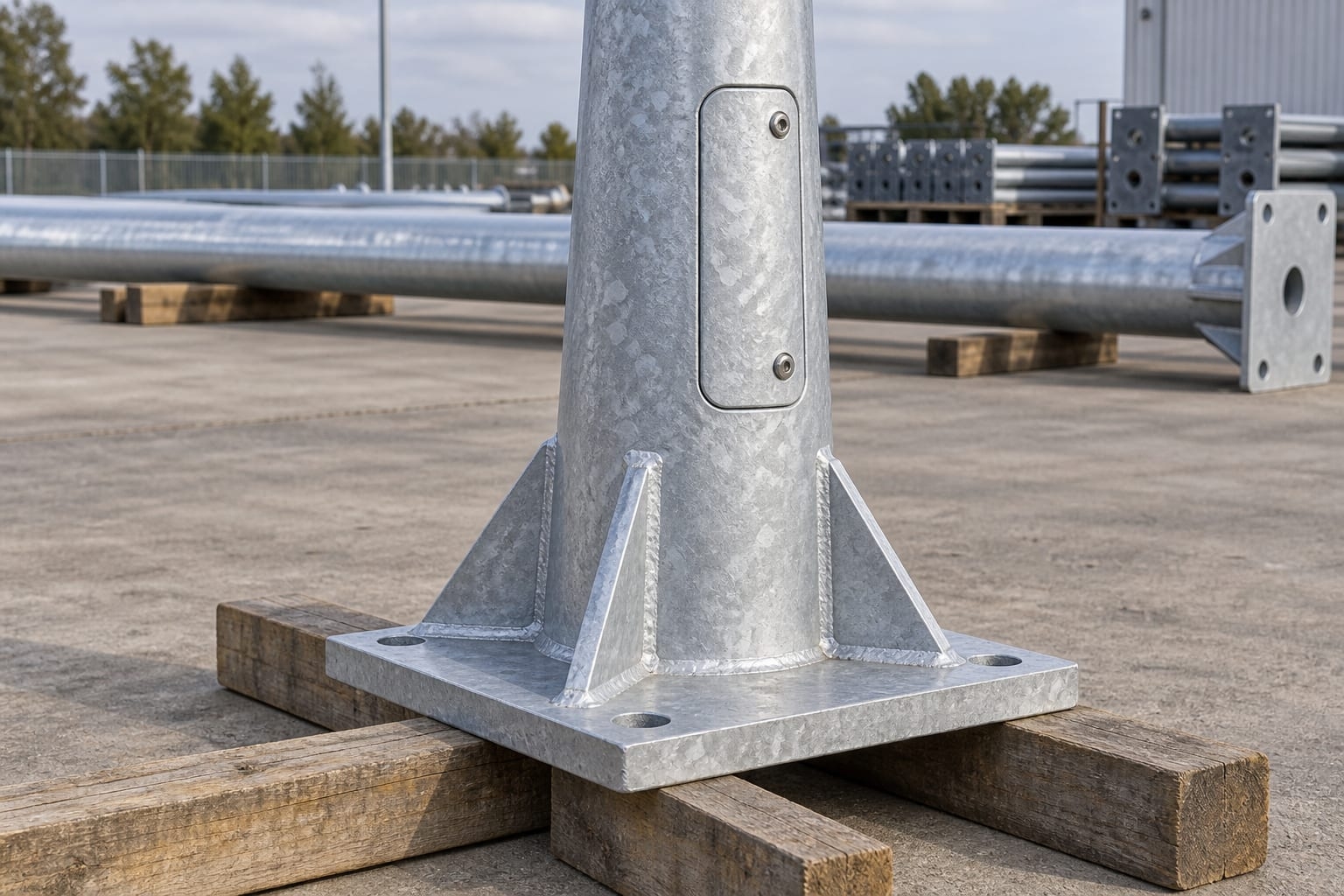
Fabricated carbon-steel poles are commonly formed from plate into round, octagonal or other tapered profiles, then welded and detailed with plates, doors and brackets. Their geometry can be configured around project loads, shipping lengths, access requirements and mounting interfaces. A steel proposal must still state grade, thickness schedule, seam and joint details, base arrangement and corrosion-protection process.
Hot-dip galvanizing protects prepared steel through a zinc coating formed during immersion. Successful use depends on steel chemistry, fabrication sequence, venting and drainage, bath access, distortion control, inspection criteria, handling and repair procedures. Galvanizing is not a reason to leave crevices, trapped water, incompatible attachments or damaged areas unresolved.
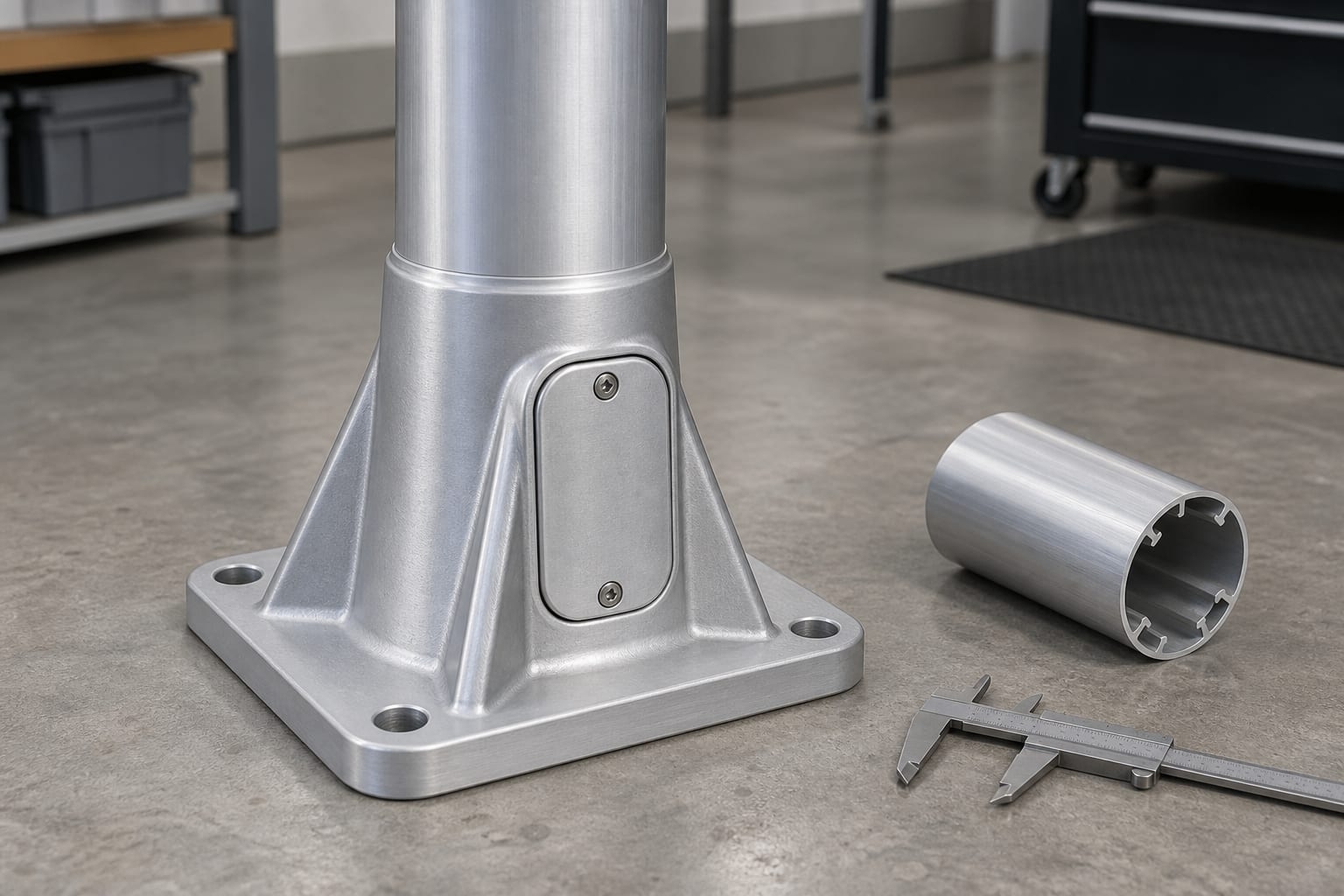
Aluminum poles may use spun, extruded, welded or cast components depending on the design. Lower density can influence handling and lifting, but installed suitability still depends on alloy, temper, section geometry, stiffness, fatigue details, openings, connections and base configuration. It is inaccurate to select an aluminum pole only because it is described as light.
Surface appearance may be mill, brushed, anodized, painted or otherwise specified. Each route needs compatible fabrication and repair expectations. Aluminum can form an oxide film, yet exposure, crevices, deposits, cleaning, contact with other metals and local damage still matter. Ask the proposed supplier to identify alloy, finish, welding process, heat-affected considerations and inspection scope.
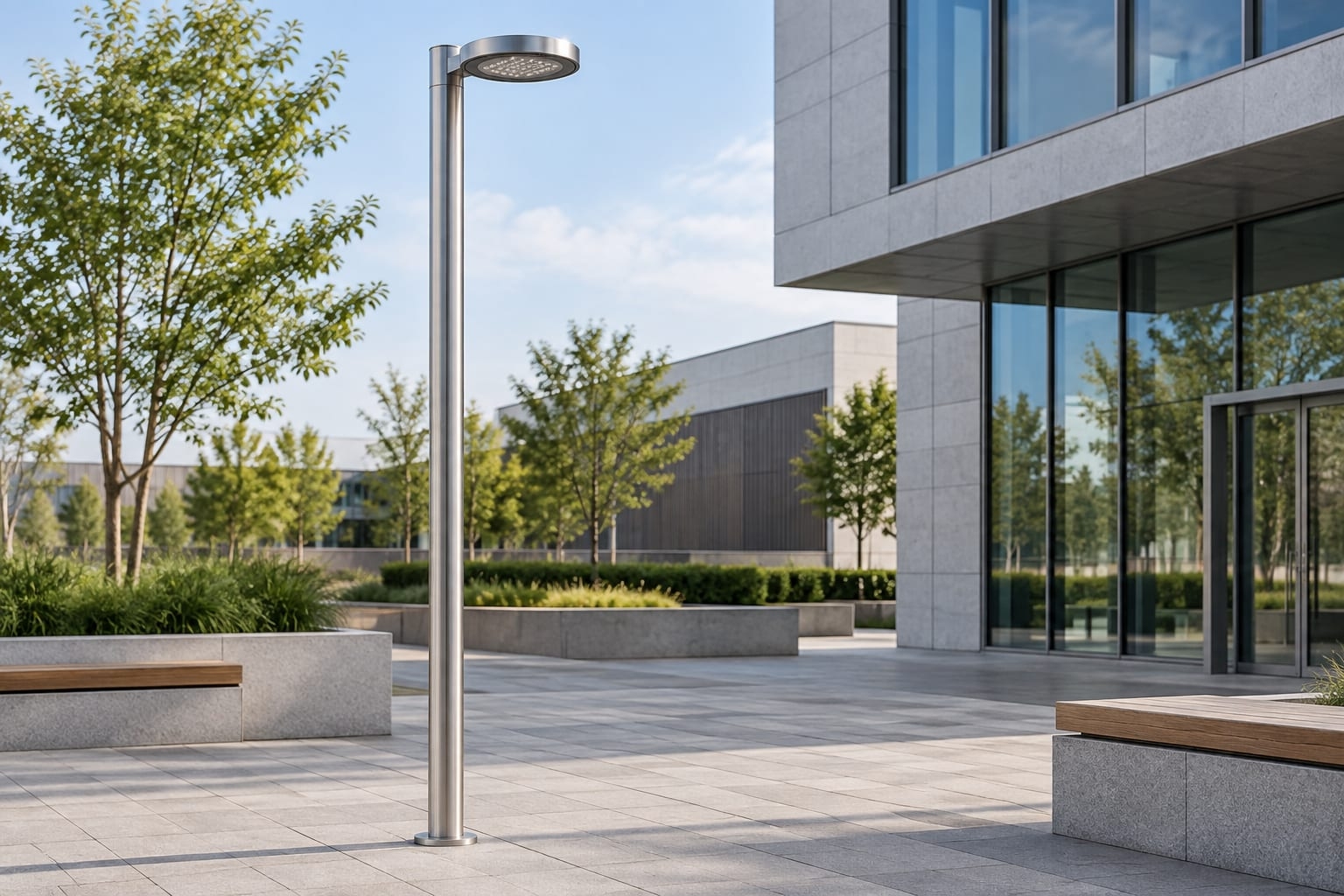
Stainless steel is a family of corrosion-resistant alloys with different mechanical, fabrication and environmental characteristics. Grade selection should respond to the defined exposure, product form, welding, surface condition and cleaning regime. A polished or brushed appearance does not by itself identify the alloy or demonstrate suitability for chloride-bearing conditions.
Architectural stainless poles require careful control of weld finishing, contamination, surface direction, crevices and visible fasteners. The proposal should define finish reference, sample approval, fabrication route, cleaning and passivation requirements where applicable, and protection during shipping and erection. Confirm whether the pole, bracket, base cover and fasteners use the same material or need managed interfaces.
Strength checks address whether stresses, connections and local regions satisfy the applicable limit states. Stiffness influences deflection, rotation, optical alignment and dynamic response. Different materials have different elastic properties, so equal outside dimensions and thickness do not create equivalent behavior. The designer must size the complete section rather than compare material strength values alone.
Taper, shape, diameter, flat width, wall schedule, seam, door cutout, reinforcement and joint location all change response. A larger section can be stiffer without using a thicker wall, while an opening can control a local region. Request calculations or design evidence at the level required by the contract instead of treating nominal thickness as a universal quality score.
The pole supports its own exposed area plus luminaires, arms, solar modules, signs, cameras and other attachments. For each component, provide dimensions, orientation, mass, projected area and location. The governing wind-speed definition, terrain, topography and load combinations must be explicit because values from different standards are not directly interchangeable.
Changing material does not remove the need to coordinate the equipment schedule. A supplier's standard pole table may assume a particular head, arm or exposure that differs from the project. The street light pole sourcing guide explains how to freeze inputs before quotations are compared.
Steel plate can be press-braked or roll-formed into tapered polygonal or round shafts. Aluminum can be extruded, spun or fabricated into suitable profiles. Stainless sheet and tube can be formed and welded with finish requirements influencing the route. Every process creates different dimensional tolerances, seams, tooling limits and opportunities for integral features.
Specify the geometry needed by structure and interfaces, then confirm that the proposed process can produce it consistently. Review straightness, taper, twist, out-of-round or across-flats tolerances as relevant. Avoid copying a profile associated with one material into another without recalculating the section and checking the fabrication method.
Welding requirements follow the material, thickness, joint type, loading and applicable code. Procedure qualification, welder qualification, consumables, preparation, fit-up, sequencing and inspection should be defined at the appropriate level. Steel, aluminum and stainless assemblies cannot share one generic welding note and be assumed equivalent.
Heat can affect strength, distortion, residual stress, coating behavior and visible finish. Door frames, base plates, brackets and transverse joints concentrate fabrication. Review access for welding and inspection before release. If a proposed substitution changes alloy or joint form, reopen the structural and fabrication review instead of changing only the bill of materials.
An access opening removes material from a highly loaded shaft region. Its size, corner radius, elevation, orientation, reinforcement, cover and fasteners belong in the design. Electrical component space and safe access must be coordinated without weakening the shaft through unapproved cutting or enlarging.
Door construction differs across fabricated steel, extruded aluminum and stainless systems. Compare water shedding, fastening, bonding, security, replacement and surface compatibility. The completed proposal should show a sectional or detailed view rather than a generic door symbol that conceals the frame and attachment.
Flanged poles transfer actions through a plate, weld or cast transition, anchors and foundation. Compare plate size, thickness, hole pattern, projection, leveling method, grout or bearing requirement, base cover and conduit clearance. The released base-plate and anchor drawings should explain the steel-pole procurement interface. Material choice can affect the connection detail, but foundation reactions and local ground conditions remain essential.
Direct-burial poles need defined embedment, surround, drainage, cable entry and soil-contact protection. Do not assume one material eliminates below-grade detailing. The responsible civil designer uses released pole reactions with soil and groundwater information; see the foundation and anchor bolt guide.
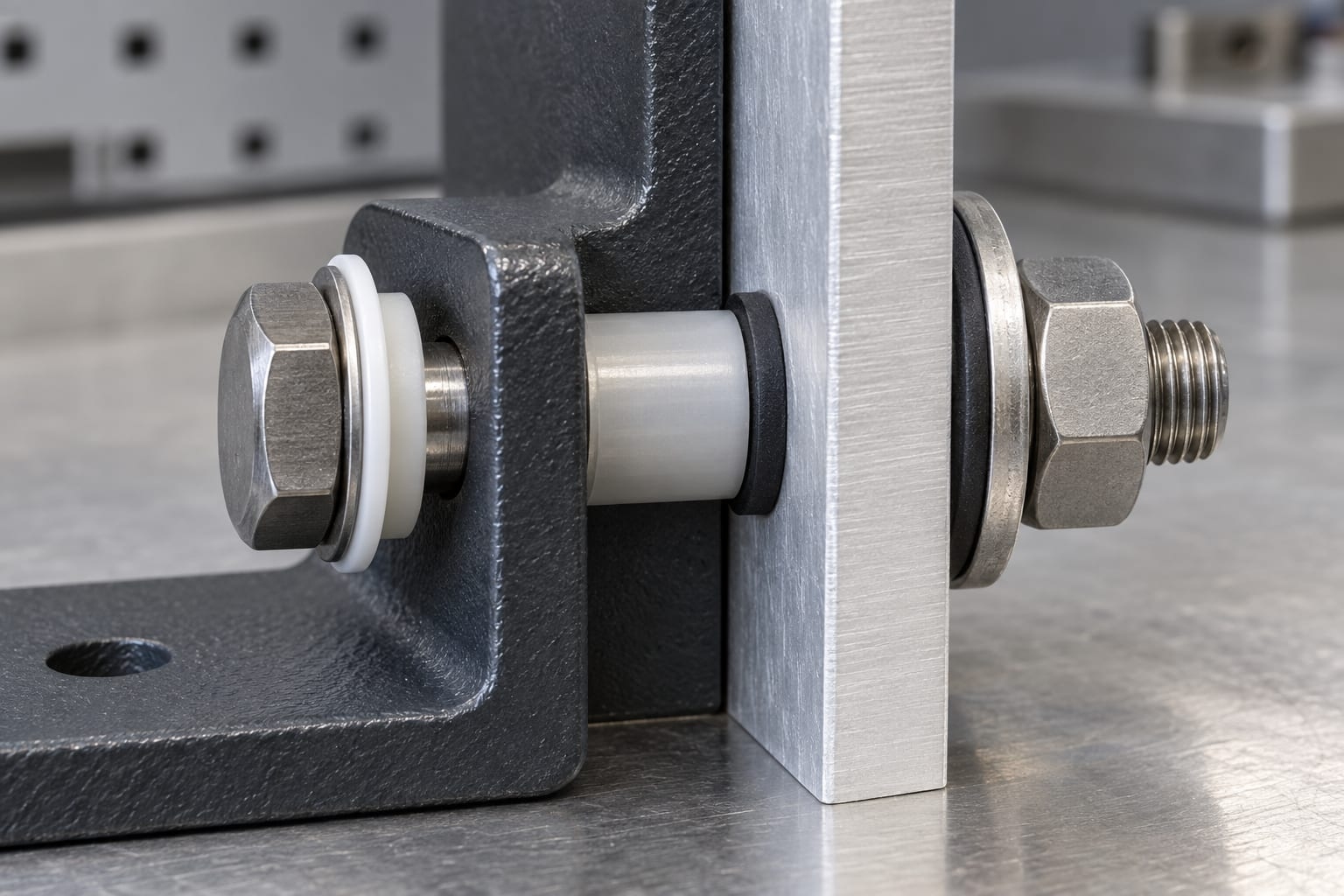
A lighting assembly often combines shaft material, stainless fasteners, aluminum luminaires, copper conductors, galvanized brackets and foundation hardware. In the presence of an electrolyte, electrical contact between unlike metals can increase local corrosion risk. Exposure severity, contact area, drainage and coating condition influence the outcome.
Possible controls include compatible material selection, isolation washers and sleeves, gaskets, sealed interfaces, coatings and drainage. The detail must also preserve structural load transfer, tightening, electrical bonding and maintainability. Never add an insulating part casually where the grounding strategy requires continuity; coordinate corrosion and electrical requirements together.
Distance from the sea is not a complete corrosion category. Wind direction, salt deposition, rainfall, shelter, wetting time, temperature, industrial pollution and cleaning influence exposure. Bases near roads may also receive splash or deicing salts. State the project's classification method and local conditions rather than relying on the word coastal.
Detail for drainage, inspection and repair. Keep covers, collars, pavement and landscaping from forming water or debris traps. For severe steel exposures, a compatible coating over galvanizing may be considered when preparation, layer sequence, color, cure, inspection and repair are defined. The duplex-coated lighting pole page explains that steel-focused configuration.
For galvanized steel, define the galvanizing standard, appearance acceptance, venting and repair. For painted or duplex systems, add preparation, compatible primer or tie layer, topcoat family, dry-film requirements where specified, cure and touch-up. For aluminum, define mill, anodized or coated finish. For stainless, define grade, surface designation, grain direction and post-fabrication treatment.
Approve representative samples when appearance matters, while recognizing that large fabricated surfaces differ from small swatches. State gloss, color reference and viewing expectations. Packaging separators, lifting slings and site storage should protect the finish without trapping moisture or transferring contamination.
Dark coatings and exposed metallic finishes can develop different surface temperatures in sunlight. Temperature interacts with touch location, electrical equipment, seals and expansion. If these factors matter to the site, define the assessment basis; do not infer safe touch conditions merely from material or color.
Earthing, bonding, conductor routing, terminal space and access are project electrical requirements. Conductive pole materials do not remove the need for a designed protection system. Isolation used for corrosion control must be coordinated with bonding. The pole drawing should show the agreed earthing point and cable route without conflicting with reinforcement or anchors.
Material density influences component weight, but finished pole mass also depends on section size, thickness, joints, base and attachments. Compare the released assembly weights, segment lengths and centers of gravity. A lighter shaft does not automatically simplify erection if it needs a large bracket, specialized protection or different joining controls.
Plan packing, unloading, storage, approved lifting points, slings, crane position and exclusion zones. Protect finishes and slender sections from point loads. Use the supplier's approved method statement for the receiving and erection workflow, adapted to site safety and construction requirements.
Transport limits may lead to slip-jointed, flanged or otherwise segmented poles. Material and forming route influence joint design, tolerances, surface treatment and assembly procedure. State required engagement or bolt arrangement, orientation, match marks, permissible assembly method and inspection checks.
A joint changes stiffness, local stress, water paths and finish continuity. Do not hammer, heat, cut or lubricate a joint without an approved procedure. Compare offers using the same transport envelope and site equipment because a one-piece and segmented proposal allocate freight, handling and field work differently.
A practical inspection plan connects documents and hold points to real risks. It may include material identification, dimensions, seam and attachment welds, door reinforcement, base geometry, joint fit, coating or surface finish, packing and released drawings. The extent follows the contract, applicable standards and responsible quality plan.
Different materials and finishes require different evidence. A galvanizing record is not a substitute for aluminum finish acceptance; a stainless visual sample is not structural material traceability. Agree certificate types, inspection reports, witness points and acceptance criteria before production so quotations include comparable documentation.
Every outdoor pole needs a project-specific inspection and maintenance basis. Owners need access to the base, door, fasteners, bracket, finish and surrounding drainage. Inspection frequency and method depend on exposure, consequence, local regulation, equipment and observed condition.
The handover file should preserve material identification, finish system, approved repair method, drawings, installed attachments and inspection records. Replacement luminaires or accessories must be reviewed for interface and structural changes. Cleaning products and tools should remain compatible with coatings, aluminum and stainless finishes.
Actual durability reflects environment, detailing, fabrication quality, finish continuity, drainage, damage, cleaning, inspection and repair. Publishing one lifespan for all steel, aluminum or stainless poles hides these variables. Even poles on the same property may experience different salt, irrigation, shade, vehicle splash and maintenance access.
Where a design-life requirement exists, state it with the governing durability method, exposure classification, inspection plan and replaceable components. Ask each proposer to explain how the offered assembly addresses that defined basis. This creates auditable differences instead of unsupported material promises.
Public unit prices rarely represent the same assembly. Pole height, shaft design, base, anchors, arms, doors, finish, documentation, quantities, packing, destination, duties, installation and testing can differ. Material affects cost, but it is only one line in the total supplied and installed scope.
Issue a common schedule and require deviations to be listed. Compare included drawings, calculations where required, certificates, inspection, spare parts, finish repair materials, freight packaging and delivery terms. Keep currencies, taxes and local civil work separate. A transparent comparison is more useful than a fixed claim that one material always costs more or less.
| Review item | Fabricated galvanized steel | Aluminum | Stainless steel |
|---|---|---|---|
| Definition | Grade, plate form, shaft geometry and galvanizing | Alloy, temper, extrusion or fabrication and finish | Grade, product form, fabrication and surface finish |
| Structural review | Formed section, seams, openings and welded attachments | Section stiffness, temper, openings and connection form | Section, grade, seams, openings and visible details |
| Corrosion route | Galvanizing or specified compatible duplex system | Alloy and specified mill, anodized or coated finish | Grade, surface condition, cleaning and crevice control |
| Interface focus | Galvanized fasteners, repair and coating continuity | Dissimilar metals, isolation and cast/fabricated base | Fastener grade, contamination, crevices and finish direction |
| Evidence | Material, fabrication, dimensions and galvanizing records | Alloy/temper, fabrication, dimensions and finish records | Grade, fabrication, surface treatment and finish approval |
A useful RFQ includes the site and lighting layout, mounting-height reference, fixture schedule, arm geometry, accessories, wind basis, governing standards, exposure description, appearance requirement, base concept, electrical interfaces, quantities, destination and documentation needs. Add any owner preference for material, but allow technically justified deviations to be stated clearly.
Where inputs are not final, identify them as open rather than inventing values. Ask for reactions, interface drawings and exclusions before foundations or luminaires are released. Use the shop drawing checklist to close shaft, base, door, bracket, finish and revision information.
Record the evidence behind each material decision, not just the selected material name.
| Decision input | Evidence to request | If still open |
|---|---|---|
| Structural basis | Fixture schedule, arm geometry, projected area and governing wind basis | Carry design loads as an approval hold point |
| Exposure and finish | Site exposure, finish specification and inspection/repair method | Request alternate finish systems with stated assumptions |
| Civil interface | Base concept, anchors, foundation reactions and utility clearances | Do not release the bolt cage or foundation drawing |
| Handover and service | Access detail, spare parts, material/finish records and cleaning plan | Mark maintenance scope and exclusions in the offer |
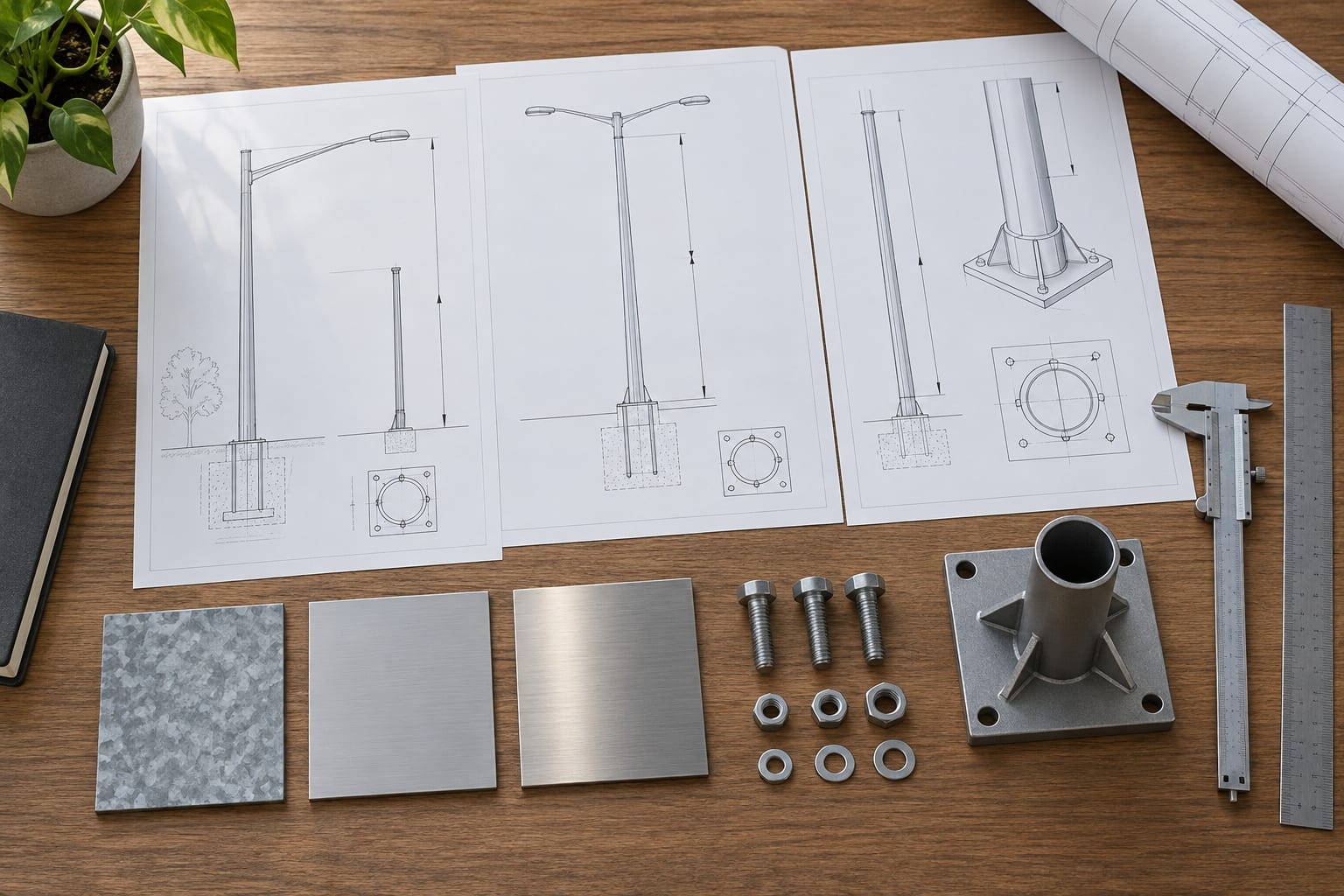
An existing pole may not match its asset label. Survey shaft profile, dimensions, apparent material, seams, openings, base, anchors, bracket and finish condition. Record attached equipment and evidence of repairs, drilled holes, corrosion, impact or movement. Where material identification affects engineering decisions, use an appropriate verification method rather than judging by color alone.
A replacement luminaire can change mass, projected area, center of gravity, mounting interface and vibration response. Moving from one pole material to another can also change bolt patterns, electrical bonding, appearance and foundation reactions. Treat retrofit compatibility as a coordinated design task, even when the new component physically fits the old tenon.
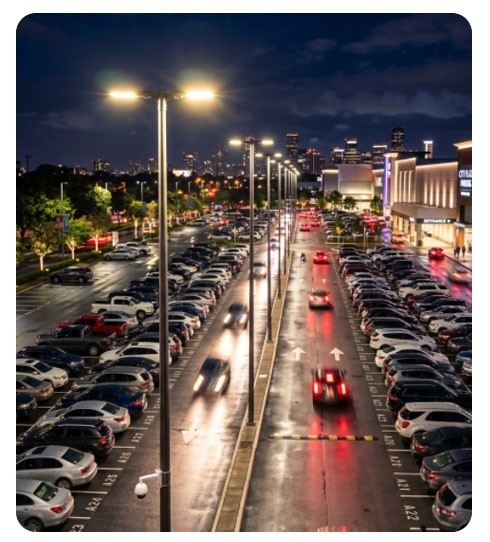
Material choice does not replace safe pole location. Keep poles outside vehicle swept paths or provide a coordinated island, curb or barrier where the site design requires protection. Consider carts, maintenance equipment, loading activity and mower access. An impact-resistant expectation must be defined through the applicable design basis, not assumed from a heavy appearance.
Doors and fasteners in public areas may need tamper-resistant details while remaining serviceable by authorized staff. Avoid sharp edges, projecting hardware and base covers that create trip or water traps. If sacrificial or breakaway behavior is required by a road authority, it becomes a specific system requirement that can govern the material, connection, foundation and approved testing route.
A technically suitable concept must also be available in the required product form, section size, length, finish and quantity. Tooling, forming limits, galvanizing bath dimensions, extrusion dies, casting patterns, polishing capacity and shipping constraints can influence the final arrangement. Ask each proposer to identify its production route and any dimensional boundaries early.
Do not assume one company supplies every material family. The commercial response should state which shafts, brackets, anchors, fasteners, finishes and documents are included and which are by others. For Jieyao inquiries, use the fabricated steel light pole hub as the primary product route and treat aluminum or stainless alternatives as comparative context unless a written proposal states otherwise.
Close the light pole material comparison with a brief decision record. List the approved assembly, governing documents, design inputs, exposure, finish, interfaces, evidence, deviations and unresolved actions. Attach the released pole schedule, drawings and approved samples. This record prevents a later material name from being separated from the conditions that made it acceptable.
When a value changes, identify which reviews reopen. A different luminaire affects photometrics and loads; a revised finish affects preparation and repair; a new base pattern affects foundations and conduits. Controlled change management protects search-stage recommendations from becoming unreviewed field substitutions and keeps procurement, engineering, production and installation aligned.
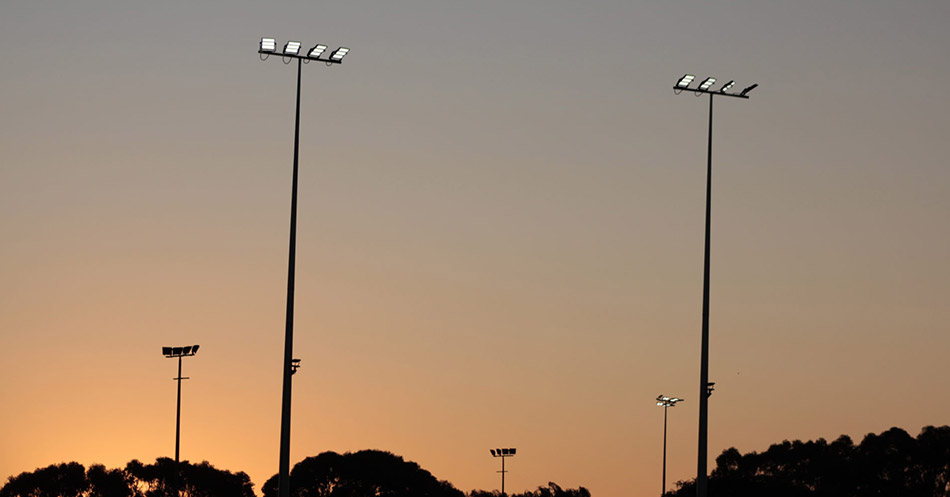
For fabricated steel options, the parking lot lighting pole page organizes a distinct commercial intent, while octagonal and square tapered profiles remain project-specific configuration choices. Their names are starting points; each project still needs a released configuration.
The best option is the assembly that satisfies the project's loads, exposure, interfaces, appearance and evidence requirements.
Compare finished assembly weights; geometry, base, joints and attachments also affect mass.
Yes. Grade, finish, deposits, cleaning, crevices and inspection still require a defined plan.
Assess the specific exposure and detailing; a compatible duplex system may be specified when required.
No. Material properties, section size, shape, openings, joints and loads all affect response.
Isolation can reduce galvanic interaction, but it must preserve structure, sealing and electrical requirements.
No. Photometrics define the mounting need and structural design sizes the proposed assembly.
Only through controlled structural, civil, finish, interface and document review.
Use one input schedule and compare inclusions, deviations, evidence, freight and installation scope.
Send geometry, equipment, loads, exposure, base concept, finish, quantities and destination.
Provide the pole schedule, fixture and arm data, wind basis, exposure, base concept, finish, quantities, destination and required submittals. Jieyao can organize a fabricated steel pole configuration and identify the open interfaces for project review.
Discuss Your Lighting Pole ProjectContact Us
Get a custom lighting solution and quotation for your project. Outdoor lighting manufacturer in Yangzhou, ChinaAbout Jieyao LightingYangzhou Jieyao Lighting Equipment Co., Ltd. is an outdoor lighting manufacturer focused on solar street light systems and high mas... Do you have any questions or requests?
Email: jay@jieyaolighting.com

Click to Chat.
Im online now.
Hey, I'm Xu Jie from Jieyao Lighting. What can I do for you? Welcome to contact me, WhatsApp: +86 13815843784
WhatsApp Us
🟢 Online | Privacy policy