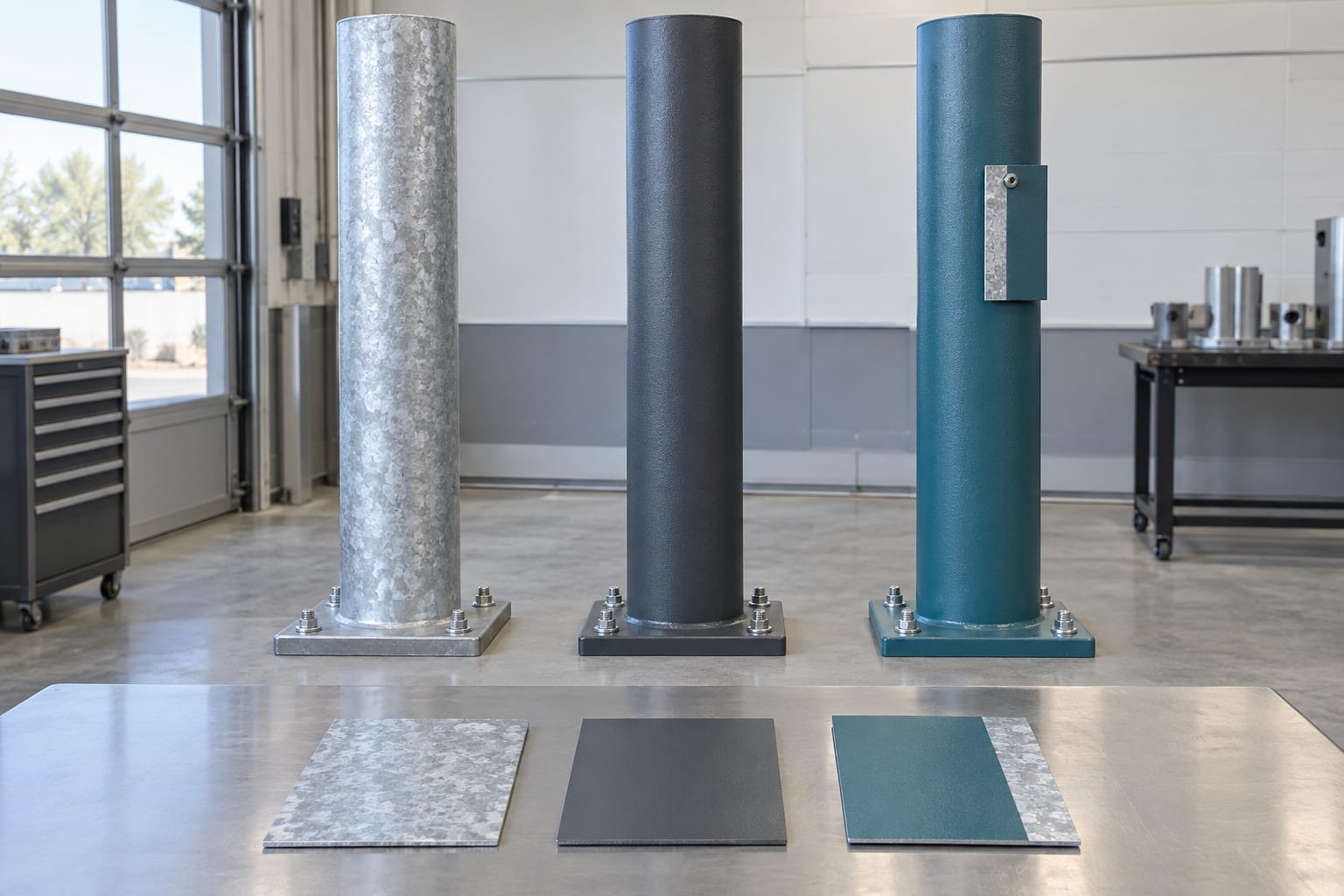
Compare complete finish systems on the same steel-pole design and exposure basis.
What is the practical difference?
Hot-dip galvanizing is a zinc coating formed on a suitably fabricated steel component by immersion. A direct-to-steel painted pole uses a specified organic coating system on a prepared steel substrate. A duplex pole combines galvanizing with compatible organic layers. Each route has its own fabrication, preparation, thickness, appearance, inspection and repair interfaces. None is automatically the lowest-cost or longest-lasting option for every site.
The selection should cover the shaft, arm, base plate, door, welds, hollow details, fasteners and field joints. Start with the owner’s specification and the actual atmospheric and local exposure. The street light pole product range provides the broader structural context; this page addresses only finish-system selection.
Table 1. Finish routes and their critical specification interfaces
| Route | Define before quotation | Check at acceptance |
|---|
| Hot-dip galvanized | Applicable standard, fabrication completion, vent/drain design, exposed interfaces | Specified coating criteria, coverage, fit and agreed repair records |
| Direct-to-steel organic | Surface preparation, compatible primer/intermediate/topcoat, color and cure | Layer records, thickness, visual condition and adhesion/test plan as specified |
| Duplex over galvanized steel | Zinc acceptance, surface conditioning, coating compatibility and joint details | Both stages, appearance, local damage and approved repair method |
Describe exposure and the fabricated assembly
“Outdoor” or “near the sea” is not a sufficient coating specification. State the project exposure method, salt or industrial deposition, wetting and drainage, irrigation, deicing contamination, cleaning practice and likely impact damage. The lower pole and base can face a different microenvironment from the upper shaft. For an exposure-led application example, see the coastal duplex-coated lighting pole.
Fabrication details must be resolved before finishing. Welds, access openings, gussets, stiffeners, caps, slip joints and attachments affect treatment access and coating continuity. Hollow assemblies going through hot-dip galvanizing require vent and drain design coordinated with the galvanizer and structural designer. Do not add holes or modify welds at the coating stage without approved drawings.
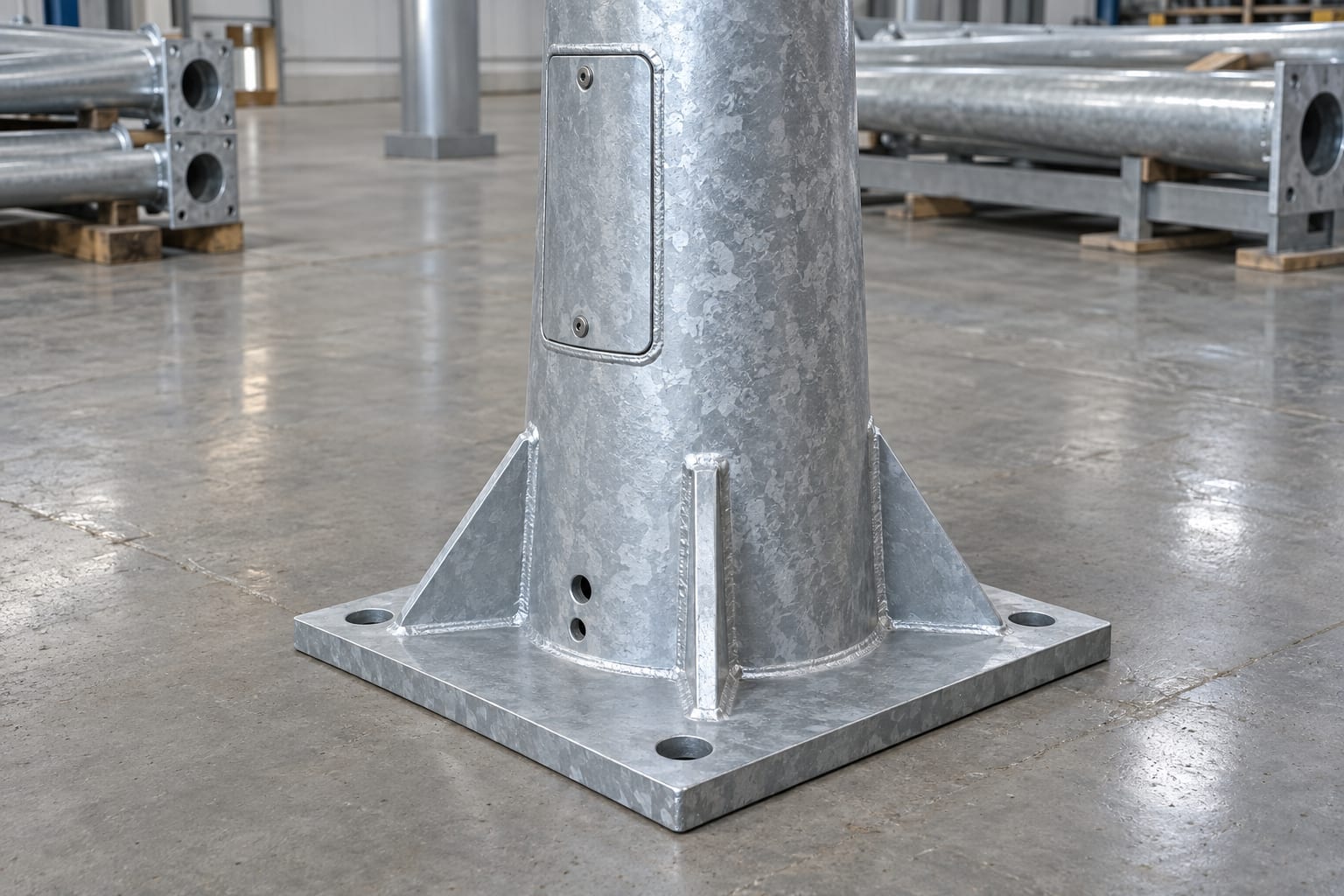
The base, openings and hollow connections require coordinated fabrication and finish access.
Specify preparation and inspection, not a color label
For galvanized work, name the contract standard and edition, product category, coverage and inspection/repair requirements; do not infer acceptance from a bright or matte appearance alone. For an organic system, define substrate preparation, layer sequence, target appearance, application conditions, cure and the inspection plan supplied by the coating-system provider. A duplex system needs explicit compatibility and conditioning between the zinc and organic stages.
Standards are contract-dependent. For example, ISO 1461 and ASTM A123/A123M are different reference routes for hot-dip galvanized fabricated steel; the purchase order should state which applies. An organic-coating schedule requires its own product data and acceptance criteria. Avoid promising one universal thickness, appearance or service life across unrelated systems.
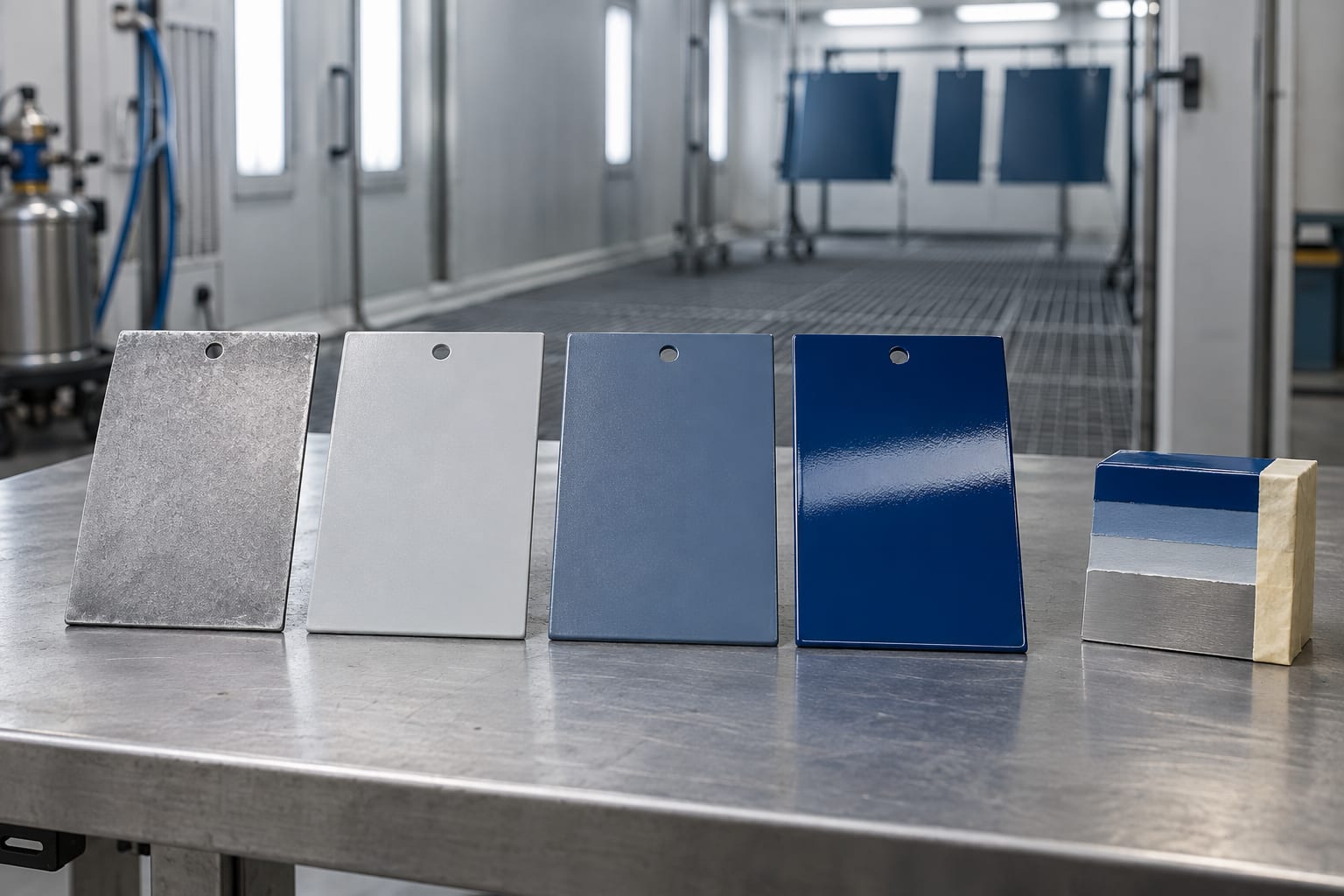
The approved organic system should identify preparation and every applied layer.
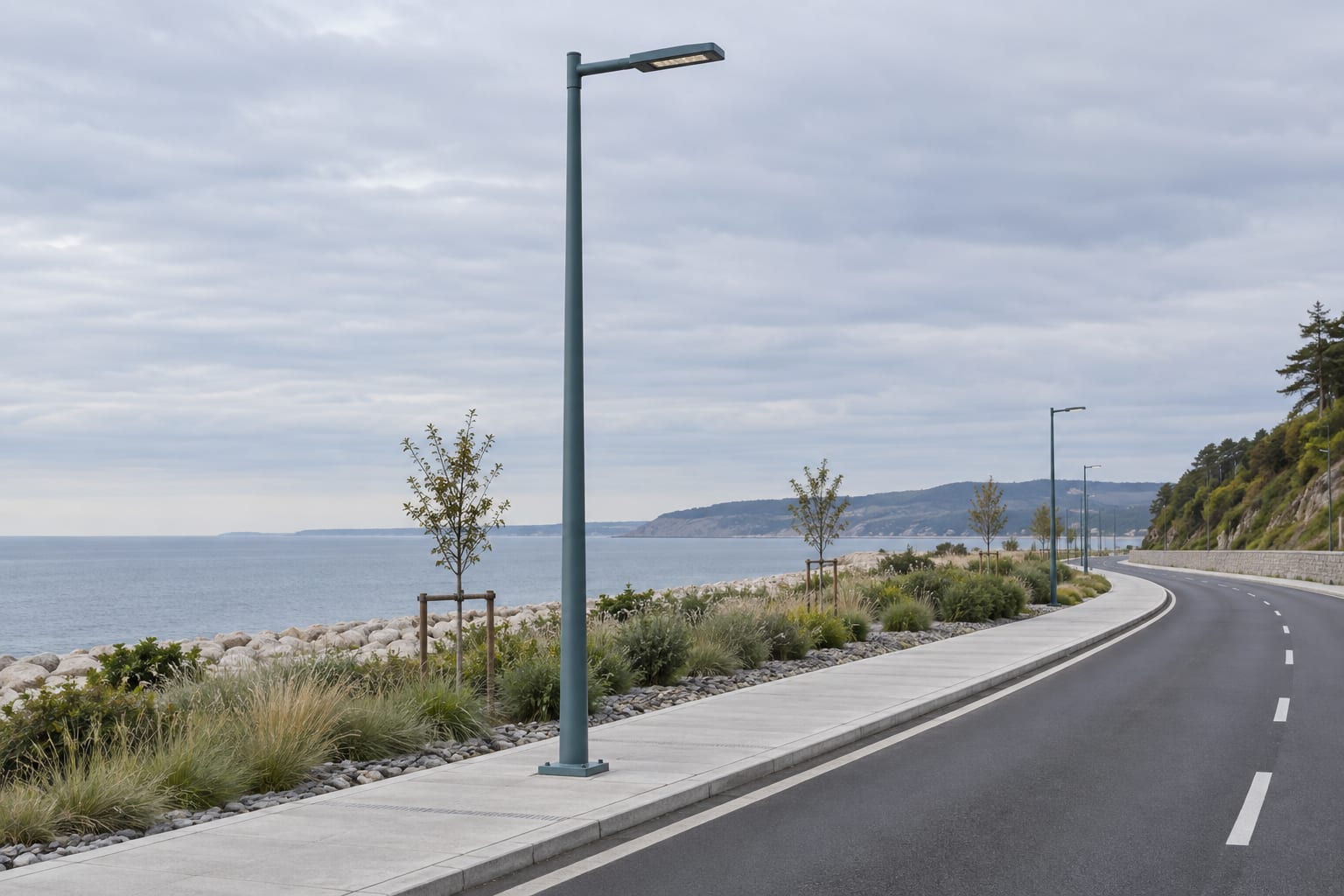
A duplex system still depends on compatible layers, drainage and maintenance planning.
Plan damage control, field repair and maintenance
Packing and lifting can damage either system. State contact protection, sling locations, unloading checks and the record required when damage is found. Localized repairs must match the approved system and the applicable project/standard procedure; do not conceal unapproved cutting or welding under paint. At handover, retain finish records and a practical inspection plan for base zones, doors, arm connections and areas exposed to contamination.
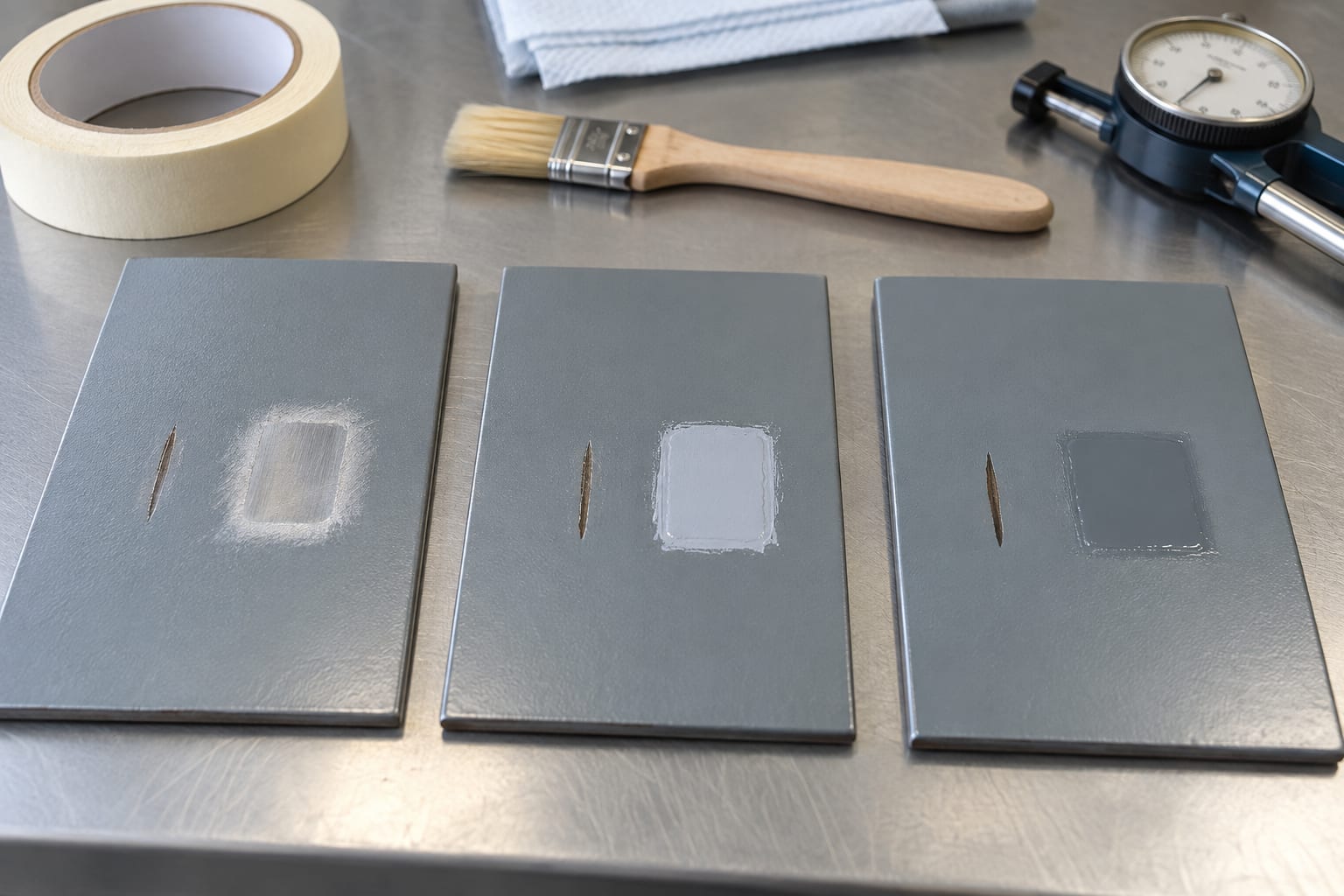
Agree the repair boundary and process before the first transport or installation damage occurs.
What should a finish-system RFQ contain?
Send the pole drawing, component list, site exposure and maintenance assumptions, appearance target, selected contract standard or coating product system, hold points, inspection documents and delivery conditions. Ask each bidder to state deviations and required design changes. The shop-drawing checklist helps coordinate fabrication, and the installation checklist carries the finish into site handover.
Table 2. Buyer RFQ and submittal record
| Record | Buyer supplies | Supplier confirms |
|---|
| Exposure and appearance | Site conditions, color/texture sample, access for maintenance | Proposed complete system and limitations |
| Fabrication interface | Released drawings and component list | Vent/drain, fit, masking and coating access plan |
| Acceptance evidence | Governing standard/system, hold points and repair approval | Inspection records, deviations and repair method |
| Delivery and handover | Packing, handling and site inspection requirements | Protection, damage log and maintenance guidance |
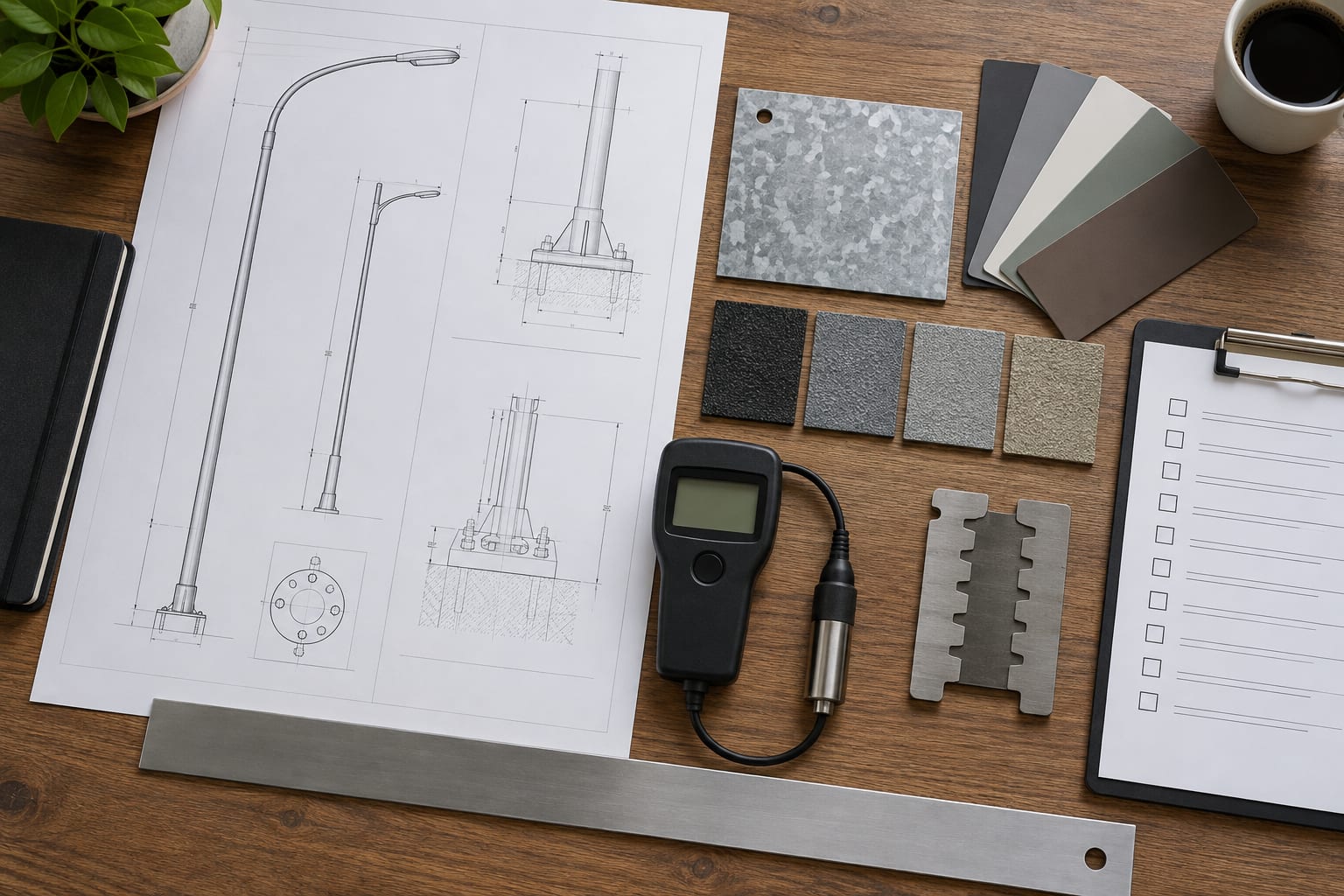
Keep the approved sample, system schedule and inspection record aligned.
Frequently asked questions
Is galvanizing always better than paint?
No. Compare the specified systems against exposure, fabricated details, appearance, acceptance evidence and maintenance access.
Can a galvanized street light pole also be painted?
Yes, if the organic layers and zinc-surface preparation are compatible and are specified as a controlled duplex system.
Why do hollow details need vent and drain openings?
They allow process fluids, gases and molten zinc to move safely during hot-dip galvanizing; location and sizing require design and galvanizer coordination.
Which finish should be used near the sea?
There is no distance-only answer. Define salt deposition, wetting, base drainage, cleaning and maintenance before selecting a compatible system.
Can damaged coating be repaired on site?
Localized repair may be possible under the applicable system and approved procedure. Record the damage and verify the repair rather than assuming any touch-up paint is equivalent.
Need a finish proposal for a defined pole and site? Send the drawings and exposure requirements for a scope review.