

 English
 Español
 Bahasa Indonesia
 Français

- Product details
-
Why tunnel lighting needs its own fixture review
Open-road lighting and tunnel lighting solve different visual conditions. A driver approaching a portal moves from a bright exterior environment into a confined interior; visibility depends on the transition, the tunnel geometry and the design method adopted by the project authority. A long tunnel may also be divided into operating zones with different design and control requirements. These are reasons to evaluate a tunnel luminaire as part of a system, rather than treating it as an ordinary street-light head with a different label.
The FHWA Lighting Handbook describes tunnel design as more complex than typical roadway lighting and identifies daytime and nighttime conditions, eye adaptation, orientation and portal design among the factors to consider. Its guidance is a reference—not a substitute for the project jurisdiction's adopted standard or engineer-of-record decisions.
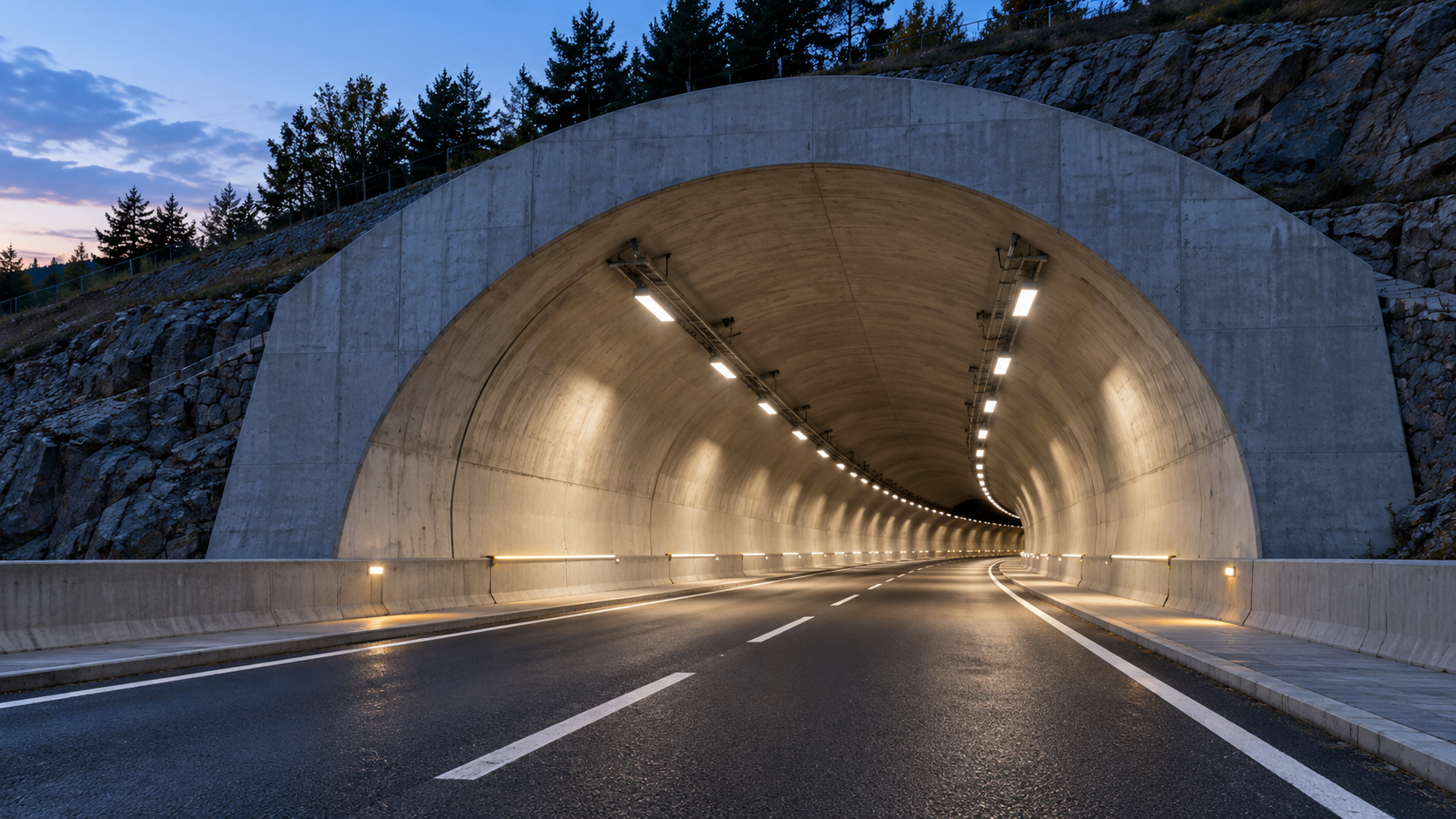
Tunnel application overview; project geometry and lighting criteria must be checked independently.
Project inputs to confirm before a quotation
RFQ input Why it matters Useful material to share Tunnel and portal geometry Sets mounting locations, spacing constraints and transition zones. Plan, longitudinal section, cross-section and portal photographs. Lighting criteria Defines the target calculation method and acceptance basis. Project specification, adopted standard and calculation requirements. Operating conditions Day/night schedules, traffic patterns and control strategy affect system selection. Operating brief, control sequence and any dimming interface requirements. Environment and access Moisture, dust, cleaning method, temperature and maintenance access influence enclosure and service review. Environmental notes, cleaning plan and access constraints. Electrical and mounting interface Prevents mismatches at supply, bracket, cable entry and service connections. Voltage/frequency, mounting detail, cable entry and approved interface drawing. How to review a tunnel luminaire submittal
1. Check the photometric file
Confirm that the submitted IES or LDT file corresponds to the exact offered configuration. Review the calculation grid, reflectance assumptions and maintenance basis against the specification.
2. Check the physical interface
Compare dimensions, mounting orientation, cable entry and service clearances with the tunnel's actual support detail. Do not assume a road-pole bracket is suitable for a ceiling or wall installation.
3. Check the compliance record
Request model-specific reports and declarations required by the tender. The project team should confirm the issuing body, model scope, document validity and accepted national rules.
Jieyao project coordination
Jieyao Lighting supplies outdoor roadway lighting products and supports project-based product review. For a tunnel enquiry, share the drawings and tender criteria first; the proposed fixture, optical distribution, control interface and supporting documentation can then be checked against the stated application. No tunnel rating, certification or performance figure should be assumed from a different street-light model.
For related roadway products, see the LED street light range and modular LED street light. These are related product families, not automatic substitutes for a tunnel specification.
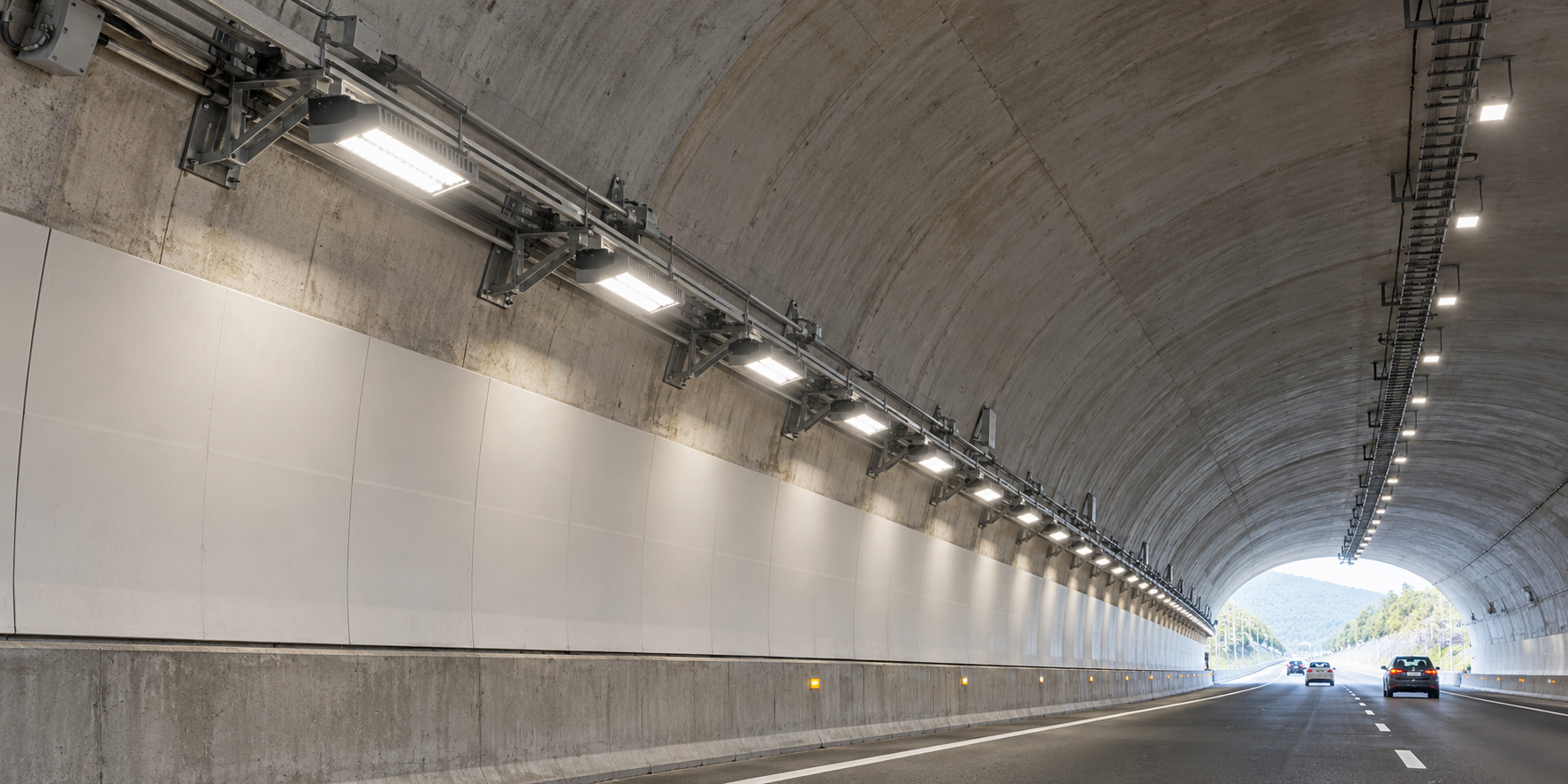
Tunnel luminaire mounting context; the offered model and fixing detail must be confirmed from project documents.
What to include in your tunnel-lighting RFQ
- Country, project location and the authority or standard named in the tender.
- Tunnel length, cross-section, portal orientation and roadway layout.
- Required lighting zones, control sequence and operating hours.
- Target photometric metrics and calculation grid, if supplied by the designer.
- Mounting, power-supply, cable-entry and maintenance-access details.
- Required test reports, compliance documents, quantities and delivery schedule.
Need a tunnel-lighting product review?Send the tunnel drawings, written criteria and required submission list through the Jieyao contact page. A model-specific offer can be prepared after the interface and evidence requirements are clear.
How to build a reviewable tunnel-lighting submittal
Keep the offer traceable to one drawing and one model revision. A clear schedule should connect each tunnel zone to the proposed fixture configuration, optic, mounting position and control state. If the tender requests a calculation file, identify the calculation software/version and the photometric file used; if it requests laboratory or compliance evidence, list the exact document and model scope. Open issues—such as a missing portal section or unclear operating sequence—should be logged as questions, not silently filled with assumptions.
For a multi-zone tunnel, show the boundaries and the design basis of each zone in a way the reviewer can follow. Include the day/night operating modes stated by the project, the handover interface for controls and the method for confirming settings after installation. Any adjustment to output, optic or mounting must flow back into the calculation and product schedule so the delivered configuration matches the reviewed package.
Submittal item Traceability check Fixture schedule Each designation maps to a specific model, optic and output configuration. Photometric calculation Inputs and boundaries match the latest approved drawings and criteria. Controls narrative Operating states and control handoff are explicit and testable. Compliance folder Reports apply to the exact model and are current for the tender scope. Separate the tunnel zones before comparing fixtures
A tunnel package may contain approach, threshold, transition, interior and exit conditions, but the names and boundaries depend on the adopted design method. Ask the project designer to identify the calculation zones and the operating state for each one. This prevents one fixture schedule or output setting from being applied to locations with materially different visual conditions.
When reviewing alternatives, hold the road geometry, calculation grid, surface assumptions and maintenance basis constant. Compare the exact photometric file and mounting arrangement proposed for each zone, then document any control or output changes. A change to optic, tilt, spacing or output can affect more than one zone; reflect it in the revised calculation and equipment schedule before approval.
For staged procurement, agree how the approved file, configuration code and drawing revision will be tied to supplied goods. If the project requests sample review, laboratory evidence or on-site aiming checks, list those as separate acceptance steps. A calculation checks a design model, while product documentation and installation inspection address different parts of delivery.
Match procurement documents to the approved configuration
For each offered tunnel fixture, request a schedule that identifies the model, optic, output setting, mounting orientation and control interface. Link the schedule to the photometric file and drawing revision used for the design. If an alternate is proposed, list exactly what changed and return the recalculation needed to show its effect on the relevant zones.
Documentary requirements should be stated by the tender rather than guessed. They may include test reports, declarations, quality records, samples or a commissioning procedure, but each document has a scope and issuer that must be checked. Confirm that any report identifies the offered model and configuration and that the responsible authority accepts its method.
Before delivery, agree how each zone and circuit will be identified on site, which party verifies controls and aiming, and what records form the handover package. This reduces the chance that a technically reviewed design is changed during procurement without a visible revision. It also helps the owner connect a future replacement part to the correct tunnel zone.
Plan the tunnel zones and operating sequence
A tunnel is not one uniform space. The design brief may distinguish the open approach, portal transition, entrance zone, interior section and exit transition, with each boundary tied to the road geometry and adopted lighting method. These labels help the designer explain what is being calculated; they do not by themselves define a universal output level. The engineer should identify the tunnel length, portal orientation, daytime conditions, traffic operation and any locally required adaptation approach.
Controls should be described as part of the system rather than added after the luminaire has been selected. State whether the project requires switching, scheduled dimming, sensor input, central control or another operating mode, then confirm compatibility across the driver, control protocol and electrical design. If emergency lighting or evacuation systems are within the contract, list them separately so a roadway-lighting fixture is not assumed to perform a life-safety function without the required evidence.
Check environmental exposure and maintenance access
Tunnel luminaires operate in an environment that can include moisture, airborne dirt, vehicle emissions, temperature variation, vibration and difficult access. The project specification should identify its actual conditions and the evidence required for the selected equipment. Request the applicable ingress-protection report, operating-temperature information, electrical documentation and maintenance instructions for the exact offered model; do not transfer a rating from another product in the supplier's range.
Maintenance planning affects whole-life usability. Confirm how a unit is isolated, reached and removed, whether cleaning is expected, how replacement parts are identified and who can access the tunnel during service. The owner may need to coordinate lane closures, ventilation states or other site permits. These operational constraints can influence mounting detail and serviceability even when they do not change the photometric calculation.
Review item Question for the project team Evidence to request Zone definition Which tunnel sections and transitions are included? Marked plan, section drawings and design criteria. Operating mode What controls, schedules or dimming states are required? Control narrative and interface schedule. Environment What exposure and temperature conditions apply? Project specification and model-specific reports. Service access How will inspection and replacement be carried out? Maintenance plan, access method and isolation procedure. Plan replacement and maintenance without losing the design basis
For a retrofit or staged tunnel project, record the existing circuit arrangement, operating sequence, mounting condition and access restrictions before choosing replacement equipment. Confirm whether the work is a like-for-like change, a controls upgrade or a redesign; these scopes require different calculations and approvals. Note which lanes or zones can be closed, how equipment will be isolated and what temporary lighting or traffic arrangements the contractor must provide under the project method.
During handover, retain the approved luminaire schedule, photometric files, control settings, installation checks and maintenance instructions required by the contract. Label the installed equipment consistently with the drawings and asset register. This makes later fault diagnosis more reliable and helps prevent a future replacement from being selected solely by appearance or nominal wattage.
Every tunnel has site-specific safety, operational and engineering controls. Product selection should therefore follow the responsible designer’s criteria and the owner’s requirements; this page is a procurement checklist, not a tunnel design approval or a substitute for the project’s governing documents.
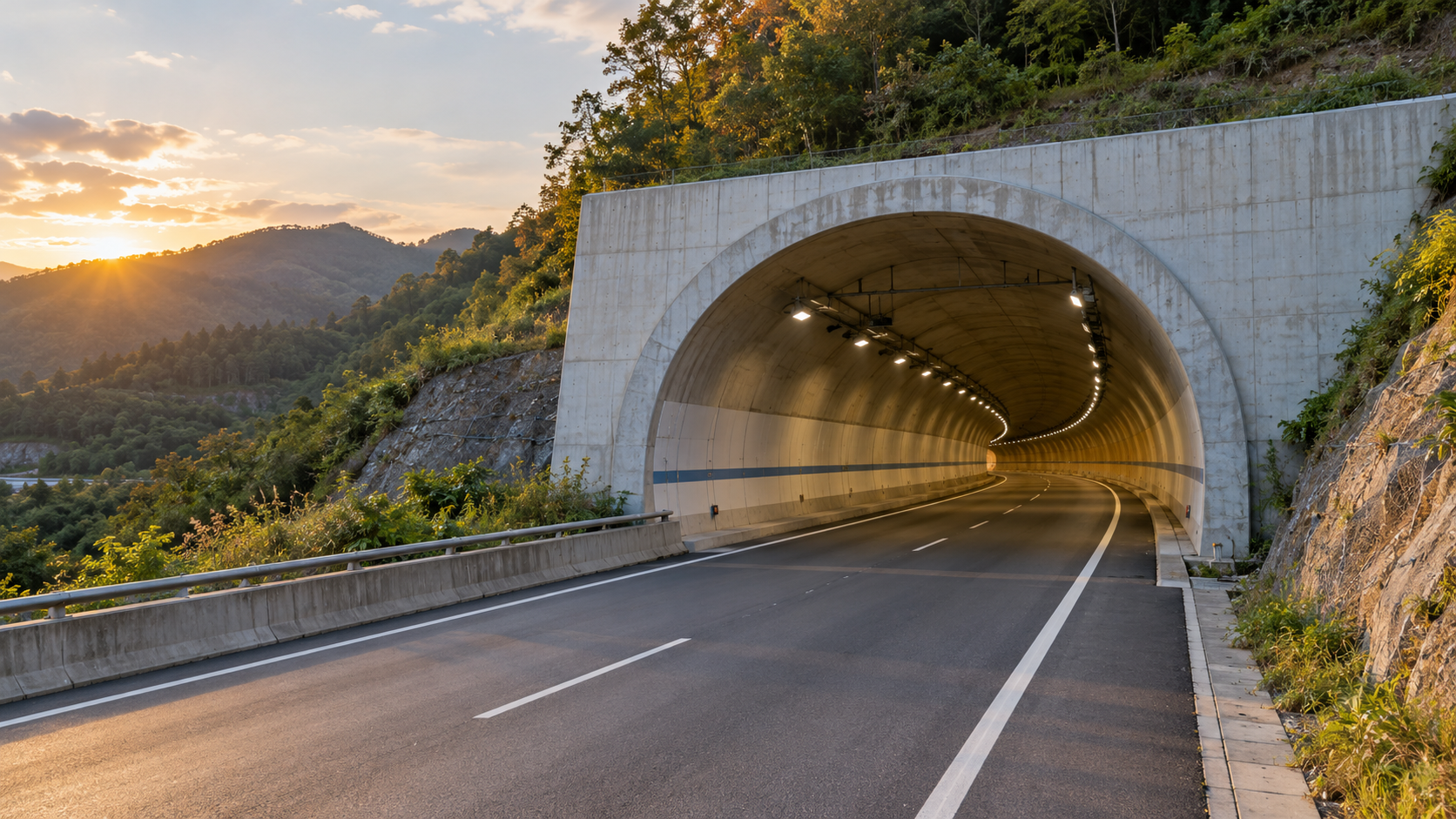
Portal and approach conditions form part of the tunnel-lighting design review.
Frequently asked questions
Can an ordinary street-light fixture be used inside a tunnel?
Not by assumption. The project designer must confirm photometry, mounting, environmental suitability, electrical interface and compliance for the actual tunnel conditions.
What is the first document needed for a tunnel-lighting quotation?
Start with the project drawings and lighting specification, including the authority's criteria and calculation requirements. A product schedule alone may omit the portal and mounting conditions.
Can Jieyao provide a fixed tunnel-luminaire rating before reviewing the project?
The model and ratings must be matched to a verified product and the tender. Share the required performance and documents so the available configuration can be checked accurately.
Does this page claim a completed Jieyao tunnel installation?
No. The tunnel scene is an application illustration; the product photo is a roadway luminaire example. Neither is presented as a named tunnel project.
Technical reference: FHWA Lighting Handbook (tunnel-lighting considerations). Consult the currently adopted local standard and project engineer for final design criteria.
-
-


