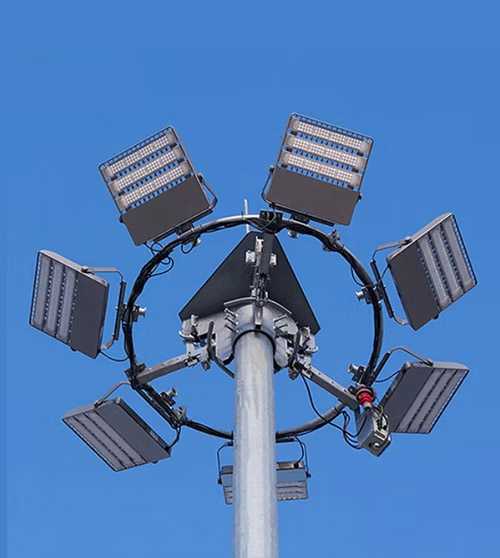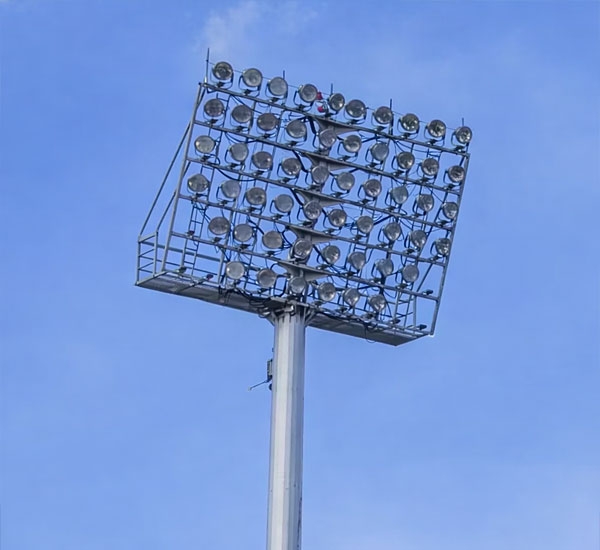


Short answer: There is no single anti-corrosion lifespan for every hot-dip galvanized high mast pole. Time to first maintenance depends on the measured zinc coating, local atmospheric exposure, details such as crevices and drainage, and any coating damage or repair. Specify the inspection criterion and site conditions before quoting a number of years.
A blanket “25–30 years” rule of thumb is too broad for a procurement decision. A dry inland site and a salt-exposed coastal site can give very different results even when both poles are galvanized. Likewise, the first planned coating maintenance is not the end of the steel pole's structural service life. The American Galvanizers Association's time-to-first-maintenance guidance defines a measurable maintenance point rather than a universal product warranty.
Zinc thickness is only one input. Road de-icing salts, airborne marine salt, industrial pollutants, humidity and wet/dry cycling change the exposure. Water traps, damaged edges, fastener interfaces and poor drainage can create local conditions that a broad atmospheric category misses. A high mast assembly also includes the shaft, base, access door, head frame and attachment hardware; each interface deserves its own inspection route.
| Input | Evidence to request | Why it matters |
|---|---|---|
| Zinc coating | Specified acceptance standard and measured thickness record | The starting zinc reserve affects maintenance timing. |
| Atmospheric exposure | Site location, salinity, pollutants and wetting conditions | The local zinc consumption rate is not universal. |
| Geometry and interfaces | Drawings showing drainage, access door, base and head-frame details | Crevices and standing water can accelerate local deterioration. |
| Handling and repair | Delivery inspection, damage log and agreed repair record | A repaired patch may age differently from the surrounding coating. |
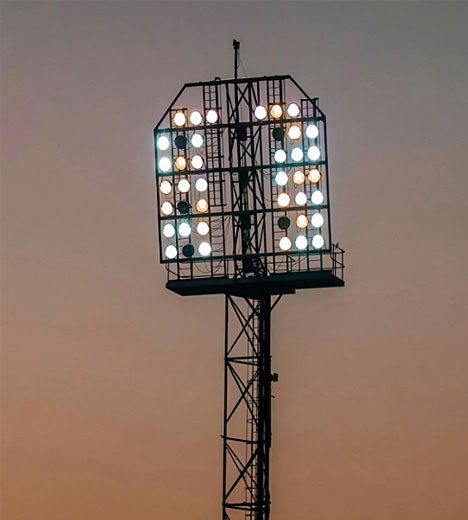
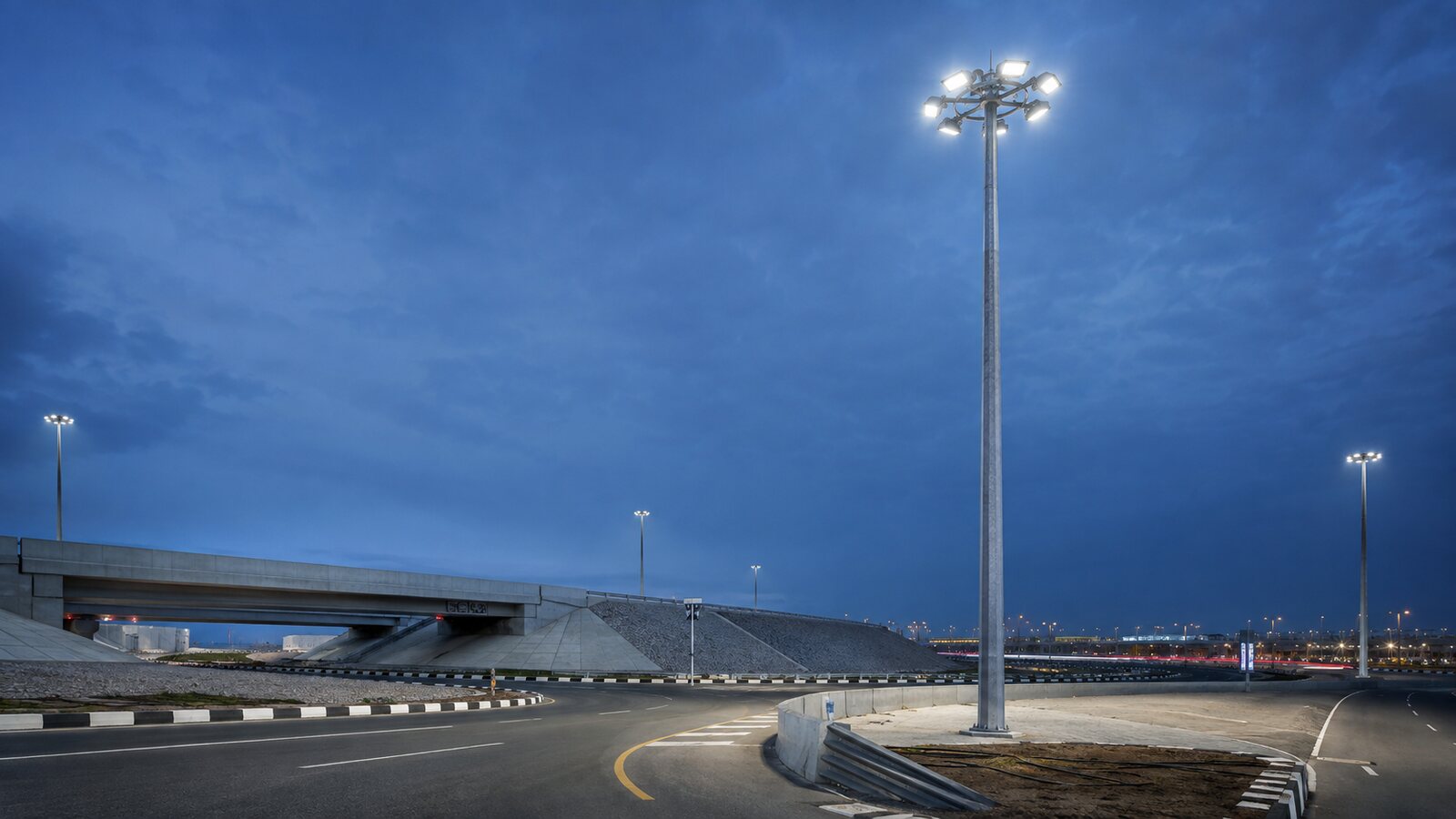 High mast configuration: assess exposure at the full shaft and head-frame height.
“Time to first maintenance” is a planning measure for when coating work becomes advisable; it is not the same as the structural life of galvanized steel. A project specification should state whether it asks for an expected first maintenance interval, a coating warranty, or the design life of the complete mast. Those are different deliverables and should not share one unqualified year figure.
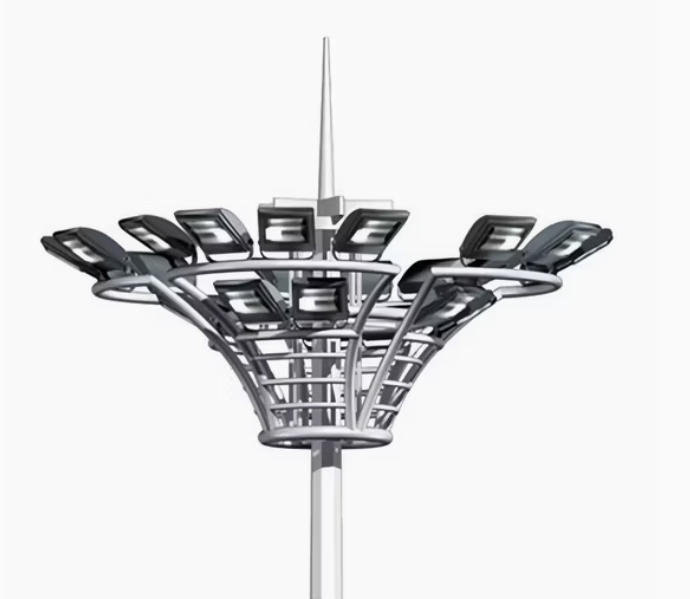
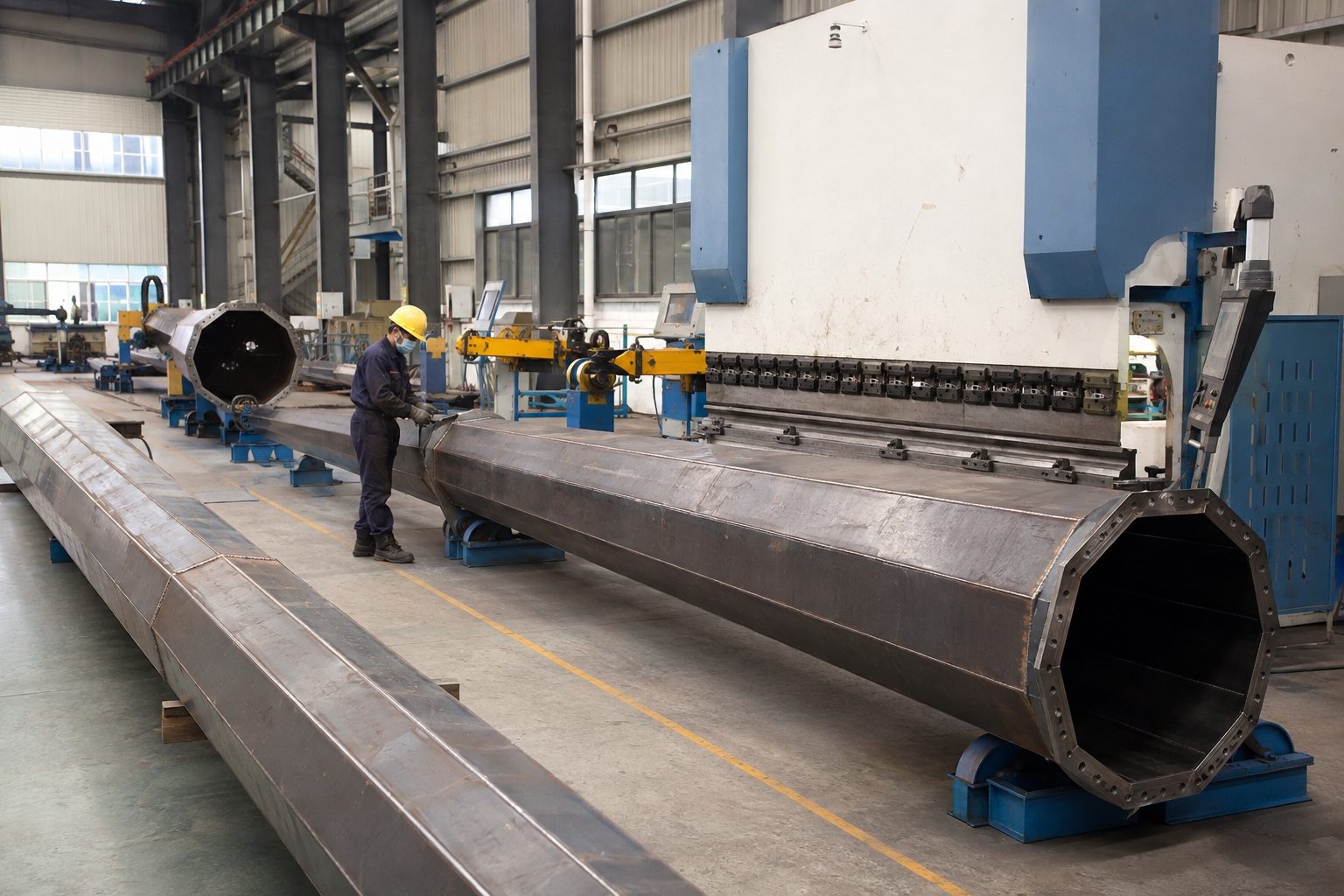 A galvanized pole section; specify the coating system and inspection record for the actual order.
Request the governing project coating standard, substrate and component scope, coating-thickness acceptance method, repair procedure, and the exposure basis used for any durability estimate. Ask how the supplier will check the shaft, weld-adjacent areas, door edges, base plate and attachment parts. For salt-laden or unusually aggressive settings, consider whether a duplex coating system should be evaluated alongside galvanizing alone; the choice belongs to the site-specific specification, not a generic catalog promise.
| Stage | Check | Decision or record |
|---|---|---|
| Before shipment | Coating thickness and visible discontinuities at agreed locations | Accept, repair under the specification, or hold for review |
| At delivery and erection | Handling damage, bolt interfaces, standing-water paths | Record and repair damage before concealed interfaces close |
| Routine service | Rust staining, coating loss, drains and previous touch-ups | Trend observations; measure local thickness where needed |
| Localized deterioration | Extent, location and any steel loss | Qualified assessment, coating repair or structural action |
The AGA field-inspection guidance notes that earlier touch-ups can require extra attention. A field team should never treat appearance alone as a substitute for the agreed acceptance criteria or for a structural review where steel loss is suspected.
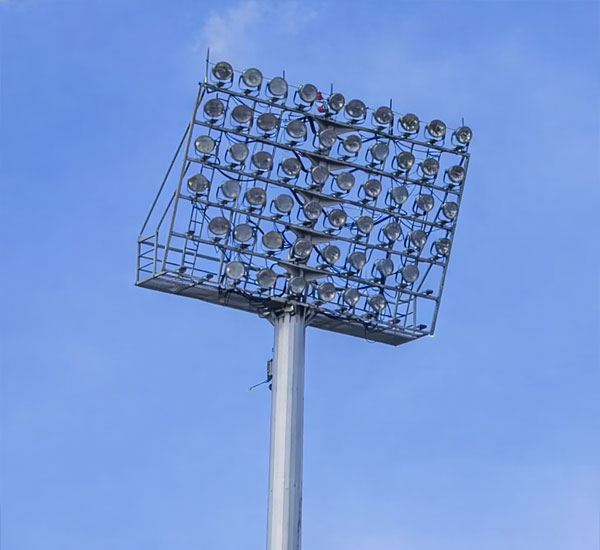
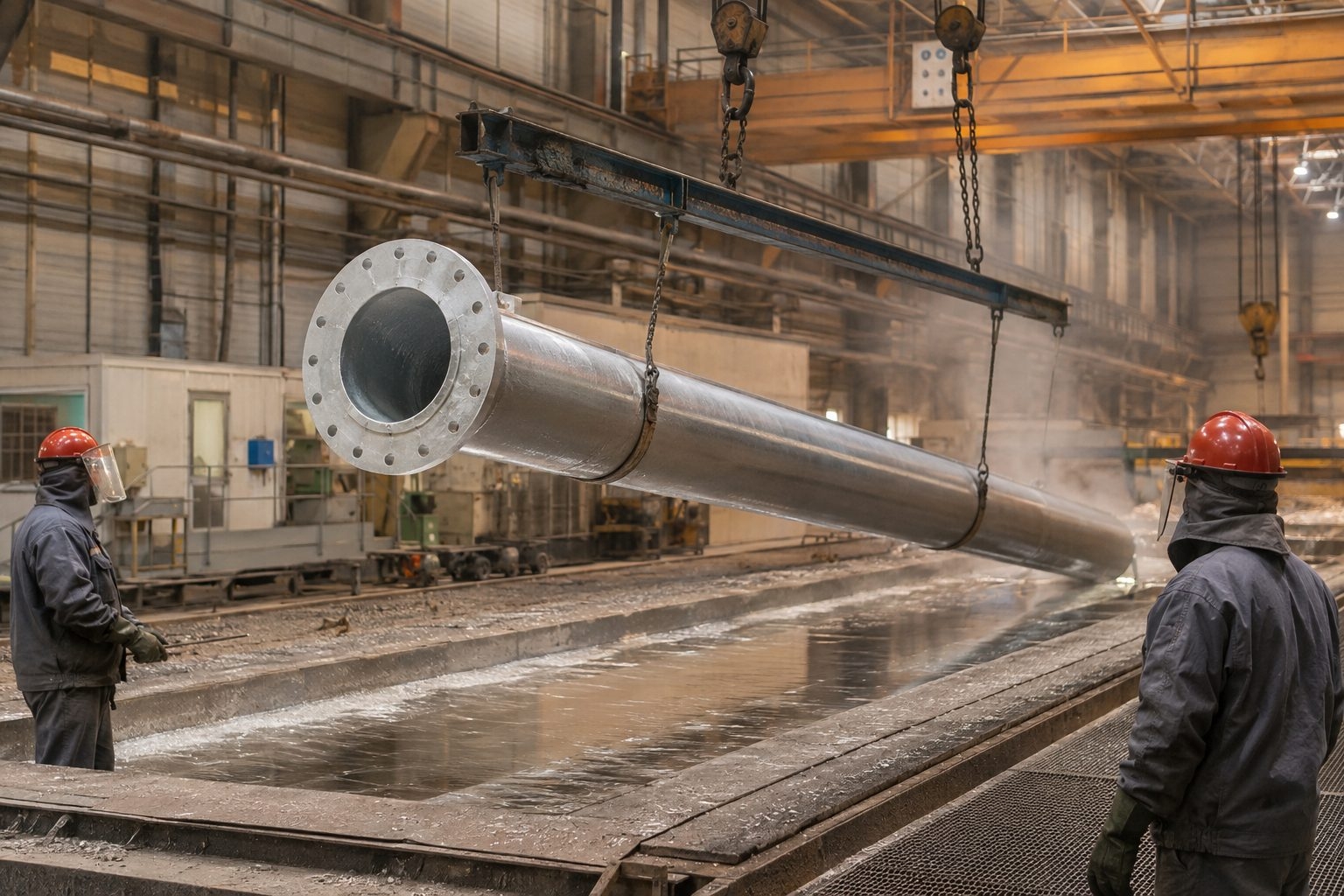 Thickness records support acceptance and later maintenance decisions.
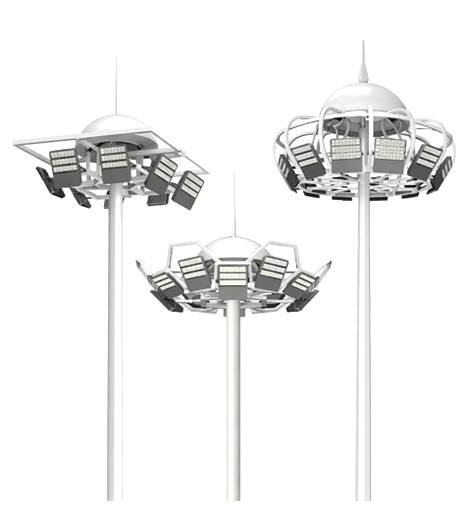
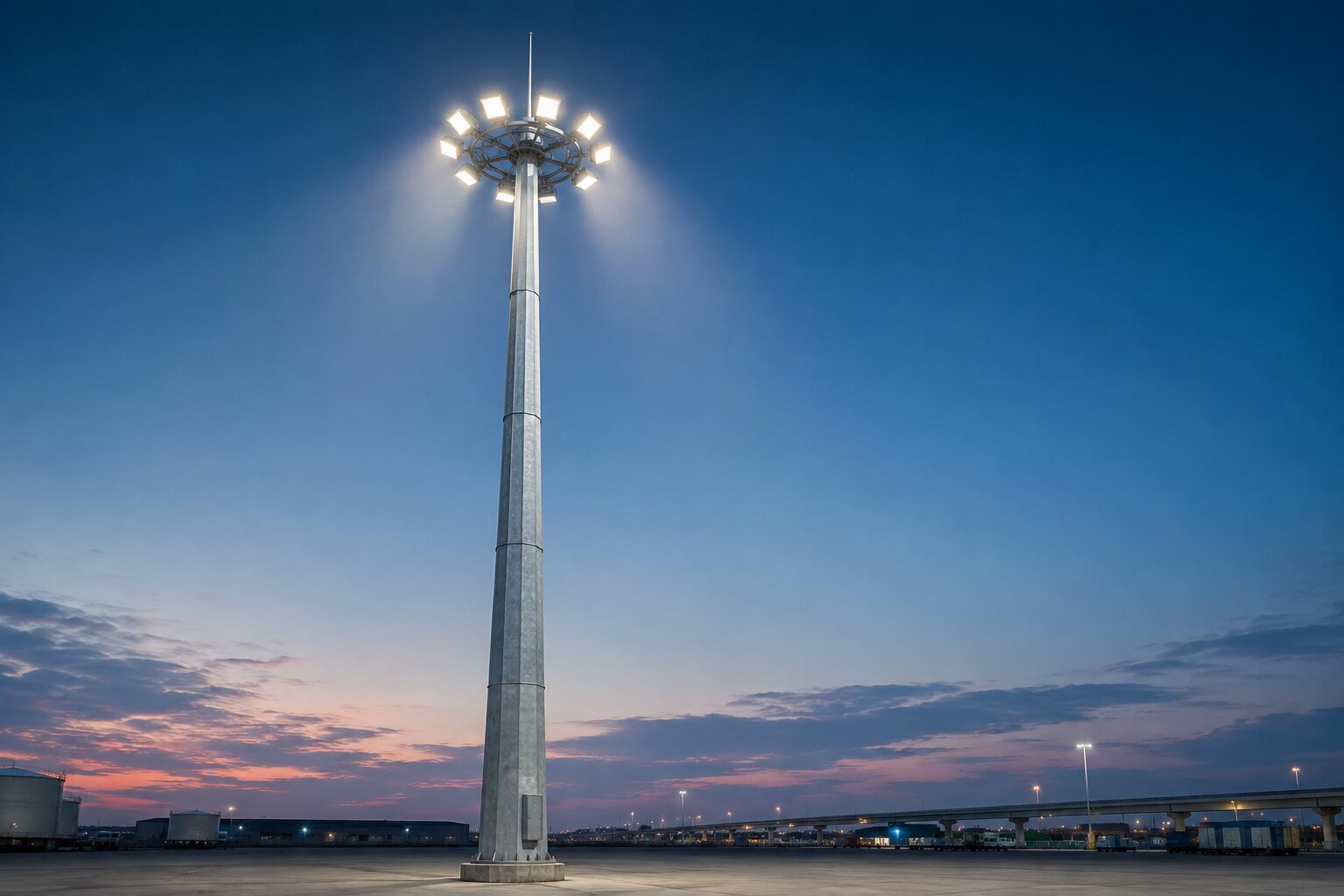 Access and exposure at the mast head should be considered in the service plan.
Use the galvanized coating inspection and repair guide for detailed hold points, and the galvanized-versus-painted finish comparison when choosing a system. For complete large-area structures, browse the high mast lighting range or send the exposure and project specification for a configuration review.
No. State the exact performance criterion, coating requirements and site exposure; a bare year figure without these inputs is not a defensible universal promise.
Not by itself. Record the location and extent, check the remaining coating and local exposure, then assess against the project inspection criteria.
Where salt exposure, maintenance access and the desired service interval justify it, compare a project-specified duplex system with galvanizing alone. The decision should follow the actual site and approved coating specification.
Contact Us
Get a custom lighting solution and quotation for your project. Outdoor lighting manufacturer in Yangzhou, ChinaAbout Jieyao LightingYangzhou Jieyao Lighting Equipment Co., Ltd. is an outdoor lighting manufacturer focused on solar street light systems and high mas... Do you have any questions or requests?
Email: jay@jieyaolighting.com

Click to Chat.
Im online now.