
 English
 Español
 Bahasa Indonesia

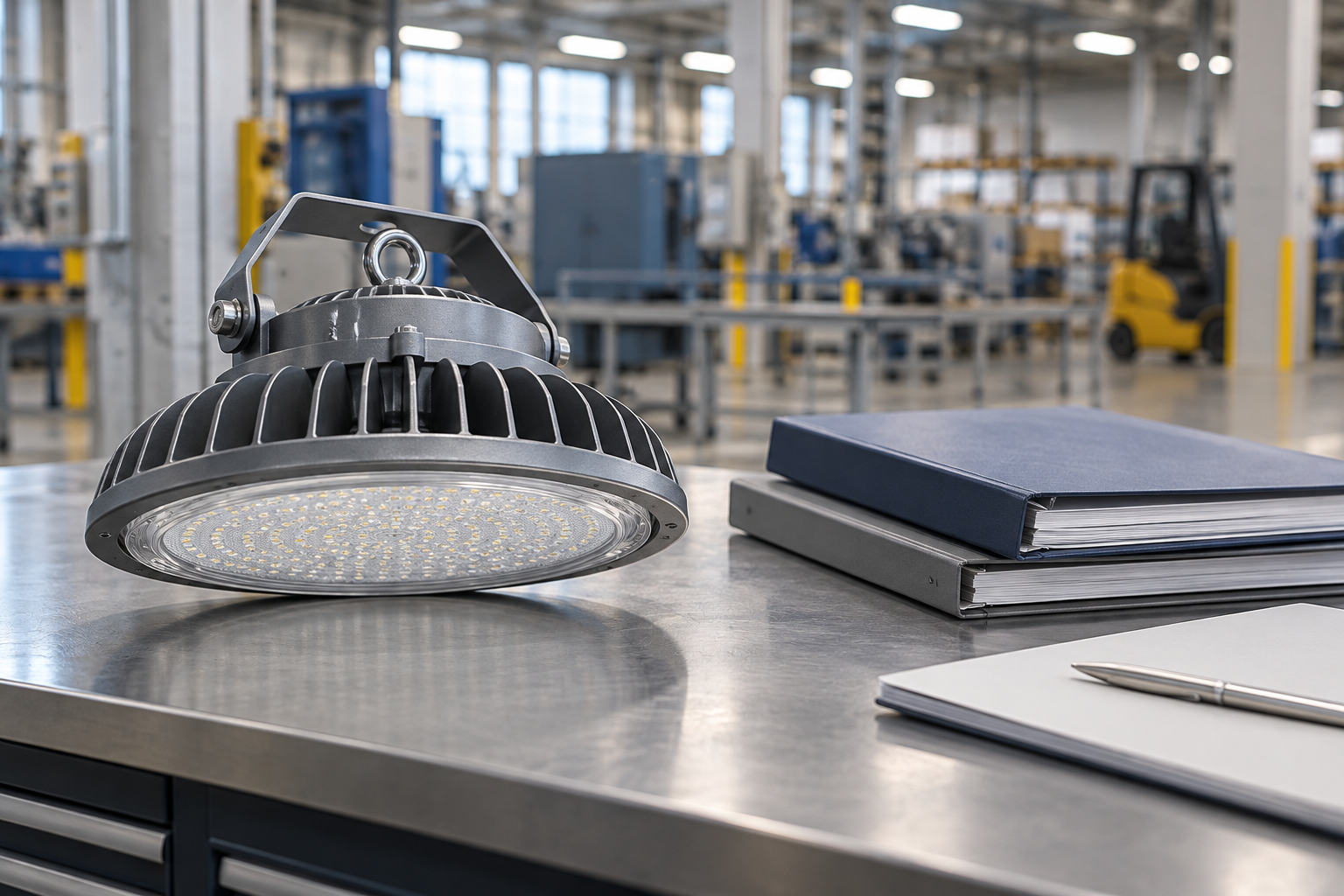
Quick answer: Do not choose explosion-proof LED lighting by appearance or a generic product label. First establish the hazardous-area classification and applicable rules for the installation, then match the exact luminaire marking and certificate scope to the location, substance, temperature and installation method. Jieyao confirms an explosion-proof LED product family is available for enquiry; no specific model suitability or certification should be assumed until its documents are checked by the project’s qualified personnel.
This page is a procurement and document-review guide, not an engineering approval or declaration that a particular fixture is safe for a hazardous location. Classification, equipment selection and installation must be completed under the applicable jurisdiction by competent project professionals.
Begin with the site classification
Before requesting a fixture, obtain the project’s hazardous-area classification documents. Depending on the regulatory system, these may identify zones or class/division, gas or dust groups, temperature limits, ambient conditions and other restrictions. The correct terminology and required marking vary by jurisdiction and by the nature of the hazard.
A supplier should not infer classification from a site name such as “chemical plant,” “paint shop” or “fuel area.” The project engineer or responsible authority must identify the location’s classification and provide the design basis. If the area classification is unknown or outdated, stop the product-selection step and obtain a qualified review rather than selecting a fixture by marketing language.
Match marking and certificate to the offered model
Request the full model number, nameplate marking, certificate number and complete certificate documents for the exact offered configuration. Compare the manufacturer or certificate holder, model family, suffixes, accessories, supply options and any conditions of use. A document for a related product is not automatically applicable to another model or configuration.
Check the issuing body, certificate status, applicable standard or scheme, country/market recognition and any special installation conditions. Confirm whether the document covers the entire luminaire or only a component. The exact review method depends on the local regulatory framework; a procurement checklist cannot replace the authority having jurisdiction.
Hazardous-area RFQ document checklist
| Information | Provided by project owner or engineer | Verified for exact offered model |
|---|---|---|
| Area classification | Applicable zone or class/division, source document and drawing revision | Marking is suitable for the stated classification |
| Hazard group | Applicable gas, vapor, dust or fiber group under the project’s system | Equipment marking covers the required group |
| Temperature constraints | Process temperature and required equipment temperature class/limit | Marking and operating limits meet the project requirement |
| Ambient and exposure | Ambient range, moisture, corrosion, vibration and mounting location | Datasheet and certificate conditions cover the installation environment |
| Electrical and control | Supply, circuit, switching, dimming and emergency requirements | Exact driver, wiring method and approvals align with the model documents |
| Certificate scope | Destination market and required scheme or authority acceptance | Holder, model, suffixes, validity and special conditions are current and applicable |
| Installation method | Mounting, conduit/cable entry, glands and competent installer scope | Instructions and approved accessories match the certificate conditions |
Review the installation conditions
Hazardous-area approval may depend on how the luminaire is installed, not just on the housing. Confirm cable entry type, thread form, glands or conduit, bonding and earthing, fasteners, mounting position, enclosure closure and any temperature or orientation limits stated by the manufacturer. A change to an accessory, wiring arrangement or enclosure component may affect the documented configuration.
Identify who is authorized to install, inspect and maintain the equipment under local rules. Include isolation, access and replacement procedures in the project plan. Do not open, modify or repair equipment in a hazardous area except under the applicable safety procedure and manufacturer instructions.
Lighting design remains a separate requirement
After the safety classification and equipment approval are established, evaluate whether the proposed optical output and layout meet the work task. The hazardous-area marking does not establish illumination level, uniformity, glare control, energy use or visual comfort. Request photometric information for the exact model and use a project-specific calculation where required.
Keep the safety approval review and lighting design review connected but distinct. A luminaire that satisfies a hazardous-area requirement still needs to be checked for the actual lighting application, mounting position, maintenance access and electrical supply.
Red flags that require clarification
- A quote gives only “explosion-proof” without full model marking and certificate scope.
- A certificate image is cropped, expired, issued to another holder or does not identify the proposed model.
- Zone/classification, gas or dust group and temperature conditions are missing from the project documents.
- The offered suffix, driver, cable entry or accessory differs from the certified configuration.
- The supplier claims suitability based only on the site industry or a similar customer installation.
- No one is identified to approve classification, installation and maintenance under local requirements.
Frequently asked questions
Does “explosion-proof” mean a light is suitable for every hazardous area?
No. Suitability depends on the site classification, hazard group, temperature conditions, jurisdiction, exact equipment marking and certificate scope.
Can I use a certificate for a similar model?
Do not assume so. Confirm the exact model, suffix, accessories, holder, certificate conditions and current status against the offered configuration.
Who determines the hazardous-area zone or class?
The project owner’s qualified engineering team or responsible authority determines and documents the classification under the applicable local framework. A lighting supplier should not guess it from a facility description.
What should I send for an explosion-proof light quotation?
Provide the classification drawing and revision, hazard and temperature requirements, ambient conditions, mounting and wiring method, supply/control needs, destination market and required approval scheme. Ask for model-matched documents.
Can a general product page confirm hazardous-area compliance?
No. A general page can explain a product family, but compliance must be verified from the exact model’s current documents and accepted by the responsible project authority.
Jieyao confirms this product family is available for project enquiry. For a quotation, share the classification and document requirements; the specific model and approval scope must be reviewed before anyone determines suitability.