


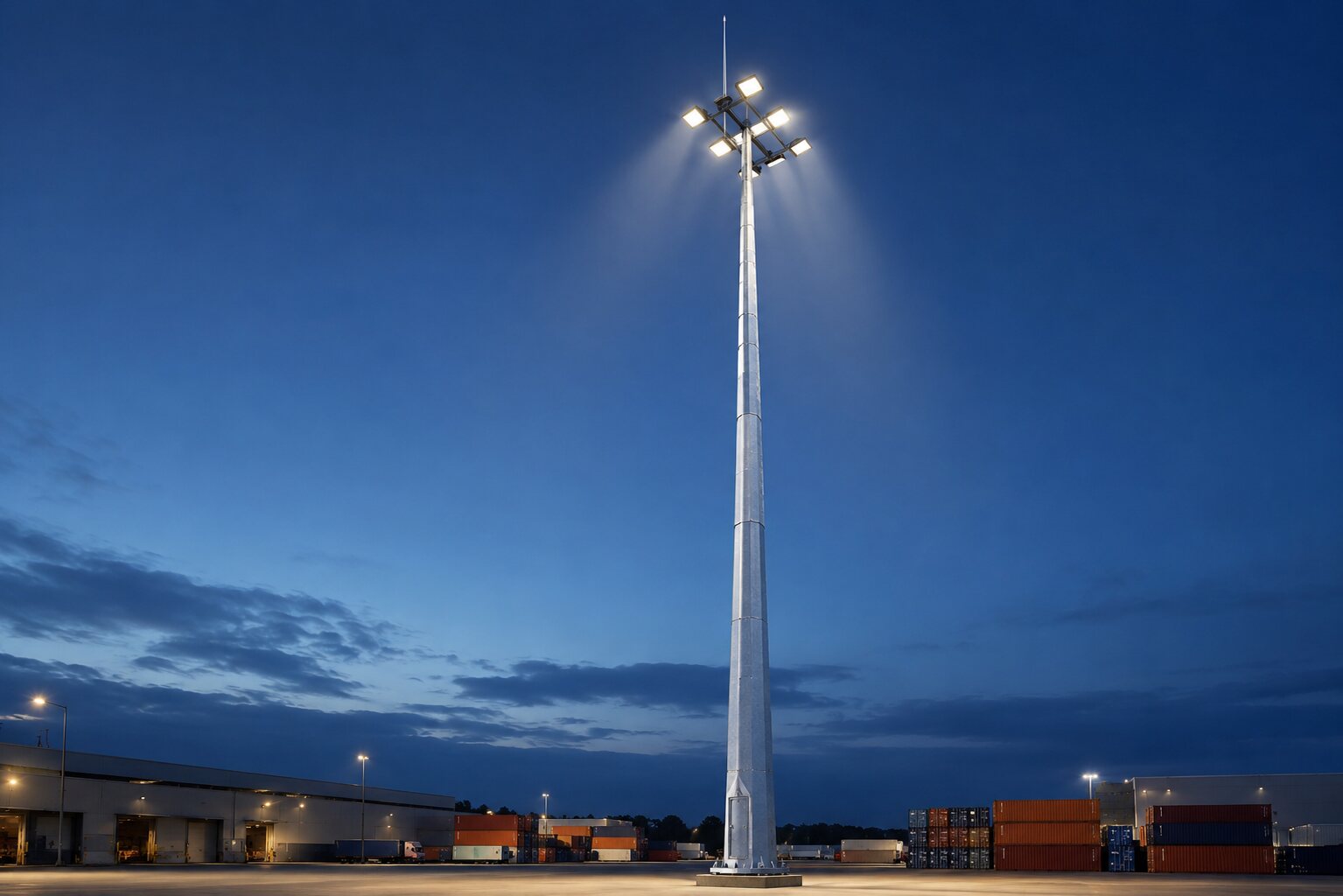
A 25m fixed-head high mast lighting system for logistics parks, container yards, industrial facilities and transport interchanges, with project-specific floodlight arrangement, wind design and foundation reactions.
A fixed-head high mast uses a rigid top crossarm rather than a motorized lowering ring. It can reduce mechanical complexity and initial cost where the owner already has suitable mobile elevated work platforms or another approved maintenance method.
The design still requires coordinated lighting, structural and civil inputs. The floodlight arrangement, total projected area, mast shaft, base plate, anchor bolts and foundation reactions must be checked for the project wind condition and site geometry.
Original generic product visualization prepared for this page. Final dimensions and configuration follow the approved project design.
Four-sided or directional headframe for loading aprons, warehouses and vehicle circulation areas.
Robust galvanized mast and targeted floodlight groups for process areas and outdoor storage.
Directional fixed crossarm for road junctions, parking areas and transport facilities.
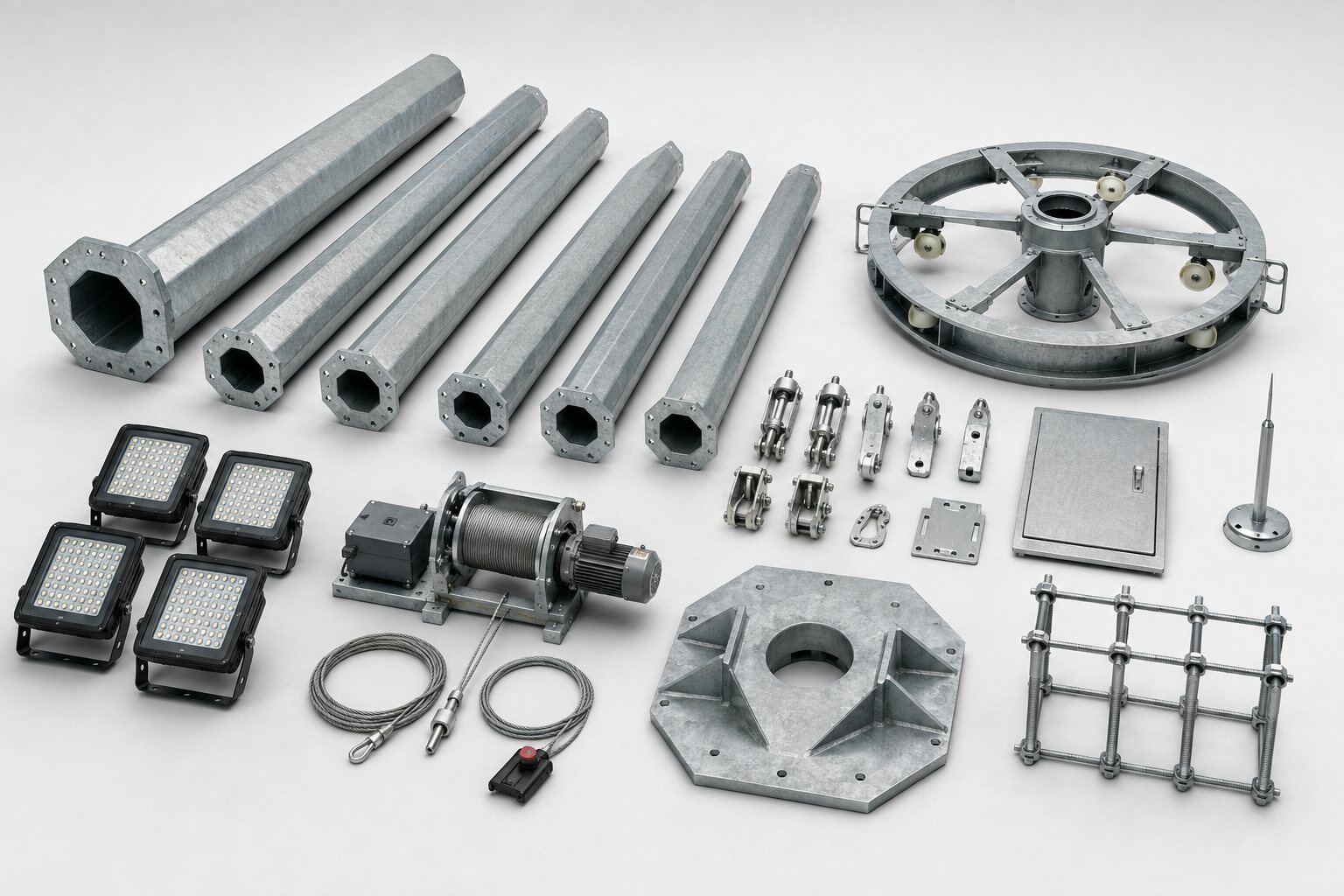
No lowering winch, moving ring or internal suspension system is required.
A 25m mounting point can serve a broad yard from fewer pole locations when glare and spill light are controlled.
Floodlights can be arranged on two-sided, four-sided or project-specific fixed brackets.
| Item | Preliminary range / option | Project decision basis |
|---|---|---|
| Nominal height | 25 m | Finished grade to floodlight mounting level |
| Mast form | Multi-section polygonal tapered shaft | Transport, overlap and structural calculation |
| Headframe | Fixed two-sided or four-sided bracket | Lighting layout and aiming directions |
| Floodlights | 6–12 typical; project-specific | Lux target, total weight and EPA |
| Maintenance | MEWP or approved access method | Owner equipment and site access |
| Surface protection | Hot-dip galvanized; coating optional | Corrosion category and appearance |
| Steel grade | Q355 or project-specified equivalent | Structural code and sourcing |
| Wind design | Project-specific | Basic wind speed, terrain and floodlight EPA |
| Base and anchors | Calculated for mast reactions | Bolt circle, edge distance and grout detail |
| Foundation | By site and geotechnical inputs | Bearing, overturning, shear and uplift |
Confirm site, lighting, wind, operating and corrosion requirements.
Prepare the product configuration, loads, drawings and bill of materials.
Fabrication, welding, surface protection and component integration.
Dimensions, appearance, function, packing list and document checks.
A fixed head can be an economical solution when the site has reliable elevated-access equipment and safe working clearances. The owner should evaluate maintenance frequency, access restrictions, operating interruptions and the cost of hiring a lift over the project life.
If ground-level floodlight maintenance is a primary requirement, a raising-and-lowering ring may offer a better whole-life solution. Jieyao can compare the two systems using floodlight count, site access and maintenance assumptions.
Representative high mast components used to explain the system architecture. Final fixed-head components follow the approved project design.
Large aprons, loading zones and circulation areas with mobile maintenance access.
Outdoor production, stock and perimeter areas needing broad floodlight coverage.
Large car parks, bus terminals and interchanges with defined aiming zones.
The floodlight bracket is rigidly fixed at the top. Maintenance normally requires an elevated work platform instead of lowering the luminaire ring to the ground.
The final number depends on the lighting layout, floodlight weight, projected area, bracket geometry, wind condition and structural calculation.
It normally has fewer mechanical components and can reduce initial cost, but the owner should include future elevated-access costs in the comparison.
Yes. The headframe can use grouped brackets or multiple sides so individual floodlights can be aimed toward defined yard zones.
Transportable polygonal sections commonly use calculated slip-joint overlaps. Section geometry and overlap length are determined by the structural design.
Site plan, lighting target, mast locations, design wind speed and code, floodlight data, corrosion environment, soil information and required maintenance method.
Send the location, site dimensions, lighting target, operating schedule, wind speed and quantity. Jieyao will review the inputs and recommend a documented system.
Send Your RequirementsSolar street light and high mast lighting manufacturer with 15 years of industry experience.
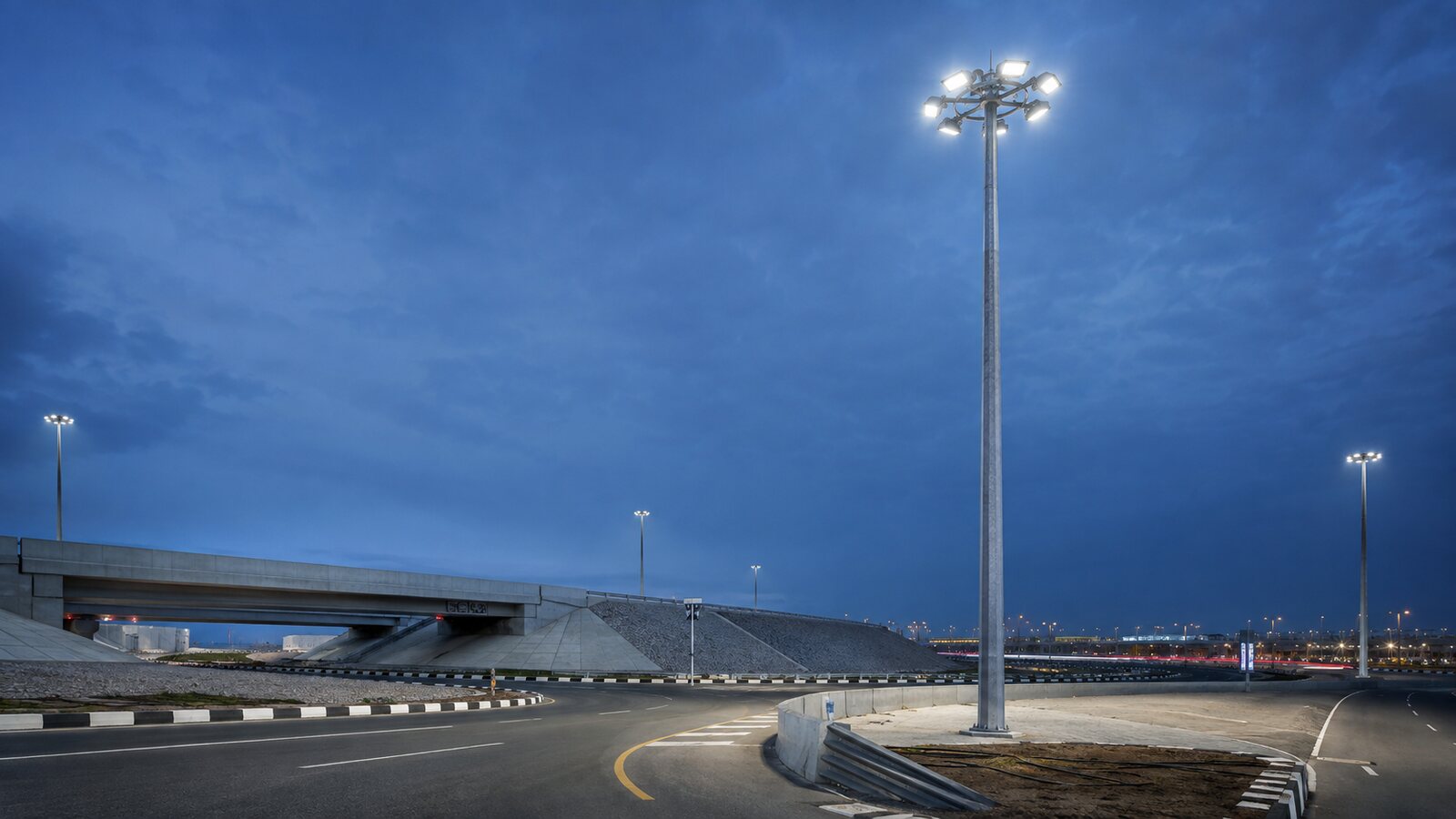
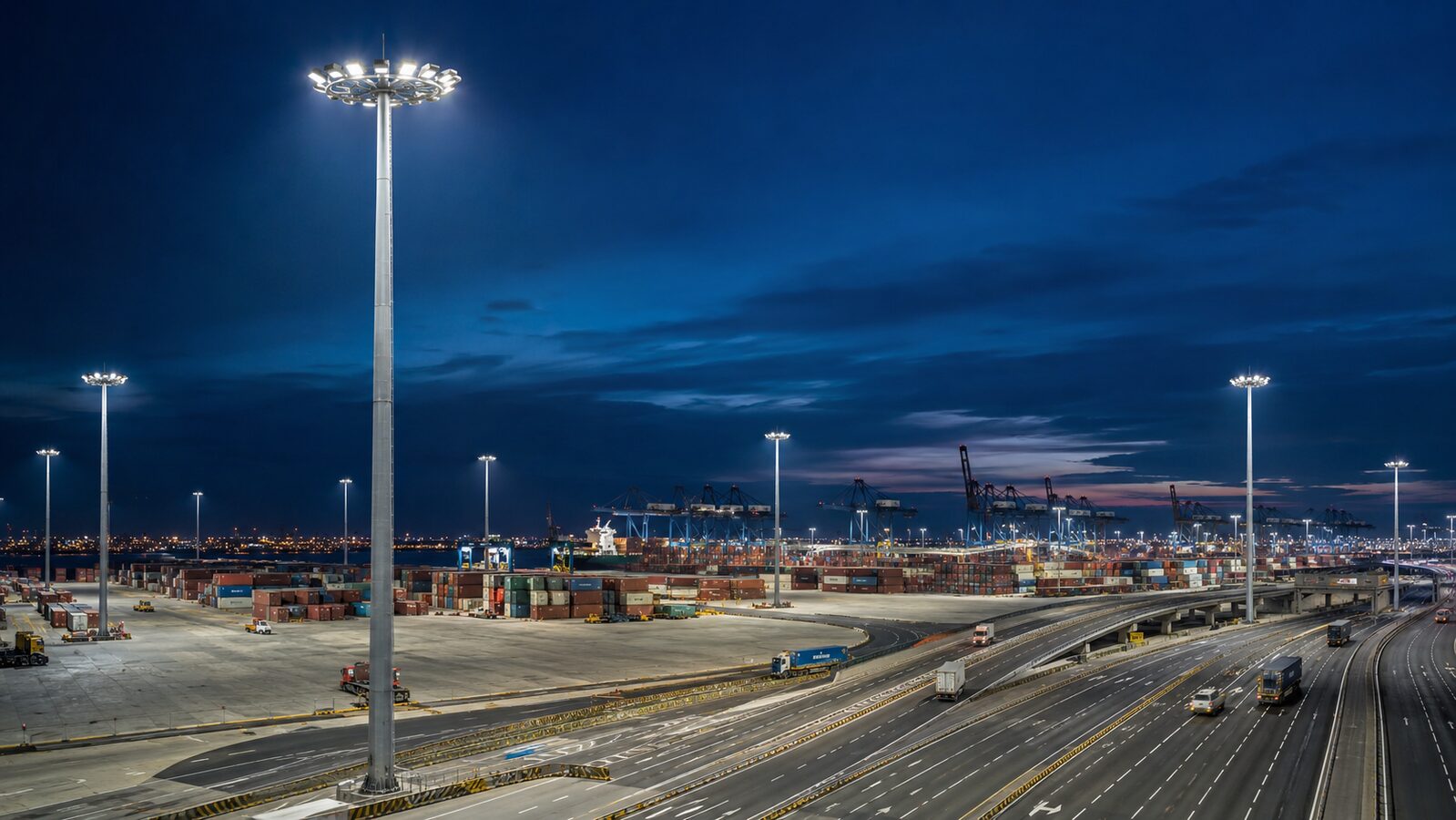
Our structural designs are based on local wind data. Standard designs withstand winds up to 160km/h (45m/s), with reinforced options for hurricane-prone regions.
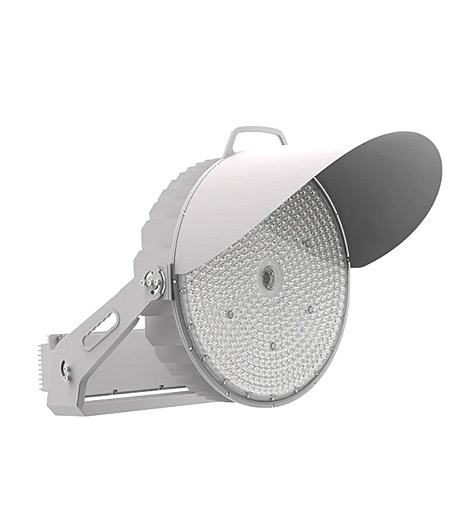
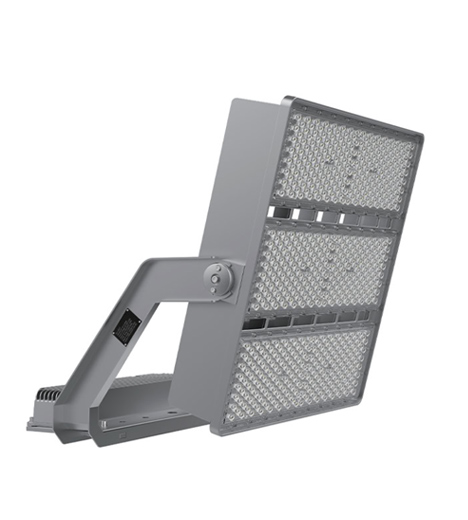
It depends on the mounting height and required lux levels. Generally, for a 25-30m pole, high-power LED floodlights ranging from 400W to 1000W are recommended.
High mast light refers to poles typically 20m (65ft) or taller. It is widely used in airports, seaports, highways, stadiums, and logistics hubs to provide uniform illumination over a vast area.
A steel grade alone does not establish high mast wind or fatigue performance. Compare project loads, shaft details, mill certificates and approved calculations before fabrication.
Yes. For coastal cities, we provide anti-corrosion powder coating that meets 500-1000 hours of salt spray test requirements.
High mast poles are designed for large-area outdoor lighting, and their height usually depends on the size of the space that needs to be illuminated.
We use high-strength carbon steel such as Q235B or Q345B, bent into polygonal shapes (usually 12 or 16 sides) and hot-dip galvanized both internally and externally.
Raising & Lowering systems feature an electric winch to lower the light ring to ground level for maintenance. Fixed systems require a bucket truck or ladders for servicing.
It consists of an electric winch, stainless steel wire ropes, pulleys, and an automatic latching mechanism. Once reaching the top, the ring locks mechanically to relieve tension from the ropes.
No. Our systems feature an automatic mechanical latching system and safety brakes to ensure the ring stays secure even without rope tension when in the locked position.
Yes. Each pole is equipped with a lightning rod at the top and dedicated grounding bolts to connect to the foundation grounding system.
We use professional asymmetrical optical lenses (such as Type IV or Type V) to ensure uniformity over large areas and minimize glare.
Through shields and precise light distribution design, we confine excess light to the target area, reducing interference for the surrounding environment and drivers.
A concrete foundation must be poured based on pole height and soil conditions. We provide detailed foundation drawings and anchor bolt cages.
There is no single anti-corrosion lifespan for every galvanized high mast pole. The coating, site exposure and maintenance criterion must be specified together.
Yes. Due to height limits, poles over 20m are typically split into 2-3 telescopic sections for convenient shipping in 40ft containers.
No. Sections are joined via overlap (telescopic fit) using gravity or hydraulic force. This mechanical joint is more flexible and fatigue-resistant than welding.
Yes. Our professional lighting design team provides free Dialux simulation reports based on your site’s CAD drawings to optimize lighting layouts.
Yes, we have extensive project references in the Middle East, Southeast Asia, and South Africa. We can provide photos and technical parameters upon request.
We typically offer a 10-year warranty on the pole structure and a 5-year warranty on the LED fixtures and lifting systems.
Yes. Our light rings can be customized with brackets to accommodate CCTV cameras or other security sensing devices.
EPA refers to the Effective Projected Area of the pole and fixtures under wind pressure. It is a critical parameter for calculating structural safety.
Technically yes, but due to high power consumption, very large solar arrays and battery banks are required. We typically recommend grid-tied or hybrid systems.
We use high-quality stainless steel or plastic-coated wire ropes and recommend regular greasing during annual inspections.
Yes. With intelligent control systems, you can remotely adjust brightness and scheduling to maximize energy savings.
Contact Us
Get a custom lighting solution and quotation for your project. Outdoor lighting manufacturer in Yangzhou, ChinaAbout Jieyao LightingYangzhou Jieyao Lighting Equipment Co., Ltd. is an outdoor lighting manufacturer focused on solar street light systems and high mas... Do you have any questions or requests?
Email: jay@jieyaolighting.com

Click to Chat.
Im online now.