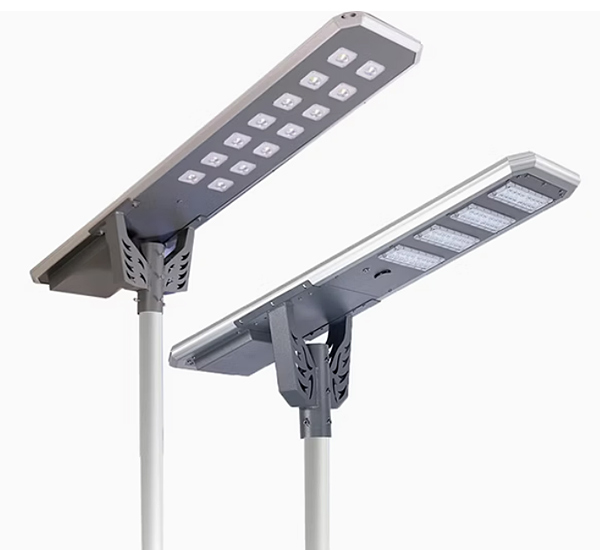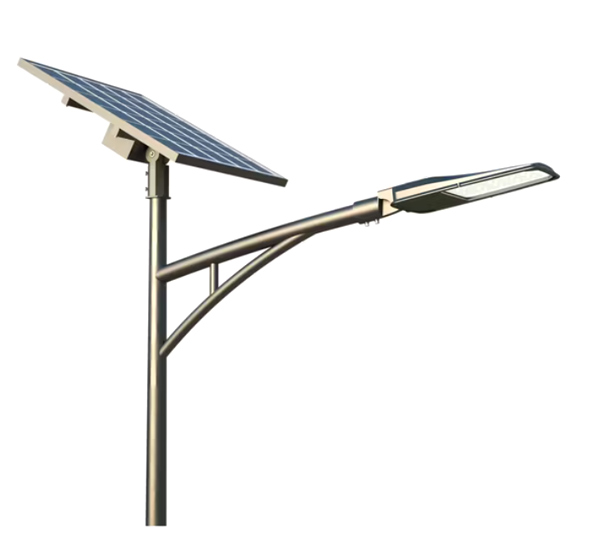


Many buyers ask the same question before starting a project: How long does a solar street light last?
The answer is not simply “5 years” or “10 years,” because a solar street lighting system is made up of several key components, and each part has a different service life. The real lifespan depends on battery quality, LED performance, solar panel efficiency, controller stability, installation conditions, and local climate.
For municipal roads, highways, parks, industrial zones, and commercial outdoor projects, understanding the replacement cycle of each component helps reduce maintenance costs and avoid unexpected failures.
In most professional projects, a high-quality solar street light system can operate reliably for 8 to 15 years, while some structural parts such as galvanized poles can last more than 20 years.
This guide explains the expected lifespan of every major component and helps buyers choose a system with lower long-term operating costs.
Different parts age at different speeds. Some parts may last over 20 years, while batteries may require replacement much earlier.
| Component | Average Lifespan | Typical Replacement Cycle |
|---|---|---|
| Solar Panel | 20–25 years | Usually no replacement needed in early stage |
| LED Light Source | 50,000–100,000 hours | 8–12 years |
| Lithium Battery | 5–8 years | 4–7 years |
| Gel Battery | 2–5 years | 2–4 years |
| Solar Controller | 5–10 years | 5–8 years |
| Light Pole | 20–30 years | Rarely replaced |
| Mounting Accessories | 10–15 years | Based on corrosion condition |
This is why professional buyers focus not only on the initial purchase price but also on lifecycle cost.
A lower upfront price often means shorter battery life and more frequent maintenance.
The solar panel is usually the longest-lasting component in the system.
Most high-quality monocrystalline solar panels maintain over 80% of their original efficiency after 20 to 25 years. The annual power degradation rate is typically around 0.5% to 0.8% per year.
This means the panel itself rarely needs early replacement unless there is physical damage caused by storms, vandalism, transportation impact, or poor installation.
For coastal areas, desert environments, and regions with heavy snowfall, stronger frame protection and anti-corrosion treatment are especially important.
Choosing Tier-1 solar cells significantly improves long-term system reliability.
The battery is usually the first component that requires replacement.
It is also the part that most directly affects system performance during cloudy days and rainy seasons.
| Battery Type | Average Life | Charging Cycles | Maintenance Requirement |
|---|---|---|---|
| Lithium Battery (LiFePO4) | 5–8 years | 2000–4000+ cycles | Low |
| Gel Battery | 2–5 years | 500–1200 cycles | Higher |
For modern export projects, LiFePO4 lithium batteries have become the preferred choice because they offer longer service life, better temperature resistance, deeper discharge capacity, and lower maintenance requirements.
Although the initial cost is higher, the total ownership cost is usually much lower.
Battery replacement planning is critical for large municipal projects.
A system with poor battery quality may require replacement in just 2 years, creating serious maintenance pressure.
The LED lamp head usually lasts between 50,000 and 100,000 working hours, depending on chip quality, heat dissipation design, and driver stability.
In practical outdoor use, this often means 8 to 12 years of operation.
However, poor thermal design can reduce lifespan dramatically.
Excessive heat causes lumen depreciation, reduced brightness, and early failure.
Professional solar street lights use:
These factors directly determine whether the light remains stable after years of operation.
The solar charge controller is the “brain” of the system.
It manages charging, discharging, battery protection, and lighting schedules.
A high-quality MPPT controller usually lasts 5 to 10 years, while low-cost PWM controllers often fail much earlier.
Controller failure may cause:
For commercial projects, intelligent MPPT controllers improve both efficiency and service life.
The galvanized steel pole often has the longest service life in the entire system.
A properly manufactured hot-dip galvanized street light pole can last 20 to 30 years, and sometimes longer in mild environments.
Key factors include:
For coastal or high-humidity areas, powder coating plus hot-dip galvanizing offers better long-term protection.
Pole replacement is rare unless there is corrosion damage or structural impact.
Even high-quality products can fail early if system design is incorrect.
The most common reasons include:
If the battery is too small, deep discharge happens frequently, greatly shortening battery life.
Undersized panels cannot fully recharge the battery during winter or rainy seasons.
Cheap controllers, weak LED drivers, and low-grade batteries create high maintenance costs later.
Extreme heat, coastal salt spray, desert dust, and snow accumulation all accelerate aging.
Incorrect pole angle, weak foundations, and bad cable protection can cause early failure.
System design matters more than simply buying the cheapest product.
Experienced buyers focus on lifecycle value instead of initial price only.
A practical purchasing strategy includes:
| Priority | Recommendation |
|---|---|
| Battery | Choose LiFePO4 instead of gel battery |
| Controller | Prefer MPPT over low-end PWM |
| Pole | Use hot-dip galvanized steel |
| LED | Select high-lumen chips with strong heat dissipation |
| Supplier | Choose manufacturers with project experience and warranty support |
For large projects, replacing batteries once is often more expensive than paying slightly more for better quality at the beginning.
This is why professional contractors care about replacement cycles before placing orders.
So, how long does a solar street light last?
A well-designed commercial solar street light system typically delivers reliable performance for 8 to 15 years, while poles and solar panels may last more than 20 years.
The battery is usually the first replacement point, followed by controllers and LED systems.
Understanding the lifespan of each component helps buyers make better purchasing decisions, reduce maintenance costs, and improve long-term project returns.
Choosing the right supplier is not only about price—it is about system stability for the next decade.
For roads, highways, parking lots, parks, stadiums, and municipal lighting projects, long-term reliability always creates the best value.
Contact Us
Get a custom lighting solution and quotation for your project. Outdoor lighting manufacturer in Yangzhou, ChinaAbout Jieyao LightingYangzhou Jieyao Lighting Equipment Co., Ltd. is an outdoor lighting manufacturer focused on solar street light systems and high mas... Do you have any questions or requests?
Email: jay@jieyaolighting.com

Click to Chat.
Im online now.