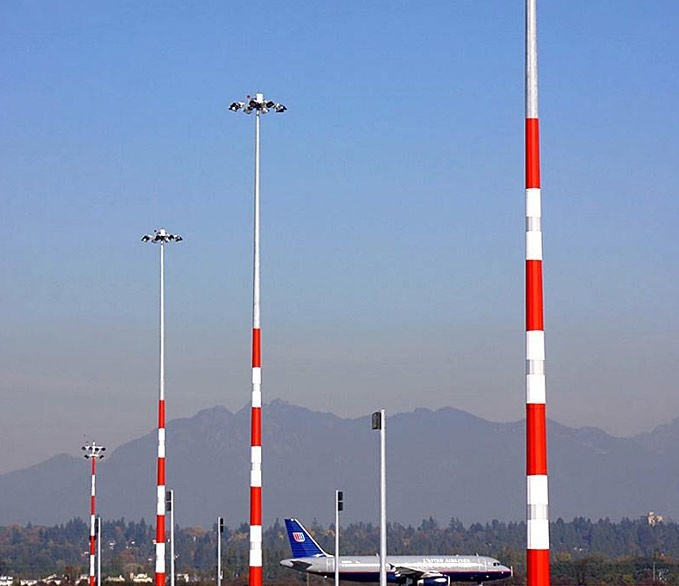
Yes, solar power can be considered for outdoor industrial lighting, including storage yards, access roads and remote work areas. Feasibility depends on the lighting load, local solar resource, available panel area and required reliability. Indoor lighting can also use solar electricity through a building energy system; it should not be treated as the same design as a self-contained solar yard light.
Calculate daily energy from each operating stage: power in watts × hours, then add the stages and fixtures. For illustration only, ten 100 W lights running for 12 hours use 12,000 Wh (12 kWh) per night before system losses. This is an arithmetic example, not a Jieyao product rating or a panel/battery recommendation.
The system design must then allow for conversion and storage losses, seasonal solar availability, shading and battery operating limits. A panel wattage by itself does not establish that the lights will run throughout the night.
Continuous production, emergency lighting and hazardous locations require their own applicable design and equipment requirements. An ordinary solar floodlight is not automatically suitable for these duties. Agree the required lighting levels, operating hours and permitted interruptions before selecting the power system.
Contact Us
Get a custom lighting solution and quotation for your project. Yangzhou Jieyao Lighting Equipment Co., Ltd. manufactures outdoor lighting and steel poles in Guoji Town Industrial Park, Gaoyou City, Yangzhou, Jiangsu, China. The company reports a 10,000 m² factory site, more than 60 employees including more than 10 technical personnel, and more than 100 production and testing machines. The present company name dates from 2017; Jieyao Poles’ published history traces the team’s manufacturing lineage to 2006. The stated 15 years of experience refers to the team. The company reports exports to more than 60 countries. Do you have any questions or requests?
Email: jay@jieyaolighting.com

Click to Chat.
Im online now.
 English
 Español
 Bahasa Indonesia
 Français