
Review industrial glare using the selected optics, layout, task and viewing directions. Interpret UGR claims with their calculation conditions and project criteria.
IP65 is commonly used for normal road lighting and can handle rain and dust. IP66 offers stronger resistance against heavy rain and water pressure. IP67 and IP68 are used in more demanding environments where water exposure is more serious, such as coastal areas or industrial zones. IP69K provides the highest protection level and is designed to withstand high-pressure, high-temperature washing, often used in extreme industrial conditions.
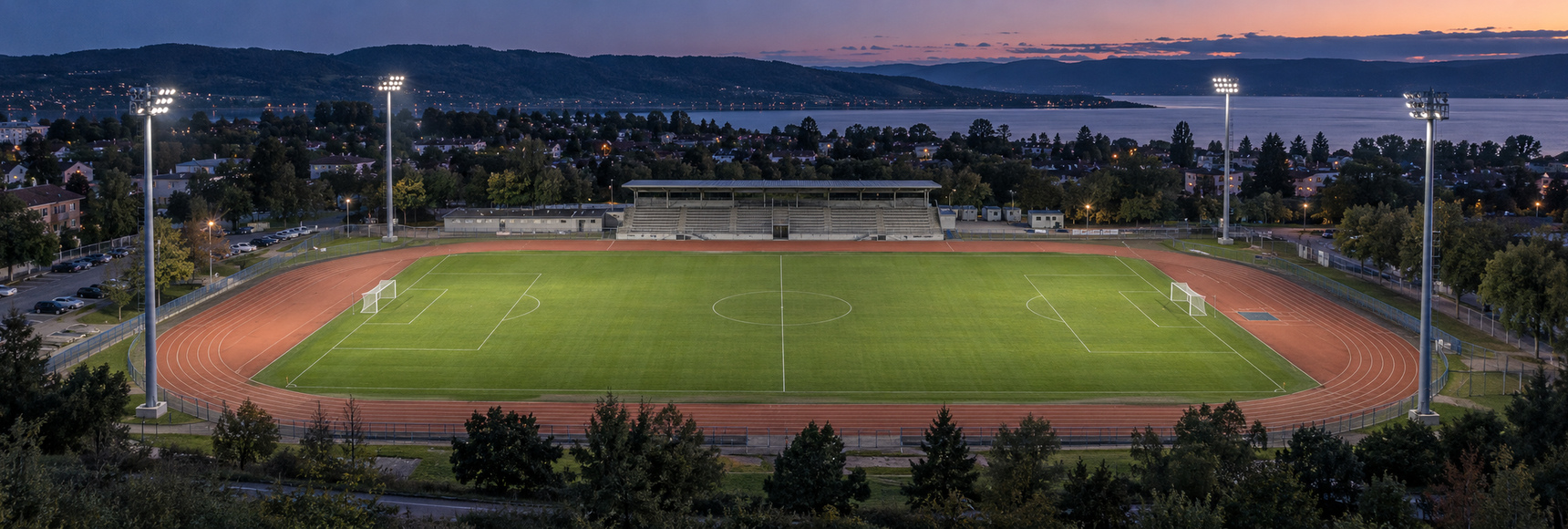
Compare sports and factory lighting by visual task, mounting layout, glare, operating environment and project criteria. Broadcast requirements apply where specified.
Tri-proof stands for waterproof, dustproof, and anti-corrosive. It is commonly used in parking lots, car washes, tunnels, and chemical plants.
Request model-specific daylight-responsive dimming. Review control zones, driver and sensor compatibility, commissioning and project-specific energy-saving assumptions.
Solar-powered industrial lighting needs a load and seasonal energy assessment. Compare standalone, grid-connected and backup arrangements against operating requirements.
For overseas warranty enquiries, provide order details and fault evidence. Coverage, remedy, freight costs and timing follow the specific order agreement and claim review.
Confirm steel grade, pole dimensions and corrosion protection in the approved drawing and quotation. Alternative materials and supporting documents depend on the specific order.
Taper describes a change in shaft size; cylindrical and polygonal describe geometry. Compare the complete pole design and interfaces for the actual project loads.
Assess pole wind resistance for the actual site, wind definition, equipment layout, connections and foundation. Confirm the documented design and rating conditions.
Wall thickness is determined with the shaft geometry, material, attached equipment, design loads and connections. Confirm the specified thickness and tolerances in the approved pole drawing and structural design for the quoted configuration.
Hot-dip galvanizing protects steel with zinc. Protective life depends on coating thickness and exposure; confirm project coating requirements, inspection records and maintenance conditions.
Use foundation and anchor drawings approved for the selected pole and site. Coordinate supplier interface details with the project foundation design before construction.
Confirm the weld inspection method, coverage, acceptance criteria and required records against the approved pole drawing and project specification.
Review current factory certificates by holder, site, activity and validity. Check lighting-pole product conformity documents separately against the proposed model and destination requirements.
Contact Us
Get a custom lighting solution and quotation for your project. Yangzhou Jieyao Lighting Equipment Co., Ltd. manufactures outdoor lighting and steel poles in Guoji Town Industrial Park, Gaoyou City, Yangzhou, Jiangsu, China. The company reports a 10,000 m² factory site, more than 60 employees including more than 10 technical personnel, and more than 100 production and testing machines. The present company name dates from 2017; Jieyao Poles’ published history traces the team’s manufacturing lineage to 2006. The stated 15 years of experience refers to the team. The company reports exports to more than 60 countries. Do you have any questions or requests?
Email: jay@jieyaolighting.com

Click to Chat.
Im online now.
 English
 Español
 Bahasa Indonesia